



Richard Boyd Barrett: Redirect R&D tax breaks to education
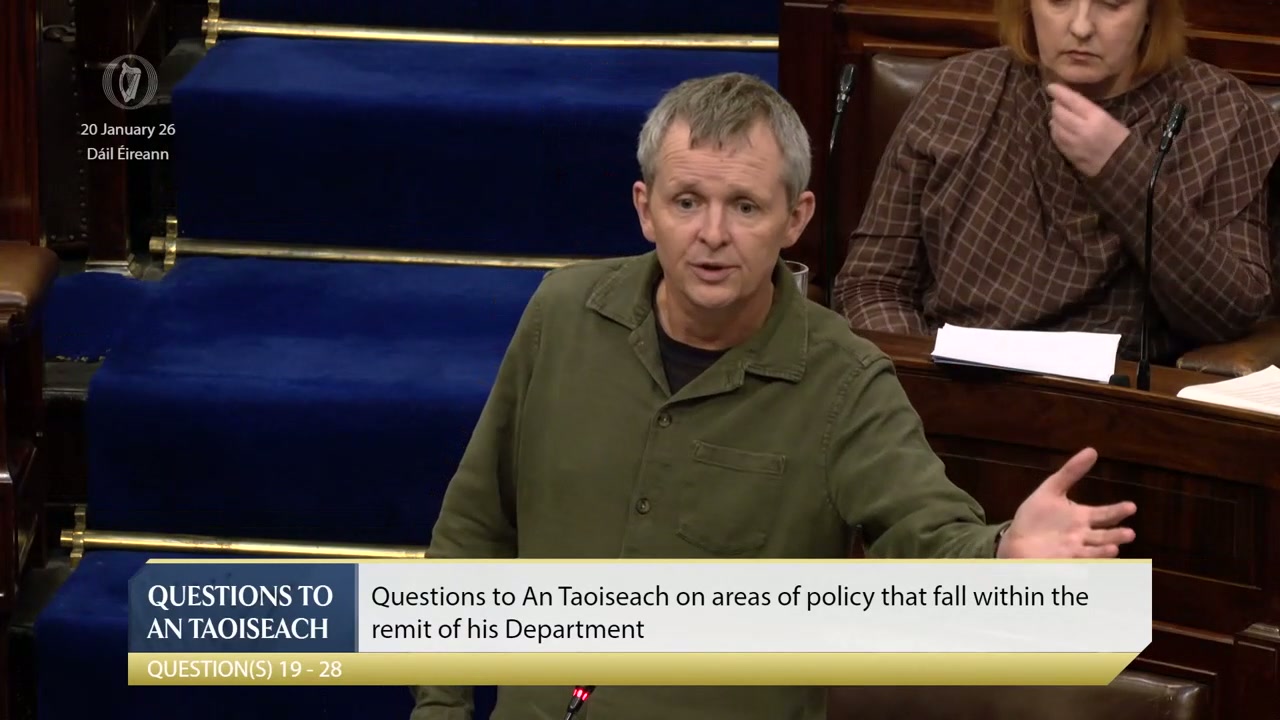
Richard Boyd Barrett questioned a Minister during discussion on research and development tax credits, arguing that public money should strengthen Irish research and higher education. He challenged the additional €118 million in tax breaks, warning that Ireland’s reliance on a small number of multinational companies leaves the economy vulnerable.
Boyd Barrett said diversifying the economy required stronger domestic research and development, including in universities and higher education institutions. He argued that the R&D tax credit was heavily claimed by large companies while researchers faced insecure work and low incomes.
He contrasted the additional €118 million for tax breaks with what he described as a funding gap of a couple of hundred million euro in further and higher education. He asked why the money was not redirected towards research capacity, better conditions for researchers and closing that funding gap.
The Minister said the credit applies to costs for people engaged in research and development, and that the number of people working in R&D rose by 65% between 2013 and 2023. The Minister argued that the credit helps attract foreign direct investment and that multinational jobs also benefit small and medium-sized businesses.
The Minister acknowledged concerns about dependence on corporation tax and referred to increased support for indigenous enterprises through Enterprise Ireland and measures for SMEs. The Minister also said not all data on the increase in the credit from 25% to 30% would be available immediately, and undertook to raise the committee’s concerns about delayed publication of data.
Economic dependence and research capacity
Boyd Barrett said diversifying the economy required stronger domestic research and development, including in universities and higher education institutions. He argued that the R&D tax credit was heavily claimed by large companies while researchers faced insecure work and low incomes.
Tax breaks and education funding
He contrasted the additional €118 million for tax breaks with what he described as a funding gap of a couple of hundred million euro in further and higher education. He asked why the money was not redirected towards research capacity, better conditions for researchers and closing that funding gap.
Minister’s response on R&D and FDI
The Minister said the credit applies to costs for people engaged in research and development, and that the number of people working in R&D rose by 65% between 2013 and 2023. The Minister argued that the credit helps attract foreign direct investment and that multinational jobs also benefit small and medium-sized businesses.
Data and support for Irish businesses
The Minister acknowledged concerns about dependence on corporation tax and referred to increased support for indigenous enterprises through Enterprise Ireland and measures for SMEs. The Minister also said not all data on the increase in the credit from 25% to 30% would be available immediately, and undertook to raise the committee’s concerns about delayed publication of data.
We publish thousands of recordings to make Irish politics transparent and resistant to manipulation. Spotted an error? Report it — together we are building a reliable archive of Irish politics.
Other speeches

Tego samego dnia All speeches from this day →
Séamus McGrath
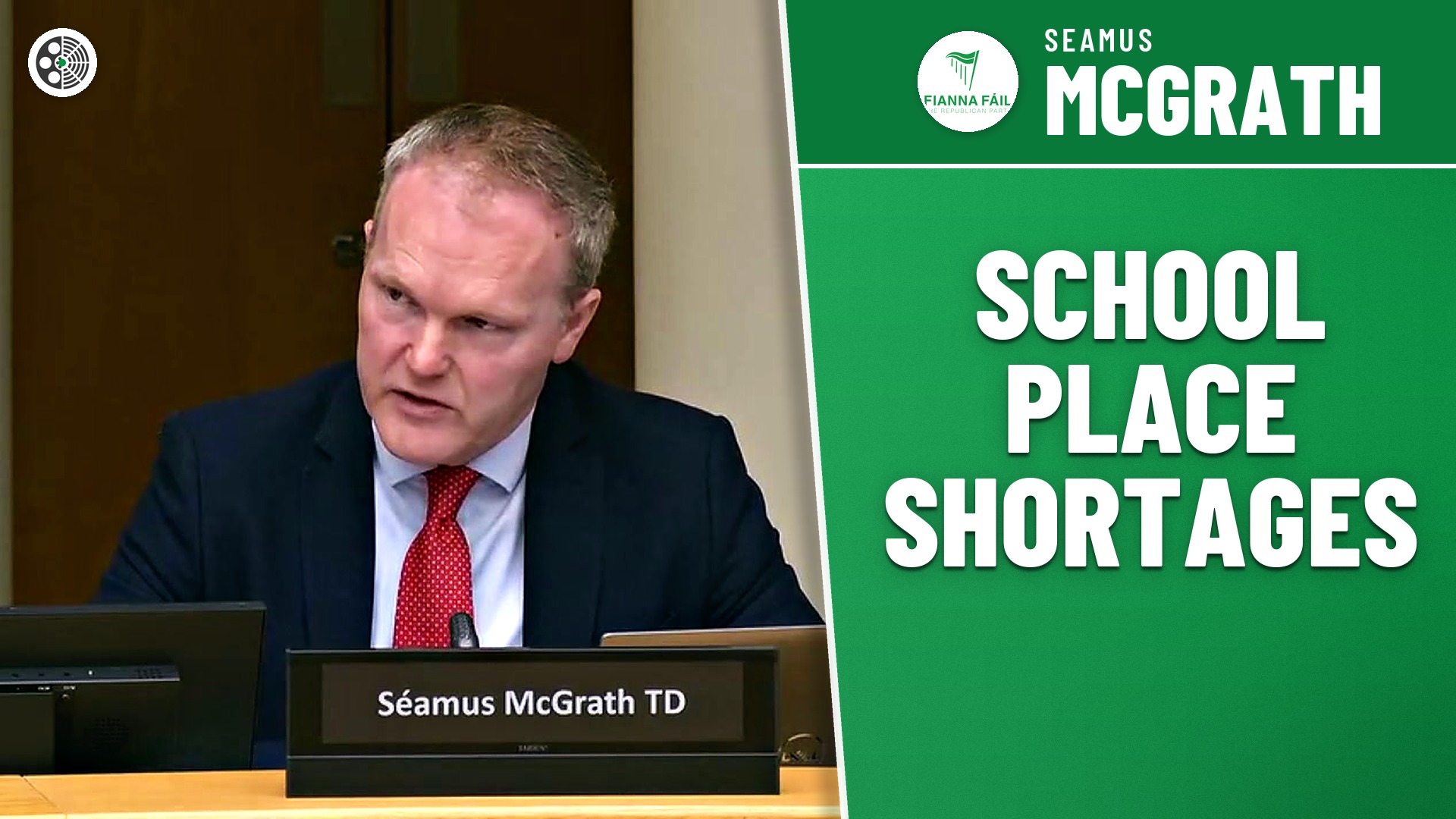
Séamus McGrath presses for answers on school transport and places
Jen Cummins
Jen Cummins Challenges Tánaiste on Special Education
Sharon Keogan
Sharon Keogan Questions Priorities on Trafficking and Online Regulation
Sharon Keogan
Sharon Keogan presses National Women’s Council on trafficking
Brian Stanley
Brian Stanley presses for childcare places in Laois
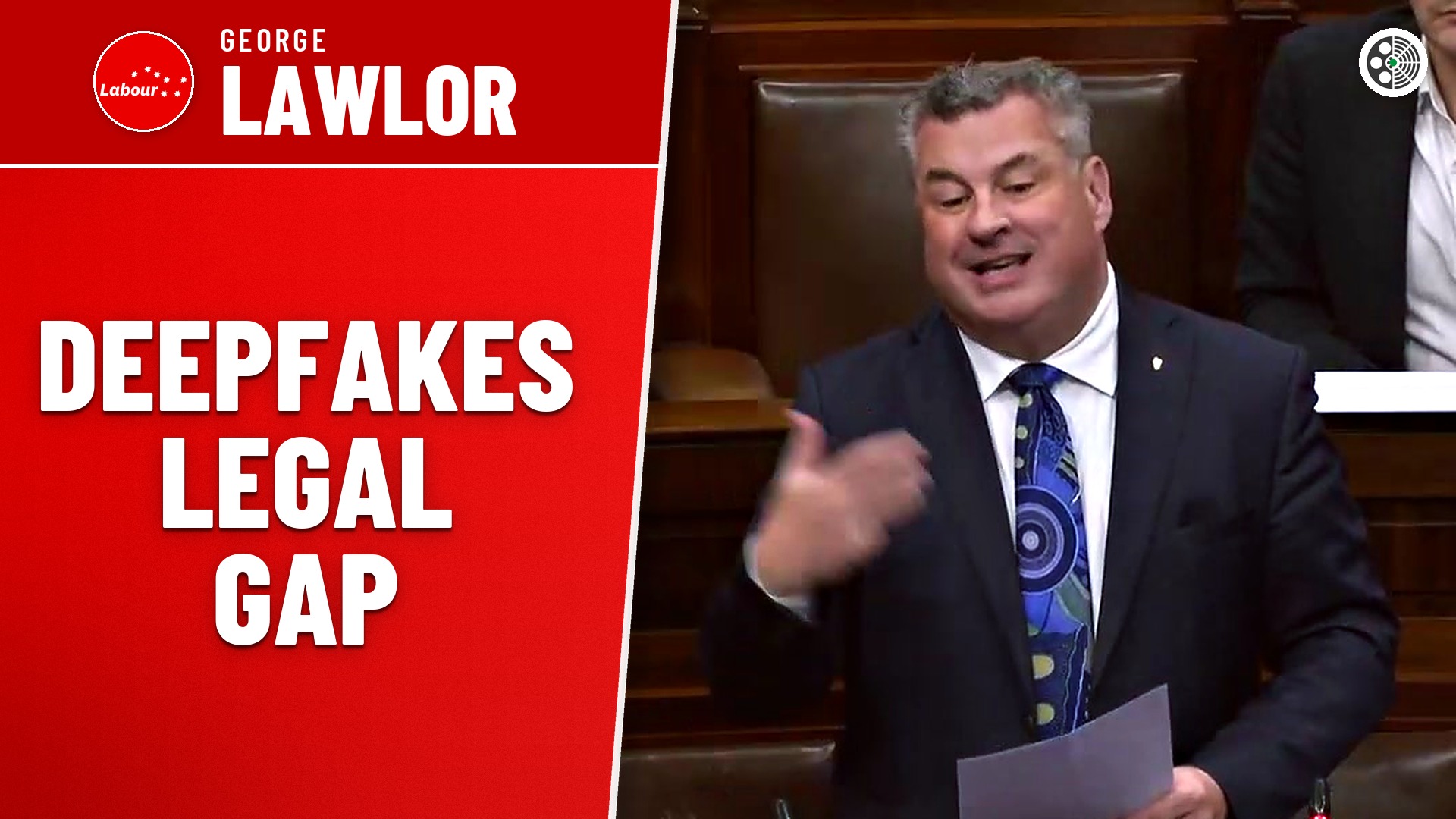
George Lawlor
George Lawlor: Deepfakes expose a dangerous gap in the law
Transcript
Yeah, I would just make the point, Minister,
that while it is absolutely a social benefit for people
to have jobs, and there's no doubt
that jobs are generated by the FDI sector,
it's pretty much mainstream consideration now and view
that the Irish economy is dangerously
dependent on a relatively small number
of multinational corporations, and that that
is a vulnerability.
So it's not just the socialist left or whatever
who are saying there's a concern over the vulnerability we have
to a potential downturn globally affecting
a small number of multinational companies
that have a very, very big impact on the well-being
of the Irish economy.
So surely we're in a race against time
to diversify the Irish economy away
from that vulnerability and that over-dependence
on a small number of companies.
And surely, if that is the case, and I think it's self-evidently
the case, and economic think tanks of pretty much
every variety have said that is the case,
surely a big part of diversifying our economy
and moving away from that over-dependence
and vulnerability is ramping up our own domestic indigenous
research and development capacity,
and a huge part of that is in our universities
and our institutions of higher education.
And let's remember that a big part of, as I understand,
you correct me if I'm wrong, but as I understand
the research and development credit, a lot of it
is, first of all, I think 75% of it is claimed, if I'm correct,
by the big companies, about 75% of it.
And the expenditure that they can claim against
includes the wages and salaries of the people
in their companies, which are often
very, very high salaries, in the case of some
of their top executives, incredibly high salaries.
But you know, and then you contrast that
with about 50% of people in higher education
in this country being on precarious contracts,
part-time contracts, effectively zero hour contracts
in many of the cases, or post-grad researchers existing
on 25,000 euro or less, or less,
who come in year after year saying
they're living in poverty, and how can they
sustain themselves?
And we know, I mean, I'm on the Further Education Committee.
We had all the heads of the universities coming in saying
there's a serious, serious problem with the funding
gap for further and higher education,
which is in the region of a couple of hundred million.
And so there's a real problem, but the government
has chosen to give 118 million extra,
now bringing it up to probably over a billion
in further tax breaks, most of which
are going to fantastically profitable multinationals who
are, because of their dominant position, if you like,
in our economy, are creating a vulnerability for our economy.
Like, to my mind, I just don't understand
why we go further down that road.
Like, they're not going to leave if you don't give them
an extra 118 million, because they're
making massive profits.
Surely that money would be better spent,
and maybe even some more of that nearly a billion euro
should be redirected towards enhancing
our own research and development capacity,
lifting our researchers out of poverty,
closing the funding gap for further and higher education,
rather than giving it again to fantastically
profitable multinationals.
OK, I'll try and come back and be as honest and as direct
with my answers as the questions have been.
First to say, I'm a longtime politician,
and I fully agree with the sentiments that
have been expressed.
Committees have an important role
in scrutinizing legislation.
When I was in opposition TD, I was an active participant
in committees myself.
So I agree with that.
I also think that it is important
that relevant information is shared in a timely fashion.
And I will bring the frustrations of the committee
back to the Tarnished and the Minister for Finance
in relation to the publication of the data.
That should have been, the deadline
should have been met in terms of June of this year.
And I will request the Tarnished to endeavor
to have that published in advance of the report stage.
But I honestly can't give a commitment
that it will be done, so I'm not going
to make a liar out of myself here today.
But I will take the frustrations of the committee back
in relation to that.
In relation to some of the points in the data,
Deputy Daugherty, you asked about the increase from 25%
to 30% and whether that will actually even be captured
by the data that's due to be published or overdue.
It won't all be captured, because as you'll appreciate,
that will depend on the filing period for companies
who are participating in it.
And in actual fact, it's more likely
that the bulk of that data won't come until this year,
to be honest.
But that's just to answer the question in relation
to the increase from the-
Some of it will.
Some of it will.
Yeah, depending on-
That's the point, yeah.
Some of it will, correct.
But it's anticipated that most companies now
file their returns at the year end, in a calendar year.
So on that basis, I don't imagine
it'll be hugely informative in relation
to the increase in the 25% to 30%.
But you're right, some of it definitely will.
In terms of, I suppose, the numbers of people engaged
in R&D, because it's only people who are actually engaged
in R&D that can act, the costs associated
with people who are engaged in R&D,
where that cost can be offset against the credit.
It's not, and maybe I'm wrong in trying to portray
Deputy Boyd Barrett is trying to insinuate
that everybody could, you know, they can use it
against all staff, they can't.
It's only people who are engaged in R&D.
And the number of individuals engaged in R&D
in the decade 2013 to 2023 increased by 65%.
And I think, you know, it is important for multinationals
to engage in R&D, to continuously be in inventing,
creating, and that that work is being done here in Ireland,
rather than being done elsewhere.
Personally, I feel if new products,
if new innovations are created here,
there is a much better chance of keeping
the larger investment in infrastructure
here in this country.
I too would be, quite frankly, worried and concerned
in relation to an over-dependence on corporation tax.
We'd be crazy if we weren't.
But that's why there has been a body of work being done
and currently being done in terms
of supporting indigenous enterprises.
That's why Enterprise Ireland have received
increased funding again, in terms of the work
that they're doing with Irish businesses.
That's why some of the amendments we brought in
just a moment ago in relation to supports
for investment to SMEs.
That's why we want to see more investment innovation
in that space.
But it's not one or the other.
It has to be a combination of both.
And I actually believe that this R&D tax credit
is a very important part of our economic model.
And as somebody who served previously
as a minister of state with responsibility
for trade promotion, and who engaged in trade missions
across many different countries,
it is a very strong bow in our armor
when we are out selling Ireland
as an ability to attract FDI.
And I don't think we should forget that.
And some people think FDI is bad
and it's dirty for some reason, but it's not.
And if you asked hundreds of thousands,
I'm not saying everybody here is saying that,
but if you asked hundreds of thousands of people
who depend on their jobs there,
they certainly appreciate the good quality jobs
that are there.
And it's not just the jobs that are there themselves,
but the many SMEs in smaller areas
that benefit from these high quality jobs.
And you think back to during COVID time,
when a lot of people who were working
in the large corporations, large office blocks,
all of a sudden work from home,
and you talk to the hospitality industry
in relation to the effect that that had in their business,
it was detrimental.
So it's not just exclusively about the jobs here,
but in fact, in terms of the supports that it has
on a much more wider element of our economy.
And just in relation to the 2023 figures,
which are the most recent up-to-date figures that we have
in terms of the breakdown of the claimants
who claimed R&D tax credit,
of those 1,804, sorry, 574 were in companies
of less than 10.
Right, I'm reading that.
Employees, sorry.
Employees of less than 10.
608 were in companies with employees of 11 and 49.
50 were, 397 were employees of,
companies with employees of 50 to 249.
Clearly we want more and we want them to be able
to avail of the tax credit
in greater monetary terms as well.