

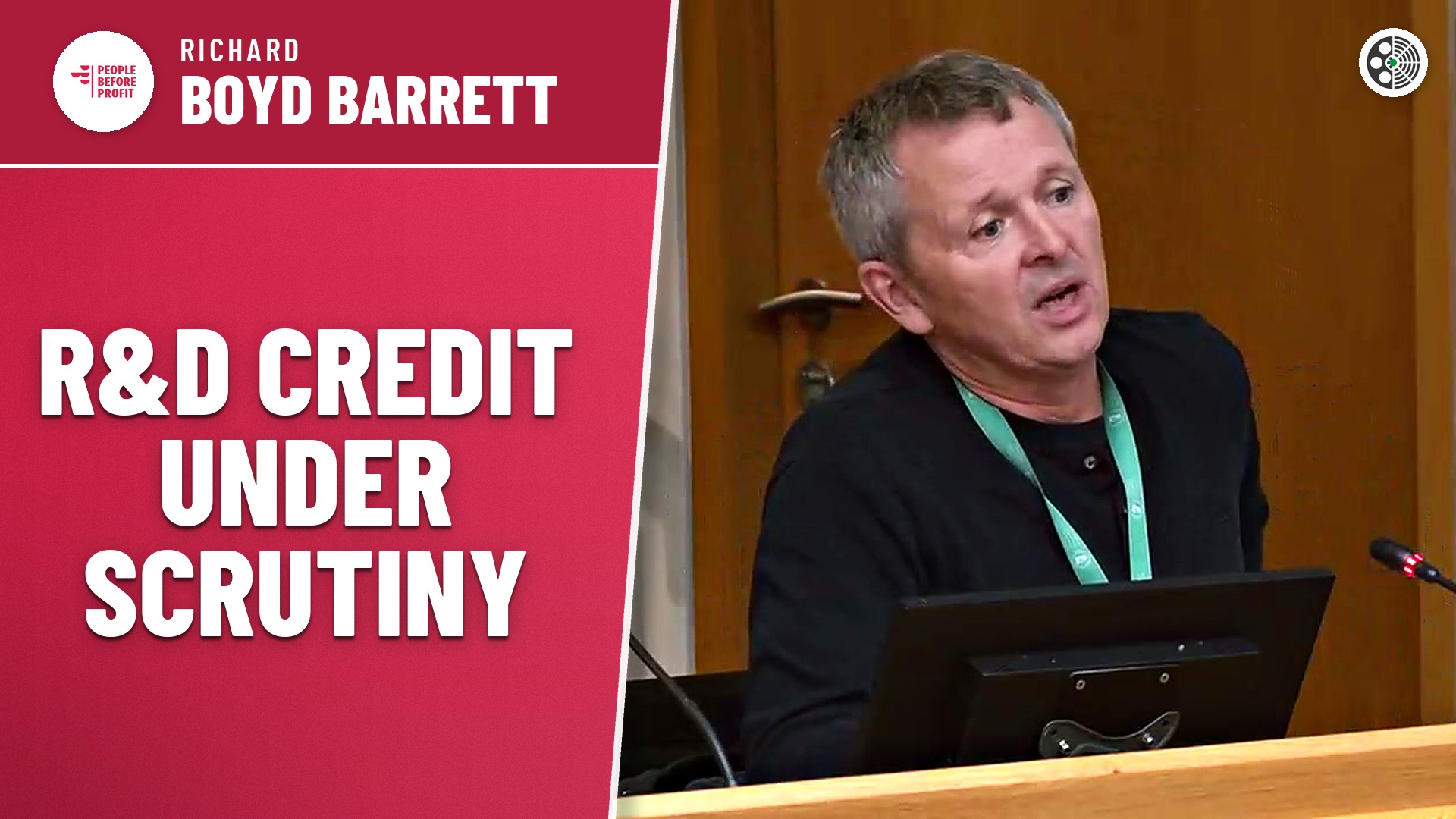


Richard Boyd Barrett challenges multinational R&D tax credits
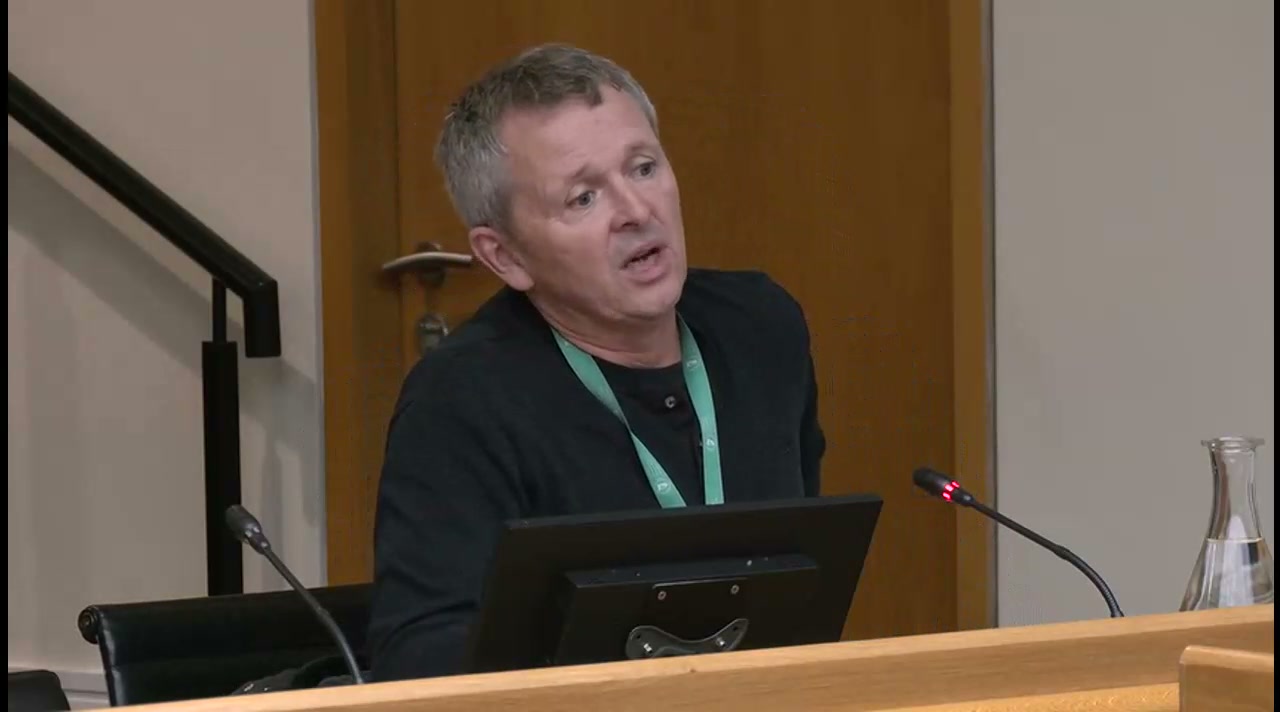
Richard Boyd Barrett questioned the social benefit of Ireland’s research and development tax credit during a committee discussion, arguing that much of its value goes to highly profitable multinational companies. A minister defended the credit, citing employment, corporation tax contributions and its role in attracting investment, while also pointing to direct public funding for research and development.
Boyd Barrett asked whether the research supported by the tax credit is evaluated for its benefit to society. He argued that the credit costs close to €1 billion and said the public should consider whether some of that funding would be better directed towards research and development in public universities.
He highlighted campaigns by university researchers seeking pay above a living wage, saying that about 10,000 researchers are living in poverty. He said raising researcher stipends from a maximum of €25,000 to €30,000 would cost €330 million, roughly a third of the amount he said was being provided mainly to multinational companies.
Boyd Barrett argued that the criteria for the R&D tax credit should include social benefit, raising concerns about public support for work in areas such as apps and social media. He called for a fundamental review and said funding for public universities should be considered alongside tax relief for companies.
In response, the minister said the credit supports enterprise policy and helps attract foreign direct investment, which the minister described as a source of jobs across the regions. The minister said 1,804 companies claimed the credit in 2023, collectively employing 253,000 people and paying more than €10 billion in corporation tax.
The minister said the Government directly funded €1.1 billion in research and development in 2024, excluding indirect support through the tax credit, and argued that academic and business research both have a role. The minister also pointed to an increase in smaller companies claiming the credit and described Revenue guidance intended to help businesses meet documentation requirements.
Social benefit under scrutiny
Boyd Barrett asked whether the research supported by the tax credit is evaluated for its benefit to society. He argued that the credit costs close to €1 billion and said the public should consider whether some of that funding would be better directed towards research and development in public universities.
University researchers and funding
He highlighted campaigns by university researchers seeking pay above a living wage, saying that about 10,000 researchers are living in poverty. He said raising researcher stipends from a maximum of €25,000 to €30,000 would cost €330 million, roughly a third of the amount he said was being provided mainly to multinational companies.
Questions about the research being incentivised
Boyd Barrett argued that the criteria for the R&D tax credit should include social benefit, raising concerns about public support for work in areas such as apps and social media. He called for a fundamental review and said funding for public universities should be considered alongside tax relief for companies.
The minister’s case for the credit
In response, the minister said the credit supports enterprise policy and helps attract foreign direct investment, which the minister described as a source of jobs across the regions. The minister said 1,804 companies claimed the credit in 2023, collectively employing 253,000 people and paying more than €10 billion in corporation tax.
Public funding and SME access
The minister said the Government directly funded €1.1 billion in research and development in 2024, excluding indirect support through the tax credit, and argued that academic and business research both have a role. The minister also pointed to an increase in smaller companies claiming the credit and described Revenue guidance intended to help businesses meet documentation requirements.
We publish thousands of recordings to make Irish politics transparent and resistant to manipulation. Spotted an error? Report it — together we are building a reliable archive of Irish politics.
Other speeches

Tego samego dnia All speeches from this day →
George Lawlor
George Lawlor: 20,000 Taekwondo practitioners shut out of funding
Sharon Keogan
Sharon Keogan Questions Women’s Council on Who It Represents
Brendan Smith
Brendan Smith seeks next round of childcare grants
Brian Stanley
Brian Stanley presses for childcare places in Laois
Sharon Keogan
Sharon Keogan Questions Priorities on Trafficking and Online Regulation
Cathy Bennett
Cathy Bennett challenges school transport eligibility and fares
Transcript
Yeah, yeah, thanks, thanks, thanks, okay, here, look, and yeah, this minister is an issue I have
big interest in and I've raised on a number of occasions over the years.
And the question I would ask is, to what extent is there any sort of evaluation of the social benefit of
the research and innovation
that is being done by the beneficiaries of
the credit?
Because as we know, the vast, vast majority of this credit, which is up over, I was just looking, the latest figures are
over a billion, are they?
976 million, it was over a billion the year before that,
2023, I don't know if you gave out the latest figures, and then this additional measure, I think it's 118
million,
is estimated as rejected cost of
this new change, expansion of
the credit. Maybe you just elaborate exactly what this is doing,
or if you haven't already done, apologies, because I'm not on this committee, obviously, I was just aware you're discussing it now.
But we're talking in the region of a billion euro,
given out almost,
the vast, vast majority of it is going to already
obscenely profitable multinational corporations. And to my mind, there is, there's a
trade-off here which needs to be examined and evaluated properly as to whether it would be more beneficial to give some or all of that
money, not just to SMEs, but to our universities, to research and development in our public universities.
I mean, we have
ongoing campaigns by researchers, actual people who do research,
to be paid more than a living wage,
10,000 of them in our universities,
who live in poverty.
But these are the people who do research in universities
for,
you know, they are funded on the basis that they're doing something useful, if you like, for our society, and it's publicly funded research.
But most, and I think for example, we
project, we costed in the advance of the budget that to give,
to move the current
level of stipends, which is at best 25,000 euro a year for
researchers, up to 30,000 for all researchers, would cost
330 million.
So it would cost about a third of what you're giving away, mostly to the multinationals,
who, let's bear in mind, are also getting a whole number of other
tax reliefs, to the extent that it massively writes down their tax liability, on a whole range of other
areas as well, that brings down their effective
corporate tax
rate, down well below the nominal, the headline percentage.
And, you know, that's been well documented over the years,
how far south of the actual headline rate of
taxation, of corporate taxation, the actual amount of tax paid is, for many of the multinational,
for many of the multinational companies.
So this is another big handout for them. And the question is, like, is this of real benefit to our society, or would it be better off
actually funding our
researchers in universities, and funding, closing the funding gap in universities, rather than giving it to a handful of incredibly profitable
multinationals. And what are they doing for it? Right? Because,
and, you know, is there, shouldn't we be looking at and evaluating,
not just that they pass certain criteria, but that those criteria, let's put it this way, would include
social benefit. Is it actually useful, the things they're claiming for, for our society? Or in some cases, because a lot of it is in the
area of software,
probably, you know, apps and stuff like that,
social media. To what extent is this actually good for our society? The stuff that we're incentivizing them and giving them
hundreds of millions in tax relief to do, is it actually good for our society? Or some of this is potentially really bad for our society?
Or certainly where the money being given to them would be far better directed at things that would be considered socially beneficial.
So that's my concern. But I really think we've got to fundamentally review
this, because it amounts to a big giveaway to obscenely profitable companies with questionable benefit
to our society, when we could be giving that money
to research and development in public universities.
Thank you, Chairperson, and thank the committee for further questions. I think we,
most of the contributors
will acknowledge that, I think, our R&D offering is a critically important part of our enterprise policy.
It is a major attraction in our ability
to attract FDI, and whether we like FDI or not,
they are major employers in this country, not just in Dublin, but
stretching right across our regions. In
2023,
the most recent
detailed data that is available to us, and I'll come back to Deputy Callaghan's point in relation to
2024's data,
the R&D tax credit was claimed by
over 1,800 companies, and those
companies collectively employed
253,000 people,
quality, real jobs,
and those companies paid over 10 billion in corporation tax
in that year as well. So there is benefit to society.
You know, I think one of the best things you can do for a person is give them a good quality job,
give them the ability to provide for themselves,
and the corporation tax is also very beneficial to society in the fact that it's through our corporation tax that we're able to fund
our social welfare system, our investment in education, in health,
so from a societal perspective, I think it's quite beneficial.
It's not always one or the other. The government directly funded
the Department of
Further and Higher Education
shows that in
2024, the government directly funded 1.1 billion of R&D, and
so that does not include
the indirect support form of R&D tax credit. So
Ireland, I think it's fair to say, needs both
academic and
it should be suggested that one should be a substitute for the other, as both, I think, have a very important role in
supporting an innovation-based
economic growth. In
relation to
more SMEs participating in an availing of the
credit, that is
something that has influenced some of the changes over the last
number of years, and
revenue statistics reports shows that for 2023
there has been an increase in SMEs engaging in the regime.
Evidence
pointing, that evidence points to
the changes are
having effect,
particularly among smaller claimants. As I said,
1,804 companies claimed R&D tax credits in
2023. That's up from
1,631 in 2022, and the first significant increase in claimant numbers in over a decade.
The increase of 170 claimants in total is comprised of
773 in the number of micro-sized claimants, 58 in additional small companies,
19 medium-sized companies, and 23 additional
large companies. Clearly, we would like to see much more,
and that's something that we have to continually keep under review in terms of how we can make it as simple as possible
for
SMEs and micro-sized companies to avail of the credit. I understand that a body of work has been done
by revenue in terms of
educating and supporting companies to avail of this tax credit.
They have
provided a suggested file layout,
which is a template that can be used by claimants to ensure that their R&D claims meets the administrative requirements in respect of
documentation, to support claims,
removing some of the maybe fear factor, and they've also published
how-to videos and information on common errors in the returns filings to assist companies
incorrectly completing the form also. In relation to
specific questions about
the data available,
I've asked revenue here to my right if
we could have it available in advance of the report stage,
and I don't want to make a promise that I can't stand over or keep, but what I have said is if there is
specific questions that you would like to raise
today, we can endeavor to have
answers to any specific questions if, in the event, all the data is not available, but I hope that's helpful to the deputies today.