



Jen Cummins Challenges Tánaiste on Special Education
Jen Cummins challenged the Tánaiste over proposed changes to access to special education, arguing that children with additional needs and their families have been let down by delays and inadequate support. In the Oireachtas exchange, she pressed the Government to put children’s needs first and listen to parents, educators and specialists before changing the system.
Cummins questioned the proposal to remove the requirement for a diagnosis to access special classes and supports. She argued that professional assessments identify what each child needs, and warned against expecting teachers, principals or schools to carry out clinical work.
Cummins said the proposal risked making children wait until their attendance, achievement, participation or wellbeing was affected before receiving specialist supports. She criticised what she described as piecemeal planning and said families were being frightened by uncertainty around possible changes.
The Tánaiste said no decision had been made and that the Government intended to consult extensively with advocacy organisations, disabled persons’ organisations and education stakeholders. He argued that the existing system was not serving children well and said reform should address bureaucracy and improve access to support.
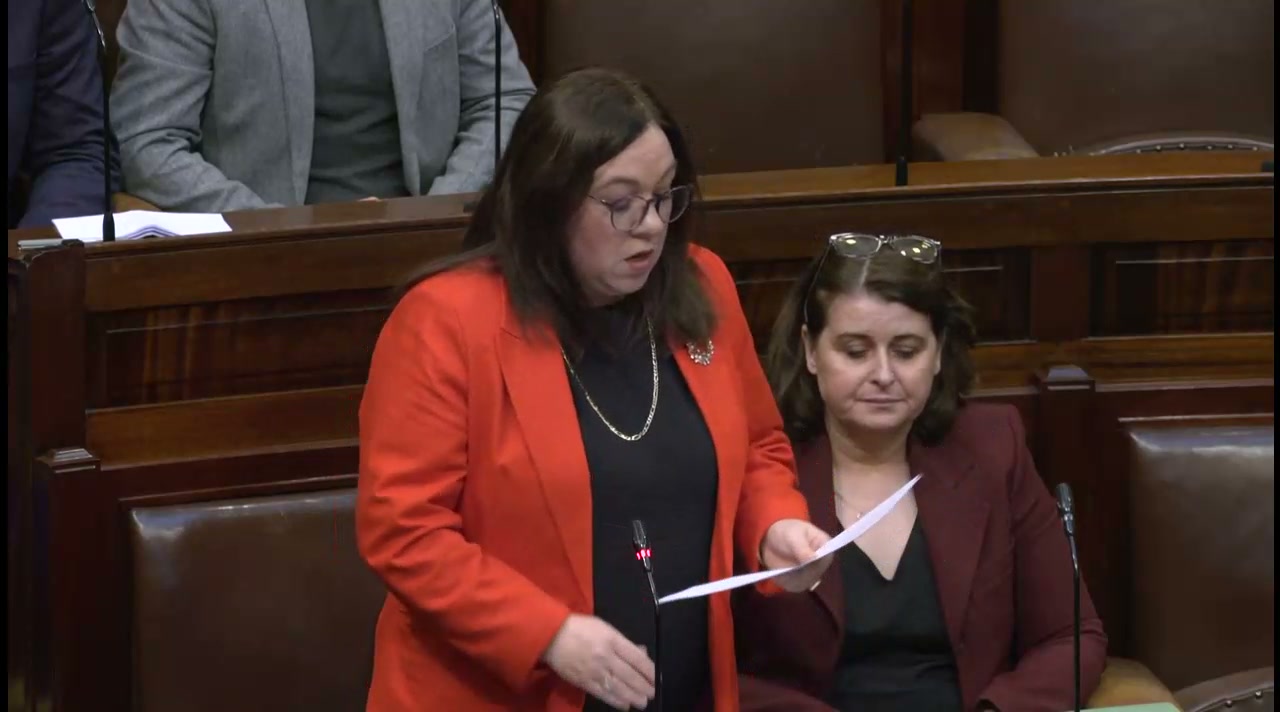
Cummins acknowledged the need for a system that works better but urged the Government to act faster, draw on expertise and listen to parents and people working on the ground. The exchange also addressed the planned inclusive education forum and the balance between investment and reform.
Diagnosis and access to support
Cummins questioned the proposal to remove the requirement for a diagnosis to access special classes and supports. She argued that professional assessments identify what each child needs, and warned against expecting teachers, principals or schools to carry out clinical work.
Concerns about the proposed approach
Cummins said the proposal risked making children wait until their attendance, achievement, participation or wellbeing was affected before receiving specialist supports. She criticised what she described as piecemeal planning and said families were being frightened by uncertainty around possible changes.
Tánaiste calls for consultation and reform
The Tánaiste said no decision had been made and that the Government intended to consult extensively with advocacy organisations, disabled persons’ organisations and education stakeholders. He argued that the existing system was not serving children well and said reform should address bureaucracy and improve access to support.
Pressure for better support
Cummins acknowledged the need for a system that works better but urged the Government to act faster, draw on expertise and listen to parents and people working on the ground. The exchange also addressed the planned inclusive education forum and the balance between investment and reform.
We publish thousands of recordings to make Irish politics transparent and resistant to manipulation. Spotted an error? Report it — together we are building a reliable archive of Irish politics.
Other speeches

Tego samego dnia All speeches from this day →
Sharon Keogan
Sharon Keogan presses National Women’s Council on trafficking
Richard Boyd Barrett
Richard Boyd Barrett challenges EU summit priorities
George Lawlor
George Lawlor: Deepfakes expose a dangerous gap in the law
Martin Daly
Martin Daly questions school transport overspends and access
Séamus McGrath
Séamus McGrath presses for answers on school transport and places
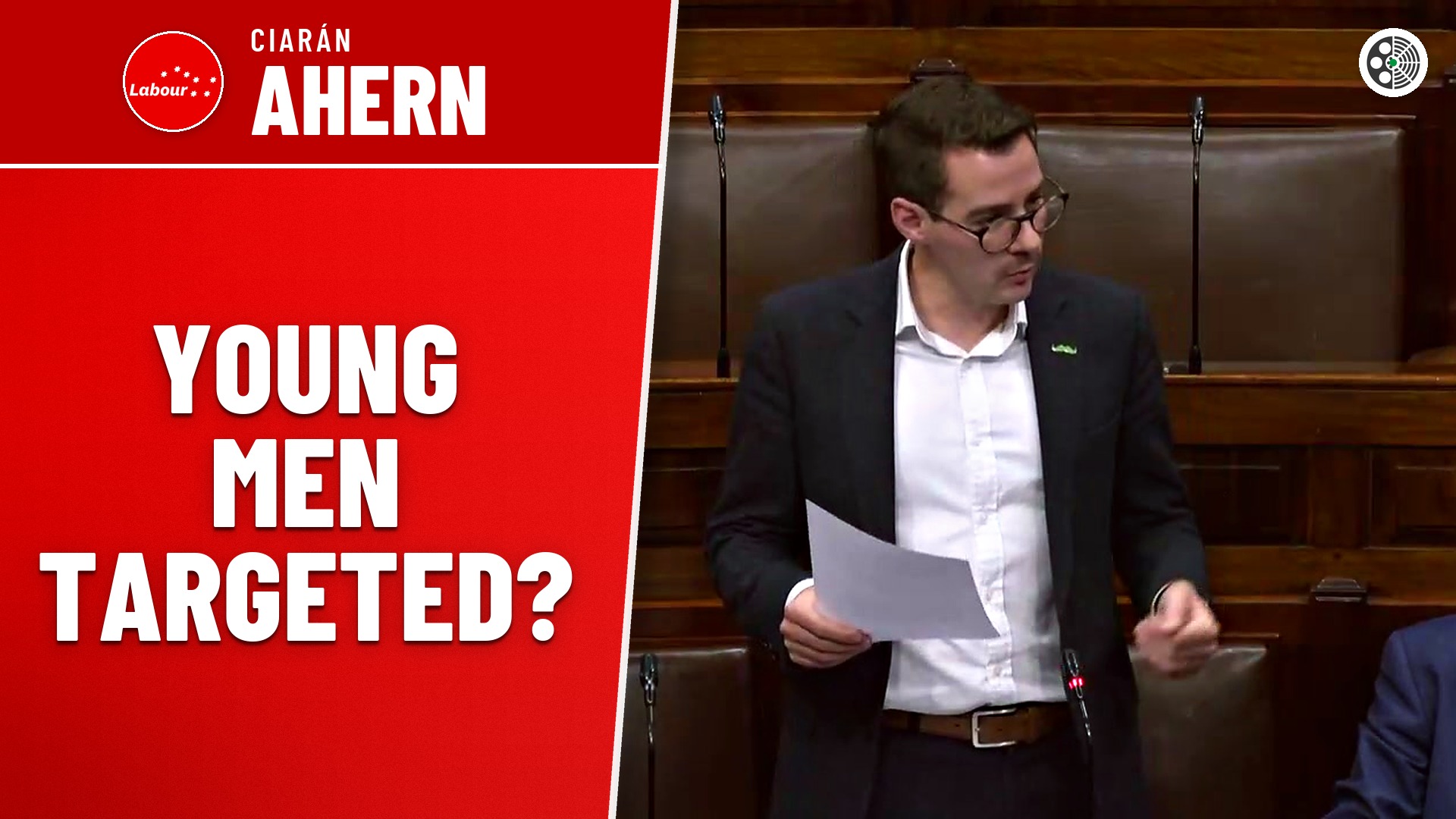
Ciarán Ahern
Ciarán Ahern: Tech firms must answer for online abuse
Transcript
Tánaiste, an internal Fianna Gáil report has found that many people are confused about what your party stands for.
Can I be so bold as to suggest a reason for the confusion?
It's your repeated failure for nearly 16 years in government to deliver on promised commitments
because you prefer to narrate the problems of this country rather than doing anything about it.
We've seen that in the housing crisis, we've seen that in the cost-of-living crisis,
but nowhere have we seen that more evident than the shameful treatment of children with additional needs and their families.
They've known nothing but failure from this government and every other government you have been involved in since 2011.
Tánaiste, for those families, talk is cheap and your commitments are not credible because despite
promise after promise after promise, nothing gets better.
Parents listen to members of this government insist that disability services and special education are a priority
while watching their children being denied basic services and supports every single day.
It is exhausting, it is demoralizing and it is heartbreaking.
So Tánaiste, there should be no surprise that these families have so little faith in this government and your plans to overhaul
access to special education. It is now nearly a year since the government announced it wanted to remove the requirement
for children to have a diagnosis to access special classes and supports.
There was very little information about this proposal until this week and the response has been very clear.
All of the teacher unions have written to the department to express universal opposition to these plans and I have to say
I agree with their concerns because it seems to me
that this plan is not being driven by the needs of children or their best interests. It is not.
It is being introduced in this state because the state has failed to provide them with timely access to diagnosis
through the assessment of needs process.
So diagnoses are now being presented as some kind of optional extra
when the reality is professional assessments and diagnoses are critical because they outline what the child needs to thrive and thrive.
Teachers are not qualified to do this functional clinical work.
They are not psychologists. Principals are not clinicians. Schools are not diagnostic centres.
They are places of teaching and learning.
This proposal as outlined in documents from your department will mean that a child will have to display
behaviours that persistently impact on attendance, achievement, participation and well-being before they receive
specialist supports.
So you want a child to underachieve
or fail
before they get the appropriate supports.
In what world is that appropriate?
Where is the care and where is the humanity in that? It is cruel
and it is throwback to a time when this country treated the most vulnerable people with the most contempt.
So Tánaiste, I would like to know, do you accept that this new proposal is more about government convenience
rather than the best interests of the child?
No, quite frankly I accept that if every time we try to consult and engage in how we reform a system that we try to
shut down the debate before having the engagement that that's not in the interests of the child.
You provoked me in relation to my own party report.
I must say if it was a secret report
we wouldn't have emailed it out to thousands of people. They handed out hard copies at the ARDESH and having a discussion in the
chamber of this country and not be complacent about the centre holding in populism and not taking hold.
So I look forward to that discussion and my party's record, I'll debate it with anyone,
we'll do that at the ARDESH,
but my party's record since I came into this house going from a position of 15% unemployment to the IMF in town
to now seeing 145 homes completed every single working day,
300 people getting keys to their new home every working day, full employment, reducing tax, reducing child care costs,
record special needs classes.
So no, sorry,
the way this works is you don't just get to make a charge and I roll over and you take on my belly.
You say something and I actually get a right to respond to it myself. So don't try to shut me down.
Now, so that's the first point. Second point is in relation to special education,
it always worries me when the starting point is the unions have said it's a bad idea.
Quite frankly, sometimes it's not about the unions or the politicians. Hang on a second, please.
I actually respect Deputy Cummins on this issue and I respect her sincerity and her bona fides and her knowledge on this issue,
fully by the way, and your interest in this issue. But I also know this,
the current system ain't working and it's not serving children and I think we can agree on that.
I can stand up here and I know what I'm meant to do. I'm meant to trot out a load of figures.
We're spending more money than ever before. We have more classes. Oh, that's true. And the system still isn't working.
So are we going to continue just pumping more money into a system that's letting children down?
Or are we going to actually say what does inclusive education look like? And I want to assure parents and teachers, by the way,
that nothing is decided here.
Nothing is decided and let's be, and I'm not suggesting you're not deputy,
but let's make sure there's an honesty in relation to this. Nothing is decided.
What we want to do is we want to consult, and I want to say this, we want to consult extensively
with all stakeholders. And that's simply where we're at at the moment.
We need to ask ourselves, are there too many hoops and hurdles and bureaucracy that a child has to jump through
before getting a place in special school? And I would contend there absolutely is. I'd contend there absolutely is.
And I would actually say, I'd look at it the other way. You're saying we want a child to fail.
You don't believe that. Nobody wants a child to fail.
But actually what we're doing now is we're waiting.
You have to have this piece of paper, then have this piece of paper, and then tick that box.
And then if you're fortunate enough to be able to pay for the piece of paper, that's not on either.
So we have to look and see
has the system become overly bureaucratic? Because I don't believe we're getting the return on investment that families expect.
Because the figures we're spending, quite rightly, it's good we're spending lots of money on special ed,
but the figures are extraordinarily large and they shouldn't be
that large with so many people still dissatisfied. So what Minister Nocton is doing,
with Minister Moynihan who's here, is trying to have a conversation about reform alongside investment.
How do we get this model right? And as part of that, we'll have this inclusive education forum,
which I think you're in favour of too, which will kick off on the 12th of November.
Let's have a discussion about what the model looks like. And in relation to this, any future proposals
will involve lots of engagement with advocacy organisations, disabled persons organisations, education stakeholders.
Of course they will, but we should be willing to have the conversation, because I believe the current system is not best serving children.
And I'm delighted to hear that you don't think it's working, because I don't either. And I have to say, I do want
to say that I respect the work that you're doing in this area,
and indeed other people in this government are doing. However,
it's not good enough. And the fact is it's not working fast enough. And there are idea after idea after idea.
Try this out, try that out.
There's a document that's going around at the moment comparing our education system to other countries.
It's not like for like. We cannot make this up as we go along.
There are going to be many more children coming into the system with additional needs, and we need proper plans.
But there needs to be not piecemeal, and that is the problem.
And it's not only the problem with the view that's had in this government of special education.
It's also what is happening on the ground for children and for schools.
We only saw that in the documentary a couple of weeks ago, that really our children with
additional educational needs are being treated as second or even third class citizens in this country.
We are not getting it right. And my
quest is to make sure that I put as much pressure on you as a government to get this right.
Get the expertise, listen to people on the ground, listen to the parents. They know what that is.
I know you're having that forum, but stop kite flying because it's scaring people. It's scaring families,
it's scaring children, and it's scaring education providers. Thank you.
I'm very conscious at that point to make it like kite flying because
on the anxiety that I can cause, what I would just respectfully say is it's not kite flying.
It's when you begin consultation and you start to engage and then somebody somewhere in the system says this is what we're doing.
There's no decision made. There's no decision made, nor is there any plan for an immediate change. Genuinely.
In fact, any changes that come about, we're talking about things that might happen in September 2028.
As in not even this coming September, right?
But
I think the second exchange we're having is perhaps more productive because you should be putting us under pressure.
We collectively need to put ourselves under pressure to do more and do better
because rhyming off the statistics, but also by the way, the benefit that the new classes are having,
we've all seen them in the new schools and we've all seen they're real, they're real benefits,
but it's still not enough. And I personally believe and the government believes there is a rigidity here
that is actually holding people back. I just got asked a question about that grandfather wondering
about will his three-year-old child get speech and language therapy. Part of the answer,
part of the answer in general to speeding up access will be to free up
therapists to do less report writing and more provision of therapy.
So we do have to look at how we get this right. We have to drive reform.
We have an addiction to spending in this country. Spend more, spend more, spend more.
We have to have a similar level of obsession with the impact of that spending and the difference
it's making and let's work through, whether it's through the education committee in this house,
whether it's through the inclusive forum, to get the model right.
This shouldn't be one, you should be keeping us under pressure to go faster,
but we should have a shared destination of where we want to get to. It has to be a better place than we're in now.
Thank you.