

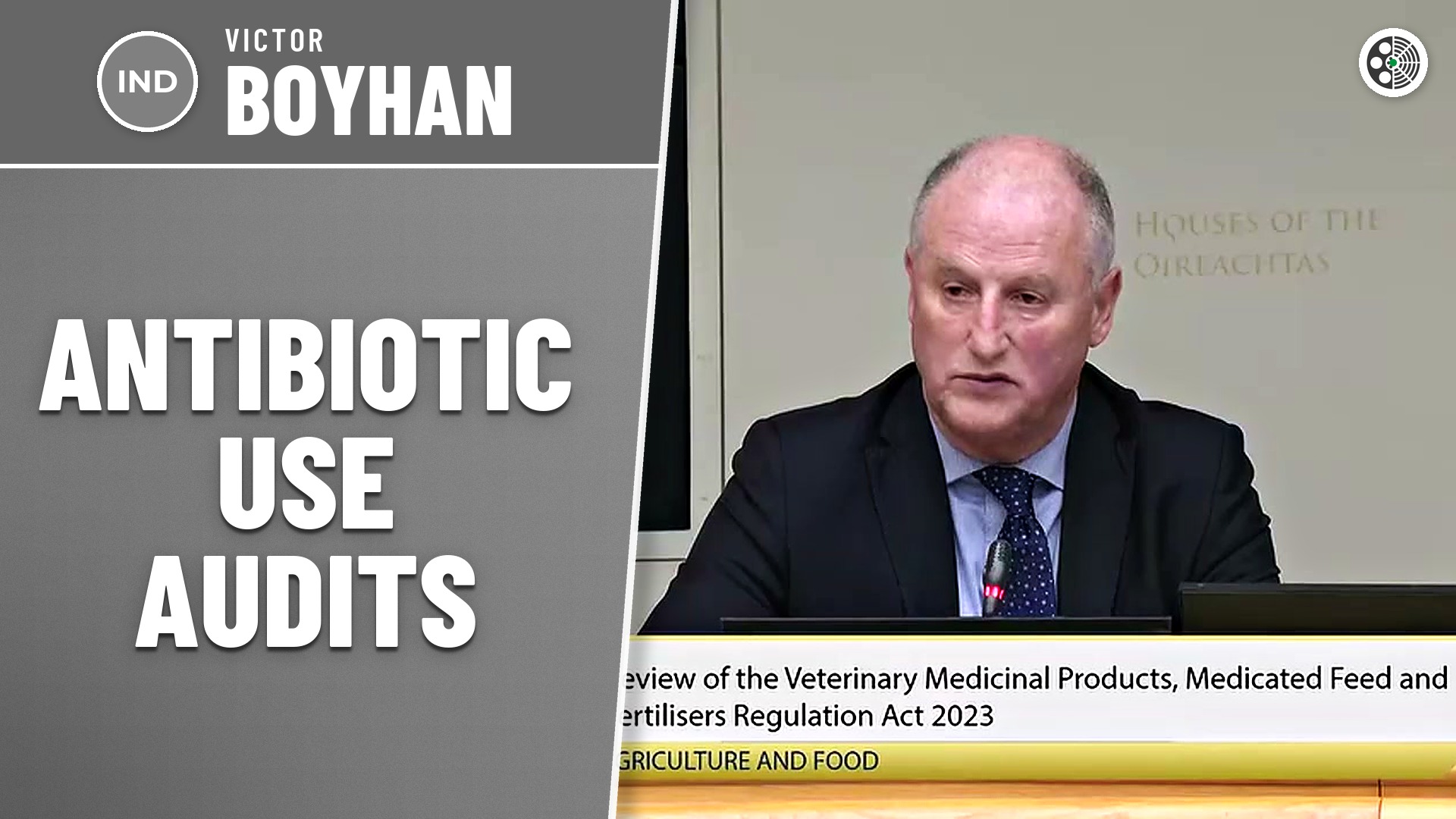


Victor Boyhan seeks details of antibiotic-use audits
Victor Boyhan questioned a witness on veterinary antimicrobial use and the evidence supporting reported reductions during a committee hearing. He asked for sourced data and audit information so the committee could scrutinise the systems and information presented to it.
In response, the witness said the figures cited were based on Health Products Regulatory Authority sales data submitted annually to the European Commission, alongside publicly available reports. The witness reported a 40% reduction in antimicrobial use since 2020, including an 18% reduction between 2024 and 2025, and said the data collection system would be used further once it provided sufficient detail.
The witness said the reductions reflected cooperation among vets, farmers and other stakeholders, and had not affected animal health and welfare. They also cited a 51% reduction in the use of veterinary medicines described as drugs of last resort, and pointed to a requirement to justify prescribing as a measure intended to protect human and animal health.
The witness said lower antibiotic use was positive for trade and access to markets, as other countries may ask about levels of use during audits. Boyhan asked whether information on the latest audit could be provided to the committee; the witness agreed that colleagues responsible for the audits could supply the reports.
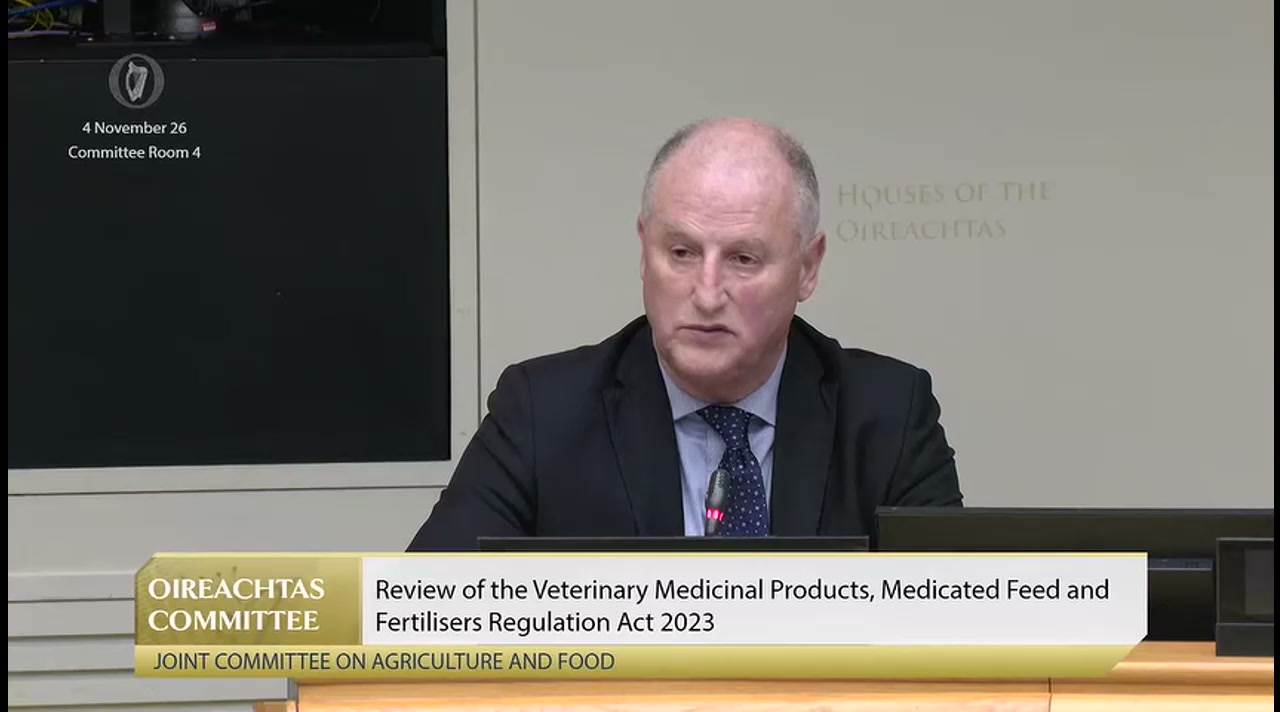
Boyhan stressed the importance of verifying the sources of data and the integrity of information presented to the Houses. The exchange covered progress on antimicrobial use, responsible use of veterinary medical products and the committee’s request for audit information.
Sourced figures on antimicrobial use
In response, the witness said the figures cited were based on Health Products Regulatory Authority sales data submitted annually to the European Commission, alongside publicly available reports. The witness reported a 40% reduction in antimicrobial use since 2020, including an 18% reduction between 2024 and 2025, and said the data collection system would be used further once it provided sufficient detail.
Responsible prescribing and health
The witness said the reductions reflected cooperation among vets, farmers and other stakeholders, and had not affected animal health and welfare. They also cited a 51% reduction in the use of veterinary medicines described as drugs of last resort, and pointed to a requirement to justify prescribing as a measure intended to protect human and animal health.
Audits and access to markets
The witness said lower antibiotic use was positive for trade and access to markets, as other countries may ask about levels of use during audits. Boyhan asked whether information on the latest audit could be provided to the committee; the witness agreed that colleagues responsible for the audits could supply the reports.
Committee scrutiny
Boyhan stressed the importance of verifying the sources of data and the integrity of information presented to the Houses. The exchange covered progress on antimicrobial use, responsible use of veterinary medical products and the committee’s request for audit information.
We publish thousands of recordings to make Irish politics transparent and resistant to manipulation. Spotted an error? Report it — together we are building a reliable archive of Irish politics.
Other speeches




Tego samego dnia All speeches from this day →
Rose Conway-Walsh
Rose Conway-Walsh questions whether social contract is broken
Eileen Flynn
Eileen Flynn backs legislation on AI image abuse
Jim O'Callaghan
Jim O'Callaghan: FISRU to investigate Colm Horkan's holster
Paraic Brady
Paraic Brady questions veterinary medicines sales and co-ops
Alan Kelly
Alan Kelly challenges RTÉ funding handling and podcast appointment
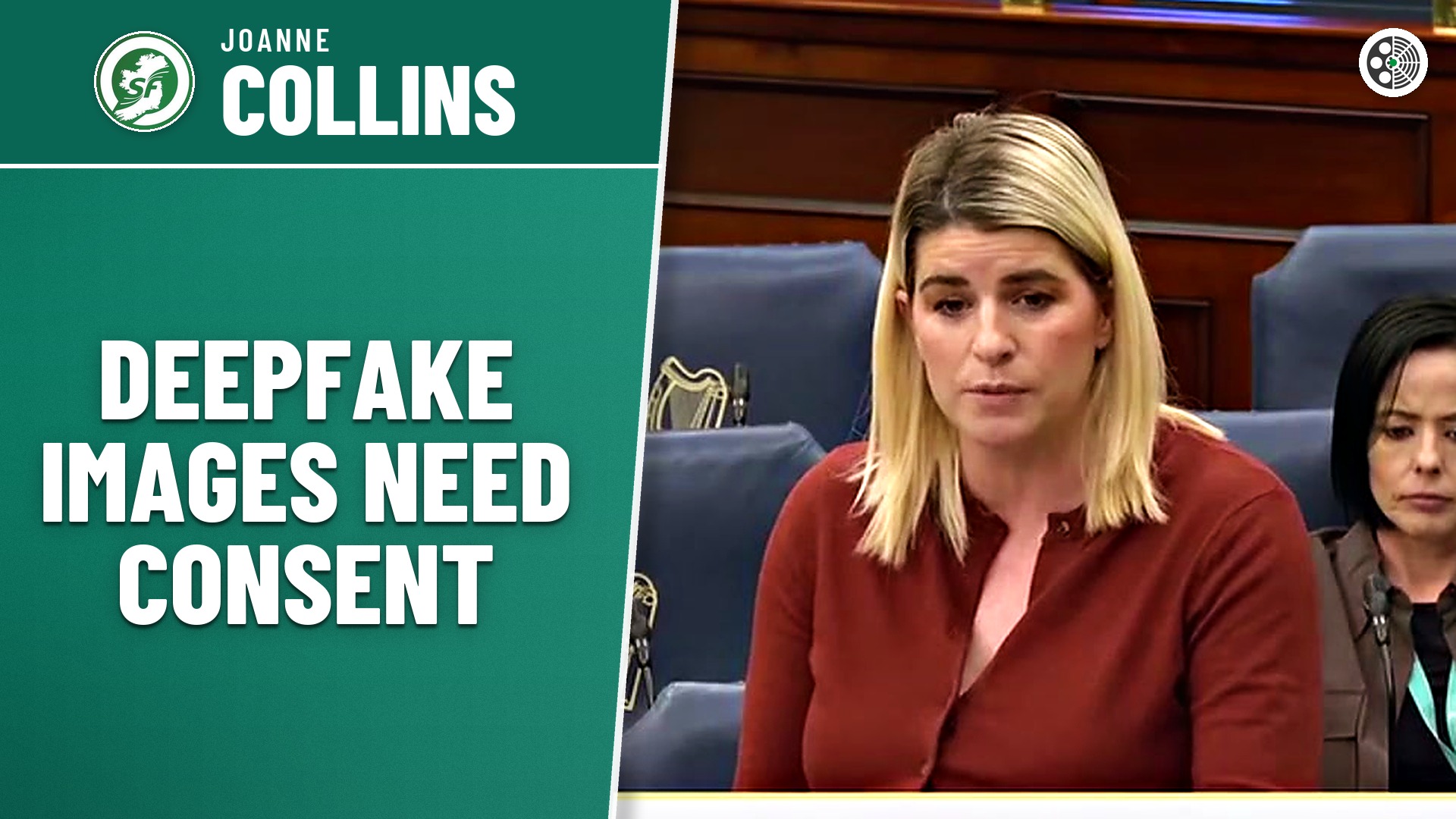
Joanne Collins
Joanne Collins backs action on non-consensual deepfake images
Transcript
I'll just be brief because actually more of my focus is going to be on the next
witnesses and we don't have any say in who was picked first so you're just out
first. So I suppose I just want to focus really on the review of the
veterinary medical products and this is an area that you have expertise in and
I'm asking you here today for the record of the House and this committee to
report progress on four key measures and they are if you report progress on
reducing the use of antimicrobial products, I think that's important, to
measuring the use of these products, reducing the use of antibiotics
generally and also encouraging responsible use of veterinary medical
products and I think they're important and if you could give us sort of hard
facts and if you're quoting facts and data tell us the source of that because
it's critically important as you've seen from the previous
engagement that we have the source because we need to go back and follow up
and validate. Our function here is to question the integrity of the system and
the systems that are in place and also the integrity of the information that's
laid before these houses. It's a serious matter in terms of engaging and
giving information to the elect. This is all recorded, it's on our system so I just
want to be conscious that what we're dealing with are actual hard facts so
you might just touch on those four items you want, I'll repeat them again.
You got the measure? Okay, you might just share that with us, thanks.
Thank you and just to reiterate, any information that I've shared here today
we stand over as being the integrity of that data. So in terms of the
reduction in the use of antimicrobials, the data that we've used for that comes
from the Health Products Regulatory Authority and it is their sales data
that they submit to the European Commission every year. We will be using
the NVPS data going forward but we just haven't got enough detail in it yet so
anything I say here is based on HPRA external data and publicly available
reports. So what we have seen as I said earlier is the reduction in antimicrobial
use of 40% since 2020 but in particular a very significant reduction in 2024 to
2025 of 18%. So this is a huge reduction, it shows the buy-in as you
asked about the responsible and prescribing in use by vets but
also by farmers because this hasn't impacted animal health and welfare so
farmers are moving now towards better husbandry and better animal
health management but it is a really positive message. When we go to Europe
Ireland is commended on these reductions and the NVPS system will
highlight even more and just from a human health perspective which is why
we're trying to address AMR in the first place, the drugs of last resort when
you go into hospital they have been reduced by 51% in veterinary medicine. We
are not seeing those reductions in human health so it is to commend what has
been done in the animal health sector by the vets, by the farmers, by the farm
advisors, by Chagas, by everyone that's working together, it's a really positive
story and in terms of our legislation we've put in a requirement to justify
your prescribing now and that's important because we don't want farmers
using antibiotics unnecessarily and it's important that we have this
justification to protect human health and animal health so I think this is a
very good news story for Ireland.
You're happy with that, you're happy that, so that's progress?
It's very significant progress, you know we would be up in the top
seven countries in Europe now in terms of our level of use, we really are
nearly best in class.
Is there anything else you'd like to say now that you have another minute and a half there, is there anything else you'd like to comment
yourself in terms of your own observations or the direction that the
department is going. I think where the department is going on this is I suppose
building the leadership and the momentum but it's been delivered by the
stakeholders and we've had very positive engagement and collaboration and
cooperation on this, it's been delivered through various committees and what it
does show is when we get audited or when we have countries coming in
particularly third countries they ask to see what is your level of antibiotic use
so it is a really positive thing for trade and access to markets.
Who's auditing you?
When other countries come in they will ask for the level of antibiotic use introduction.
Do you have any information in terms of your last audit that you could share with the
committee in relation to this particular matter?
I wouldn't have it directly now I'd have to go on to it, it would be a different division.
Would you be able to go on because I think that information that you've talked about,
because that gives us comfort that there is a standalone auditing system for
international people coming in and inquiring and I think it'd be very
helpful if we could have that information.
So you can commit to give us that?
Absolutely, there would be other colleagues that would oversee those audits, we just feed into them but they would have the reports.
Well I'd really appreciate if you could send that information to the committee.
Thanks very much.
Thank you.