

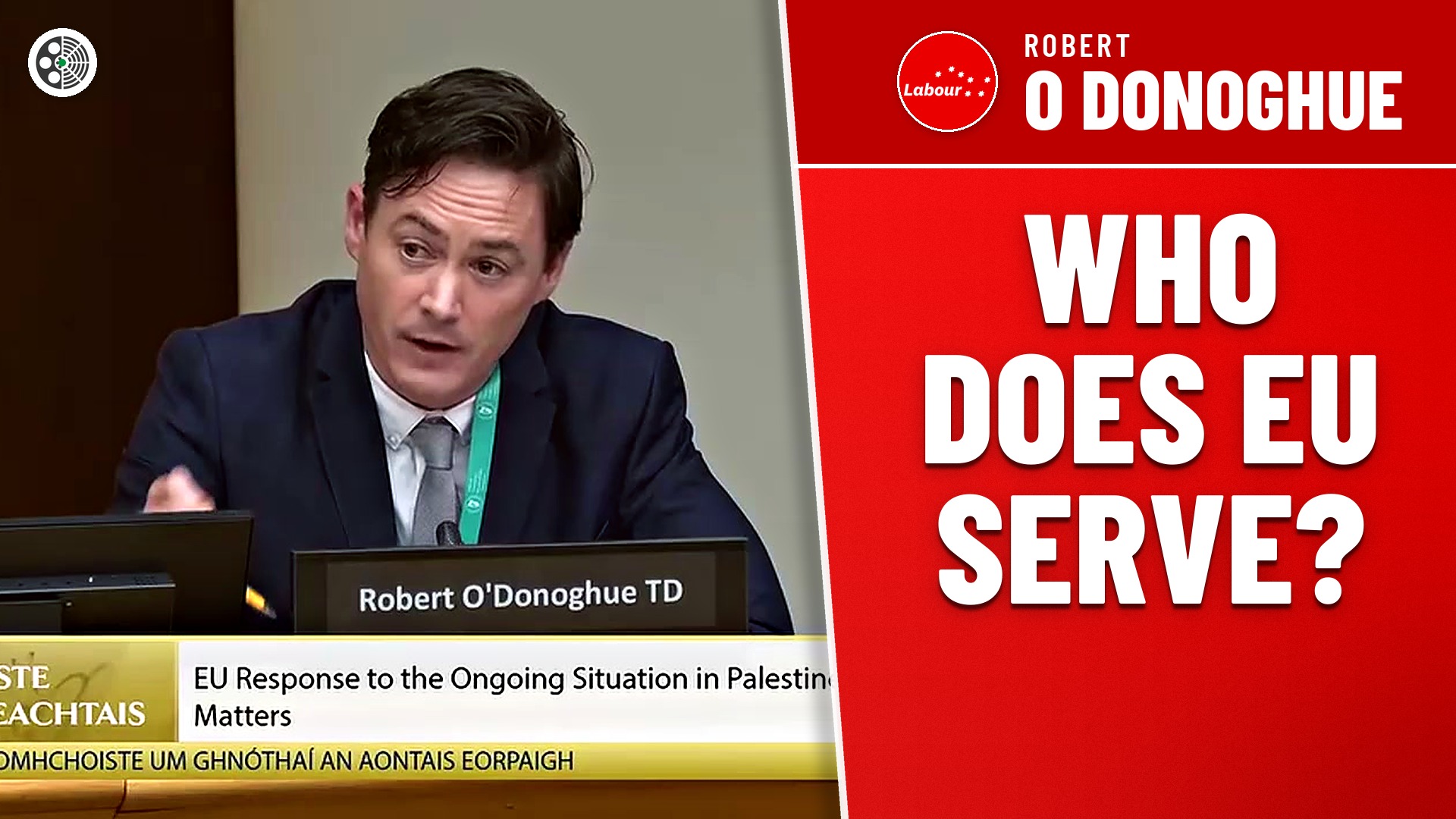


Robert O'Donoghue asks how the EU can be made more accountable
During a committee exchange, Robert O'Donoghue asked Francesca Albanese how the European Union could make its institutions more accountable and uphold international law. He raised whether EU foreign policy decisions on sanctions should move from unanimity to qualified majority voting, and asked what kind of Europe could protect its citizens and create economic prosperity.
Francesca Albanese says the International Court of Justice has declared Israel’s presence in Gaza, the West Bank and East Jerusalem illegal and ordered it to withdraw troops, dismantle settlements and stop exploiting Palestinian resources. She criticises EU member states for what she describes as selective respect for international law.
She argues that the EU serves markets, banks and multinational companies rather than the interests of its people, and calls on European countries to lead by example in respecting international law. She says words of condemnation are not enough.
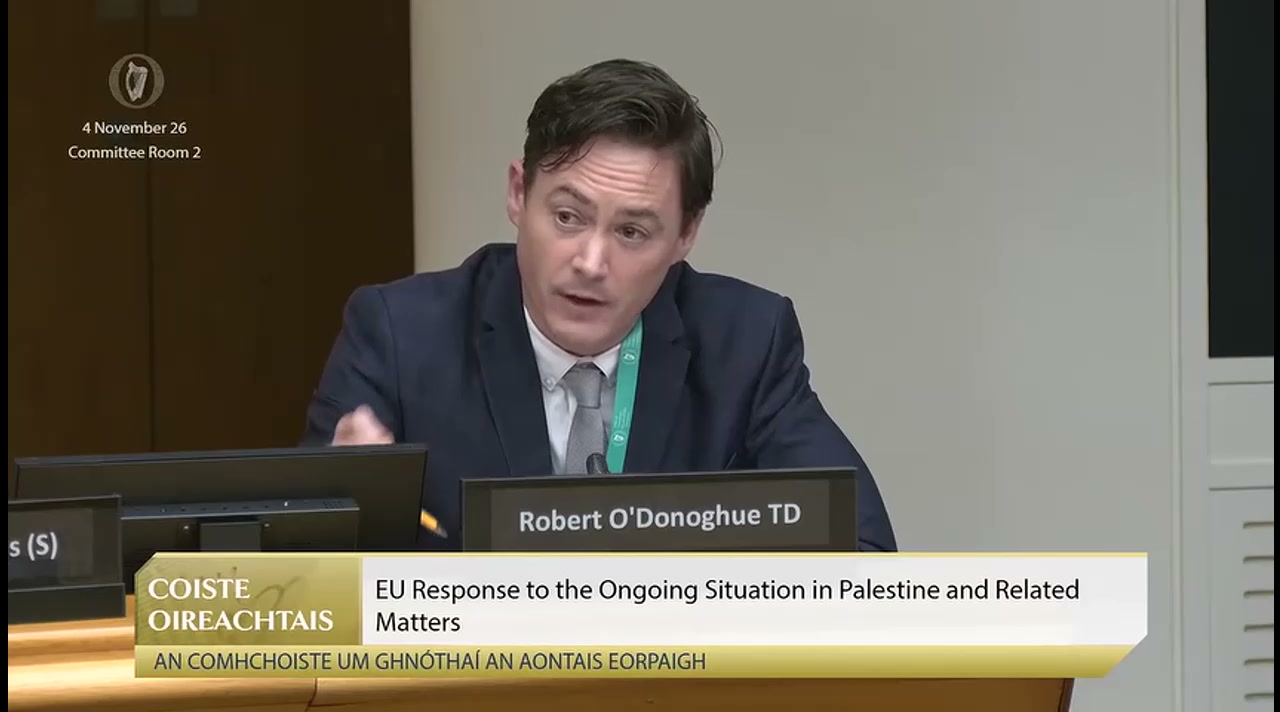
Francesca Albanese says the International Court of Justice has declared Israel’s presence in Gaza, the West Bank and East Jerusalem illegal and ordered it to withdraw troops, dismantle settlements and stop exploiting Palestinian resources. She criticises EU member states for what she describes as selective respect for international law.
She argues that the EU serves markets, banks and multinational companies rather than the interests of its people, and calls on European countries to lead by example in respecting international law. She says words of condemnation are not enough.
We publish thousands of recordings to make Irish politics transparent and resistant to manipulation. Spotted an error? Report it — together we are building a reliable archive of Irish politics.
Other speeches
Tego samego dnia All speeches from this day →
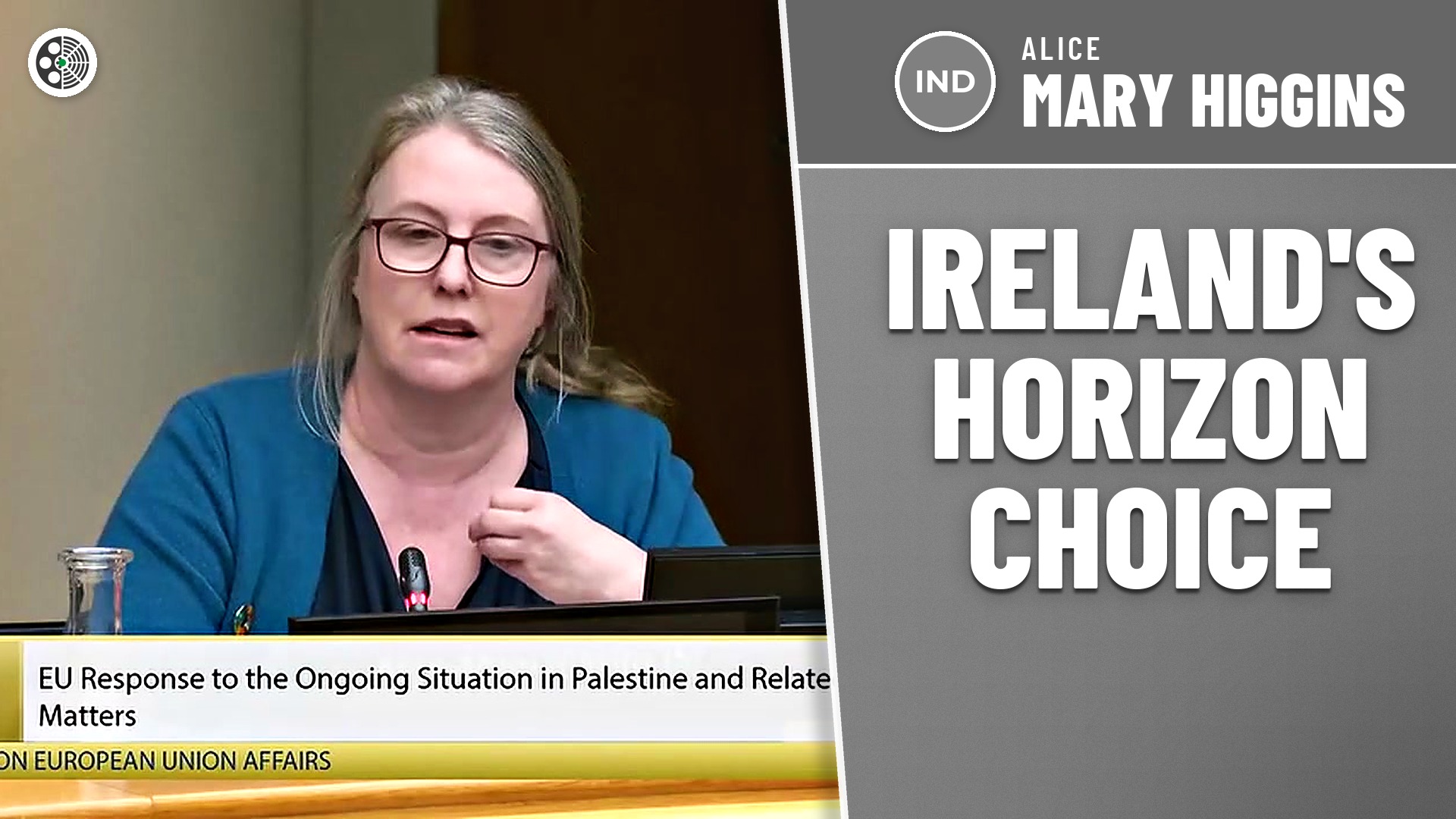
Alice-Mary Higgins
Alice-Mary Higgins presses Ireland on Israel and Horizon
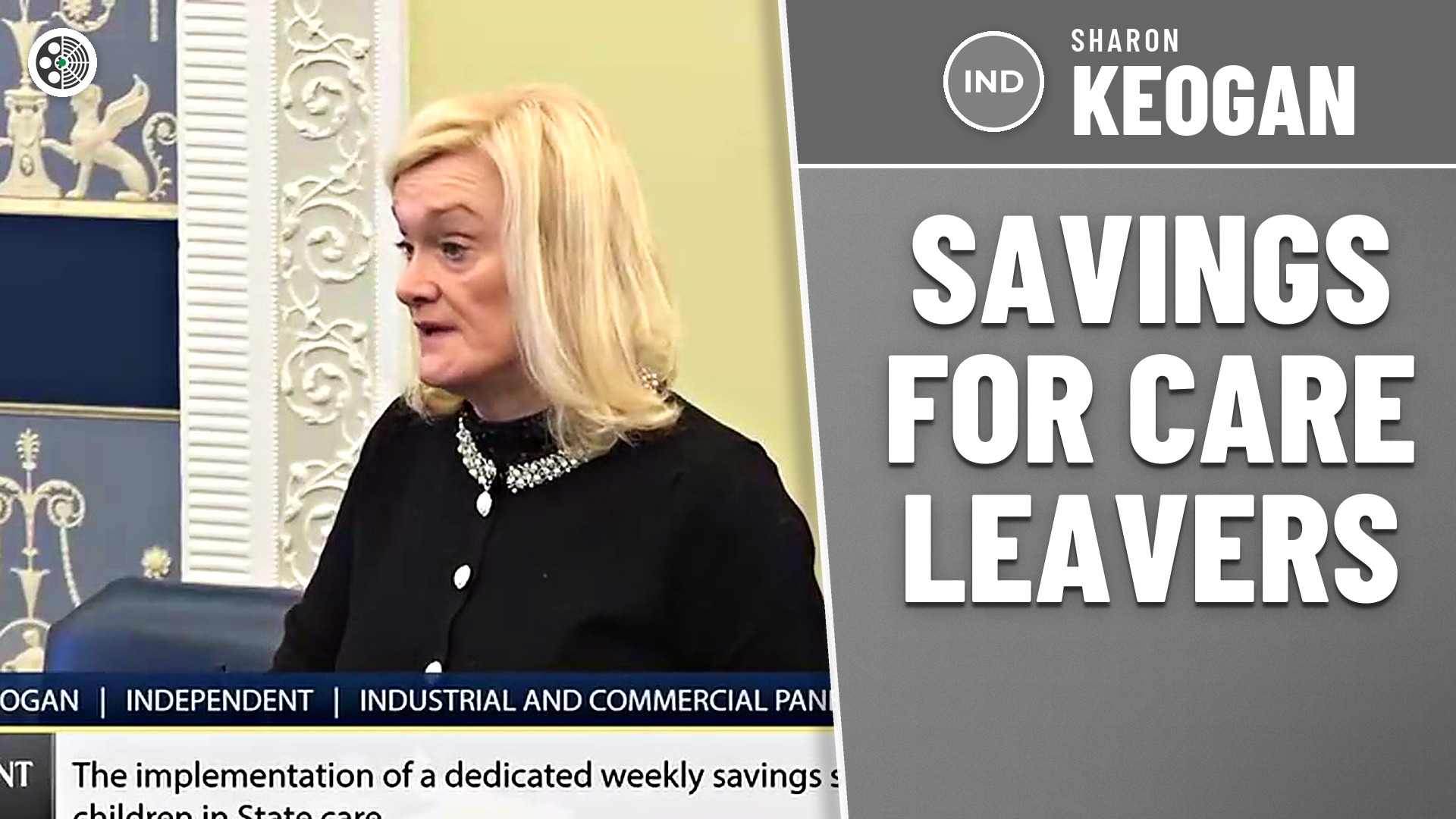
Sharon Keogan
Sharon Keogan calls for savings scheme for children in care
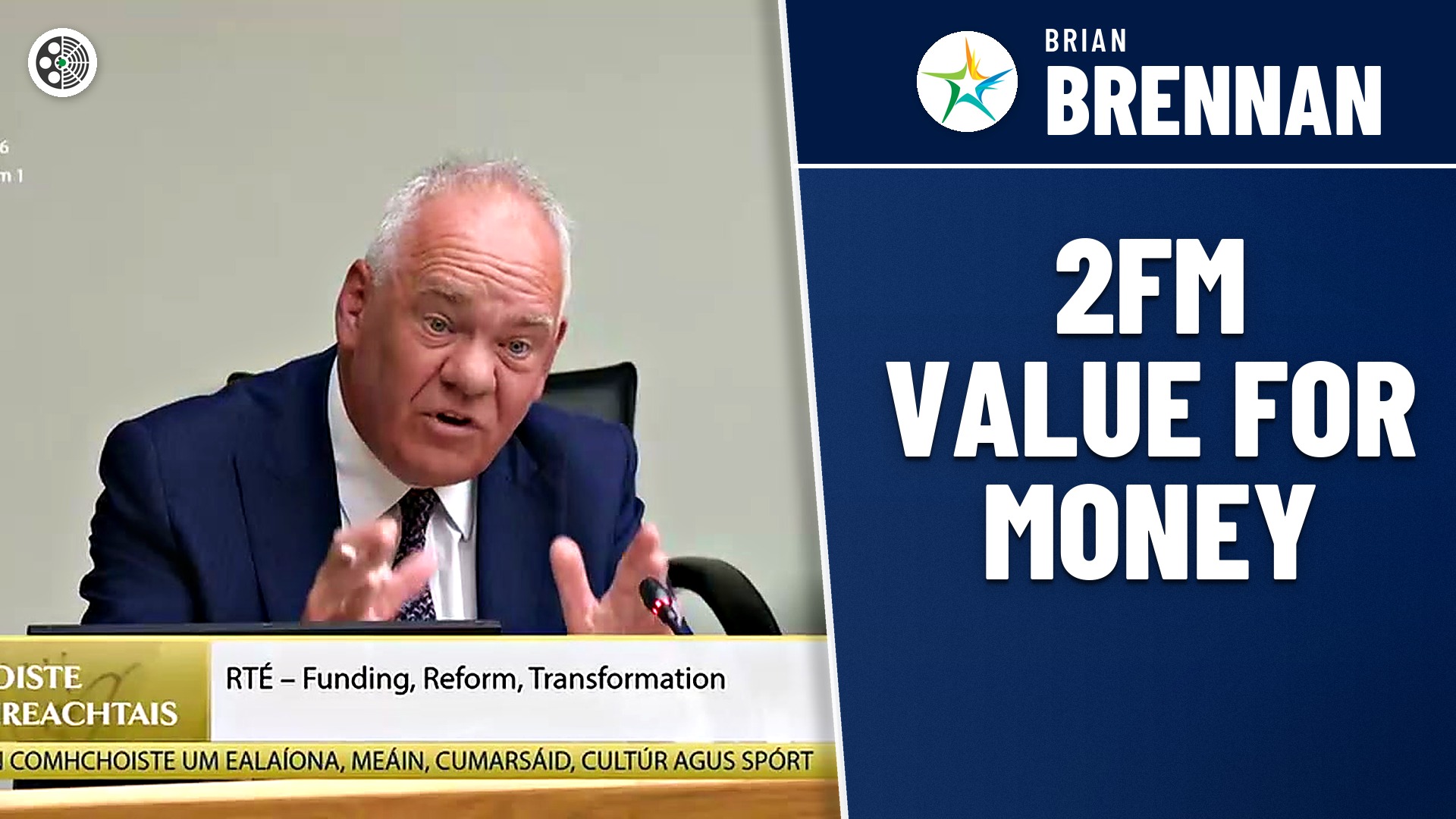
Brian Brennan
Brian Brennan challenges RTÉ on funding and value for money
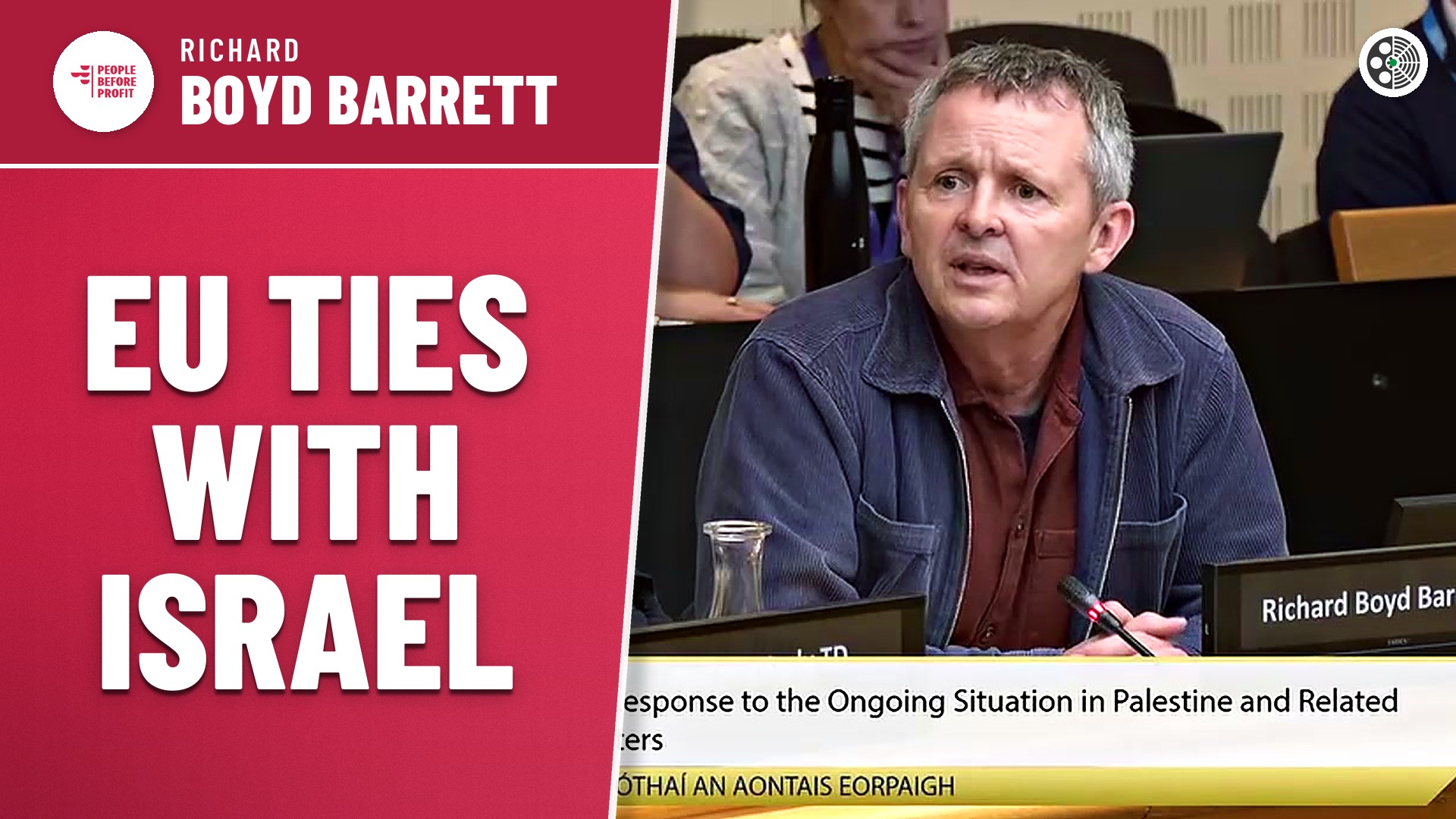
Richard Boyd Barrett
Richard Boyd Barrett questions EU ties with Israel
Evanne Ní Chuilinn
Evanne Ní Chuilinn challenges RTÉ over hiring transparency
Michael Fitzmaurice
Michael Fitzmaurice questions access to animal medicines
Transcript
Thank you chair. Thank you very much for coming to the committee and addressing us. You spoke
now bravely about the EU's failure to uphold international law. To Deputy Omurcu, the status
quo has weakened us and you're worried about European leaders. So I'd like to ask, particularly
around the area of foreign policy and with 27 member states with competing interests,
it can be difficult to find common ground at times. But regarding the institutions,
how do you think we can make them more accountable? So if some member states refuse to support
sanctions against countries responsible for carrying out human rights violations, would
you support the removing of the unanimity requirement and going for a qualified majority
voting, I suppose coming in the medium or to longer term, given that you might know
how that outcome might go? And on the EU institutions, their governance in particular, do you have
a vision for the kind of Europe you'd like to see that can protect its citizens, that
can create economic prosperity and uphold international law? What changes can we make
to make Europe, I suppose in the medium to long term, agree with everything you're saying
there in the short term, but in the longer term, what do you think we could do to make
it more accountable? Thank you. Look, the International Court of Justice, just
to understand the kind of bias and the unsufferable cherry picking attitude that member states
have vis-a-vis international law, is that the International Court of Justice has declared
the Israel's presence in Gaza, the West Bank and East Jerusalem, illegal in its entirety.
It's tantamount to aggression. So, because of that, it has ordered Israel to withdraw
the troops, dismantle the settlement and stop exploiting Palestinian resources. Because
Israel continues to do that in our face, with total disregard, not only for our principles,
our values, it even, I mean, you recognise the state of Palestine and they retaliated
against you, or you passed the Occupied Territory Bill, which frankly, again, so much work for
honestly, an outcome that now we know in the face of a genocide is really little, and you
allow them to retaliate against you, but when are we going to show some spine as European
Union altogether? The reason why it doesn't happen is because this European Union doesn't
preserve the interests of its people. This is the Europe of the market, this is the Europe
of the banks, and this is the Europe that promotes the interests of multinationals and
not the interests of the people. It's going to collapse. It's just a matter of time. But
I think, for God's sake, if there is one thing, this system was not devised to lead us to
heaven, but at least it has preserved us from falling into hell, and now we are nose
diving into that. There is still hope to step back, but we need to be coherent. So, what
is the way, to answer your question in a sense, what is the way to have European Union respect
international law, start respecting international law yourself as a country? Lead by example,
because the words of condemnation and wishful thinking is not enough anymore. Israel will
continue to destroy the Palestinian people, and this is genocide in the making in the
eyes and in the heart of young people, which will have just distrust towards institutions.
So, we are seeding the we are planting instability for the decades to come, and we are not preparing
our societies to work together in the spirit of solidarity, to challenge, to face the challenges
ahead of us. Sorry, the environmental crisis, with all the other issues that require sacrifice
and collective thinking. So, this is a fundamental test. If we fail it, this will become we will
aggravate the situation of all of us individually as countries and as the European Union. Sorry.
Thank you very much.