

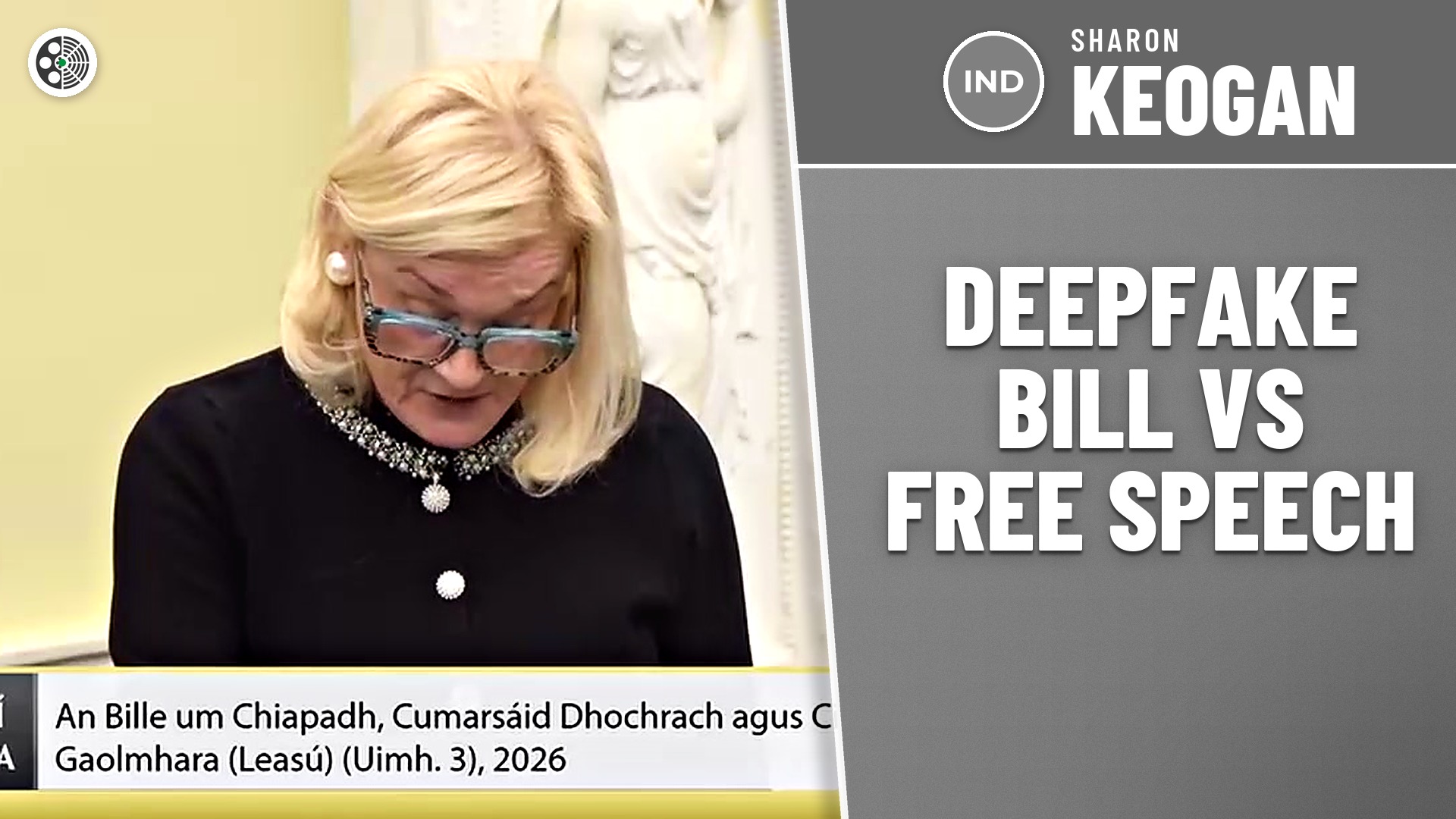


Sharon Keogan warns deepfake bill risks chilling free speech
Sharon Keogan criticised a proposed deepfake bill during a debate in the Oireachtas, arguing that its criminal provisions, civil remedies and platform-blocking powers raise legal and practical concerns. She said the bill could chill satire, burden the courts and conflict with European Union law, while confirming she would support it and seek amendments at the next stage.
Keogan said the proposed offence of generating a deepfake image could be difficult to apply because prosecutors would have to prove intent to cause harm and recklessness. She warned that the bill lacks clear protection for artistic expression and parody, potentially exposing political satire and caricature to legal challenge.
She noted that Coco’s Law already covers the distribution and sharing of harmful fake intimate images, while the bill seeks to address the creation and possession of such images. Keogan argued that proving a creator’s state of mind could make enforcement difficult while leaving legitimate artists uncertain about the law.
Keogan said additional legislation could overlap with other bills before the Dáil and EU measures not yet transposed into Irish law. She also raised concerns about the workload identification orders could place on the Circuit Court, the difficulty of prosecuting people operating abroad, and the legal risks of blocking entire online services under the EU Digital Services Act.
Keogan argued that effective protections for victims require precise drafting, safeguards for legitimate expression and enforcement that works across borders. She welcomed the bill’s intention, said she would support it, and confirmed she would propose amendments at the next stage.
Deepfake offences and free expression
Keogan said the proposed offence of generating a deepfake image could be difficult to apply because prosecutors would have to prove intent to cause harm and recklessness. She warned that the bill lacks clear protection for artistic expression and parody, potentially exposing political satire and caricature to legal challenge.
Overlap with existing law
She noted that Coco’s Law already covers the distribution and sharing of harmful fake intimate images, while the bill seeks to address the creation and possession of such images. Keogan argued that proving a creator’s state of mind could make enforcement difficult while leaving legitimate artists uncertain about the law.
Courts, EU rules and cross-border enforcement
Keogan said additional legislation could overlap with other bills before the Dáil and EU measures not yet transposed into Irish law. She also raised concerns about the workload identification orders could place on the Circuit Court, the difficulty of prosecuting people operating abroad, and the legal risks of blocking entire online services under the EU Digital Services Act.
Support with proposed amendments
Keogan argued that effective protections for victims require precise drafting, safeguards for legitimate expression and enforcement that works across borders. She welcomed the bill’s intention, said she would support it, and confirmed she would propose amendments at the next stage.
We publish thousands of recordings to make Irish politics transparent and resistant to manipulation. Spotted an error? Report it — together we are building a reliable archive of Irish politics.
Other speeches
Tego samego dnia All speeches from this day →
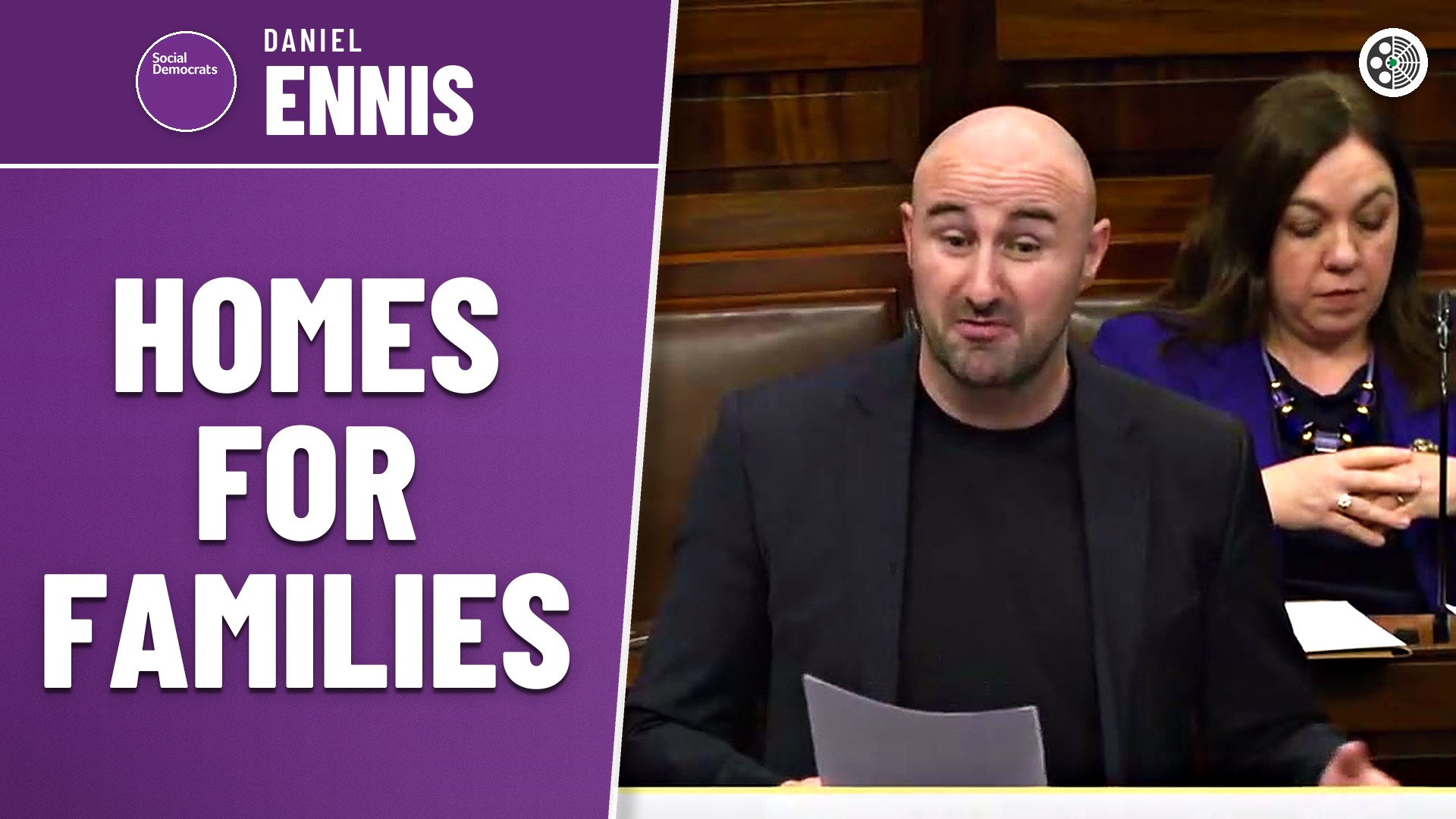
Daniel Ennis
Daniel Ennis: Short-term lets must return homes to families
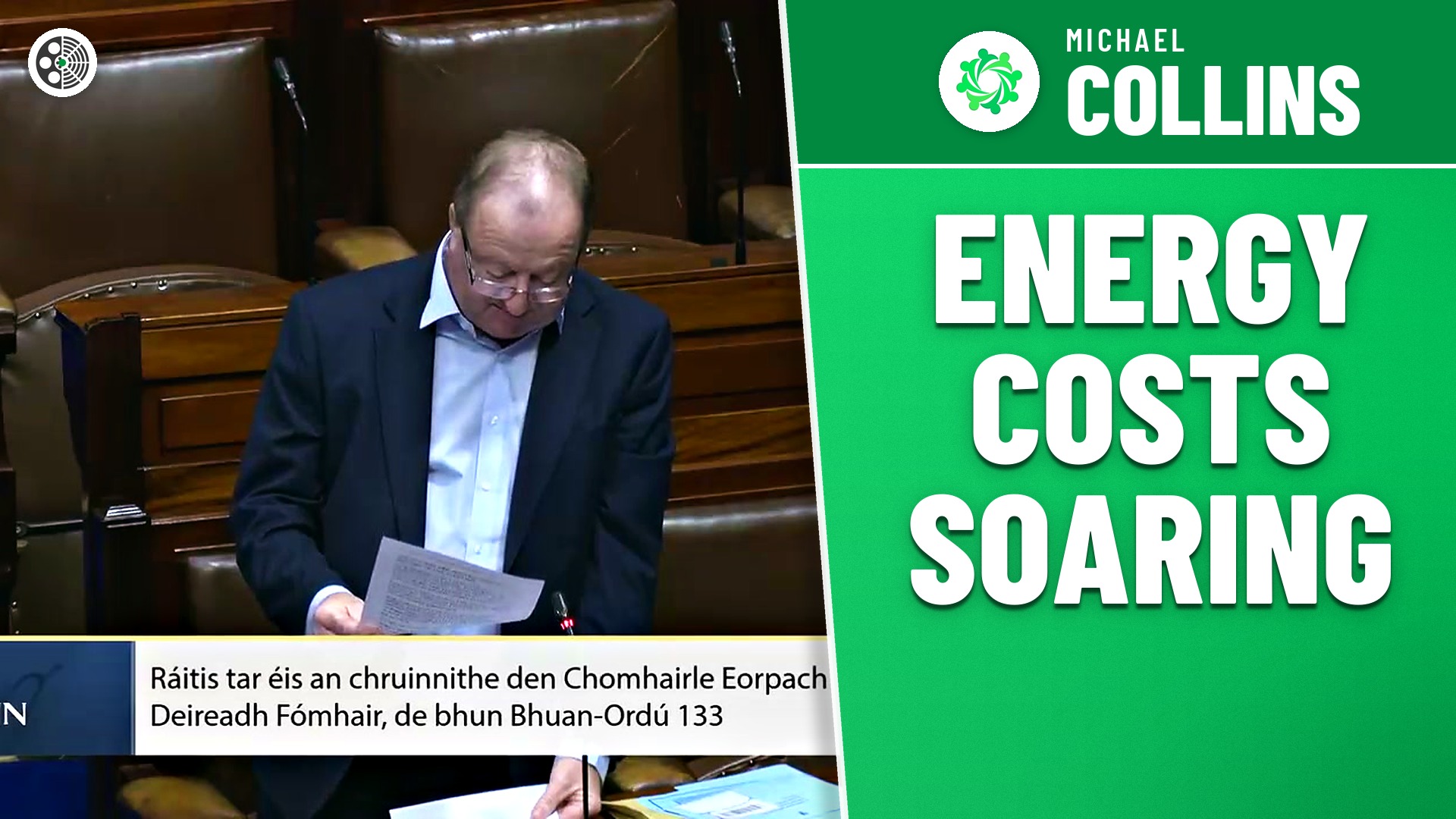
Michael Collins
Michael Collins: Ireland’s soaring energy costs need real action
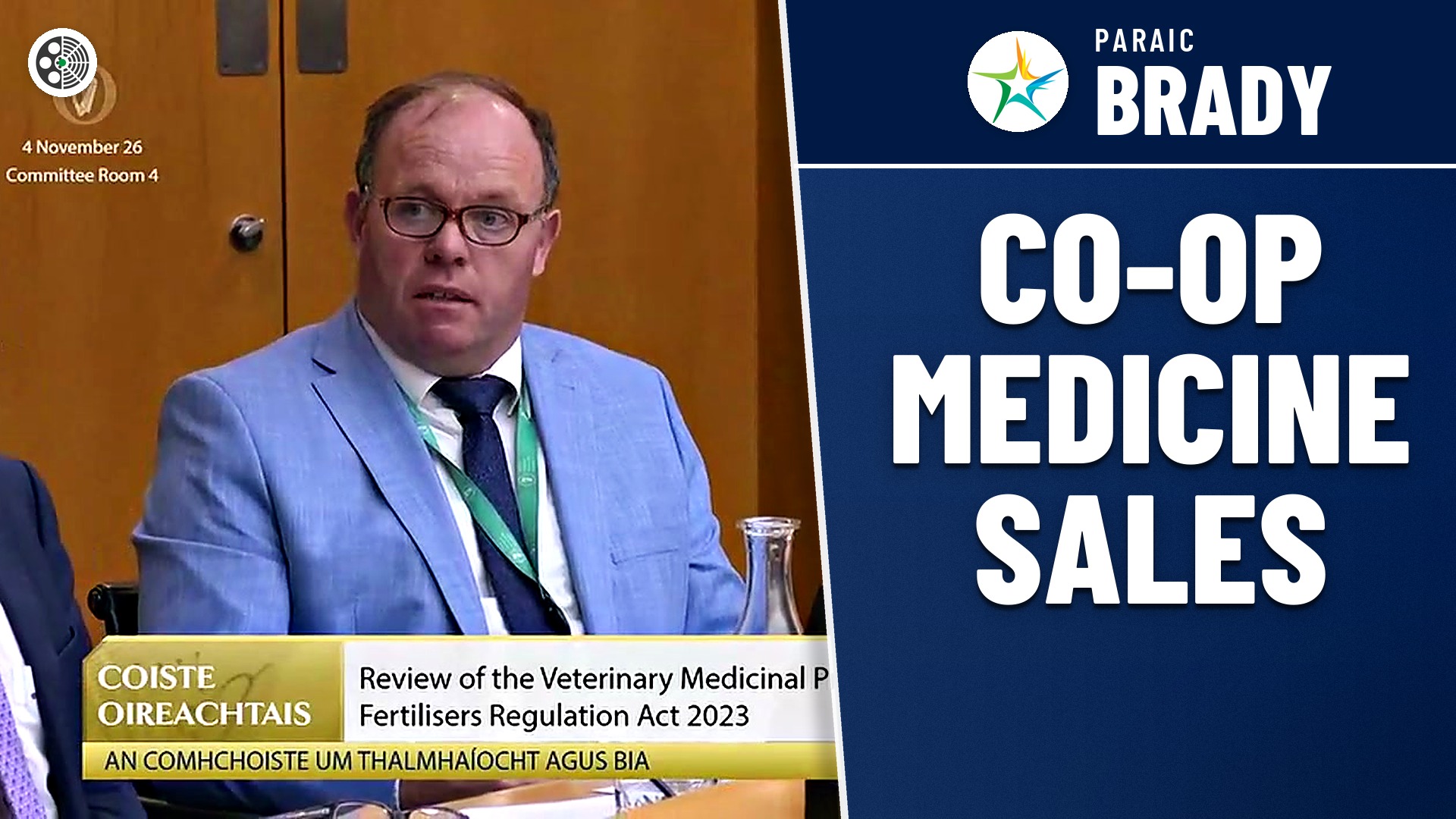
Paraic Brady
Paraic Brady questions veterinary medicines sales and co-ops
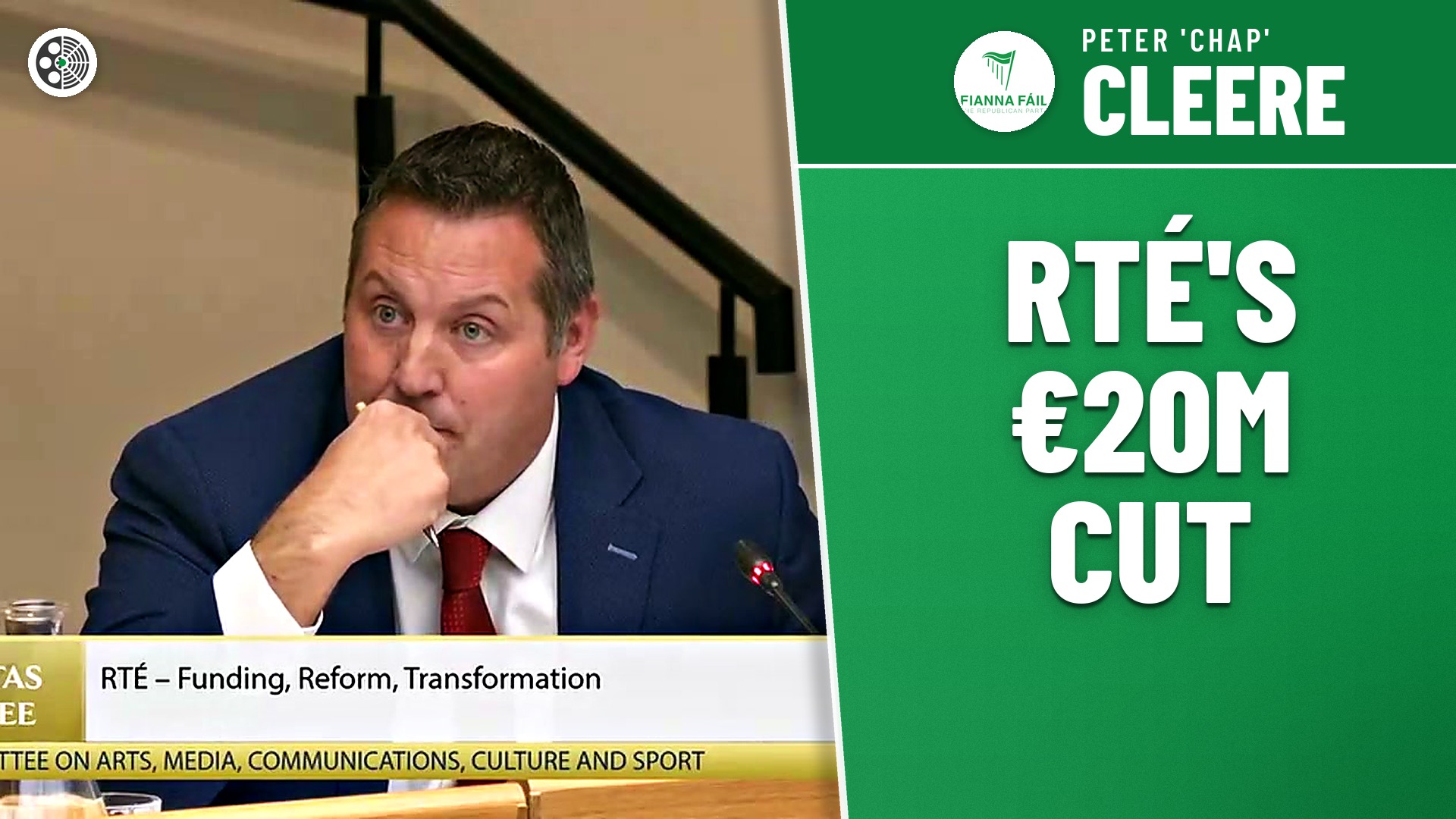
Peter 'Chap' Cleere
Peter 'Chap' Cleere questions RTÉ on €20m funding cut
Alison Comyn
Alison Comyn Questions RTÉ on Cuts and Sports Podcast Appointment
Thomas Gould
Thomas Gould: Cork Prison History and Traffic Gridlock
Transcript
Sharon Kilby. Thank you and I too want to commend my colleagues in the civil engagement group for bringing this bill to the house today.
While I fully support the goal of stopping people from using artificial
intelligence to harm private citizens, I believe the bill is slightly unworkable,
full of legal issues and blind to how the courts actually operate.
Well-meaning sentiment are poorly served by bad law. We need practical
rules that actually work. Let us start with the core of the bill, making it a crime to generate
a deepfake image under section 2a. To get a conviction that carries a heavy seven-year
prison sentence, prosecutors must prove beyond a reasonable doubt that the creator
had the explicit intent to cause harm and act recklessly. This is where things become blurred.
By using the highly subjective standard of recklessness, this bill creates a massive
poll that cuts both ways. The whole point of biting political satire, comedy or caricature
is to cause discomfort or shock to public figures. Because this text contains no clear protection for
artistic expression or parody, it will create an immediate chilling effect. A satirist using
modern AI tools to critique a politician could easily be targeted by a powerful individual
claiming that the caricature caused them severe alarm or distress. We risk passing a law that
powerful figures can weaponise to shut down legitimate dissent. Yes, in theory, many satirists
would be exonerated, but we have to acknowledge that at this moment in time, the process itself
is a punishment. Furthermore, this bill creates deep confusion when mixed with existing law.
We must remember that Coco's law already covers images that purport to be intimate images of a
person. Under current law, distributing and sharing these harmful fakes is already a severe criminal
offence. The primary loophole this bill attempts to close is the mere act of creating and keeping
a file on a private device. But by forcing prosecutors to prove a person's exact state
of mind, we are handing them an almost impossible burden of proof. A bad actor can easily claim
they were just experimenting or making a parody, leaving the law toothless. Meanwhile, legitimate
artists are facing constant legal uncertainty. It fails to catch the malicious operator, yet
successfully intimidates law-abiding citizens. Beyond these specific flaws, we must look at the
wider picture. Now is simply not the time to be pushing yet another piece of legislation into the
mix. There's already a number of bills dealing with this issue before the Dáil. I think Malcolm
Byrne, your colleague in Frida Fall, has passed a second stage in the Dáil in March 2025, alongside
massive legislative frameworks underway at the EU level. Instead of rushing this bill through,
we need to stand back and wait to see how EU laws come into effect, so we can respond appropriately.
This is especially true, considered that the government has yet to actually transpose the
relevant EU legislation into our Irish law. Piling another uncoordinated domestic bill on top of an
unfinished European framework will only lead to legal chaos and duplicate roles that contradict
one another. The structural flaws multiply when we move from criminal law to civil remedies.
Section 8A lets the circuit court issue identification orders to force internet
companies to unmask anonymous uploaders so victims can sue them. It sounds common sense on paper,
but it completely ignores the harsh reality of our judiciary. Our local courts are already
facing severe backlogs, flooding the circuit court system with highly complex emergency digital
recovery applications, where local judges must balance intricate European data privacy rights
against plaintive claims will cause a total administrative bottleneck. Without dedicated,
specialised judicial resources, this reactive policy tweak will break an already strained system.
Even if a victim secures an order, we run directly into a wall of international borders.
Section 2B attempts to criminalise inducing someone to create a deepfake explicitly stating
that the person being induced does not need to be in Ireland. This is an illusion of security.
Irish courts have strictly limited jurisdiction over non-citizens operating abroad. Successfully
identifying, extraditing and prosecuting an anonymous user hosted on a foreign server or
outside our borders presents immense international law hardness that this text simply glides over.
It offers empty comfort to victims but does little to solve the cross-border reality of
digital abuse. Finally, we must look at the most radical tool in the Bill,
Chapter 6B, which empowers Commissioner Mahon to seek high court orders to completely block access
to an entire online service or application store within Ireland. This is basically using a
sledgehammer to crack a nut and it places this Bill in direct conflict with European Union law.
Under the EU Digital Services Act, online platforms operate with a unified,
single-market compliance framework with specific liability exemptions. A single member state
acting unilaterally to institute nationwide internet blocks risks violating EU law and
disrupting the single market. More fundamentally, blocking an entire platform because a subset of
users abused constitutes a form of mass censorship that may directly challenge Article 40 of our
constitution and Article 10 of the European Conventions of Human Rights. It punishes
of lawful users, stifles digital commerce and sets a dangerous precedent for state-sanctioned
internet blocking. True protections for victims do not come with sweeping bills that conflict
with EU law, overburden our courts and threaten free speech. It comes with precise legal drafting,
explicit protections for legitimate expression and robust enforcement mechanisms that work
across borders. As I stand, the Bill is flawed slightly. I commend it, I will be supporting it
and I will be putting in amendments at the next stage, but I commend my colleagues for putting
it. I actually welcome the sentiment of their Bill. Thank you.