



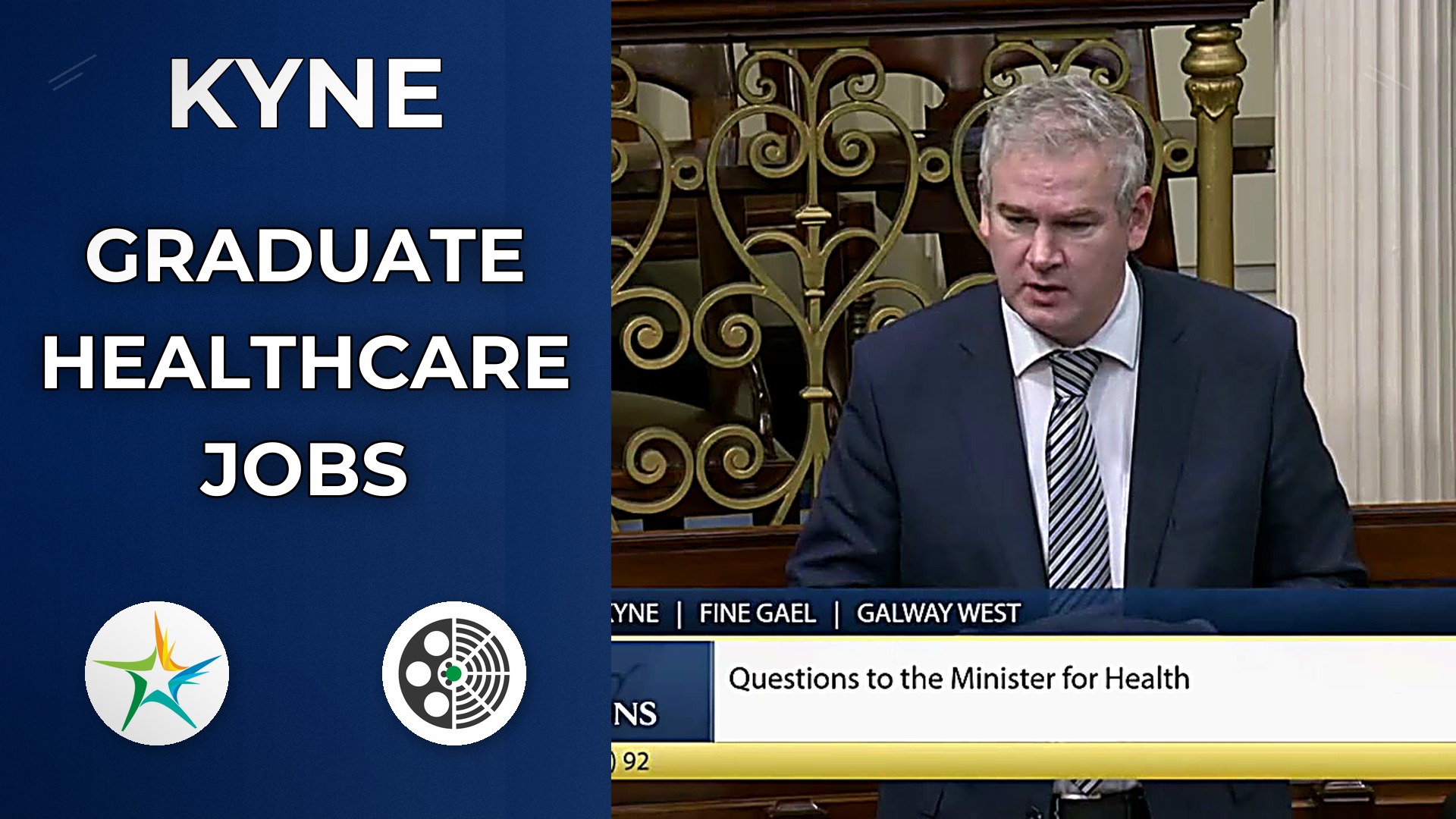
Seán Kyne backs balanced rural short-term letting rules
Seán Kyne said the Bill on short-term letting takes a balanced approach to housing and tourism during his contribution to the debate. He argued that rural communities in Galway West, Connemara and the Aran Islands need different treatment from cities because tourism supports local businesses and livelihoods.
Kyne welcomed measures in the Bill to protect short-term letting businesses in rural areas, warning that an absolute clampdown could have a serious negative impact on small communities. He highlighted the importance of tourism as an indigenous industry in Connemara and on offshore islands.
He described people who have moved away from the Aran Islands but return for holidays, and who rent out their family home for a few weeks in between. He also referred to people who have inherited homes and let them short-term while keeping them for their children and the future.
Kyne said the seven-year grandfathering provision was welcome, as was the Bill’s recognition of differences between urban and rural areas. He noted concerns raised by Gaeltacht groups and the Connemara and Aran Islands Tourism Network about the potential effects of the legislation.
He raised questions about the boundaries of Galway City and its suburbs, the one-month registration period and what happens when planning permission is pending. Kyne said these issues should be clarified as the Bill progresses to committee stage, while supporting its overall balance between urban areas and smaller rural communities.
Rural tourism and short-term lets
Kyne welcomed measures in the Bill to protect short-term letting businesses in rural areas, warning that an absolute clampdown could have a serious negative impact on small communities. He highlighted the importance of tourism as an indigenous industry in Connemara and on offshore islands.
Family homes and inherited properties
He described people who have moved away from the Aran Islands but return for holidays, and who rent out their family home for a few weeks in between. He also referred to people who have inherited homes and let them short-term while keeping them for their children and the future.
Seven-year grandfathering
Kyne said the seven-year grandfathering provision was welcome, as was the Bill’s recognition of differences between urban and rural areas. He noted concerns raised by Gaeltacht groups and the Connemara and Aran Islands Tourism Network about the potential effects of the legislation.
Questions for committee stage
He raised questions about the boundaries of Galway City and its suburbs, the one-month registration period and what happens when planning permission is pending. Kyne said these issues should be clarified as the Bill progresses to committee stage, while supporting its overall balance between urban areas and smaller rural communities.
We publish thousands of recordings to make Irish politics transparent and resistant to manipulation. Spotted an error? Report it — together we are building a reliable archive of Irish politics.
Other speeches
Tego samego dnia All speeches from this day →
Michael Collins
Michael Collins: Ireland’s soaring energy costs need real action
Sharon Keogan
Sharon Keogan warns deepfake bill risks chilling free speech
Alan Kelly
Alan Kelly challenges RTÉ funding handling and podcast appointment
Paul Murphy
Paul Murphy challenges Ireland’s Ukraine protection rules
Michael Healy-Rae
Michael Healy-Rae: Short-term let bill creates uncertainty
Thomas Gould
Thomas Gould: Cork Prison History and Traffic Gridlock
Transcript
I think this Bill is a balance on competing demands and competing viewpoints in relation
to housing and tourism. I think it has recognised that in our large urban areas there are particular
pressures, that the housing situation is more concentrated and more problematic and therefore
the Government has decided as part of this Bill to support those individuals. But rural
Ireland is different. In my area in Galway West and particularly in the Connemara area
and the Aran Islands and in Ispachan, it's a different scenario. And things have evolved
over time to a situation whereby, without any great fuss being made, people started
doing short-term rents and short-term lettings. And that hasn't gone through the planning
process. And there was a genuine concern among many people that this would be a campdown.
So I welcome the initiative in the Bill that, as I said, protects these businesses, and
that's what they are, because tourism is hugely important as an indigenous industry in Connemara
in particular and in our offshore islands. And if there was an absolute campdown, as some
would like, it would decimate those rural communities. We're talking about small rural
communities where tourism is hugely, hugely important. I'm not talking about the cities
or large towns. I'm talking about the small rural communities. You have situations, for
example, in the Aran Islands where somebody might have had their family home, they've
moved away, but they come back every so often. They come back at Christmas. They come back
for summer holidays with their family. And in the intervening periods, they may rent
out for a number of weeks. Those situations have to be protected. You have a lot of situations
whereby people, again, may have inherited the family house. They want to keep that for
their children, for the future. And in the meantime, they're renting it out on short-term
letting to generate a few pounds for themselves as well. And there's nothing wrong with that,
to use the assets that you have. But there is a difference in the cities. And I think
the government has recognised that in this Bill. I've met with groups, and I've met with
the Gaeltacht groups as well, as I know, that there are difficulties, and that they are
aflame. But certainly, the Connemara and Aran Islands Tourism Network are very much
concerned with what could have happened to this. And I think the seven-year grandfathering
is certainly welcome. And I think the understanding that there is a difference between the urban
and rural situation is certainly welcome. So I think this has been a balanced approach.
And I think some people have talked about delays. I would suspect perhaps the Department
of Housing have a stronger view on this. The Department of Tourism recognises well that
tourism is a hugely important indigenous industry for rural Ireland and needs to be protected
as well. The impact of a blanket ending of short-term letting would have been huge and
consequential in a negative fashion for those businesses. So look, there's a number of things
in Galway City. It's Galway City and suburbs. So I presume that's the area of Galway City
itself. So those areas just outside, even though they're rural, but they're proximate to Galway
City, wouldn't be included in this. There are some concerns about the timeline in relation to the
one-month registration in relation to the—if someone does have to get planning permission
and it's pending, can they still—do they have to stop the listing come 1 January?
So there are a number of issues that I think need to be clarified as the Bill progresses
and at committee stage. But the general thrust of the Bill, in terms of a balanced approach to the
urban areas and large towns versus the smaller rural communities in offshore
and the decision made by Cabinet that we see in this Bill.