

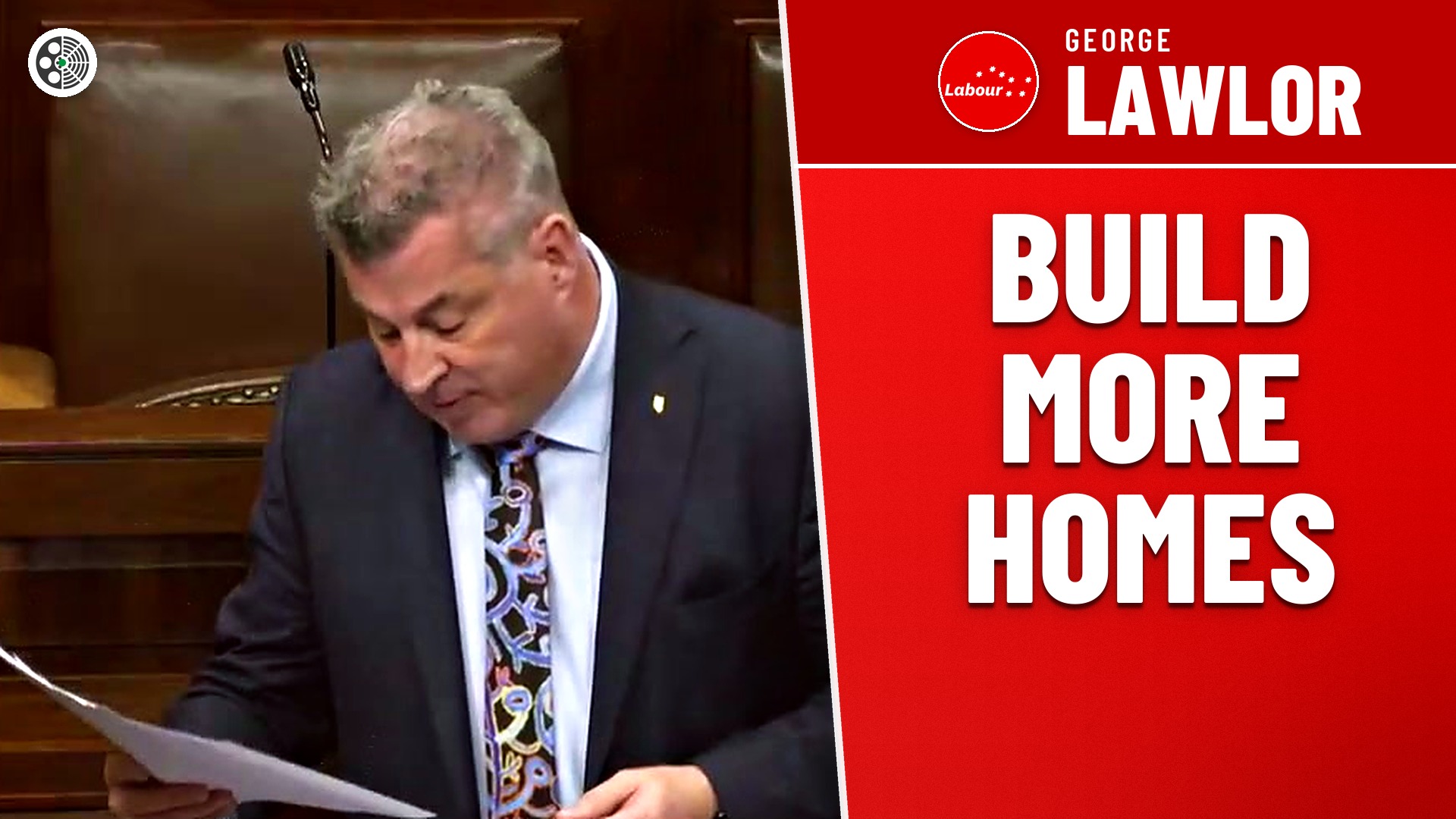


George Lawlor: Short-term let rules must be targeted
George Lawlor argued during the second-stage debate on the short-term letting Bill that enforcement should focus on areas facing the greatest housing pressure. He called for proportionate rules that distinguish commercial operators from occasional home-sharing, saying the housing crisis can only be addressed by building more homes.
He said enforcement should be prioritised in Dublin, Cork, Galway, Limerick and Waterford and their surrounding metropolitan areas, where he said most people in emergency accommodation are concentrated. He warned that spreading limited enforcement resources nationwide could reduce their effectiveness, while calling for a distinction between large commercial operators and occasional hosts sharing their principal residence.
Lawlor questioned why planning requirements for short-term letting had not been clarified earlier, arguing that homeowners, small tourism providers and local authorities had been left without certainty. He said regulation should be proportionate, evidence-based and fair, and that self-catering accommodation and home-sharing contribute to tourism, particularly outside major cities.
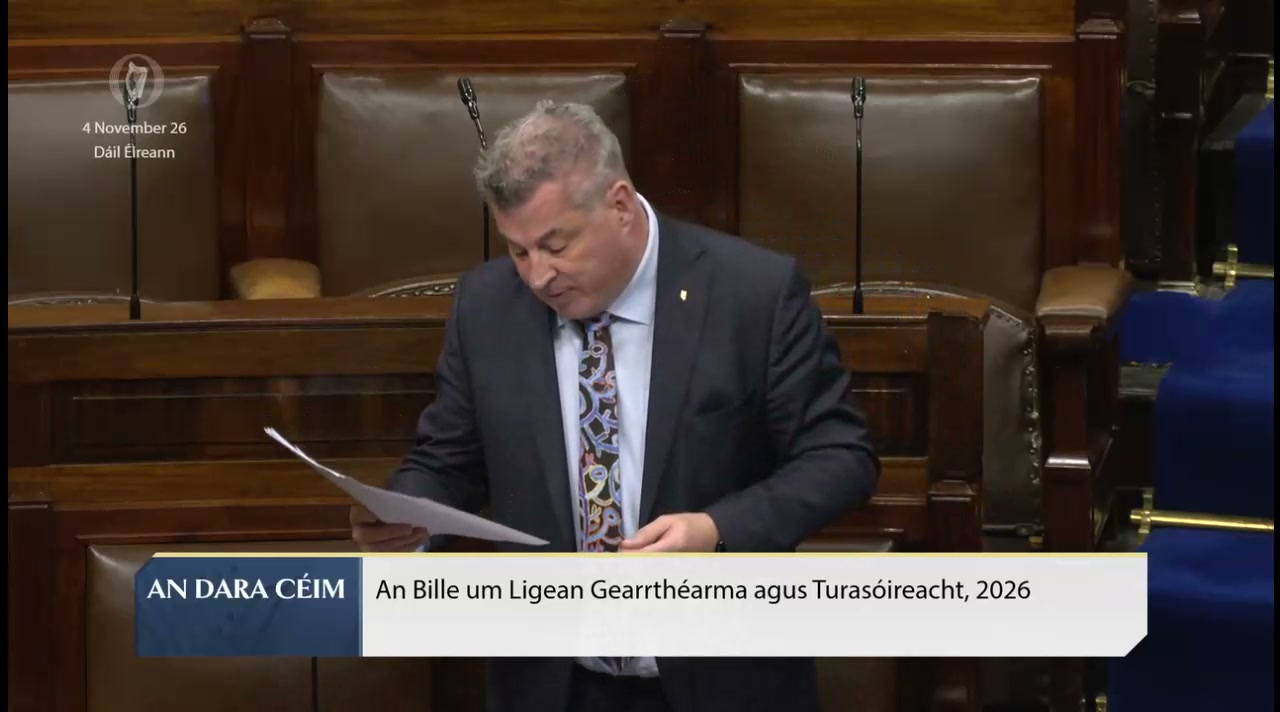
He said enforcement should be prioritised in Dublin, Cork, Galway, Limerick and Waterford and their surrounding metropolitan areas, where he said most people in emergency accommodation are concentrated. He warned that spreading limited enforcement resources nationwide could reduce their effectiveness, while calling for a distinction between large commercial operators and occasional hosts sharing their principal residence.
Lawlor questioned why planning requirements for short-term letting had not been clarified earlier, arguing that homeowners, small tourism providers and local authorities had been left without certainty. He said regulation should be proportionate, evidence-based and fair, and that self-catering accommodation and home-sharing contribute to tourism, particularly outside major cities.
We publish thousands of recordings to make Irish politics transparent and resistant to manipulation. Spotted an error? Report it — together we are building a reliable archive of Irish politics.
Other speeches

Tego samego dnia All speeches from this day →

Edward Timmins
Edward Timmins: USC proposal would reduce tax take
Alice-Mary Higgins
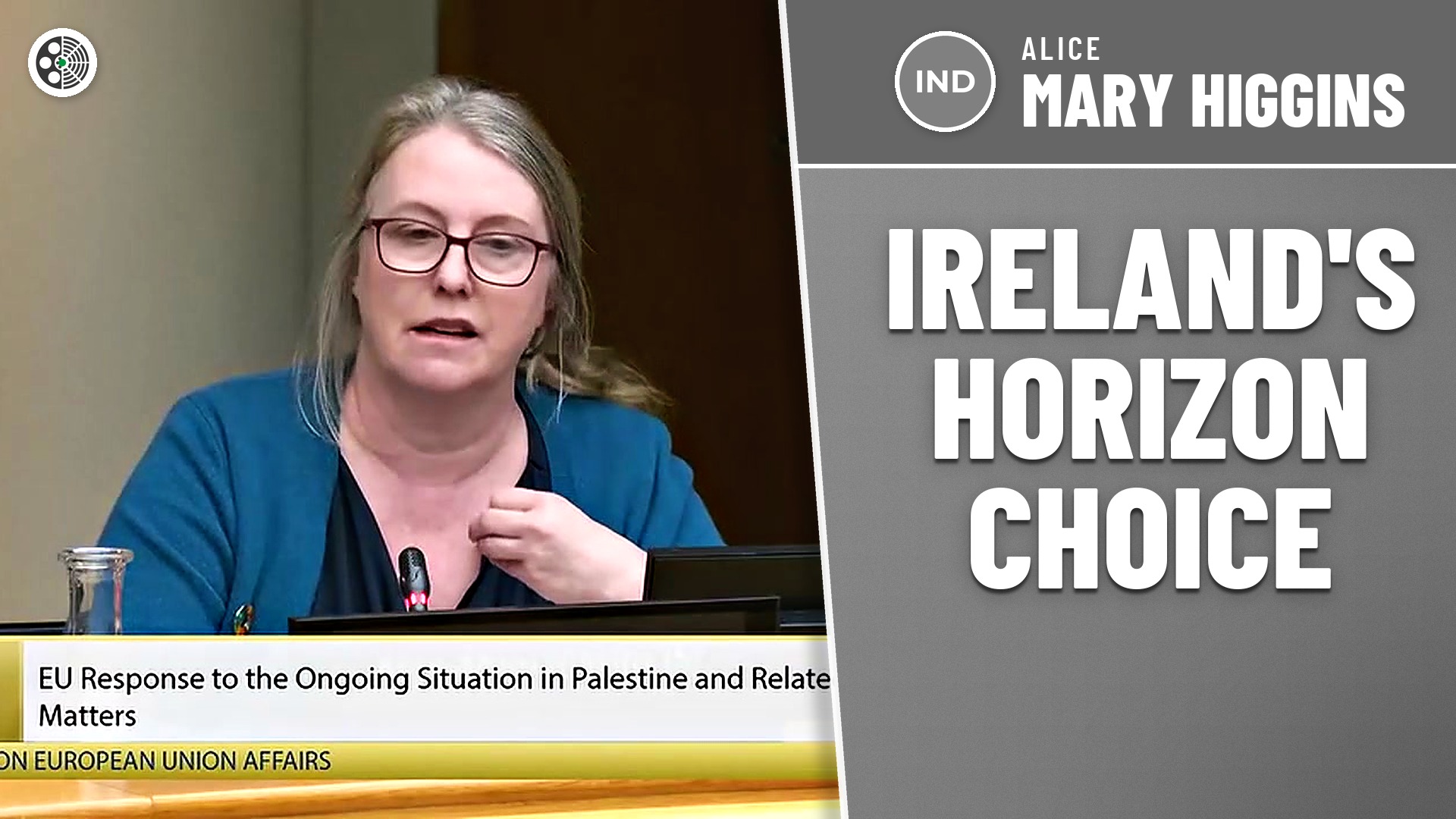
Alice-Mary Higgins presses Ireland on Israel and Horizon

Victor Boyhan
Victor Boyhan: Keep horticulture in focus in Food Vision 2030
Alison Comyn
Alison Comyn Questions RTÉ on Cuts and Sports Podcast Appointment
Matt Carthy
Matt Carthy Says Criminal Justice System Is in ‘Absolute Chaos’
Paraic Brady
Paraic Brady questions veterinary medicines sales and co-ops
Transcript
I welcome the opportunity to contribute to this second stage debate, and at the outset
I want to acknowledge that there is a legitimate public policy objective behind this legislation.
Every member of this House is deeply conscious of the housing crisis.
Every one of us knows families who cannot find accommodation, young people who have
been locked out of home ownership, workers travelling enormous distances because they
cannot access housing near their jobs, and most tragically, the growing number of individuals
and families forced into emergency accommodation.
No responsible politician can ignore these realities.
For that reason, I understand the Government's argument that the regulation of short-term
letting should be confined solely to our largest cities.
I can appreciate the rationale behind including towns with populations of 20,000 or more.
Housing pressures are no longer restricted to Dublin, Cork, Galway, Limerick and Waterford.
We are seeing increasing pressure in large regional towns throughout the state.
However, if we are serious about tackling homelessness and increasing housing supply,
then enforcement resources must be focused primarily where the crisis is at its most
acute.
The figures speak for themselves.
Today more than 17,000 are living in emergency accommodation.
Of those, almost 15,000 are concentrated in the major urban centres of Dublin, Cork, Galway,
Limerick and Waterford, and their surrounding metropolitan areas.
That is where the pressure is greatest.
That is where the demand is greatest.
That is where homelessness is most severe.
That is where enforcement must be most vigorous.
If local authorities and regulatory bodies have finite resources, and they always do,
those resources should be directed first to those areas where the return is highest and
even modest increases in long-term housing supply could make a meaningful difference.
I fear that this legislation risks creating a situation where scarce enforcement resources
are spread too thinly across the entire country.
In policy-making, there is always the danger of trying to be everything to everyone.
Sometimes the result is that we end up being effective nowhere.
I want a system that targets abuse.
I want a system that addresses large-scale commercial operators who have effectively
removed housing stock from the private rental market.
I want a system that ensures compliance.
But I also want proportionality.
There is a world of difference between a major investor operating multiple short-term rental
properties in a city experiencing severe housing shortages and a homeowner who occasionally
rents part of their principal primary residence.
Those distinctions matter.
Good legislation recognises distinctions.
Poor legislation ignores them.
The government itself recognises that housing pressures are not uniform across the country.
If that is true, and it is, then enforcement priorities should not be uniform either.
A one-size-fits-all enforcement approach risks imposing significant administrative burdens
on smaller communities where short-term letting may play an important role in sustaining local
tourism while yielding very little additional housing supply.
The central question must always be this.
Where can intervention deliver the greatest public benefit?
The answer is obvious.
It's in the major cities.
It is in the areas where emergency accommodation numbers are highest.
It is in the areas where rental shortages are most acute.
It is in the areas where housing demand vastly exceeds supply.
I therefore believe the government must make it absolutely clear that enforcement policy
will be targeted and prioritised according to housing need.
But there is another issue with this Bill that deserves much greater scrutiny.
That issue is planning.
Throughout this debate, we have heard the government speak about planning compliance.
We have heard ministers say that short-term letting activity must comply with planning
requirements.
Yet I have a very simple question.
Why now?
Why has this suddenly become the great planning issue of our time?
Short-term letting has existed in one form or another for years.
Platforms have operated openly.
Properties have been advertised publicly.
Successive governments were fully aware of this sector.
So why are we only now being told that there is a planning crisis associated with short-term
accommodation?
Why wasn't this addressed years ago?
Why wasn't it clarified years ago?
Why did government after government fail to provide certainty?
Why were homeowners, small tourism providers and local authorities left operating under
a cloud of ambiguity?
These are not unreasonable questions.
In fact, they are questions the public have every right to ask.
The government now wants us to impose additional requirements with additional regulation.
But where was the urgency when clarity was needed?
Where was the urgency when local authorities were seeking guidance?
Where was the urgency when people were trying to understand what rules applied?
One cannot help but feel that this legislation is attempting to cure symptoms rather than
address causes.
That brings us to the heart of the matter.
Why is the spotlight being trained so heavily on self-catering accommodation and short-term
lets?
Why has this become such a major political focus?
The answer is uncomfortable for government, but it needs to be stated.
Because it provides a convenient distraction from the government's failure to build enough
homes.
That is the uncomfortable truth behind much of this debate.
Successive governments have provided over one of the most severe housing crises in the
history of the state.
Housing completions fail to match demand.
Planning systems remain cumbersome.
Infrastructure delivery lags behind.
Affordable housing targets were missed.
Social housing waiting lists continue to grow.
Private rents have spiralled.
House prices escalated beyond the reach of ordinary working families.
And homelessness reached record levels.
Those are the facts.
And against this backdrop, governments have increasingly looked for explanations elsewhere.
Migrants working in our essential services are blamed.
Planning appeals are blamed.
Vacant homes are blamed.
Now short-term lets are increasingly being blamed.
Of course, all of these factors can play a role, but none of them explain the scale of
the crisis.
The primary reason Ireland has a housing emergency is painfully simple.
We have not built enough homes for a very long time.
That is the central failure.
No amount of regulatory activity aimed at short-term letting can hide that reality.
No amount of administrative enforcement can substitute for housing delivery.
And no amount of political spin can alter the basic arithmetic of supply and demand.
The government cannot regulate itself out of a housing shortage.
It must build its way out.
That is the challenge and the test.
That is where the focus should remain.
Indeed, I find it extraordinary that some of the loudest voices calling for even more
planning scrutiny of homeowners were remarkably resilient when genuine planning abuses were
occurring in years gone by.
It is an awful pity that the government, and Fianna Fáil in particular, were not nearly
as energised about planning enforcement during the days of the Galway Tent.
It is an awful pity that we are not displaying the same level of enthusiasm for regulation
when developers appear to enjoy extraordinary influence over planning and development decisions.
It is an awful pity that we are not demanding rigorous oversight when powerful interests
seemed able to secure rezoning decisions and planning outcomes that benefited them enormously.
Because many people remember those years.
People remember an era when ordinary citizens often felt disconnected, and some still do,
from the planning process.
People remember a culture in which development frequently appeared to proceed with inadequate
scrutiny.
The irony is striking.
Today the government wants us to believe that the great planning challenge facing Ireland
is the retired couple renting a self-catering property.
Today the government wants us to believe that the central planning priority is the homeowner
engaging in occasional short-term letting.
Yet, where was this zeal when genuine systematic planning issues demanded attention, and some
still do today?
Where was this relentless focus on compliance?
Where was the passion for enforcement?
Where was the determination to regulate?
The Irish public are entitled to ask those questions, and they are entitled to receive
answers.
So I want to be clear that this is not an argument against regulation.
It's not an argument against registration or transparency or enforcement.
Rules are important, and compliance matters, and consumer protection matters, as does public
confidence.
But good regulation must and has to be proportionate, and it must be evidence-based and targeted
and fair.
Above all, it must recognise that not every short-term letting arrangement is the same.
Home sharing is not the same as commercial investment.
Principal private residence is not the same as a professionally managed portfolio.
An occasional host is not the same as a corporate operator.
Legislation that blurs those distinctions risks doing real damage to ordinary people
who are simply trying to supplement household income at a time of extraordinary financial
pressures.
Many homeowners are facing significant mortgage repayments.
Many families are facing soaring costs.
Rural tourism providers are struggling with rising operating expenses.
And for some, short-term letting provides an important supplementary income stream.
For others, it supports local employment and local tourism.
For many areas, particularly outside the major cities, self-catering accommodation forms
an important part of the tourism offering.
And that reality should not be overlooked.
Ireland's tourism product depends on diversity.
Hotels play a critical role.
Guesthouses play a critical role.
B&Bs play a critical role.
Self-catering accommodation plays a critical role.
As does home sharing.
So a successful tourism sector requires all of these components working together.
Therefore, while I support reasonable regulation, I do not support the assumption that every
short-term letting property represents housing stock that would otherwise immediately enter
the long-term rental market.
That assumption is overstated.
It's not always supported by evidence.
And in many cases, it simply does not reflect the reality on the ground.
The challenge for us legislators is to distinguish carefully between properties that genuinely
impact housing availability and those that do not.
And this requires nuance.
And it requires balance.
And it requires a willingness to move beyond simplistic narratives.
As legislators, we should be capable of that.
The housing crisis, of course, deserves serious solutions.
And the public deserves serious solutions.
Headlines will not solve homelessness.
Scapegoating will not solve homelessness.
Only increasing housing supply on a substantial and sustained basis will solve homelessness.
And that simply means building more homes.
It means accelerating infrastructural delivery.
And it means addressing construction capacity and providing certainty within the planning system.
And that also, of course, as we know, means that the local authorities have the resources
that they absolutely need.
But it means, first and foremost, focusing relentlessly on housing delivery.
And if we fail in those tasks, no amount of regulation of short-term lets will compensate.
As this Bill progresses, I hope the Minister will carefully consider amendments that strengthen
the distinction between large-scale commercial operators and genuine home-sharing arrangements.
I hope the Minister will provide greater clarity regarding planning requirements.
I hope the Minister will commit to targeting enforcement where housing pressures are genuinely
most severe.
And I hope the Government will recognise that while short-term letting may form part of
the wider housing debate, it is not the primary cause of our housing crisis.
Ultimately, the answer to Ireland's housing emergency is not to search endlessly for new
villains.
The answer, once again, is to build more homes.
It always has been and it always will be.
Until we confront that reality honestly, the housing crisis will persist regardless of
how many regulations we introduce.
For that reason, I recognise the intention behind this Bill and support targeted efforts
to return the housing stock to the greatest need.
I believe it requires further refinement, greater proportionality, stronger differentiation
between categories of providers and a much clearer focus on genuine housing pressures
in our major urban centres.
That is the approach that will best serve both housing policy and tourism policy.
That is the approach that will best serve communities.
And that is the approach that I urge the Minister and this House to adopt.