

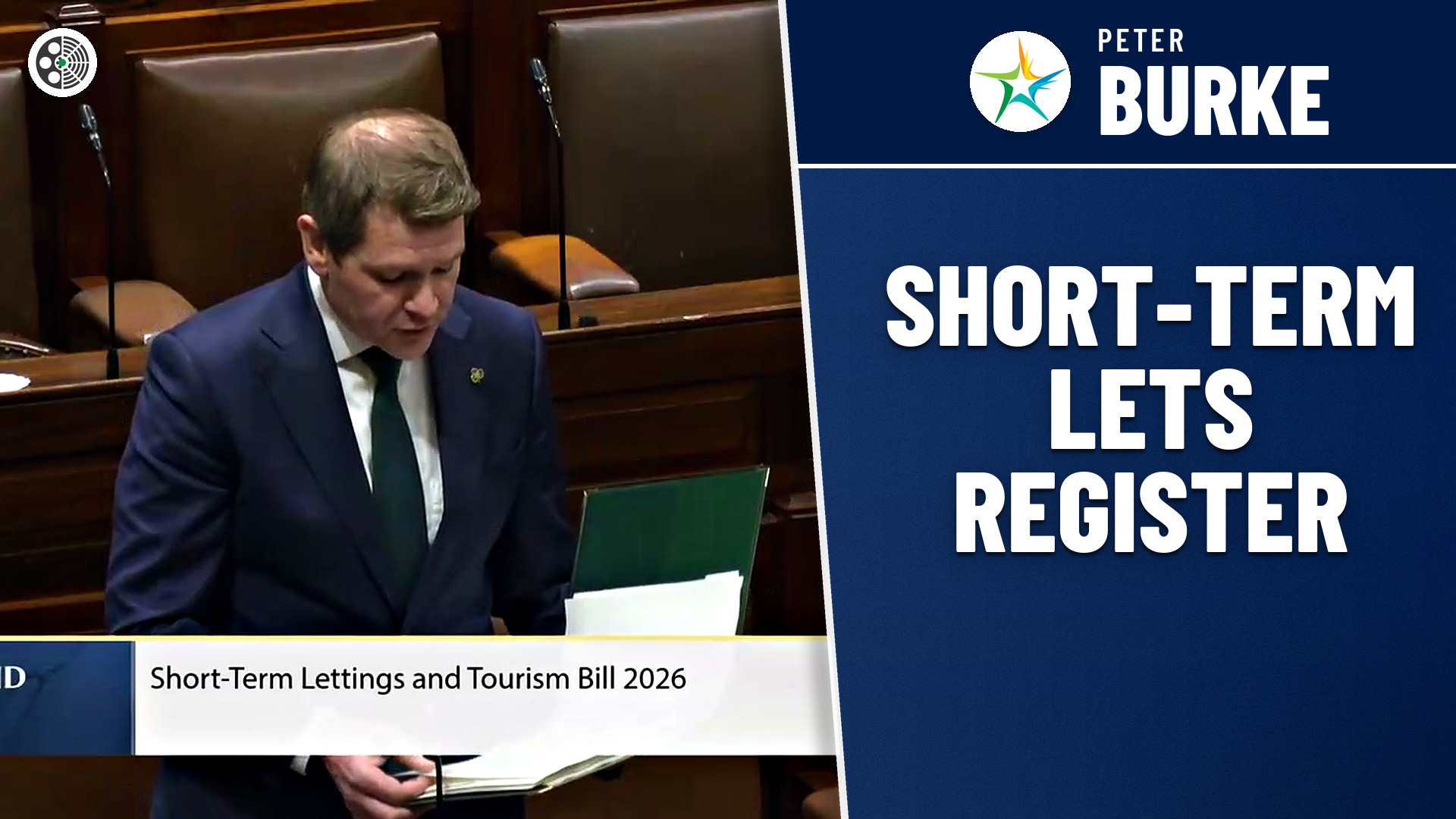


Peter Burke sets out national short-term letting register
Peter Burke introduced the Short-Term Letting and Tourism Bill 2026 in the Dáil, setting out plans for a national register of short-term rentals and new data-sharing requirements. He said the legislation would improve oversight, support housing and tourism policy, and fulfil Ireland’s obligations under EU law.
The Bill would establish a registration framework for short-term lets involving stays of up to 21 consecutive nights. Hosts would register each unit, display its registration number on listings and pay a proposed €25 fee. The legislation also requires online platforms to display registration numbers, provide rental activity data and remove listings where required by law.
The Bill provides for inspections and investigations, fixed payment notices and summary offences for hosts, and an administrative sanction process for platforms. An independent panel could impose financial sanctions of up to 2% of a platform’s annual worldwide turnover. Hosts would also have to confirm that accommodation is planning compliant; existing operators in locations with populations below 20,000 would have two years to regularise their position.
The Bill would leave existing home-sharing arrangements unchanged: rooms in a person’s principal private residence would remain exempt from planning requirements, and the entire home could be let for up to 90 cumulative days a year while the owner is temporarily absent. It also proposes a registration framework for limited visitor stays in purpose-built student accommodation, allowing otherwise vacant capacity to be used outside term time while preserving its primary student use.
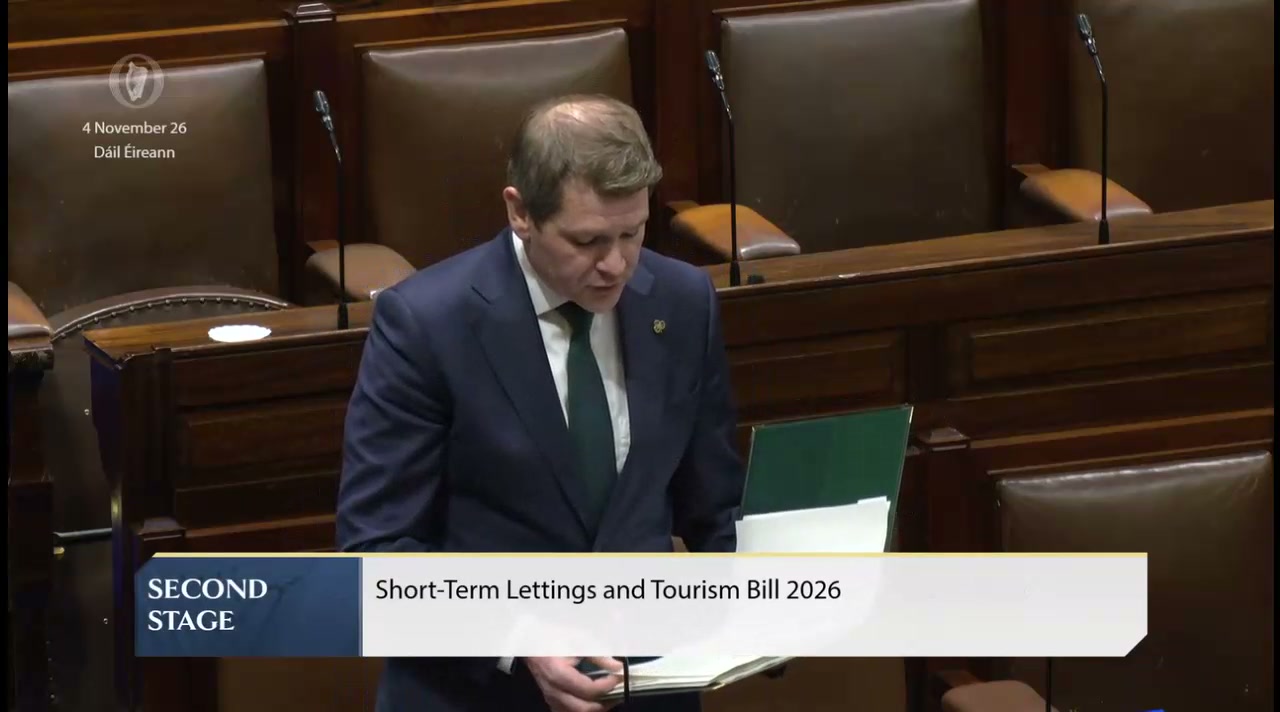
The legislation would update rules covering hotels, guest houses, hostels, holiday camps, caravan sites and camping sites, and introduce independent appeals for decisions on statutory tourism registers. Burke said better accommodation data would support decisions on tourism, housing and regional development, while helping prioritise long-term homes in areas under housing pressure.
Watch the recording to hear Peter Burke’s full contribution.
A national framework for short-term letting
The Bill would establish a registration framework for short-term lets involving stays of up to 21 consecutive nights. Hosts would register each unit, display its registration number on listings and pay a proposed €25 fee. The legislation also requires online platforms to display registration numbers, provide rental activity data and remove listings where required by law.
Enforcement and planning rules
The Bill provides for inspections and investigations, fixed payment notices and summary offences for hosts, and an administrative sanction process for platforms. An independent panel could impose financial sanctions of up to 2% of a platform’s annual worldwide turnover. Hosts would also have to confirm that accommodation is planning compliant; existing operators in locations with populations below 20,000 would have two years to regularise their position.
Home sharing and student accommodation
The Bill would leave existing home-sharing arrangements unchanged: rooms in a person’s principal private residence would remain exempt from planning requirements, and the entire home could be let for up to 90 cumulative days a year while the owner is temporarily absent. It also proposes a registration framework for limited visitor stays in purpose-built student accommodation, allowing otherwise vacant capacity to be used outside term time while preserving its primary student use.
Wider tourism regulation
The legislation would update rules covering hotels, guest houses, hostels, holiday camps, caravan sites and camping sites, and introduce independent appeals for decisions on statutory tourism registers. Burke said better accommodation data would support decisions on tourism, housing and regional development, while helping prioritise long-term homes in areas under housing pressure.
Watch the recording to hear Peter Burke’s full contribution.
We publish thousands of recordings to make Irish politics transparent and resistant to manipulation. Spotted an error? Report it — together we are building a reliable archive of Irish politics.
Other speeches
Tego samego dnia All speeches from this day →
Richard O'Donoghue
Richard O'Donoghue challenges Garda investigation over holster
Michael Fitzmaurice
Michael Fitzmaurice presses for VetPal viability analysis
Liam Quaide
Liam Quaide challenges Taoiseach over CUH staffing
Michael Collins
Michael Collins: Ireland’s soaring energy costs need real action
Peter 'Chap' Cleere
Peter 'Chap' Cleere questions RTÉ on €20m funding cut
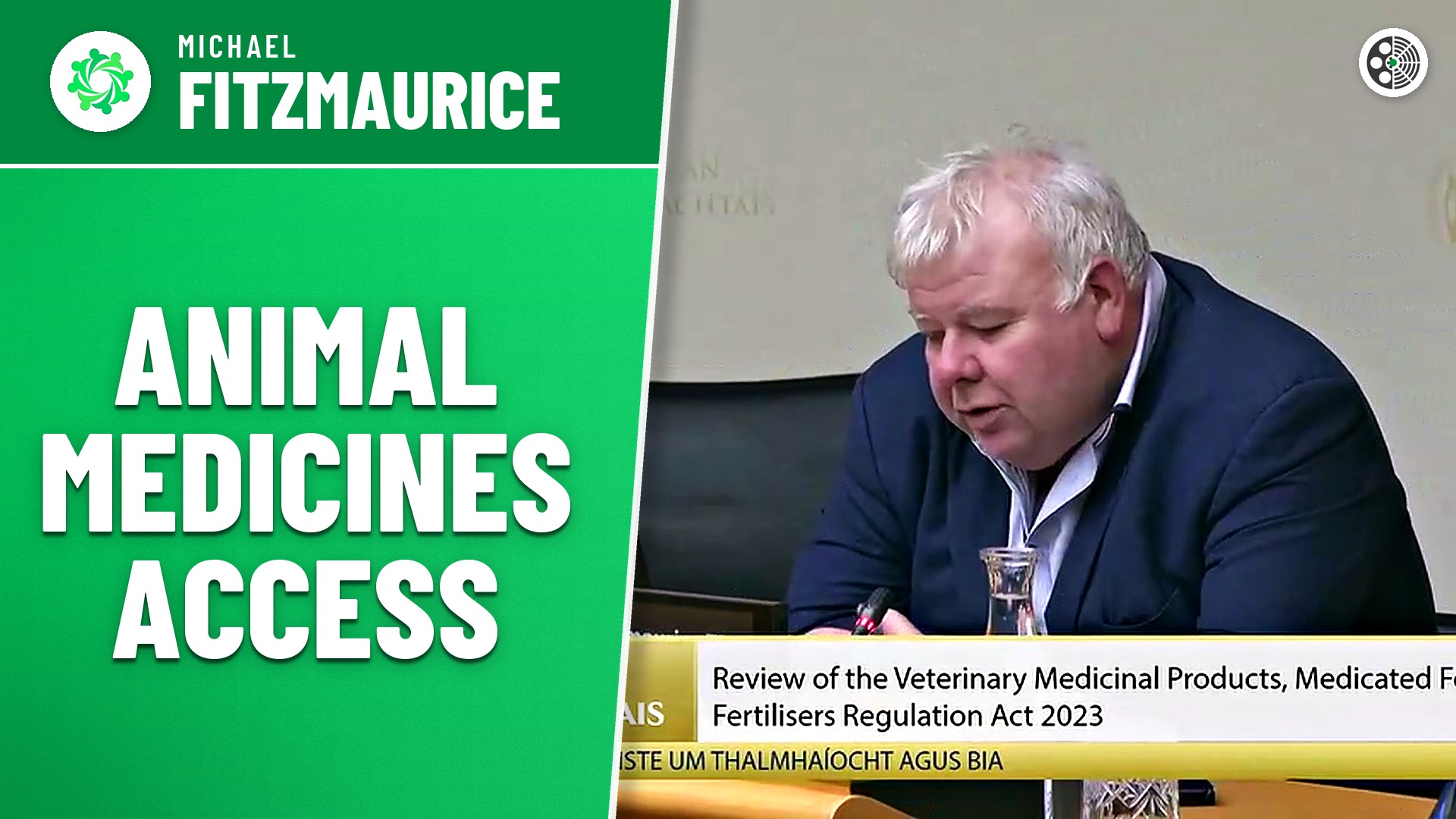
Michael Fitzmaurice
Michael Fitzmaurice questions access to animal medicines
Transcript
I move that the Short-Term Letting and Tourism Bill 2026 be read a second time.
I am pleased to introduce this important legislation to the House.
The publication of the Bill represents a significant milestone in the development of a modern regulatory
framework for short-term accommodation rentals in Ireland and in the fulfilment of our obligations
under the EU Short-Term Rental Regulation.
That regulation came into effect on 20 May, provided for the collection and sharing of
data relating to short-term accommodation rental services and aims to enhance transparency
and oversight across the sector.
At its core, this Bill is about establishing a clear, fair and effective framework for
the regulation of short-term letting in Ireland.
It will ensure that hosts and platforms operate within a consistent set of rules, that public
authorities have access to the information necessary to perform their functions effectively
and that policy-making is informed by reliable evidence.
Over the last decade, the short-term letting sector has undergone significant expansion.
The emergence and growth of online platforms has transformed the way accommodation is marketed,
booked and provided, creating new opportunities for tourism and generating additional income
for many property owners.
As a result, short-term letting now forms a substantial and increasingly important part
of Ireland's tourism accommodation offering.
The scale of this activity is considerable.
Pending the establishment of the National Register, Focha Ireland continues to produce
monthly estimates of online short-term letting activity based on data derived from online
listings.
These estimates indicate that, as of September 2026, approximately 31,770 short-term letting
properties were advertised across two of the largest booking platforms operating in the
Irish market.
Despite this growth, the state has locked the tools necessary to obtain a complete and
accurate picture of the sector.
To date, there has been no comprehensive National Register of short-term letting properties
and limited mechanisms for gathering consistent information about activity in the market.
As a result, policymakers and regulators have faced challenges in monitoring the sector
and understanding its impact at a national and local level.
The Bill addresses this gap.
It will establish for the first time a national registration framework for short-term lettings
involving stays of up to 21 consecutive nights, and will give effect to data-sharing arrangements
required under European Union law.
The Bill designates Focha Ireland as the competent authority responsible for administering the
framework.
It will establish and maintain the National Register, operate the single digital entry
point required under the EU regulation, and oversee the collection and sharing of relevant
information.
Together, these measures will provide a more comprehensive understanding of short-term
letting.
The benefits of this approach are significant.
It will provide clarity and certainty for hosts regarding their obligations, establish
consistent requirements for online platforms, and ensure that public authorities have access
to the information required to support informed decision-making in areas such as tourism,
housing and regional development.
Importantly, the framework also supports the Government's broader objective of ensuring
that long-term residential accommodation is prioritised in areas experiencing housing
pressures.
In that regard, the Bill supports both tourism and housing policy objectives.
Under the Bill, all hosts providing short-term accommodation, rental services will be required
to register with Focha Ireland, who will issue a unique registration number for each registered
unit.
Registration will be straightforward and fully online.
The system has been designed to minimise administrative burden, while ensuring that the information
necessary for effective regulation is collected.
A nominal registration fee of €25 will apply, which will be prescribed by Focha Ireland
through the regulations.
Once registered, hosts will be required to display their registration number on all advertisements
and listings relating to the accommodation unit.
Focha Ireland will verify information submitted by hosts to ensure the accuracy and integrity
of the register.
The obligations established by the Bill will not rest solely with the hosts.
Online short-term rental properties will also be required to play an active role in supporting
compliance.
Platforms must display registration numbers, conduct random checks on listings, submit
specified rental activity data to Focha Ireland, and remove or disable access to listings where
required by law.
These obligations reflect the central role played by platforms within the short-term
accommodation market, and are fully aligned with the requirements of the short-term rental
regulation.
A regulatory framework is only effective as its enforcement mechanisms.
For that reason, the Bill provides Focha Ireland with the powers necessary to monitor compliance
and investigate suspected breaches.
The legislation provides for the appointment of registration officers and authorised officers
with powers to conduct inspections, carry out investigations, and require the production
of records and information where necessary.
These powers are proportionate, practical, and essential to the effective operation of
The Bill also establishes a graduated enforcement regime.
In the case of hosts, enforcement measures include fixed payment notices and summary
offences.
For online short-term rental platforms, the Bill provides for an administrative sanction
process where contraventions of legal obligations occur.
Where appropriate, matters may be referred to the independent panel of adjudication officers
that I will appoint.
The panel will have the authority to determine whether a breach has occurred and, where warranted,
to impose financial sanctions of up to 2% of annual worldwide turnover.
This approach ensures that enforcement measures are proportionate, effective, and accompanied
by appropriate procedural safeguards.
A key requirement of the registration process is that hosts must confirm that their accommodation
is planning compliant.
The Government recognises the importance of clarity and consistency in this area.
Accordingly, the Minister for Housing, Local Government and Heritage, James Brown TD, obtained
approval to publish the National Planning Statement for Short-Term Letting Activity
on 3 November.
The statement establishes a clear and consistent planning framework for the sector and provides
certainty for hosts, local authorities and communities.
The planning framework set out in the statement restricts the approval of new planning permissions
for short-term letting activity in cities and towns with a population exceeding 20,000.
At the same time, it provides a pathway for existing operators to regularise their position
through a presumption in favour of granting retention permission in specified circumstances
where properties have operated continuously as short-term lets for at least seven years
and no enforcement action has been taken.
A simplified administrative version of this application process for retention specifically
for these short-term lets was introduced on 29 September 2026.
The Bill does not alter the existing arrangements for genuine home sharing.
The letting of room or rooms in a person's principal private residence will remain exempt
from planning requirements.
A home sharer may also continue to let their entire principal private residence for up
to 90 cumulative days per year while temporarily absent.
Beyond that threshold, planning permission for change of use will continue to be required.
The Bill also incorporates an important transitional arrangement for existing hosts.
Hosts operating in locations with populations below 20,000 have a two-year period within
which to regularise their planning position.
This provides a proportionate pathway to compliance while supporting an orderly transition to
the new framework.
The legislation contains a number of additional reforms.
It strengthens cooperation between FALCHA Ireland, public authorities and other competent
bodies in the performance of their functions under both the national and European legislation,
including the short-term rental regulation and the Digital Services Act.
The Bill also establishes a dedicated registration framework for limited visitor stays in Purpose
Bill student-specific accommodation.
This is not a new activity.
Many student-specific accommodation providers already accommodate visitors outside academic
term time, making productive use of otherwise vacant capacity.
Nationally, the supply of Purpose Bill student-specific accommodation continues to expand, with 16,704
beds delivered since 2017, bringing the total stock to more than 49,700 beds.
Current projections indicate a need for approximately 42,000 additional student beds over the coming
decade.
The purpose of these provisions is to place existing practice on a clearer statutory footing
through a proportionate registration framework.
Registration will operate on a three-year cycle and is designed to complement rather
than duplicate existing registration requirements with the Residential Tenancies Board, which
are focused on the landlord-tenant relationship.
The new framework will provide greater transparency and regulatory oversight of visitor accommodation
activity and is strategically important for tourism as it provides a clear regulatory
basis for the continued use of otherwise vacant student accommodation during holiday periods.
This supports accommodation capacity at peak time demand, improves efficient use of existing
assets, and contributes to a more resilient and sustainable tourism sector while preserving
the primary role of student accommodation.
The Bill also modernises elements of Ireland's wider tourist accommodation regulatory framework.
It provides updates, provisions governing hotels, guest houses, hostels, holiday camps,
caravan sites and camping sites to reflect contemporary operational, administrative and
regulatory requirements.
At the same time, the legislation repeals a number of outdated provisions relating to
accommodation categories that no longer reflect the current tourism practices.
A key element of these reforms is the introduction of the independent appeals process for decisions
relating to the statutory registers established under the tourism legislation.
While the original legislative framework dating back to the Tourist Traffic Act 1939 did not
provide for such a mechanism, modern regulatory systems place a strong emphasis on transparency,
accountability and procedural fairness.
The new appeals process will ensure that all registered accommodation providers have access
to an independent review of registration and grading decisions, strengthening confidence
in administration of registers and bringing forward a framework interlying with modern
standards of good regulatory practice.
This Bill represents a practical and proportionate response to a rapidly evolving sector.
It will establish for the first time a comprehensive national framework governing short-term letting
activity across the state, strengthen regulatory oversight, improve the quality of information
available to public authorities, and ensure that Ireland fully implements its obligations
under European Union law.
Critically, the Bill will provide for the first time a comprehensive picture of tourist
accommodation provision across the state.
Through the establishment and modernisation of statutory registers, public authorities
will have access to more complete, accurate and up-to-date information on accommodation
and providers and accommodation capacity.
This enhanced visibility will support better policy-making, more effective enforcement
and a stronger evidence base for decisions affecting tourism, housing and regional development.
Beyond short-term letting, this Bill delivers the most significant modernisation of Ireland's
tourist accommodation registration framework in decades, updating legislative provisions,
strengthening governance arrangements and introducing an independent appeals process
across a range of statutory registers.
Most importantly, it reflects the Government's determination to address the impact that the
Bill can have on housing availability in areas facing significant housing pressures,
while continuing to support a vibrant, sustainable tourism sector.
By bringing greater transparency and oversight to the sector, the Bill will help ensure that
homes are used for their intended purpose, provide policymakers with information needed
to respond to emerging pressures, and support a more balanced approach to the use of accommodation
right across the state.
In doing so, it will contribute to protecting housing supply for local communities while
maintaining the important role that tourism plays in our economy and, indeed, in our regions.
I look forward to engaging constructively with colleagues right across the House as
this Bill progresses through the legislative process, and I thank Members for their time.