

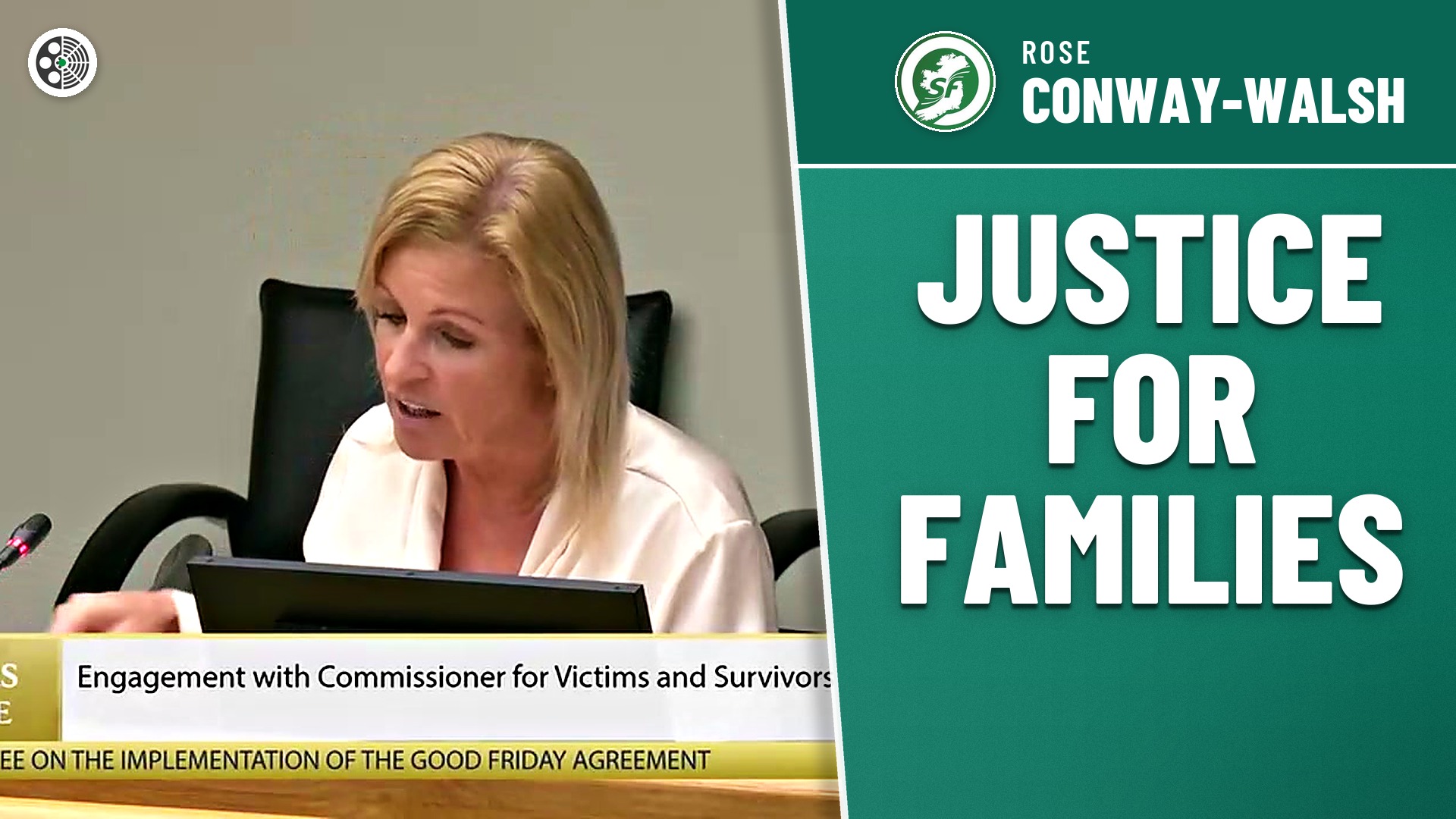


Rose Conway-Walsh challenges legacy Bill's human rights test
Rose Conway-Walsh questioned witnesses on legacy legislation during a committee hearing, focusing on its human rights provisions and the difference between rights being respected and obligations being complied with. She also raised concerns about the independence of investigations, the definition of new evidence and the powers of the Attorney General.
Rose Conway-Walsh asked witnesses how the distinction between human rights being respected and obligations being complied with should be interpreted under international law. She also asked whether earlier investigations that were not Article 2 compliant could prevent families from having an inquest reopened, and who would determine what counted as new evidence.
She cited the Ballymurphy inquiry as an example of an inquiry that she believed could not have taken place under the proposed framework. She questioned the Attorney General having what she described as absolute power and said the committee could not stand over that.
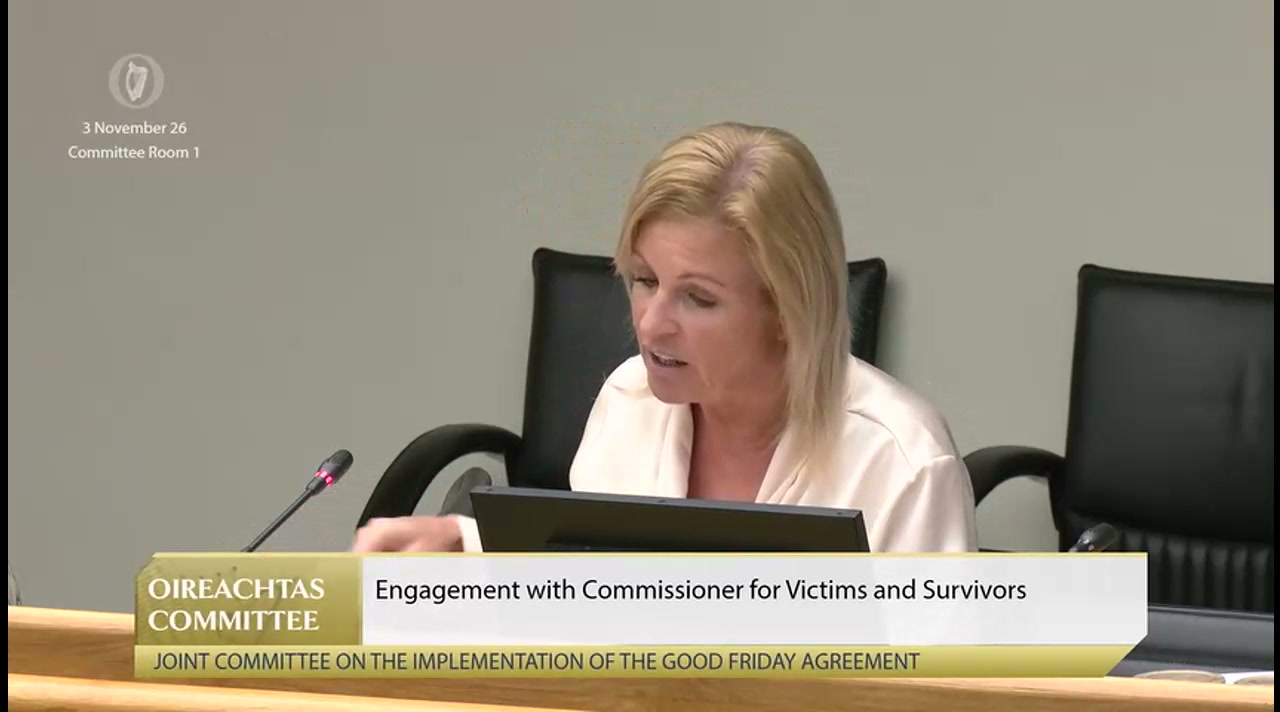
Rose Conway-Walsh asked witnesses how the distinction between human rights being respected and obligations being complied with should be interpreted under international law. She also asked whether earlier investigations that were not Article 2 compliant could prevent families from having an inquest reopened, and who would determine what counted as new evidence.
She cited the Ballymurphy inquiry as an example of an inquiry that she believed could not have taken place under the proposed framework. She questioned the Attorney General having what she described as absolute power and said the committee could not stand over that.
We publish thousands of recordings to make Irish politics transparent and resistant to manipulation. Spotted an error? Report it — together we are building a reliable archive of Irish politics.
Other speeches


Tego samego dnia All speeches from this day →
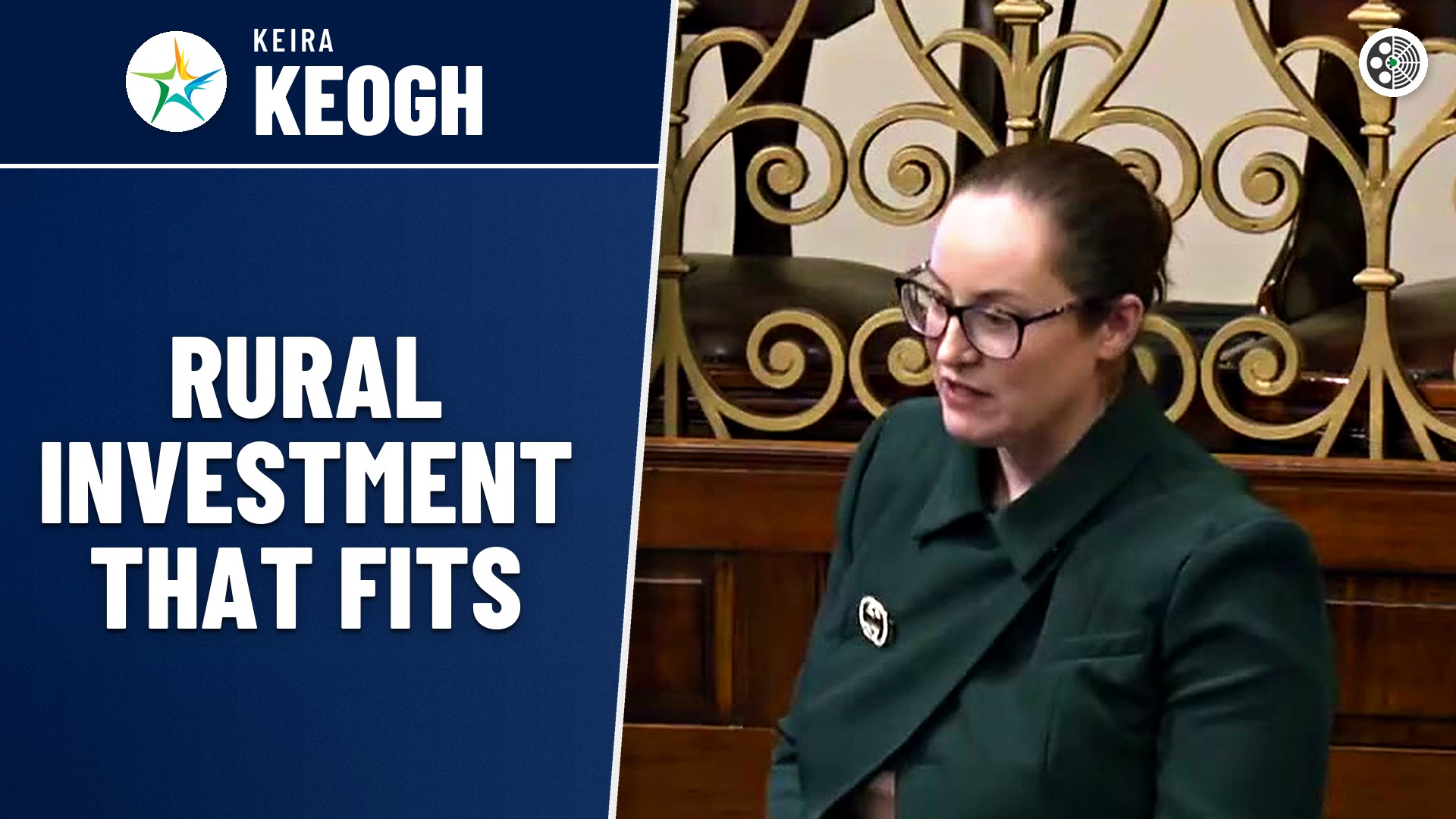
Keira Keogh
Keira Keogh backs targeted investment in rural Mayo
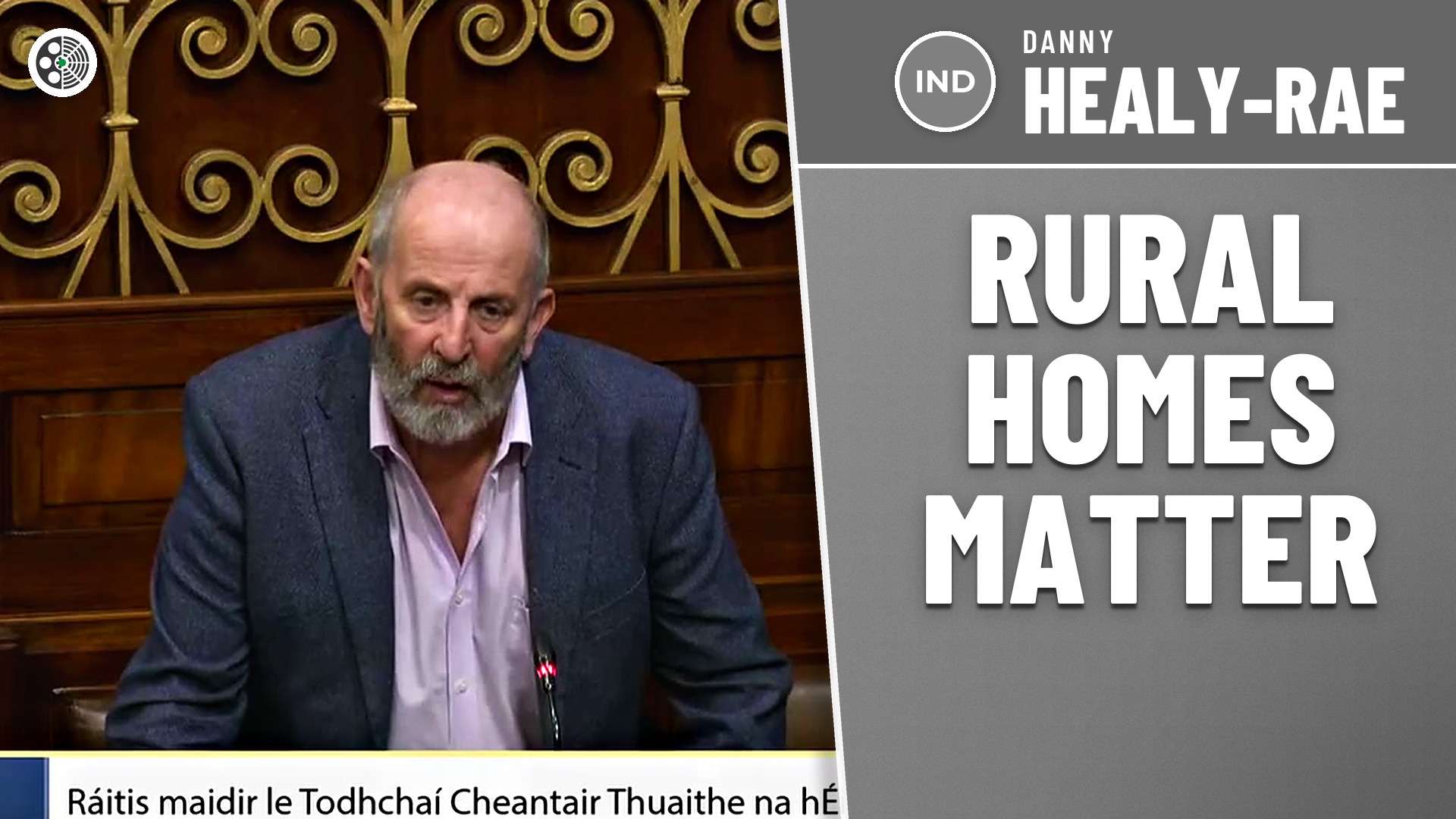
Danny Healy-Rae
Danny Healy-Rae: Planning Permission and Rural Homes
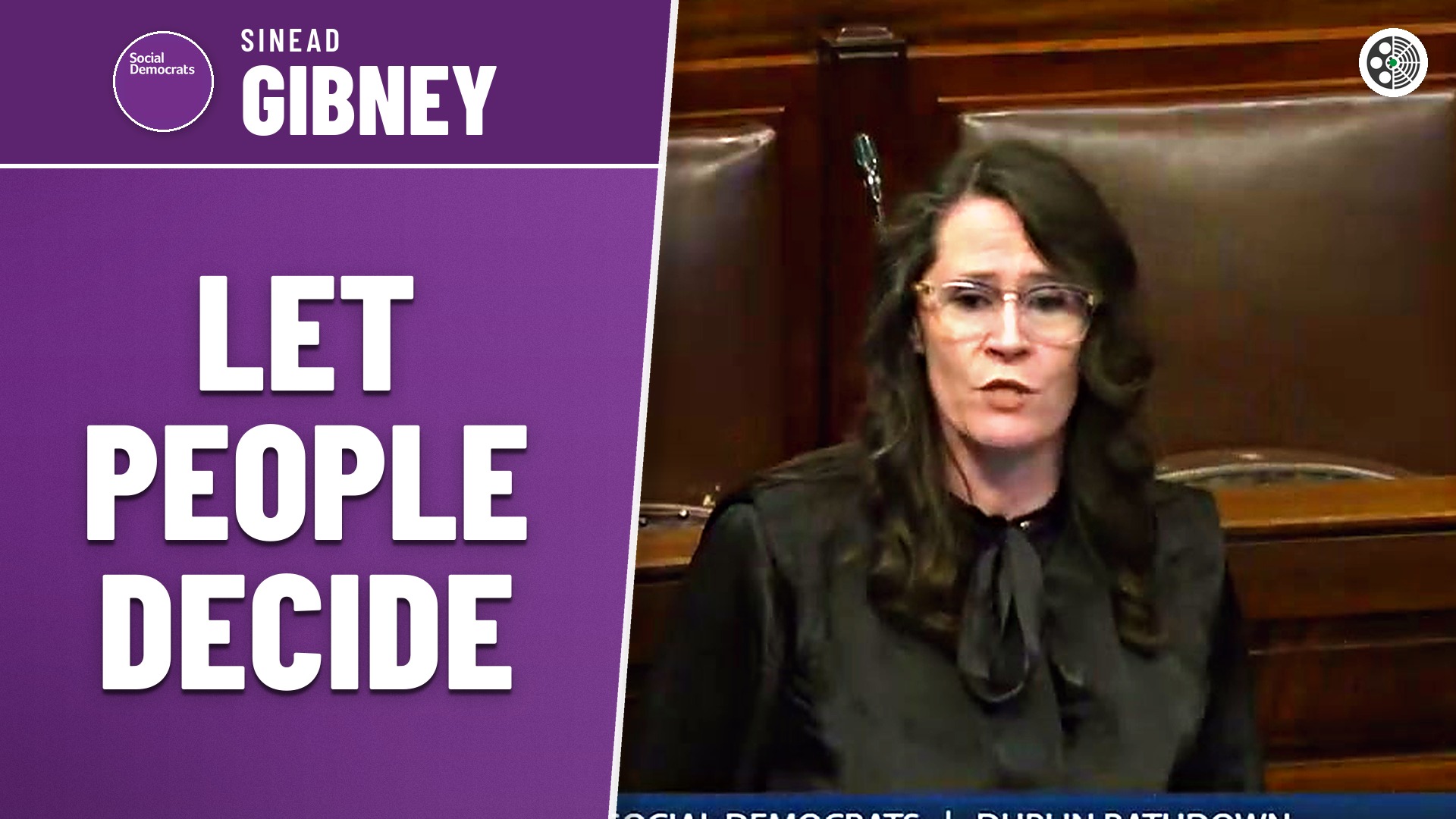
Sinéad Gibney
Sinéad Gibney challenges the case for Triple Lock reform
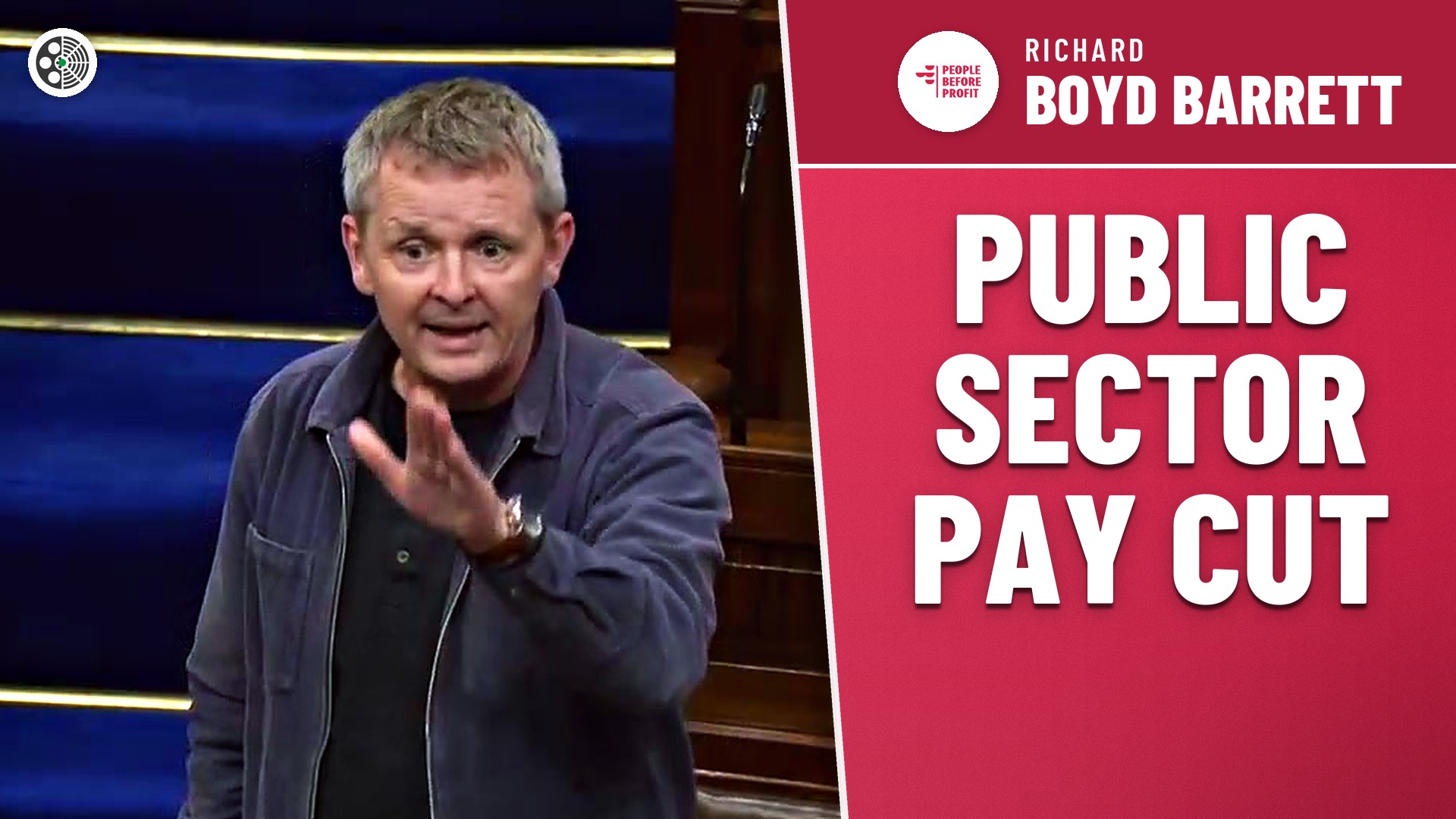
Richard Boyd Barrett
Richard Boyd Barrett says public workers face real-terms pay cut
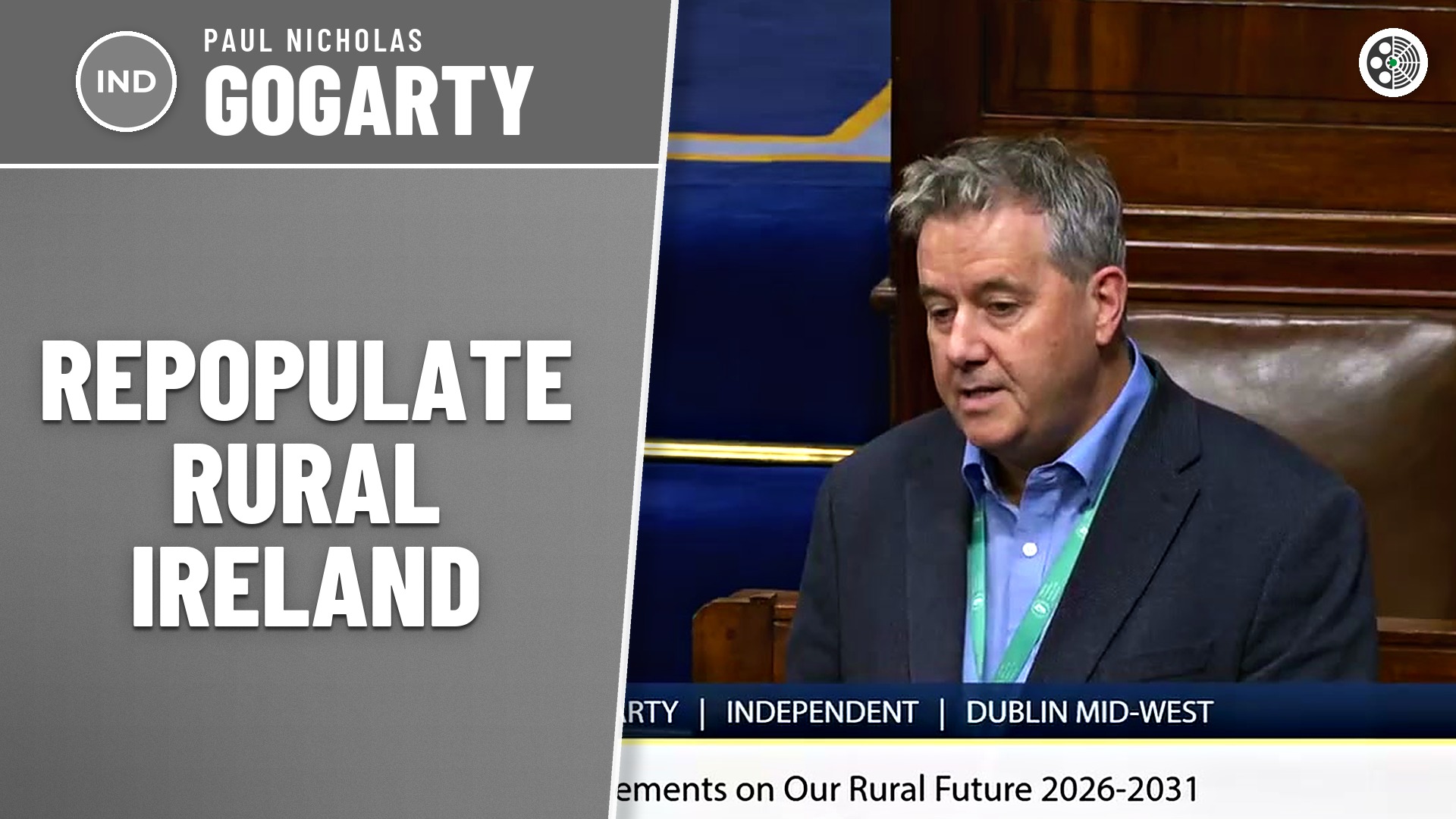
Paul Nicholas Gogarty
Paul Nicholas Gogarty calls for rural Ireland to be repopulated
Ken O'Flynn
Ken O'Flynn says Minister puts headlines before hospitals
Transcript
Thank you for being with us here this morning. I'll confine most of my questions to the legacy
legislation that's going through at the moment because as you rightly say I think this committee
needs to have a role in that, it needs to keep a watchful eye on that. The first thing I suppose
that strikes me about it is the original promise by the Labour government in 2024
was to repeal and replace by returning to the principles of the Stormont House Agreement,
but in particular in the Stormont House Agreement it explicitly says that the principle that human
rights should be respected, that's what it says in this legacy bill, but in the Stormont House
Agreement it was the principle that human rights and obligations should be complied with. Now the
difference between being respected and complied with in terms of international law, how would
you interpret that and how important do you think it is? Thank you, thank you very much
Rose. I think for us, going back to the Stormont House Agreement, two things strike me with that
and I'll pass to Tina to pick up on that as well. The Stormont House Agreement
was I think incredibly impressive not only in terms of content as you've alluded to
but also the implementation and the work that was going to go in to take it forward. I think
one of the biggest disappointments is that work just foundered and here we are all these years
on 10 or 12 years later and made very little if any progress at all, in fact we've gone backwards
and I think for us then looking at the current legislation is a concern that there's almost a
going backwards in that as well, so I think that's something that we'd be very mindful of
and I think it's that sense of ourselves and this committee and the legislation in Britain
to make sure we don't do that. Tina do you want to pick up? And I think when we have engaged with
victims and survivors and those who work with them in the sector, what we're very much hearing is
what we've built into our submission is around that independence, so that if you're saying that
victims and survivors want to have confidence, then one of the indicators of confidence
is independence which is a prerequisite for human rights compliance as well, because to have for
example an Article 2 investigation, there needs to be independence built into that, so that's where
actually the rubber hits the road when it comes to some of these provisions, is are they suitably
independent, do they give confidence to victims and survivors, so I think where there's the
difference between respect and compliance, it's probably judiciable as well and it'll come before
the courts, but I think that's what it actually feels like for victims and survivors, is if they
don't think that for example there's a suitable degree of independence in the person who's going
to be looking at their case, then they just simply will continue to be failed because they won't
present to these bodies.
Yeah, they mean two completely different things in terms of respect to and compliance, it is a play with words to
not do what it's pretending that it is doing, if you like, it's good. Just in terms of the
Article 2 compliance, obviously all families and survivors have the right to Article 2
investigations, but where it says that the directors of investigation must take into account
any investigation of any kind, including an inquest of the death that has already been carried out by
another person, so does that mean that investigations that were not Article 2 compliant
that have been carried out heretofore are then excluded from that, so like there's a whole
volume of inadequate investigations that have been done, so does that preclude them then
from having, from reopening that inquest, if you like, because where it's saying that
if new evidence emerges, but then who decides what's new evidence, and I mean that
makes it just a farce of, in my view, just makes a farce of Article 2 compliance and
where injustices have been done with inadequate investigations heretofore, so how is that going to be?
No, I think back to Tina's earlier point, I think if you're in a climate of trust and confidence,
you could perhaps take those things at face value and say, you know, with good intentions,
people will get what they need, I think at the moment that that is not only open to interpretation
but does feed into that sense of, well, what is the intention behind that, the way that
language is used, rather than making it watertight, again, what is new evidence, what does that mean,
and the lack of detail, I think, can cause people's concern, and at the climate we're in at the moment
is people saying, well, that doesn't give me confidence, and I think that's the danger, if I may say.
Because this very question was asked of the Secretary of State the last time he came out and
met with the Victims and Survivors Forum, they asked to define, well, what is that,
and how would you go about getting compelling new evidence in the absence of an investigation,
and I think the answer is there isn't actually clarity on this, and this is part of the
confidence problem, there is not a clear determination, definition of what that is,
so what will fall in scope of what was considered an effective investigation,
what will be determined, and there wasn't clarity on that, and that's part of the issue.
If I could just very briefly in response to that, and I think that's back to where we started,
you know, on the one hand, the legacy framework and the Troubles Bill and the legislation, both in
the UK and here, does provide, as I said at the beginning, great opportunities, and I think the
danger is to what extent can we and yourselves, as members of this committee, get behind it and
support it, because the danger is if we don't get behind it and support it in the UK at the moment
and the Bill doesn't go forward, what are we left with? And I think that's the tension we're all
living with at the moment, to say we want to get this right, but there are so many things that are
open to interpretation or give victims and survivors cause for concern. You're trying to
balance to say, you know, can we make this better before it becomes into law? And I think that's the
real tension for us at the moment, and for victims and survivors, you know, there's almost a sense
people are saying, you know, should we just sort of hold our nose and hope that we can live with
some of those things rather than saying in a different circumstance we would want all those
tied down. So there's a real tension at the moment to saying we want the Bill to go forward,
we want it to pass, because in the absence of that, what's next? How many more years are we
going to have to wait? But that doesn't take away from it. I know what you're saying, but you can't
when you give absolute power to the Attorney General, give absolute power. I mean, we as a
committee cannot stand over that. I mean, I keep asking myself the question with the Ballie Murphy
inquiry, could it have happened under this framework? And it couldn't. It wouldn't have
happened. And I put a lot of the success actually of the Ballie Murphy inquiry down to, you know,
has given rise to all this to make sure that inquiries like the Ballie Murphy inquiry never
happens again, so that the truth is kept covered. And that should be a concern to every, every
legislator across these two islands and beyond. There are many other questions,
but I want to give it to, sorry, give it to my colleague here. Thank you.