

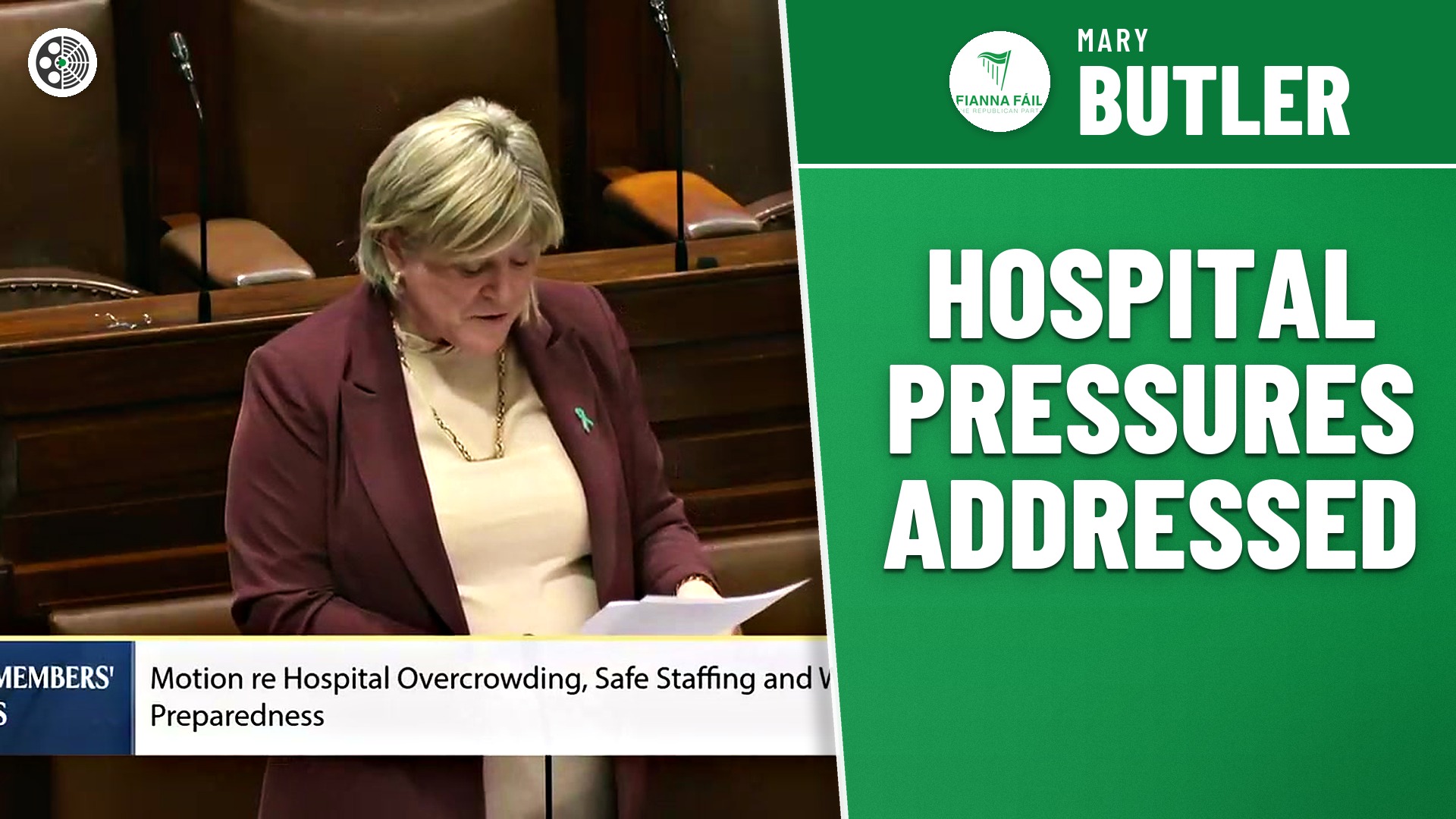


Mary Butler sets out Government's response to hospital pressures
Mary Butler, Minister for Mental Health and TD for Waterford, concluded the Government’s response to a Dáil debate on hospital pressures on 3 November 2026. She acknowledged long waits and overcrowding, while setting out staffing and investment figures, community-care measures and winter preparations as the Government’s plan to improve patient care.
She cites rising patient demand, including almost 100,000 additional attendances so far in 2026 compared with the same period in 2025, alongside increases in health-service staffing and spending. She describes surgical hubs, community-care programmes, virtual wards and home supports as measures intended to ease pressure on hospitals, and highlights University Hospital Waterford’s record of maintaining zero-trolley status during the first ten months of 2026.
As Minister for Mental Health, she outlines investment in community crisis supports, including crisis resolution teams, crisis cafés and suicide crisis assessment nurses, with further teams and nurses funded for expansion. She also describes specialist crisis nursing teams in emergency departments for people with both physical and mental health needs.
She cites rising patient demand, including almost 100,000 additional attendances so far in 2026 compared with the same period in 2025, alongside increases in health-service staffing and spending. She describes surgical hubs, community-care programmes, virtual wards and home supports as measures intended to ease pressure on hospitals, and highlights University Hospital Waterford’s record of maintaining zero-trolley status during the first ten months of 2026.
As Minister for Mental Health, she outlines investment in community crisis supports, including crisis resolution teams, crisis cafés and suicide crisis assessment nurses, with further teams and nurses funded for expansion. She also describes specialist crisis nursing teams in emergency departments for people with both physical and mental health needs.
We publish thousands of recordings to make Irish politics transparent and resistant to manipulation. Spotted an error? Report it — together we are building a reliable archive of Irish politics.
Other speeches
Tego samego dnia All speeches from this day →
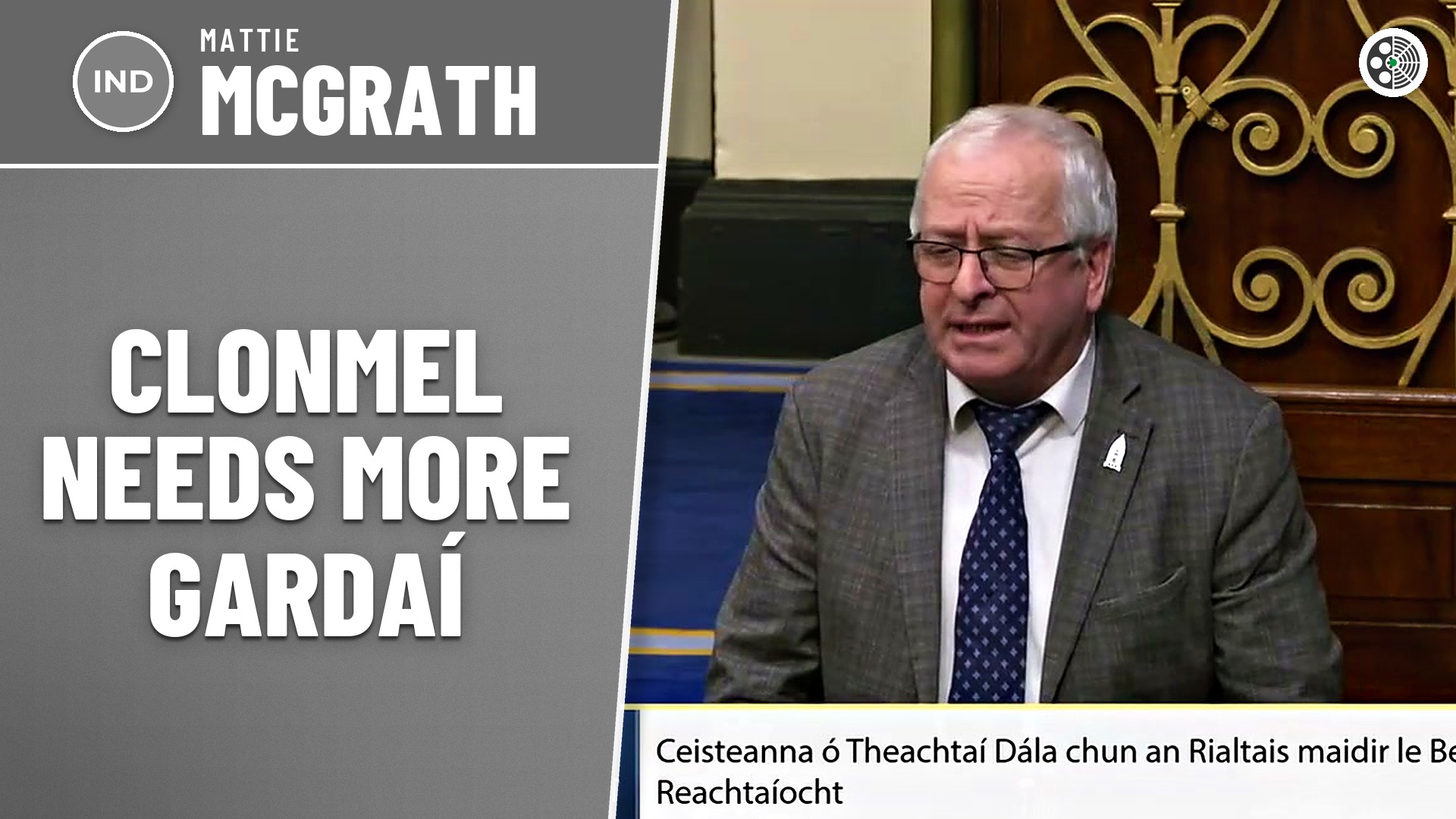
Mattie McGrath
Mattie McGrath Seeks More Gardaí for Clonmel
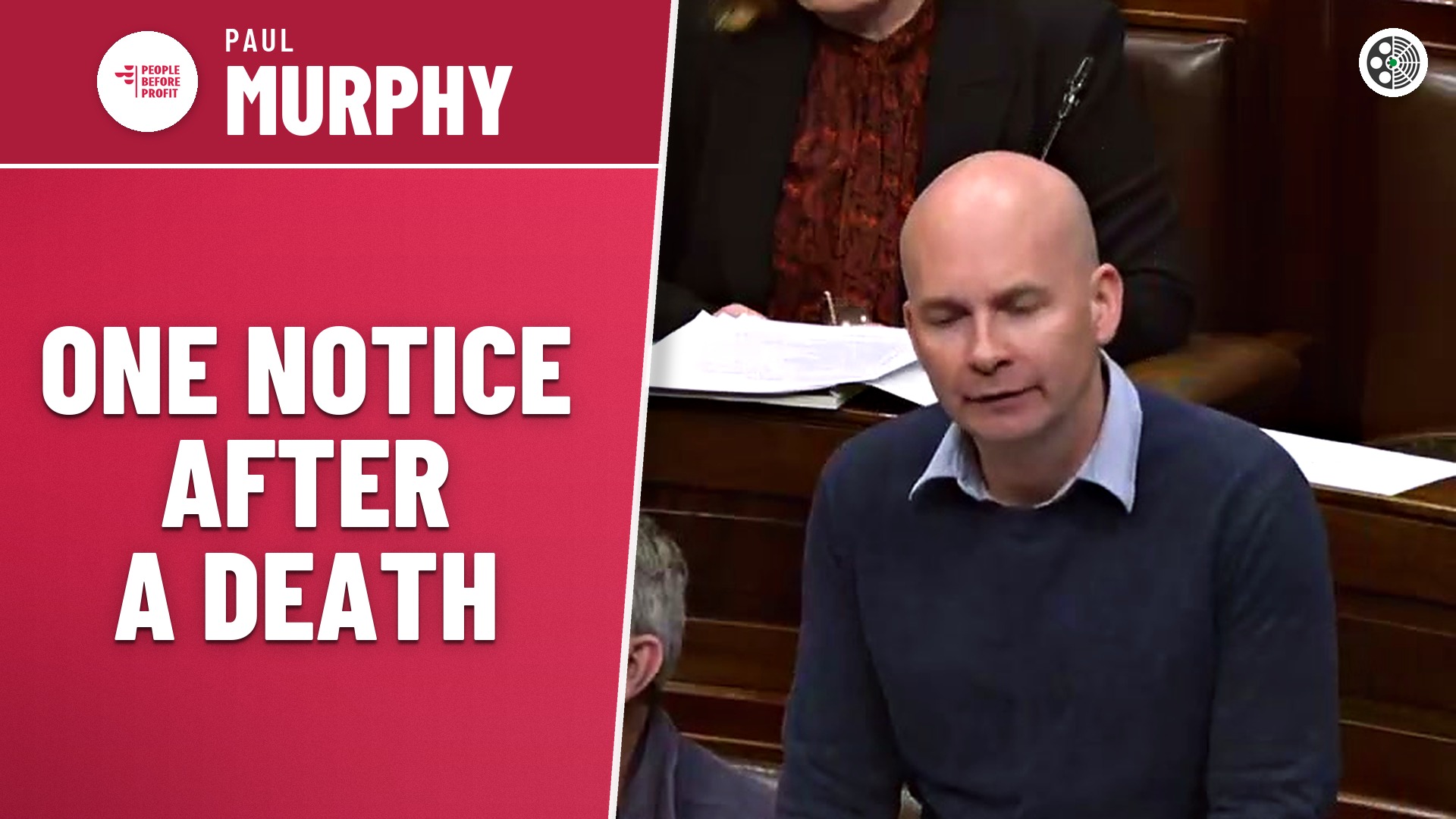
Paul Murphy
Paul Murphy Seeks ‘Tell Us Once’ Service for the South

George Lawlor
George Lawlor: Rural Ireland needs delivery, not another plan
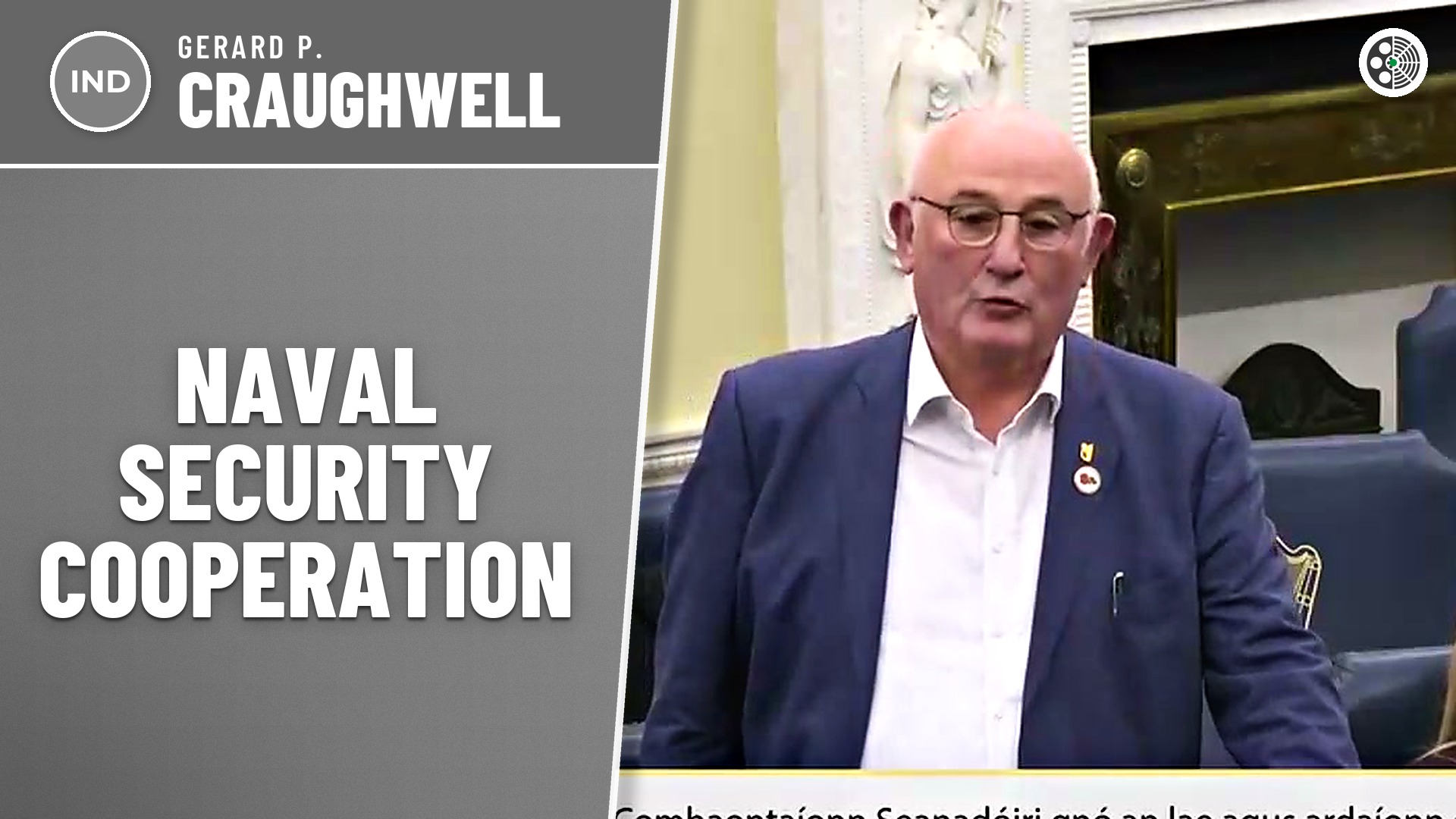
Gerard P. Craughwell
Gerard P. Craughwell calls for thanks to Royal and French Navies
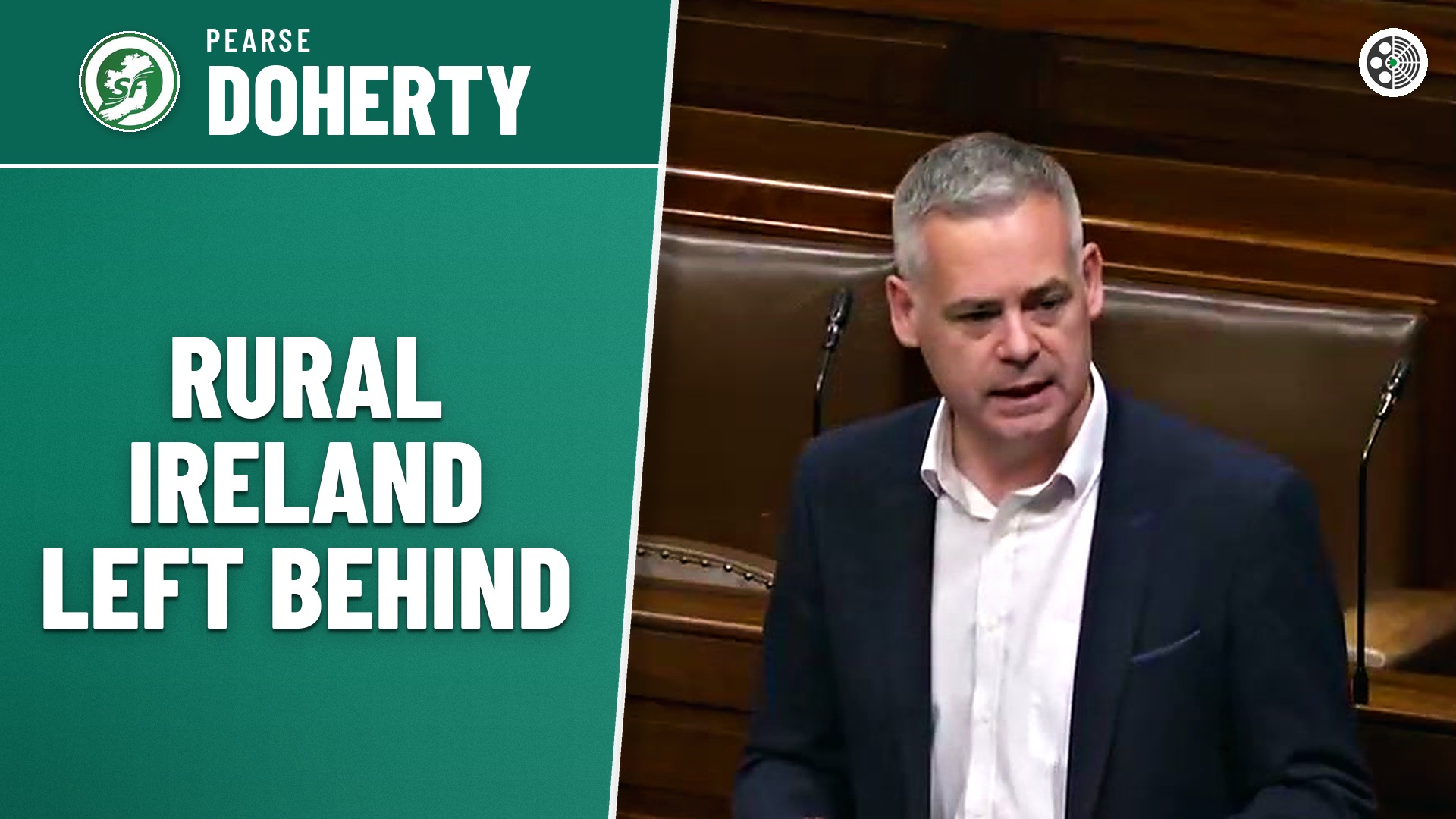
Pearse Doherty
Pearse Doherty: Rural Ireland needs more than ambitious targets

Richard Boyd Barrett
Richard Boyd Barrett challenges Donnybrook housing mix
Transcript
Go raibh maith agat, Caheirleac. A very able Caheirleac, I must say.
Caheirleac, I welcome the opportunity to conclude this debate on behalf of the
Government. At the outset, I want to acknowledge the very real concerns that
patients and families experience when they face long waits for care.
Overcrowding can never be acceptable. As we know, it places pressure on the
patients, on their families and our health and social care workers alike.
None of us, especially in Government, are in any way complacent about these challenges.
As Minister Carl MacNeill outlined earlier, our health service is dealing
with unprecedented levels of demand. Almost 100,000 more patient attendances
so far this year compared to the same period in 2025. 18,000 more attendances
by people aged 75 and over, many with more complex health and social care needs
and requiring additional care. It is unacceptable to me
that older people are left for very long times on trolleys. Nobody wants to see that.
This House cannot ignore the fact that, despite this growing demand, our health
and social care workers continue to provide very high-quality care every
single day, often in challenging circumstances. I want to place on the
record my appreciation and the appreciation of the Government for the
extraordinary work of nurses, doctors, allied health professionals, support
staff and managers throughout our health service.
My colleague Opsa can put down a motion with rhetoric about a lack of investment
in staffing and capacity across the health service, but the facts tell a
different story. There are 4,000 more staff in our health service today than
at the start of the year. That is a fact. There are 6,000 more staff today
than 12 months ago. That is also a fact. There are 30,000 more staff now than at
the start of 2020. That is another fact. Within our acute hospitals, staffing
has increased by a third. Since 2019, health spending has increased by more
than two-thirds, or €10.6 billion. The motion from the party opposite ignores
these facts because they cannot accept that the Government is making sustained
and very substantial investment in our health services, in staffing and in
patient care. They cannot accept that major investment is also under way
through the largest healthcare capital programme in the history of the state.
Surgical hubs are being rolled out across the country to separate elective
and emergency care. Four hubs are already operational, and further hubs,
including the new surgical hub in Waterford, are due to open in the coming
months. These facilities will help reduce waiting times and ensure that
procedures are less vulnerable to disruptions arising from pressures in
emergency departments. I want to correct an earlier comment that there had been
eight people through the surgical hub in Cork. As of yesterday, 2 November,
87 patients had attended the hub. This Government is also continuing to
develop and grow alternatives to hospital care through the enhanced
community care programme, the chronic disease management programmes, more
community pharmacies and virtual wards providing care in the home. Home
support is an important part of our response to pressures on hospitals,
including over the winter period. The triangles of supports of home care,
day care and meals on wheels have grown exponentially over the last six years
alone, supporting many people to stay for as long as possible in their own
homes. It helps people to remain in their homes and enables people who no
longer require acute hospital care to return home with appropriate supports.
Priority is given both to people in the community with acute needs and to those
assessed and waiting in acute hospitals who can return home with supports.
As a TD for Waterford and as a Minister in the Department of Health, I also want
to acknowledge, and it was mentioned here tonight, the outstanding work taking
place at University Hospital Waterford. University Hospital Waterford has
maintained a green status throughout the first 10 months of 2026. This is
effectively a zero-trolley status that it has held for years, despite having the
same increasing demand for services being witnessed nationally. University
Hospital Waterford is demonstrating what can be achieved through strong
leadership, effective patient flow and a whole-of-health services approach.
I do think it's important to state again that today just five out of the 29
emergency department sites account for 50% of the national trolley congestion
total. We have 29 hospitals with emergency departments. Our persistent
problem is in eight or nine of them. Waterford demonstrates that good patient
flow is about knowing who is in the hospital and having a plan for every
patient. It is about having strong operational oversight, a senior manager
focused on bed capacity every day, being proactive in the management of
diagnostics and infection prevention and control, and facilitating timely
discharges. It is about maximising the use of all available capacity,
including community sports such as community intervention teams and home
first services. The entire health service needs to recognise and learn
from the University Hospital Waterford's successes in dealing with trolleys.
In my role as Minister for Mental Health, I am particularly conscious that
emergency departments are not always the most appropriate setting for people
experiencing a mental health crisis. Over recent years, we have made
significant progress in developing community-based mental health supports.
We are continuing to invest in crisis resolution teams, crisis cafes,
enhanced out-of-hour responses and stronger community mental health teams
so that people can receive support closer to home and at an earlier stage.
We now have seven crisis resolution teams in place, two in Cork, one each in
Waterford Galle with Sligo, Limerick and Dublin, and five more funded for
Donegal, Kerry, the Midlands, North Tipperary and Wexford. We have six
solace cafes open, with nine more funded to open over the next 12 months.
Where we have solace cafes in place, so they are crisis cafes with people
with enduring mental health conditions, we have seen a reduction of between 14%
and 18% of presentations to emergency departments.
We are also investing in our scan nurses, our suicide crisis assessment
nurses. These experienced nurses work to support people who present to
GPs in distress, often providing support in GP surgeries and even in
people's own homes. In Budget 2027, I have funded a further 24 of these
nurses to expand this programme so that it has a presence in every county,
bringing the total number to 69.
Our objective is clear where appropriate people experiencing mental
health difficulties should be able to access timely support in their
communities without having to attend already pressurised emergency
departments. By creating additional pathways to care, we can improve
outcomes for individuals while also helping to reduce pressure on acute
hospital services. As we continue this major expansion of community-based
supports, we know some people in distress may need to present to a
hospital where they have both a physical and a mental health need. That
is why we are also investing in building the capacity of our emergency
departments to better respond to the development of new specialist crisis
nursing teams. These teams are made up of experienced clinical nurse
specialists and advanced nurse practitioners working out of hours, at
night and over the weekend, to support the NCHD on duty. I funded teams for
all model 4 hospitals and the Mersey and Cork in this year's budget, and
new teams for six of our model 3 hospitals for next year's budget.
As we enter the winter period, the public can be assured that extensive
work is under way across the health regions. Region-specific and
hospital-specific plans are being implemented. Additional patient flow
measures are being put in place. Vaccination programmes for influenza,
Covid-19 and RSV are already under way, and will play a critical role in
protecting vulnerable people and reducing avoidable hospital admissions.
In government, we do not underestimate the challenges ahead. Our
responsibility is to focus relentlessly on what works for patients—safety,
staff capacity, reduced delayed discharges, seven-day services—really
important—strong patient flow, alternative care pathways, innovation
and accountability. That is the approach set out in government's
counter-motion. It acknowledges the challenges. It recognises the
outstanding contribution of healthcare staff, and it provides a practical
path to improvement, to investment and reform. We want patients to be
seen quickly, treated safely and cared for in dignity. We want families
to have confidence that the health service will be there when they need
it. We want our healthcare workers to have the facilities, staffing and
support they need to do their jobs.
The Government's focus will continue to be on delivering the mission of
universal healthcare. We did not hear much about that tonight, I have to
say. We will continue to keep building capacity to strengthen our
community services and improve patient outcomes. We will continue to
invest in and support the dedicated health and social care workforce
who treat patients every day. This winter, every single available
resource must be focused on the patient. Every part of our health and
social care service must work together, and every opportunity to
provide safe care in the right setting must be taken. I commend the
Government's counter-motion to the House.