

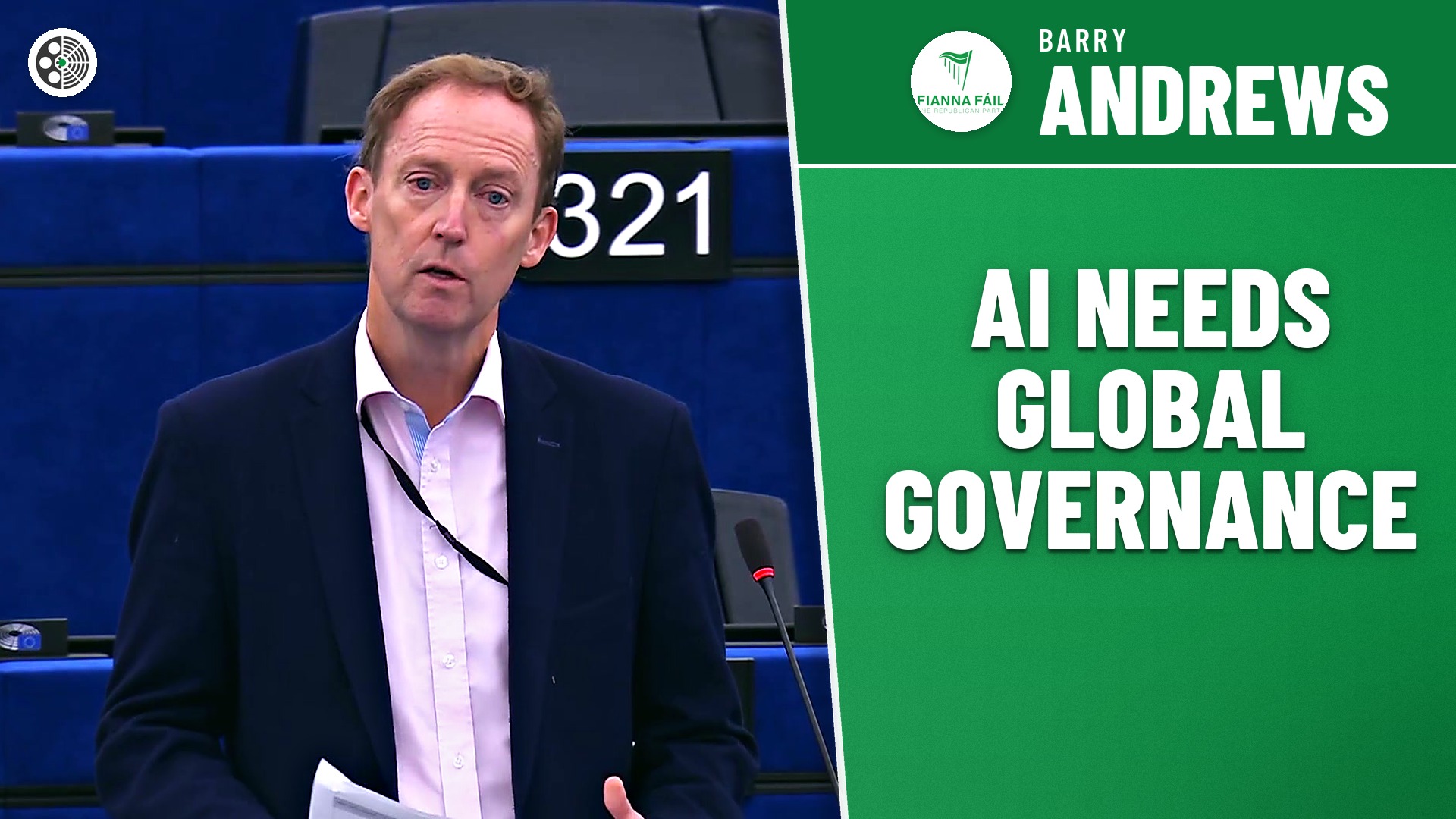


Barry Andrews: AI needs global governance
Barry Andrews argued in a European Parliament debate that artificial intelligence requires global governance, not just EU regulation. He said international health governance offers a better model for managing AI risks than nuclear arms control, while keeping innovation human-centred.
Andrews framed the debate as a question of global governance and the EU’s role in shaping it. He argued that governance and innovation can work together, with rules guiding innovation towards human-centred outcomes.
He said comparisons between AI and nuclear arms control were limited because nuclear weapons are held by a small number of governments and are costly to develop. AI, by contrast, is used across the economy and is largely privately owned.
Andrews pointed to the World Health Organization, the World Health Assembly and international health guidelines as a more relevant comparison. He cited reporting and emergency-response protocols for a pathogen escaping from a laboratory as an example of the kind of international controls needed.
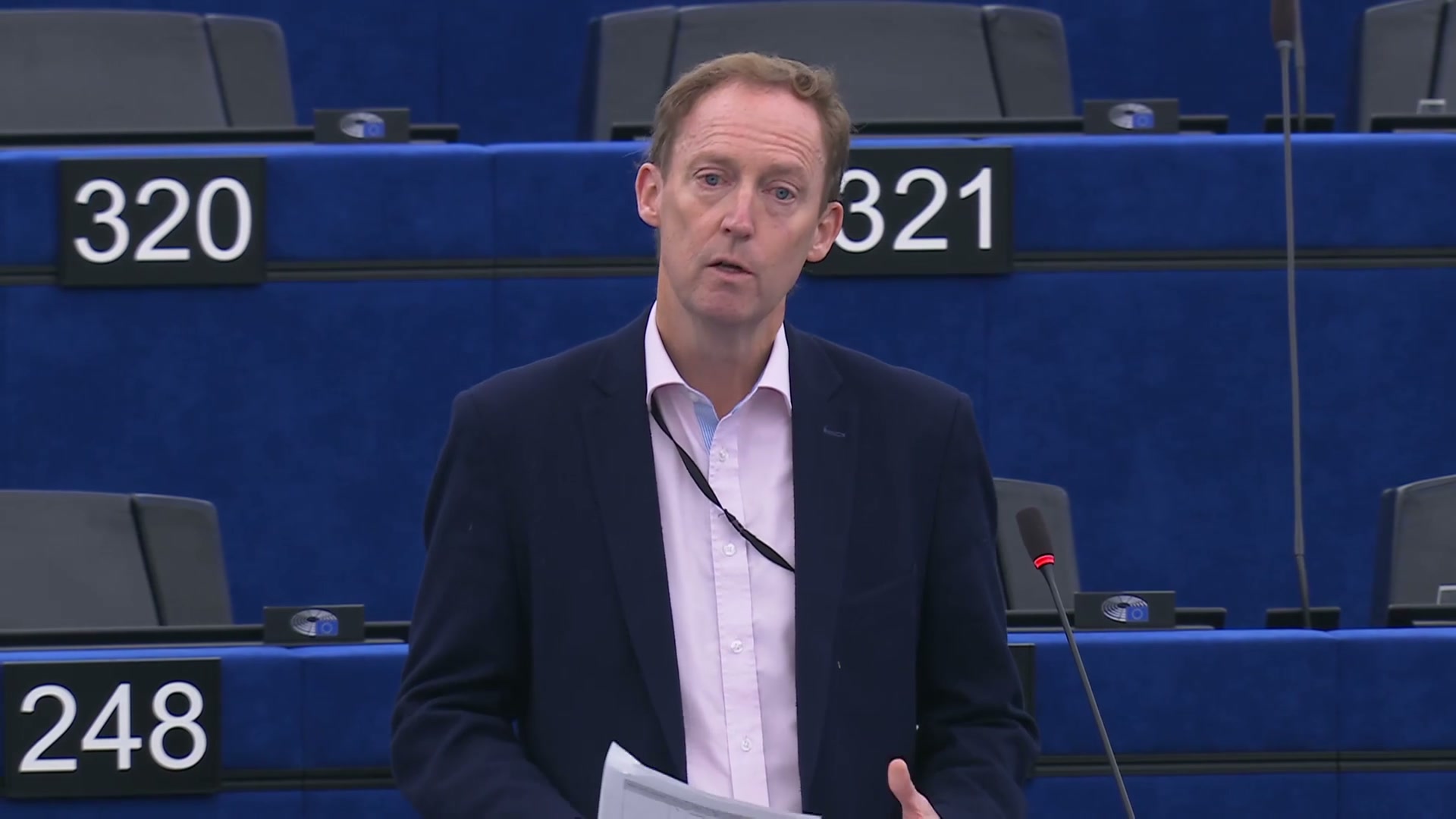
He warned that arguments for “free-wheeling market forces” in AI would not age well. His contribution made the case for international safeguards that address AI’s broad reach while allowing innovation to continue.
AI and global governance
Andrews framed the debate as a question of global governance and the EU’s role in shaping it. He argued that governance and innovation can work together, with rules guiding innovation towards human-centred outcomes.
Why nuclear arms control falls short
He said comparisons between AI and nuclear arms control were limited because nuclear weapons are held by a small number of governments and are costly to develop. AI, by contrast, is used across the economy and is largely privately owned.
A health governance model
Andrews pointed to the World Health Organization, the World Health Assembly and international health guidelines as a more relevant comparison. He cited reporting and emergency-response protocols for a pathogen escaping from a laboratory as an example of the kind of international controls needed.
The role of market forces
He warned that arguments for “free-wheeling market forces” in AI would not age well. His contribution made the case for international safeguards that address AI’s broad reach while allowing innovation to continue.
We publish thousands of recordings to make Irish politics transparent and resistant to manipulation. Spotted an error? Report it — together we are building a reliable archive of Irish politics.
Other speeches
Tego samego dnia All speeches from this day →
Paul Nicholas Gogarty
Paul Nicholas Gogarty Calls for Scoliosis Inquiry Tribunal
Sharon Keogan
Sharon Keogan challenges Government on counterterrorism
Jennifer Carroll MacNeill
Jennifer Carroll MacNeill backs CHI inquiry commission

Albert Dolan
Albert Dolan presses for hot school meals fix in Moyglass
Sharon Keogan
Sharon Keogan criticises consent campaign on family greetings
Gerard P. Craughwell
Gerard P. Craughwell asks about PTSD respite care
Transcript
Mr. Andrew, seat 188.
Thank you, President.
This debate is not actually about EU regulation.
It is about global governance, and it's about the EU leading in debate in this hemicycle
in global governance.
The title of the debate is very explicit about this.
And governance and innovation don't have to run against each other.
Governance can point innovation in a human-centered way.
I also think that the analogy drawn by many speakers to nuclear arms control is very limited.
Nuclear arms are concentrated in the ownership of very few sovereign governments and are
very expensive to develop.
AI, on the other hand, is in every sector of the economy.
AI is largely privately owned.
So I think a better analogy is with world health governance.
We have a situation where we have a World Health Organization, a World Health Assembly,
and international health guidelines.
If a pathogen escapes from a laboratory, we have specific controls and protocols around
reporting and emergency response.
And that's the analogy we need to draw.
And I think those who have made an argument for free-wheeling market forces, those arguments
will not age well.
Thank you, President.
Thank you very much, dear colleague.
Mr. Grazzuli, seat 525.