

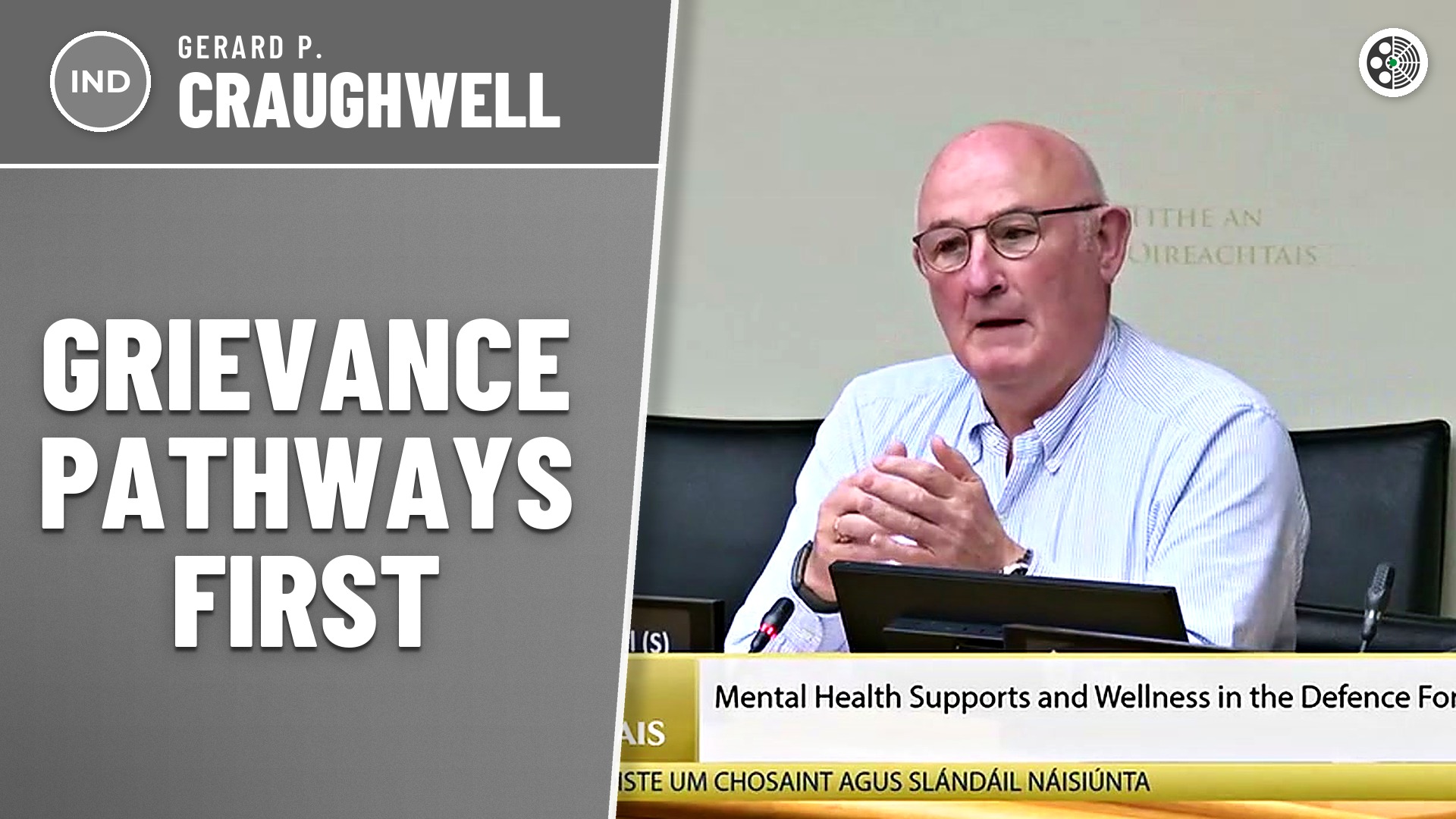


Gerard P. Craughwell questions Defence Forces grievance pathways
Gerard P. Craughwell asked General Lewis whether Defence Forces personnel should be encouraged to use internal grievance channels before contacting public representatives. The exchange took place during a discussion of grievance services, cultural change and protected disclosures, with Craughwell stressing that genuine whistleblowing must remain an option.
Craughwell said electronic communications had made public representatives more accessible to Defence Forces personnel, and recalled that contacting a representative during his own service would not have been something he did. He asked whether education programmes should include a frank discussion about when it is appropriate to contact a public representative and encourage personnel to try internal channels first.
General Lewis said the organisation was working to build confidence in its grievance systems as part of cultural development. He said personnel were being encouraged to use channels designed for the organisation, including independent protected disclosure routes, rather than going directly to individual public representatives.
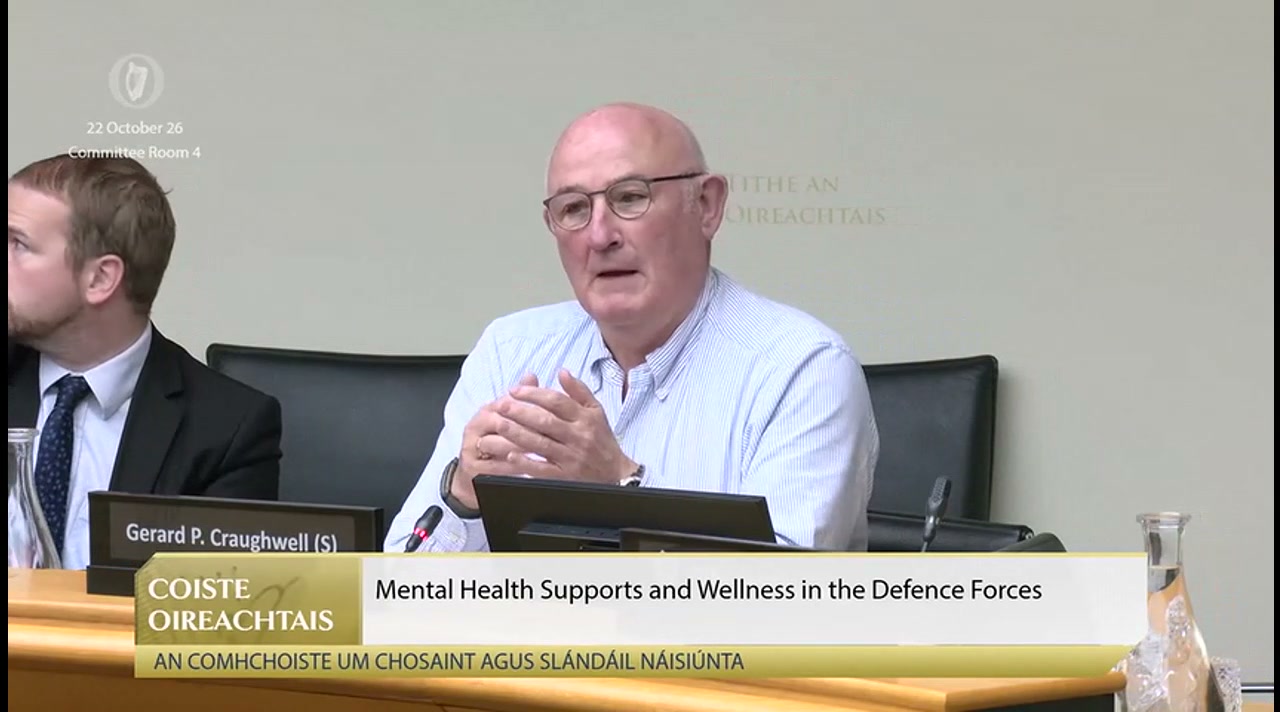
Craughwell said electronic communications had made public representatives more accessible to Defence Forces personnel, and recalled that contacting a representative during his own service would not have been something he did. He asked whether education programmes should include a frank discussion about when it is appropriate to contact a public representative and encourage personnel to try internal channels first.
General Lewis said the organisation was working to build confidence in its grievance systems as part of cultural development. He said personnel were being encouraged to use channels designed for the organisation, including independent protected disclosure routes, rather than going directly to individual public representatives.
We publish thousands of recordings to make Irish politics transparent and resistant to manipulation. Spotted an error? Report it — together we are building a reliable archive of Irish politics.
Other speeches




Tego samego dnia All speeches from this day →
Barry Andrews
Barry Andrews asks how party views align with Pope's teaching
Rose Conway-Walsh
Rose Conway-Walsh Questions Defence Forces Culture Measures
Joe Neville
Joe Neville questions school meal waste and procurement
Pearse Doherty
Pearse Doherty challenges Minister over elderly patients waiting
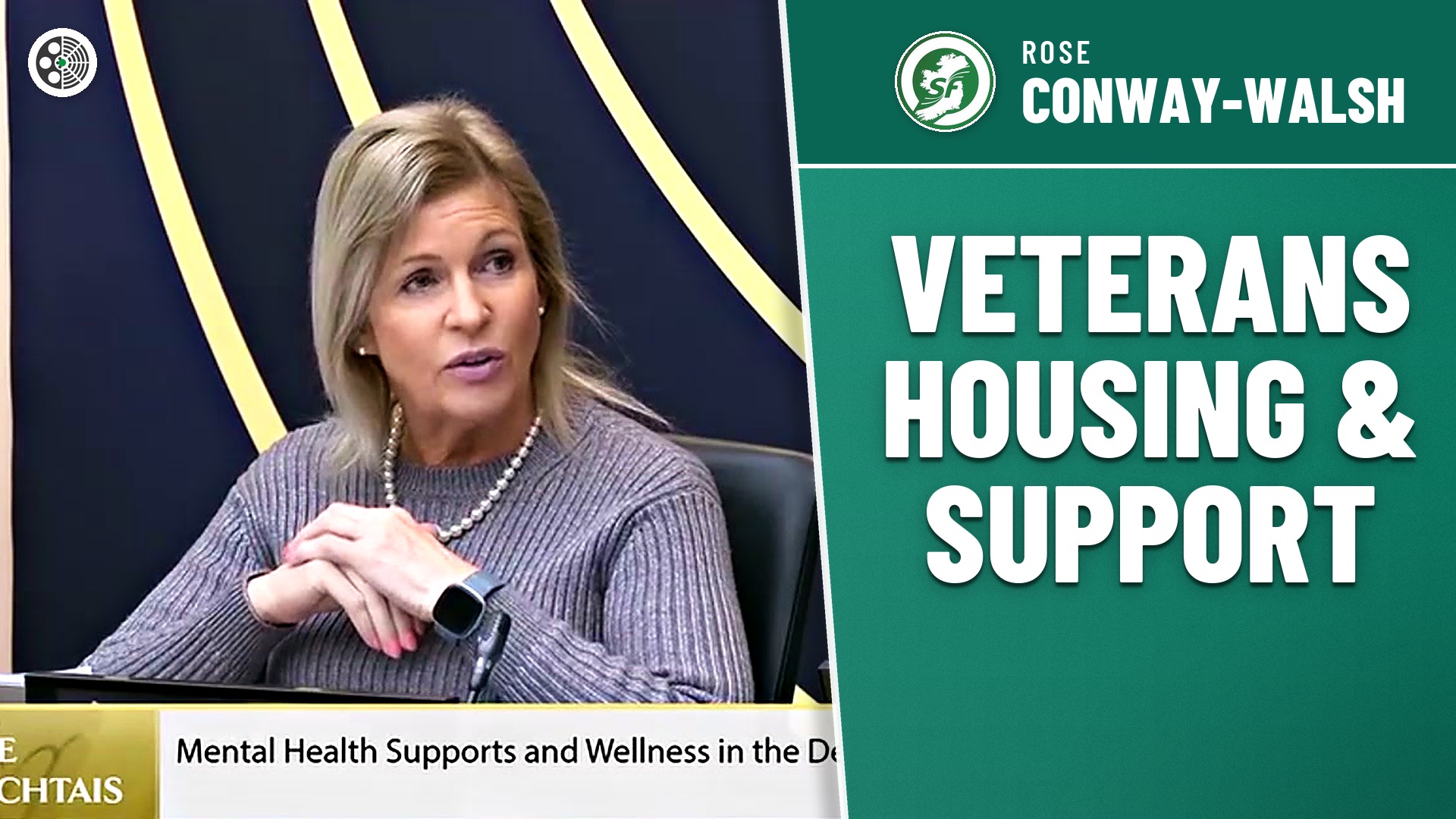
Rose Conway-Walsh
Rose Conway-Walsh questions veteran housing and mental health supports
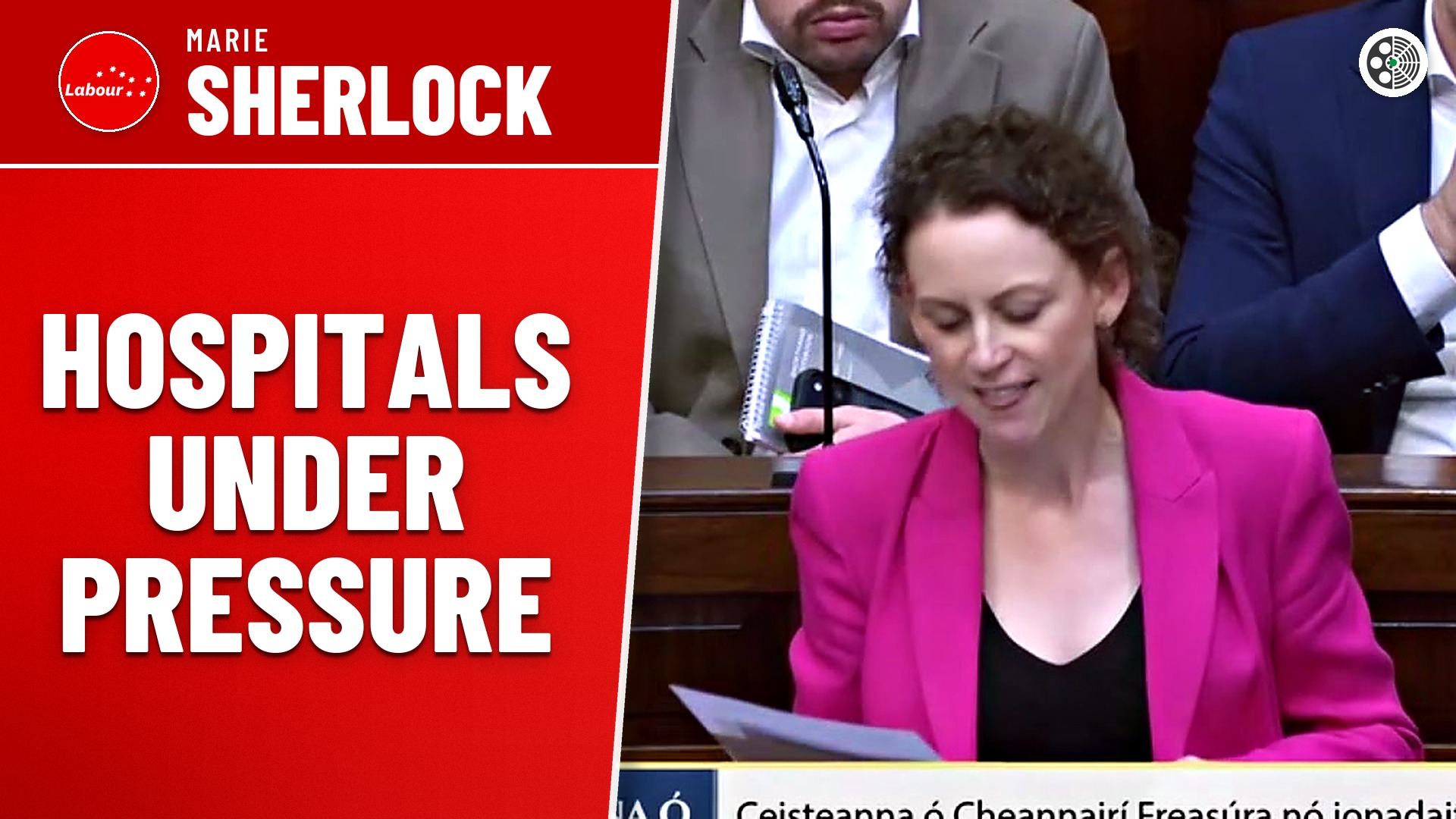
Marie Sherlock
Marie Sherlock challenges Government over health service deficit
Transcript
General Lewis, you spoke about the services that are available to members who have grievances,
As members, as public representatives, we get communications from members of the public
on all sorts of issues at all times.
I get emails that are addressed to everybody in the world and they rant with grievances
people have in the world.
Having served in the Defence Forces myself, I would never during my service have contacted
a public representative.
It just was something you didn't do.
That has changed because of electronic communications, because we're all available, everybody has
email addresses.
You talk about the changing culture and what you're doing and what you're working towards
there.
You have all of these services, you're revamping the grievance service, etc.
Do you think the time has come to maybe have a frank discussion with those who are serving
with respect to when and where it's appropriate to contact a public representative?
Or if you want, for those who step outside the system without first trying the system
to see will the system actually come to their support?
I don't want to discourage those who may have a genuine whistleblowing statutory disclosure
that they want to make.
I don't have difficulty with that.
If somebody wants to do that, they should have the option to do it.
But you're putting all these processes in place.
Now we need to get people to come back in who might feel that they were easier to contact
a public rep and see will the public rep fix the problem for them.
We're not here to fix those sorts of problems.
Your organisation is well capable of that.
So is it time to have a frank discussion during those education programmes?
I think you raise a valid point.
We are on a journey of cultural development and part of that journey is engendering confidence
in the systems that we have and in developing them to that level of confidence.
And I think we're well on the way to that.
Yes, it may be the case that people will contact public representatives.
Of course, we have our own rules and regulations around that.
But what I would say is that there's an increasing confidence in the systems that we do have.
And as the design of our grievance management system finalises and we roll out that new
I think that all those avenues will be plenty for people to access all the necessary services.
As you pointed out, the protected disclosure system is there anyway.
And if they don't want to or feel strongly that they can't go through internal systems,
that protected disclosure system already exists.
So there are plenty of avenues and pathways for people.
And yes, we are encouraging people to use those pathways initially
and use those pathways that are designed specifically for the organisation
and those external ones that are independent like protected disclosures
rather than going directly to individual public representatives.
Just finally, people make protected disclosures that are actually not protected disclosures.
So maybe a bit of education in that area might go down well as well.
Thank you.
Appreciate that.