

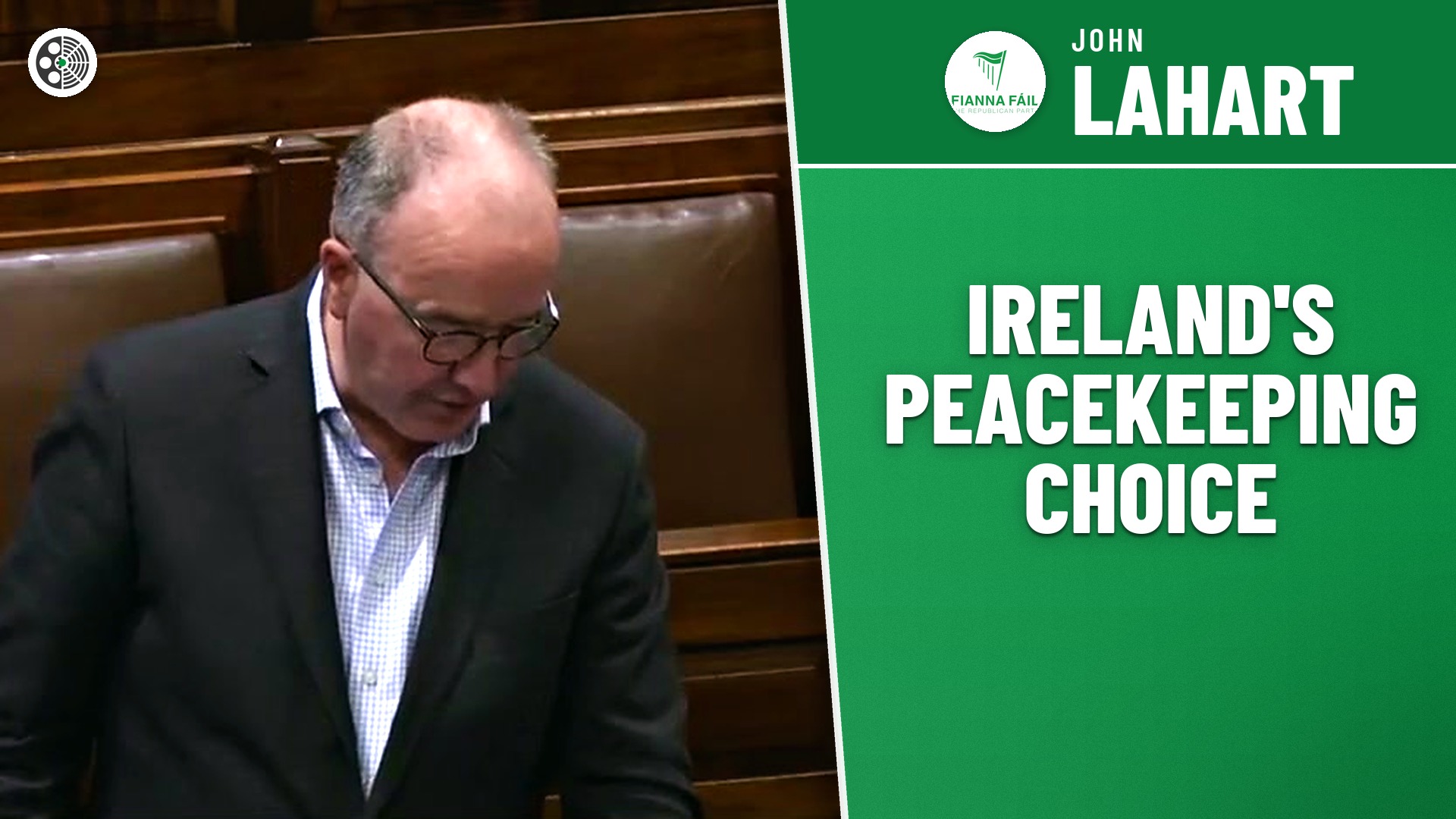


John Lahart argues Ireland must decide where peacekeepers serve
In a Dáil debate, John Lahart argued that Ireland should retain the sovereign right to decide when and where its Defence Forces take part in peacekeeping missions. He said changing the triple lock would not end Irish neutrality or Ireland’s commitment to the United Nations, but would give elected representatives a greater say over deployments.
Lahart pointed to Ireland’s record of UN peacekeeping, saying Irish personnel had served continuously under the blue helmet since June 1958 and that no country had a longer unbroken record. He described peacekeeping as part of Ireland’s history and national identity.
He argued that the triple lock now allowed the UN Security Council to determine whether and where Ireland could deploy its Defence Forces. He said Sinn Féin’s position would leave decisions subject to the influence of Russia or China and give Britain more say than the Irish Parliament.
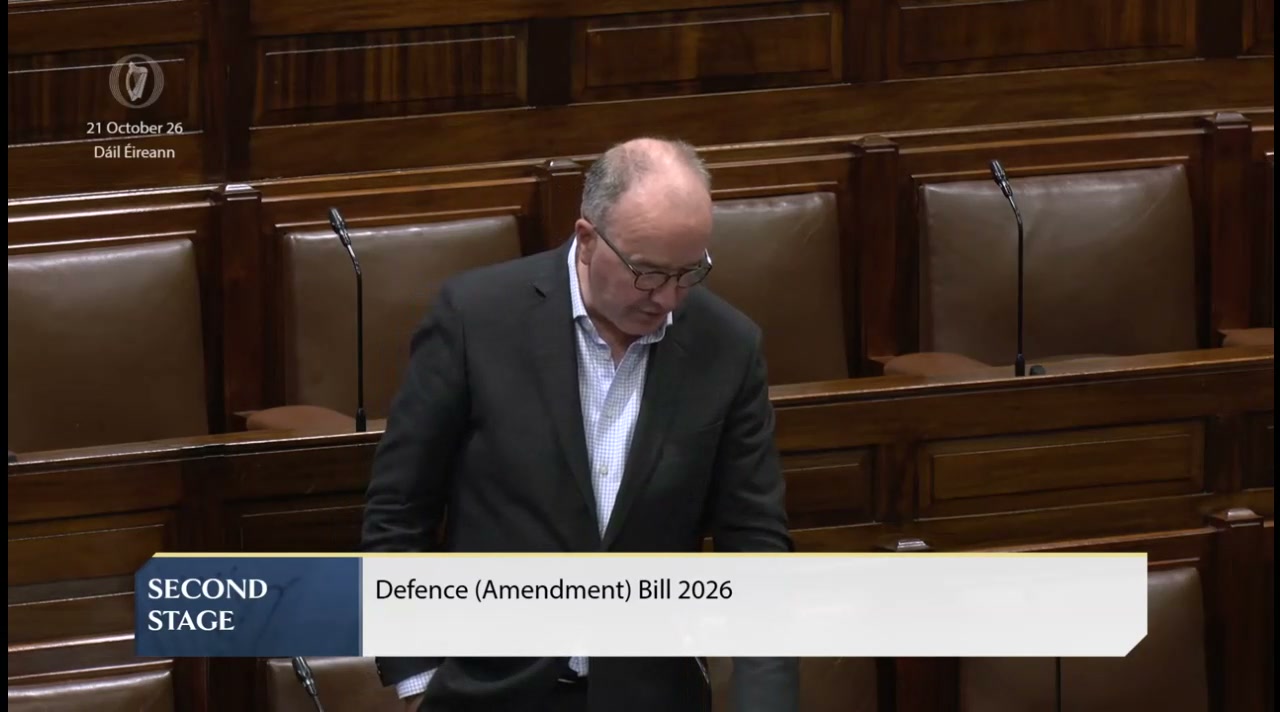
Lahart pointed to Ireland’s record of UN peacekeeping, saying Irish personnel had served continuously under the blue helmet since June 1958 and that no country had a longer unbroken record. He described peacekeeping as part of Ireland’s history and national identity.
He argued that the triple lock now allowed the UN Security Council to determine whether and where Ireland could deploy its Defence Forces. He said Sinn Féin’s position would leave decisions subject to the influence of Russia or China and give Britain more say than the Irish Parliament.
We publish thousands of recordings to make Irish politics transparent and resistant to manipulation. Spotted an error? Report it — together we are building a reliable archive of Irish politics.
Tego samego dnia All speeches from this day →
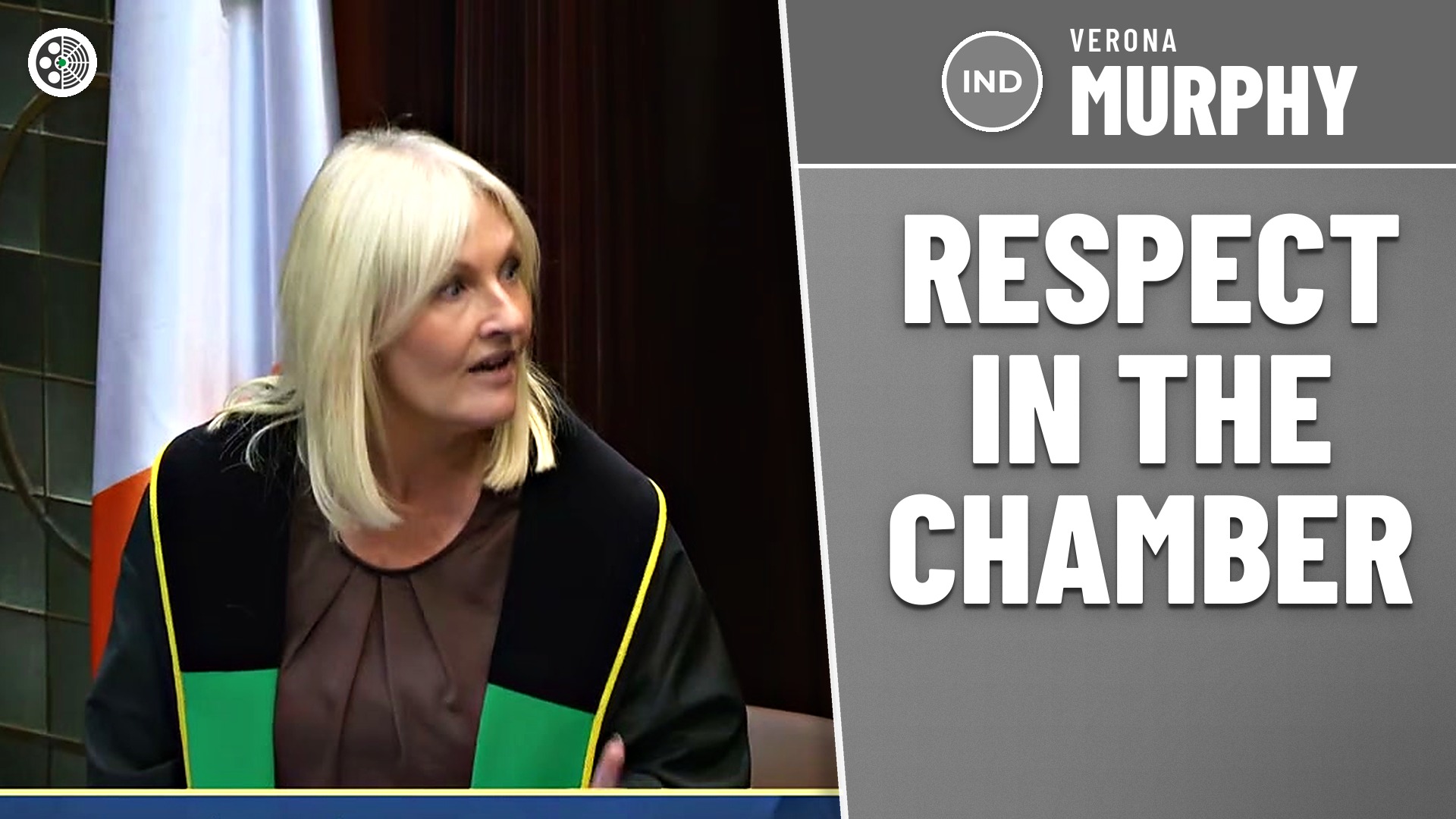
Verona Murphy
Verona Murphy calls for respect and order in the Chamber
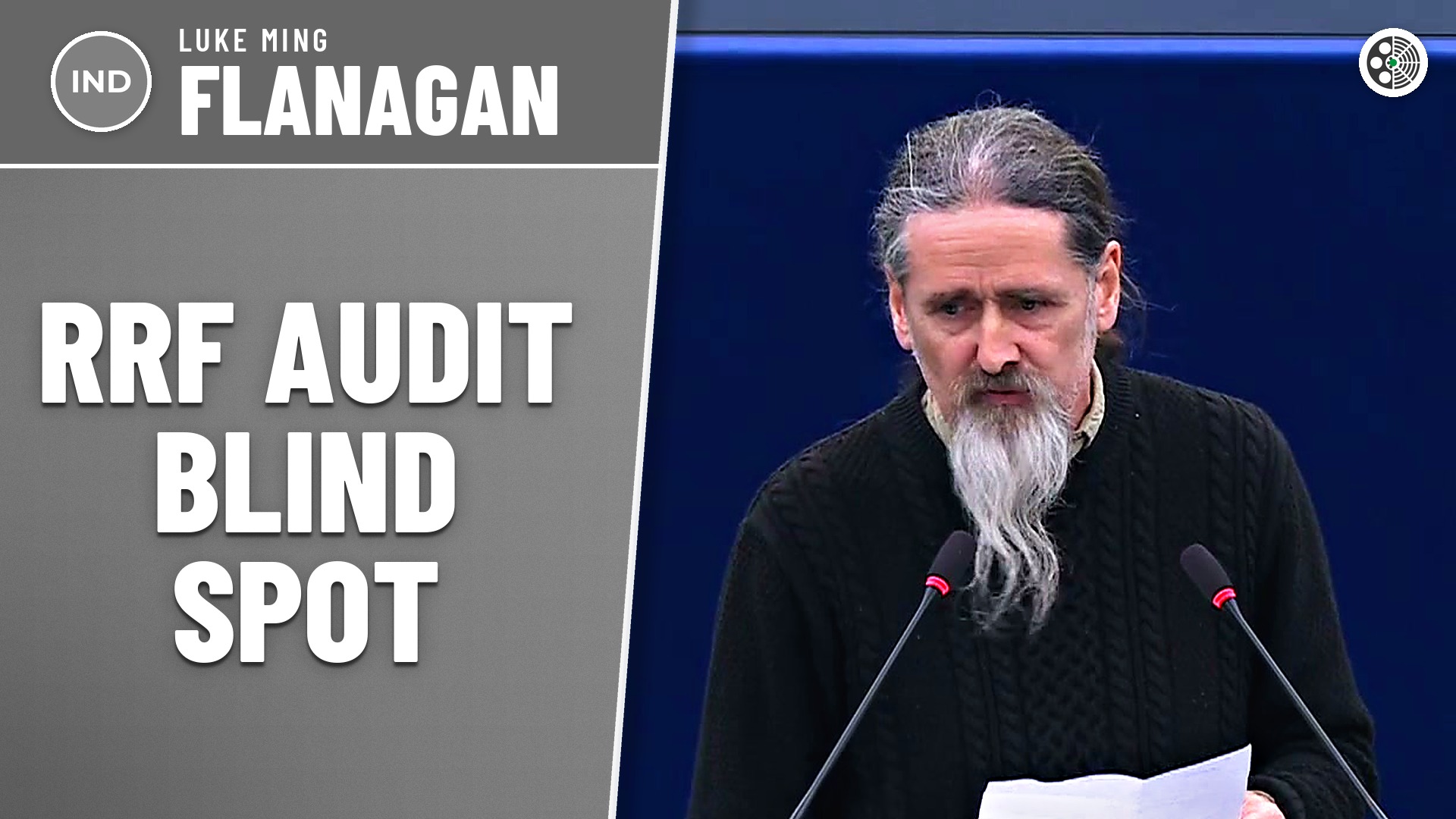
Luke Ming Flanagan
Luke Ming Flanagan: RRF audit leaves value-for-money blind spot
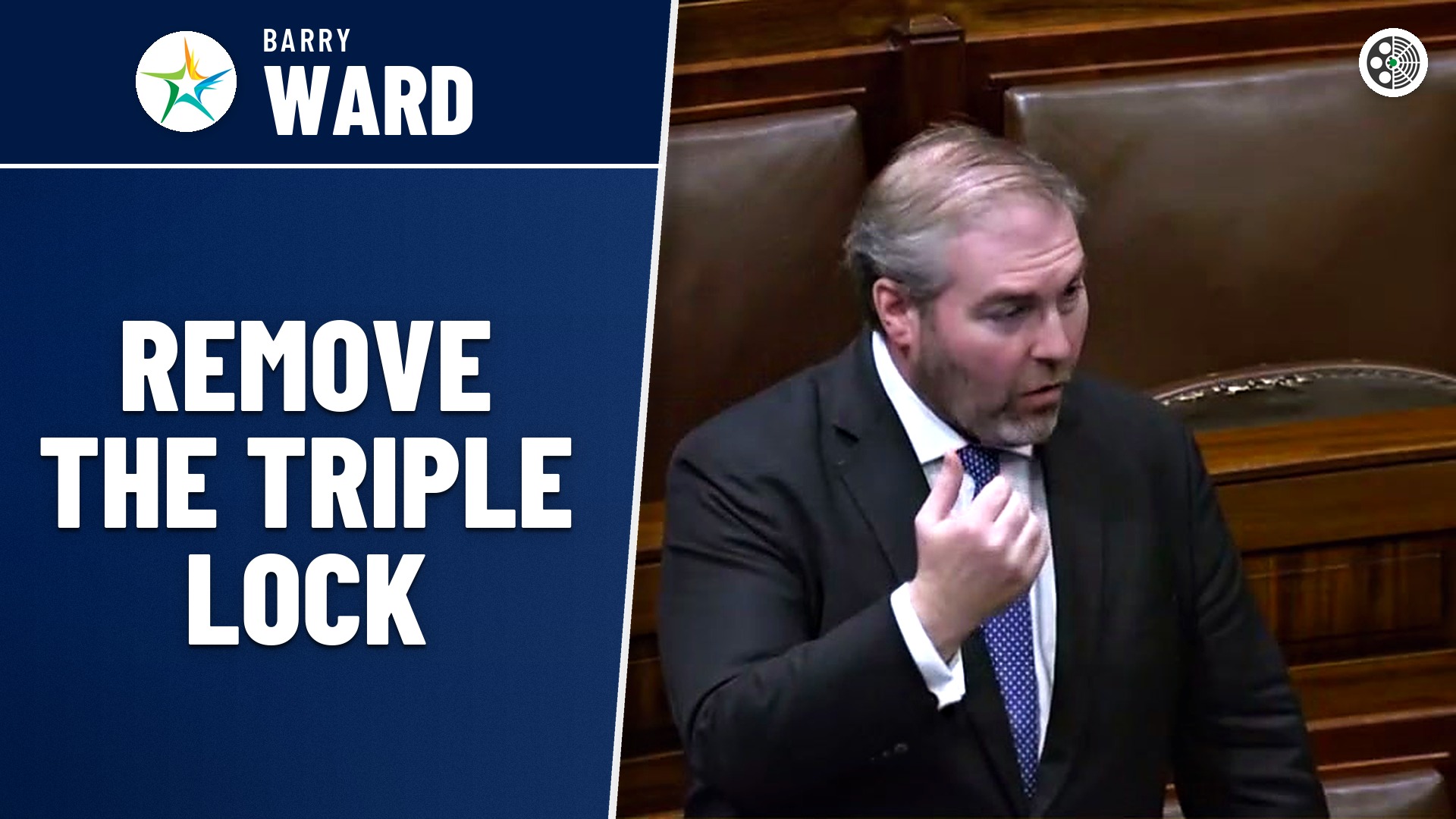
Barry Ward
Barry Ward backs removing the triple lock while defending neutrality
Sean Fleming
Sean Fleming: Stack family apology must lead to justice
Mary Lou McDonald
Mary Lou McDonald calls for referendum on triple lock
Sharon Keogan
Sharon Keogan calls for deemed disposal to be scrapped
Transcript
Thanks, Cíochairleach. There is, I think, so much hysteria on the opposition benches
today, so let me reassure people from the outset that this debate is not about ending
Irish neutrality, it's not about joining NATO, and it definitely isn't about creating a European
army. This debate is about one thing, it's about our independence, whether we in Ireland
should retain the sovereign right to decide for ourselves when and where we participate
in peacekeeping missions. For decades, Ireland has earned an international reputation far
beyond our size through the courage and professionalism of our defence forces. No country in the world
has a longer unbroken record of service in UN peacekeeping than ourselves. So that every
day since June 1958, Irish men and Irish women have served under the blue helmet in the pursuit
of peace. This isn't just part of our history, it's part of who we are as a nation, a peaceful
nation. But the uncomfortable truth, Cíochairleach, is that the triple lock means we can't do
that anymore. The triple lock was meant to ensure continuity in peacekeeping, and sadly
that is no longer the world we live in. Today, it does quite the opposite. The Security Council
can effectively veto whether we, or where, Ireland sends its defence forces. So the opposition
can't credibly claim to defend Irish sovereignty. Sinn Féin, the party whose very name means
ourselves alone, would leave Ireland dependent on a system where Russia or China can determine
where Ireland sends our peacekeepers. Sinn Féin would allow Britain, ironically, more
say than our own parliament, over where we deploy our peacekeepers. This House is elected
by the people of Ireland. The Irish government is elected by members of this House. And ultimately,
the opposition don't trust the elected representatives of the people. If you believe in Irish democracy,
then you should have the confidence to allow democratic decisions to be made here, in this
I assure you, once again, when it comes to deploying peacekeepers or Irish troops, any
deployment of Irish troops will still have to comply with the United Nations Charter
and International Law. A majority of elected representatives in this House will still be
required to support it, and government approval will still be required. Cíochairleach, the
opposition is trying to confuse and bewilder people. A number of things can be true at
the same time. It is true that our commitment to the UN is unwavering, and no government
has defended the UN more than the government of Ireland, as evidenced, for example, by
the government's defence of UNRWA. It's also true that the desire of Ireland to continue
its invaluable work as an international peacekeeper remains steadfast. And finally, it is also
true that we equally want the preservation of our tradition of military neutrality.