

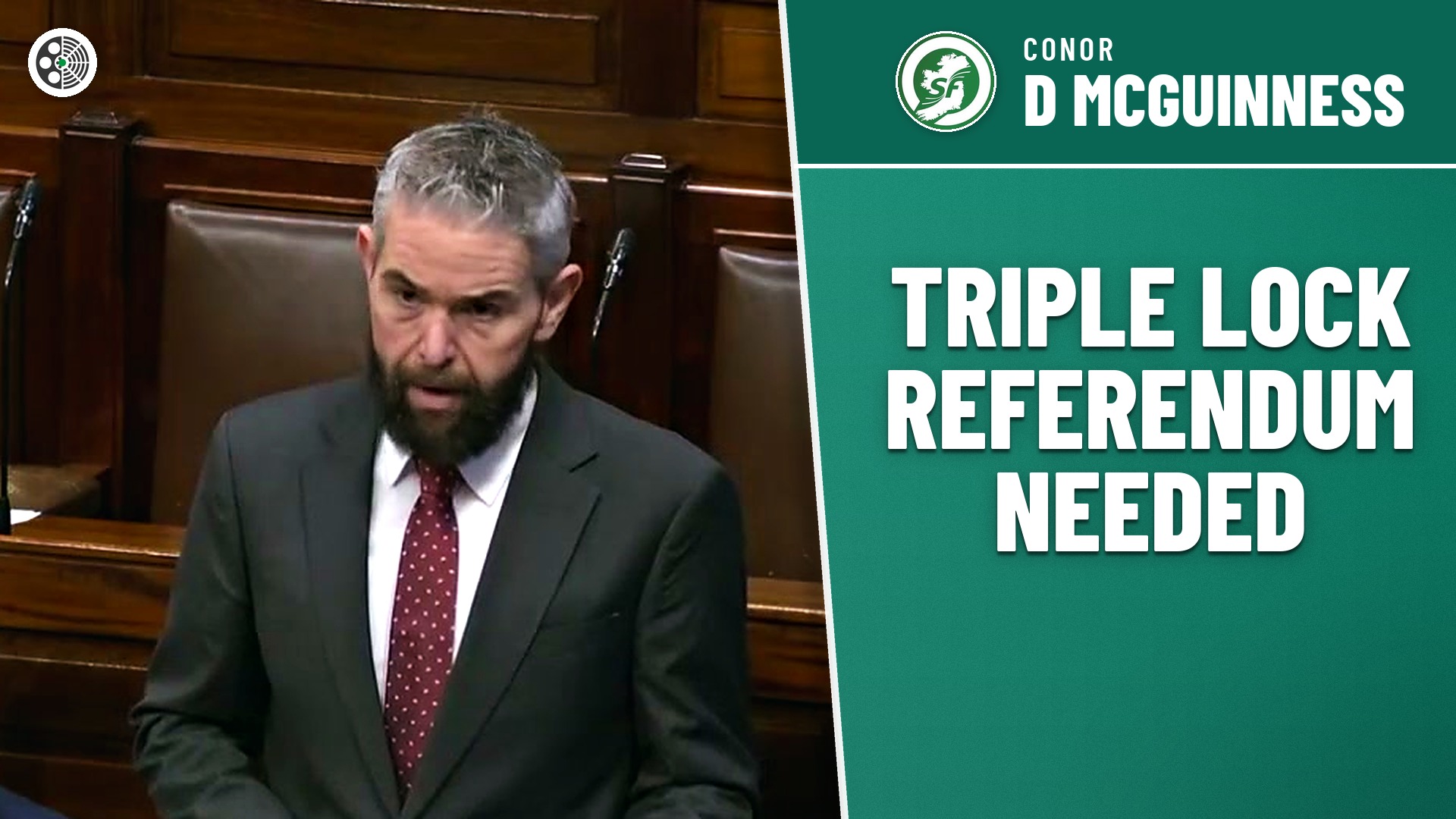


Conor D McGuinness calls for Triple Lock referendum
Conor D McGuinness argues that the Triple Lock is central to Irish military neutrality and calls for a referendum before it is changed. He says the safeguard protects Irish troops from being sent overseas without Government approval, Dáil Éireann approval and a United Nations mandate.
McGuinness warns that removing the Triple Lock could expose Irish troops to military missions shaped by the interests of major powers. He argues that neutrality allows Ireland to speak for peace and international law, and underpins its peacekeeping tradition.
He acknowledges that the United Nations needs reform, but says its limitations should not be used to weaken Irish neutrality. He rejects claims about sovereignty, arguing that the record of Fianna Fáil and Fine Gael gives people reason to question whether they would resist international pressure.
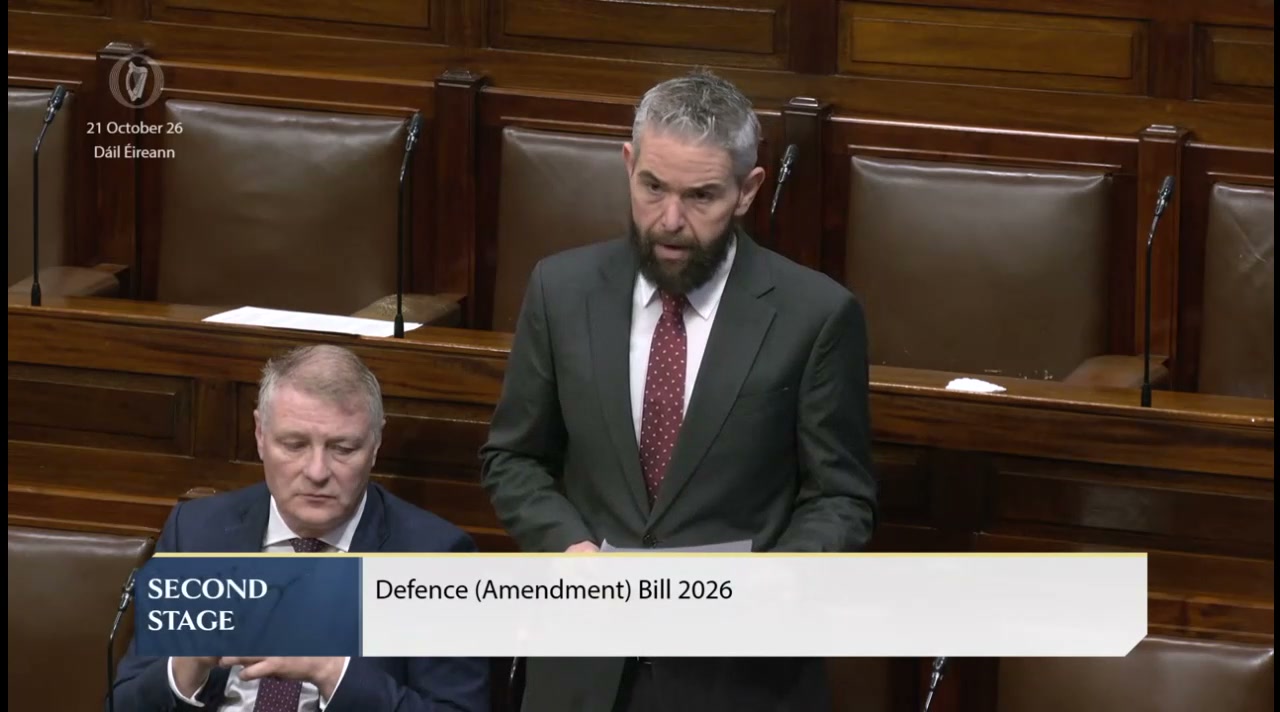
McGuinness refers to the guarantees on neutrality given to voters around the Nice and Lisbon treaties. He says the Triple Lock should not be removed without asking the public and challenges the Government to put the issue to a referendum.
He concludes that Irish neutrality belongs to the people, not to the Taoiseach, the Tánaiste or any government. Watch the recording to hear his full contribution.
The Triple Lock and neutrality
McGuinness warns that removing the Triple Lock could expose Irish troops to military missions shaped by the interests of major powers. He argues that neutrality allows Ireland to speak for peace and international law, and underpins its peacekeeping tradition.
UN reform and military neutrality
He acknowledges that the United Nations needs reform, but says its limitations should not be used to weaken Irish neutrality. He rejects claims about sovereignty, arguing that the record of Fianna Fáil and Fine Gael gives people reason to question whether they would resist international pressure.
Referendum and public consent
McGuinness refers to the guarantees on neutrality given to voters around the Nice and Lisbon treaties. He says the Triple Lock should not be removed without asking the public and challenges the Government to put the issue to a referendum.
He concludes that Irish neutrality belongs to the people, not to the Taoiseach, the Tánaiste or any government. Watch the recording to hear his full contribution.
We publish thousands of recordings to make Irish politics transparent and resistant to manipulation. Spotted an error? Report it — together we are building a reliable archive of Irish politics.
Other speeches

Tego samego dnia All speeches from this day →
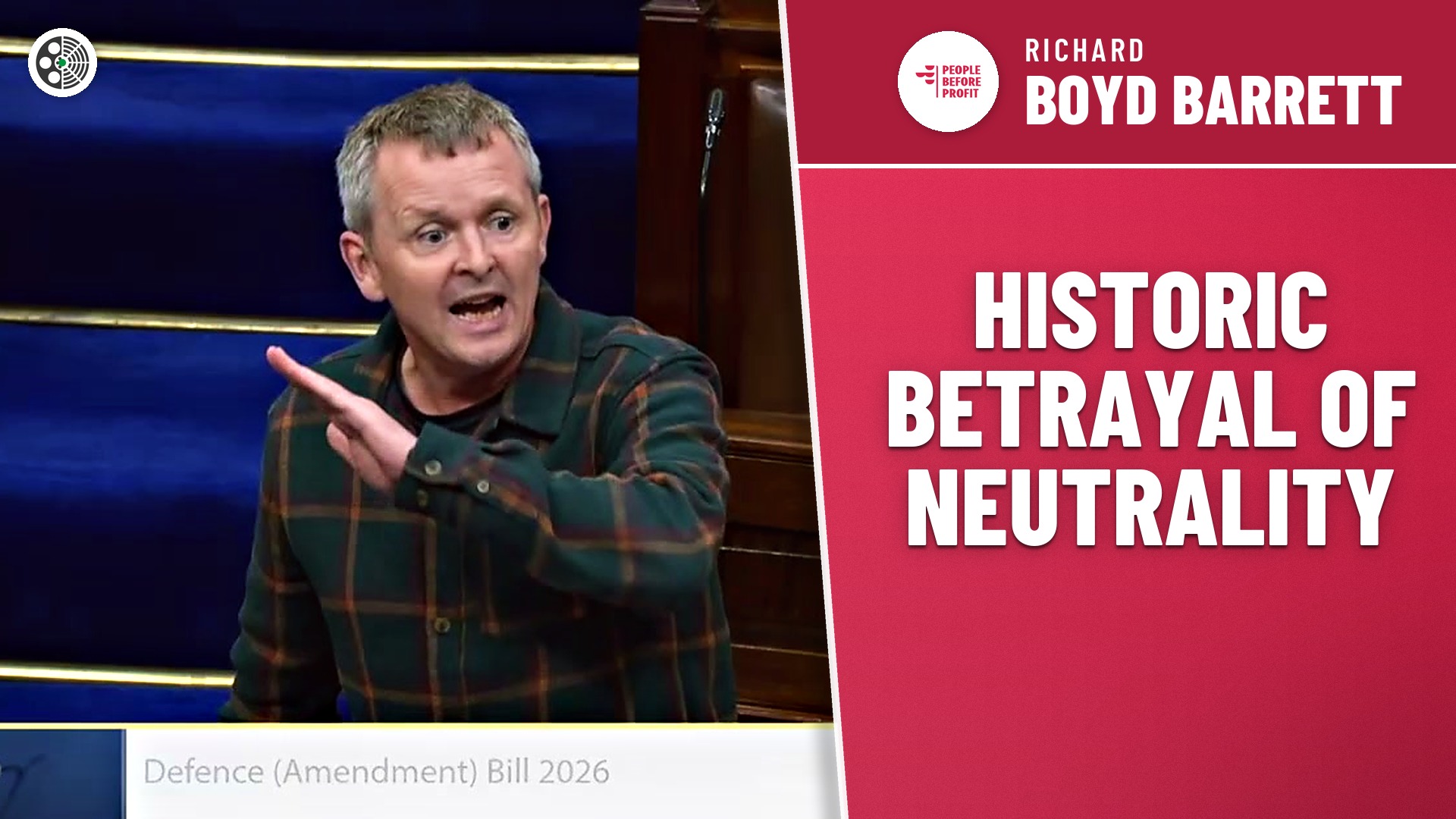
Richard Boyd Barrett
Richard Boyd Barrett: Neutrality Bill Is a ‘Historic Betrayal’
Seamus Healy
Seamus Healy: Triple Lock change must go to the people
Lynn Boylan
Lynn Boylan sets out three tests for the Circular Economy Act
Sharon Keogan
Sharon Keogan calls for deemed disposal to be scrapped
Emer Currie
Emer Currie: The Stacks deserve the truth
Michael Lowry
Michael Lowry presses for clarity on a new Midwest hospital
Transcript
Micheál Martin called the Triple Lock the core of Ireland's military neutrality, and
now he wants to get rid of it.
The question must be asked, whose interest is the Taoiseach serving, and what price is
he willing to ask young Irish people to pay for his personal ambitions?
The Triple Lock means Irish troops can only be sent overseas as part of an international
force with government sign-off, with Dáil approval, and with the UN mandate.
Our military neutrality keeps us out of those military blocks, and those conflicts that
are not ours to fight.
It prevents craven Irish leaders falling to outside pressure and sending our young people
to fight in military missions shaped by the big powers.
It gives us the credibility to speak up for peace, for justice in international law, and
it has long underpinned our proud tradition of peacekeeping.
The UN absolutely needs reform, but don't use its limitations as an excuse to strap
our neutrality.
And spare us this talk of sovereignty.
We remember Fianna Fáil and Fine Gael bending to the Troika.
We remember ministers gutting legislation after late-night phone calls from the embassy.
Fianna Fáil and Fine Gael paid off with cushy jobs, or more often, just a few slaps on the
back.
The Irish people do not trust you to stand up to international pressure.
At Nice and Lisbon, the people were asked to vote with guarantees of neutrality, including
the Triple Lock.
Now you want to remove that safeguard without asking the people, and you can tie yourselves
up in legal niceties, but why are you afraid of a referendum?
If you really believe you are right, let the Irish people make their decision.
Put it to the people, because Irish neutrality belongs to the Irish people, not to Mion Martin,
not to Simon Harris, and not to this or any government.