

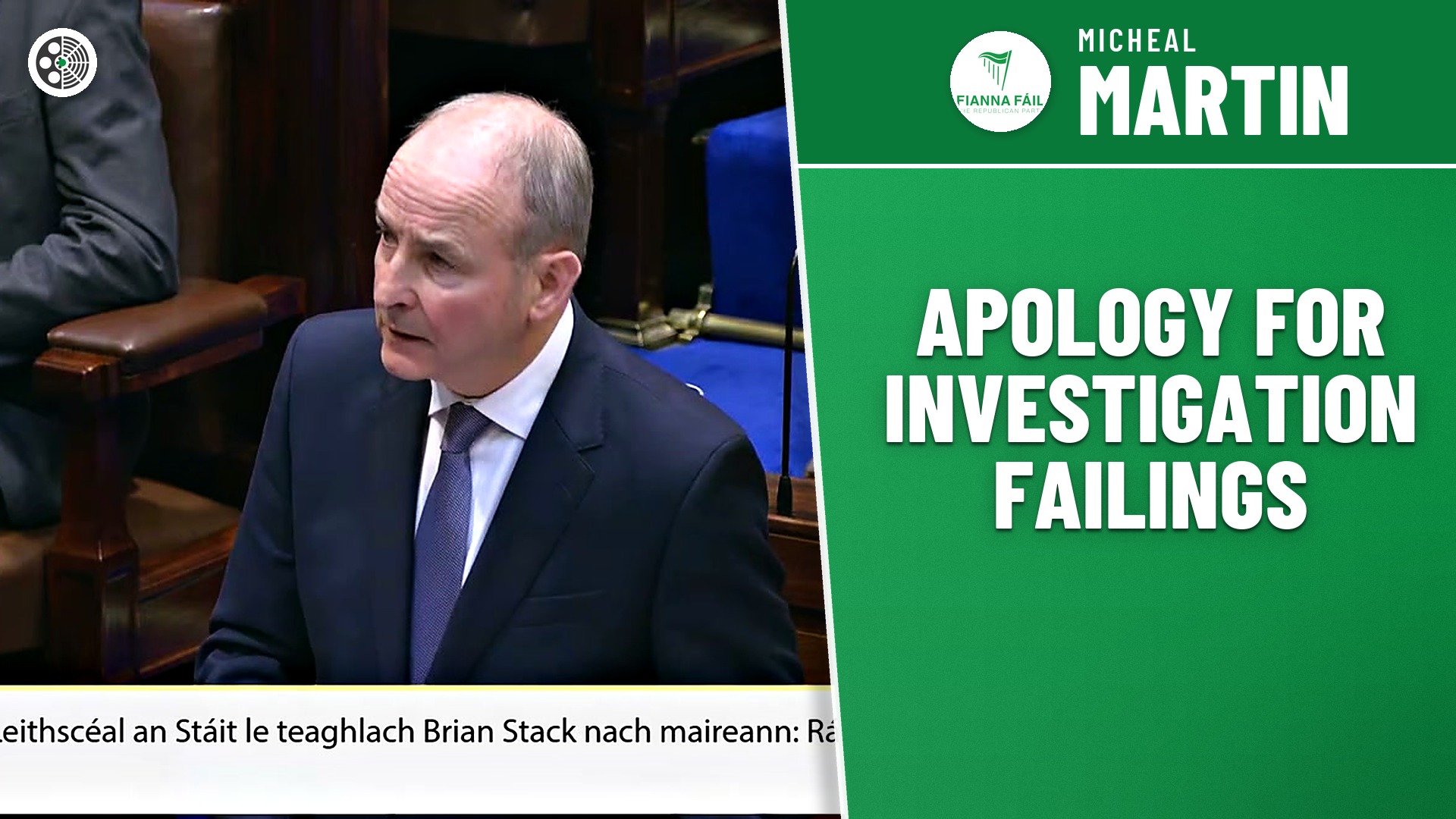


Micheál Martin apologises to Brian Stack’s family in Dáil
Taoiseach Micheál Martin formally apologised to the family of Brian Stack in Dáil Éireann for serious failings in the investigation into the prison officer’s shooting and death. He paid tribute to the family’s campaign for answers and said he shared their hope that justice may still come, as live lines of inquiry continue.
Micheál Martin recounted Brian Stack’s shooting outside the National Stadium in March 1983 and his death in September 1984, aged 49. He said members of the Provisional IRA were responsible and that no one had been brought to justice for the killing.
He outlined shortcomings in the Garda investigation, including missing crime-scene and evidential material, gaps in documentation and the failure to interview the Stack family and Brian’s friends. Martin said the family had helped bring relevant intelligence to the attention of the reinvestigation team, and noted that material potentially relevant to the case could no longer be located by An Garda Síochána.
Martin said a comprehensive file was submitted to the Director of Public Prosecutions in 2019, but no charges could be brought at that time. He said An Garda Síochána continued to pursue live lines of inquiry and maintained contact with the Stack family.
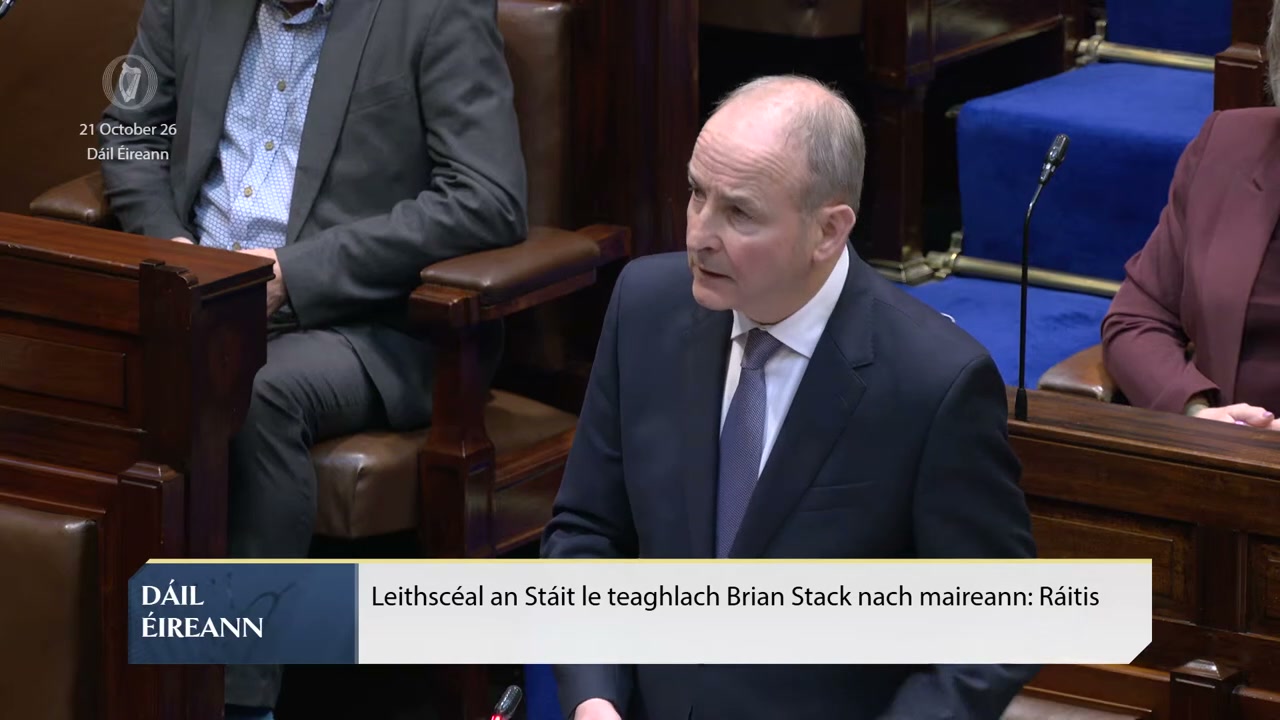
Micheál Martin recounted Brian Stack’s shooting outside the National Stadium in March 1983 and his death in September 1984, aged 49. He said members of the Provisional IRA were responsible and that no one had been brought to justice for the killing.
He outlined shortcomings in the Garda investigation, including missing crime-scene and evidential material, gaps in documentation and the failure to interview the Stack family and Brian’s friends. Martin said the family had helped bring relevant intelligence to the attention of the reinvestigation team, and noted that material potentially relevant to the case could no longer be located by An Garda Síochána.
Martin said a comprehensive file was submitted to the Director of Public Prosecutions in 2019, but no charges could be brought at that time. He said An Garda Síochána continued to pursue live lines of inquiry and maintained contact with the Stack family.
We publish thousands of recordings to make Irish politics transparent and resistant to manipulation. Spotted an error? Report it — together we are building a reliable archive of Irish politics.
Other speeches

Tego samego dnia All speeches from this day →
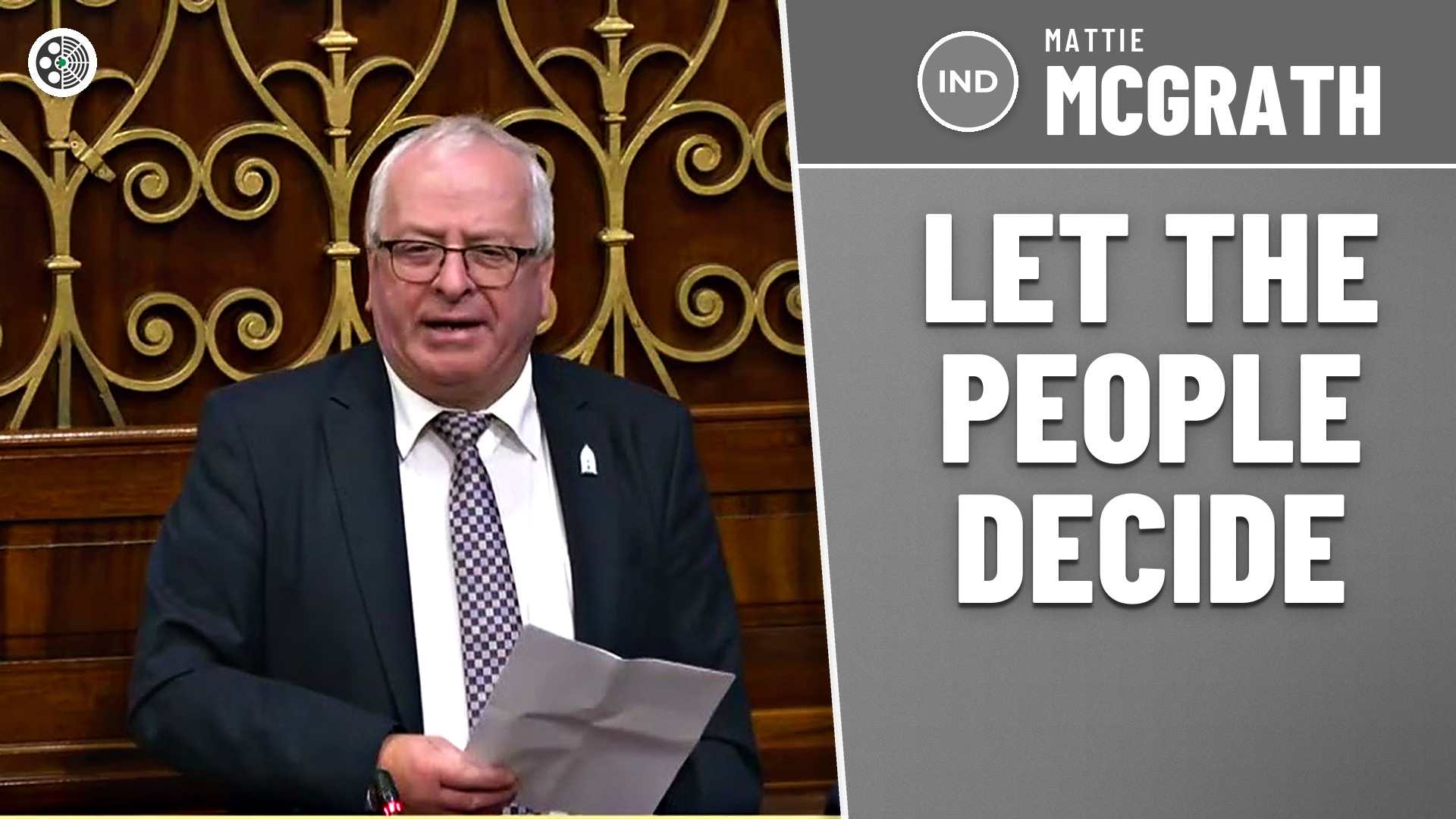
Mattie McGrath
Mattie McGrath: Put Changes to the Triple Lock to the People
Michael Collins
Michael Collins criticises the bill
John Lahart
John Lahart argues Ireland must decide where peacekeepers serve
Gary Gannon
Gary Gannon: Stack apology must lead to meaningful action
Paul Murphy
Paul Murphy: ‘You didn’t reform the Triple Lock’
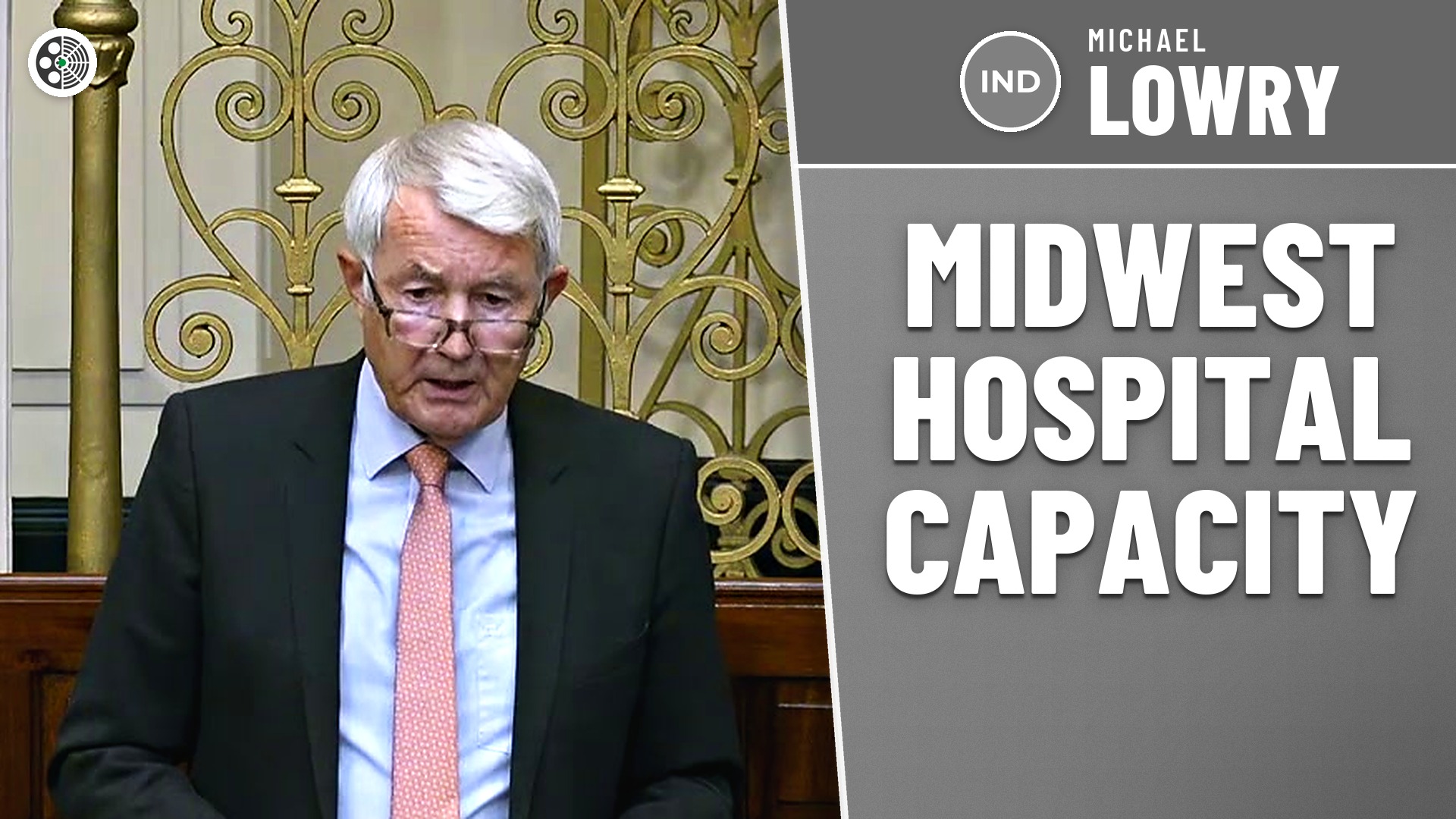
Michael Lowry
Michael Lowry presses for clarity on a new Midwest hospital
Transcript
Thank you, we'll ask John Corley. Today I would like to again with you welcome to
the Distinguished Visitors Gallery, Sheila, Austin, Ciarán and Oliver Stagg,
the wife and sons of the late Chief Prison Officer Brian Stagg. And they
have campaigned tirelessly to uncover the truth of what happened to Brian in
March 1983, to keep his memory and legacy alive following his death in September
1984. Unforgivably, we still don't have the full truth of or any justice for
what happened that day. But with the facts we have we know it was a very dark
day in our country's history. On the night of the 25th of March 1983, Brian
Stagg was at the National Stadium in Dublin. He was a very senior prison officer who was
serving the state with great distinction and the father of a young family. He was
leading a full and meaningful life, a man in his prime of life. But on leaving the
venue, Brian was approached by a man wearing a balaclava. He was approached
from behind. He was shot in the neck. Brian survived the shooting but was left
paralysed and brain damaged. And after fighting on bravely for 18 months, he
succumbed to his injuries on the 29th of September 1984. He was just 49 years old.
He's killer escaped with an accomplice on a motorbike and to date no one has
been brought to justice for Brian's murder. We know now, because of the work
of his family, that Brian was targeted and shot by members of the Provisional
IRA, an organisation still in possession of all the facts of what
happened. It is important to put these facts on the record because I know from
Brian's family that they do not want any confusion in the public mind about who
was responsible for his killing. Those who shot him, transported the killer and
covered for them in the intervening decades are responsible. What happened
next is why Brian's family is with us this afternoon and why I am here to
offer them an apology on behalf of the government. Because Brian and his family,
a man who was providing a hugely important service as Chief Officer at
Portleach Prison, at a time of great peril for the state, was badly failed by
the investigation into his killing. A Major Gardner investigation was
established after the shooting in March 1983 but this failed to identify those
responsible. Upon Brian's death in September 1984, the case was reviewed by
the Gardner murder squad but nothing of evidential value was found. After this
point, the investigation into Brian's killing remained open but dormant. In
2007, at the request of the Stack family, the Gardner Commissioner directed the
review of the case by the Gardner Serious Crime Review Team. This review made 202
recommendations relating to the case, leading to the Gardner Commissioner
directing that an independent reinvestigation team be appointed in the
National Bureau of Criminal Investigation in 2008. Although this
brought a fresh impetus to the investigation and led to the
identification of new lines of inquiry and suspects, it also led to the
identification of a number of serious failings and shortcomings in the
management of the earlier Gardner investigation. These failings were
admitted by the Gardner Commissioner to the Stack family in 2019 and my formal
apology on behalf of the government in this house today relates to those
failings. They are a failure to keep a map made of the crime scene, a failure to
keep a motorbike helmet found near the crime scene and linked to the crime and
a failure to keep custody of material exhibits, including various fingerprints,
samples and debris gathered during the investigation. In addition to this, there
was a failure to document some potentially important aspects of the
original investigations, such as whether an identification lineup process was
conducted before eyewitnesses in relation to a number of people that were
arrested during the original investigation, whether prisoners at
Portleach Prison were interviewed during the original investigation and whether
Brian's colleagues at Portleach Prison were interviewed during the original
investigation. Furthermore, there was a failure to carry out certain steps in
the investigation which the Stack family considers particularly relevant and
important to the case and would now be considered part and parcel of a
victim-centered approach to policing. And these were to interview the Stack
family and to interview Brian's wider group of friends. Although it is clear
that there was a strong suspicion of provisional IRA involvement on the part
of the investigators, both in the original investigation in the 1980s and
the reinvestigation since 2008, there was a failure by Gardie to identify a
definitive link to the provisional IRA in the shooting until this was admitted to
Austin and Oliver Stack by a former IRA commander in 2013 through their own
family efforts to uncover the truth. It was also the Stack family who brought to
light the existence of relevant intelligence received by Angordish
O'Connor in 1990 and brought it to the attention of the re-investigation team
in 2016. It was not recorded on the original investigation and file.
Angordish O'Connor is independent in its functions and it's not for me as Taoiseach
or for any other member of this house to insert themselves into any criminal
investigation. However, it is plainly and utterly unacceptable that material that
was potentially of evidential value to the investigation can no longer be
located by Angordish O'Connor. It is admitted by Angordish O'Connor that
these are serious matters that had an impact on the investigation. As Taoiseach
and on behalf of the government, I want to formally apologize to the Stack family
for these failings. When viewed in conjunction with the failure by Angordish
O'Connor to document those other aspects of the investigation that I've already
highlighted, this failing raises legitimate concerns about how the
investigation was conducted and whether it was done competently and properly.
This is an inherently unfair position to place the Stack family in and today I
also apologize for this. But I know from talking to the Stack family over many
years that the hope for justice endures. Since 2007, the Garda investigation into
the murder of Brian has continued to progress and I understand that in 2019 a
comprehensive file was submitted to the DPP for a decision. Although the outcome
of this was that no charges could be brought against any suspect at that time,
I am informed that Angordish O'Connor continues to pursue live lines of
inquiry in the case and is making every effort to bring those responsible to
justice and I know that Garda liaison continues with the Stack family in this
regard. Brian Stack joined the prison services in 1959 and progressed through
its ranks to a senior uniformed role when Portleach Prison became the main
place of detention in the state for subversive prisoners. Brian Stack served
the state with great distinction and honor at a time when the end point of
the trouble still appeared to be remote. The challenges the state faced at this
time were very very significant and prison officers like Brian were in the
vanguard of the effort to defend the state against subversives that wished to
undermine it during the conflict. Brian's important service was recognized by the
Prison Service when it renamed the Prison Service College Brian Stack
House and posthumously awarded him its highest bravery award which was also
renamed the Stack Medal. Outside of work Brian was at heart was at the heart of
his community and a keen sportsman, referee and organizer at Portleach GA
and Portleach Boxing Club. Brian's commitment to public service was carried
on by his son Austin who also served the state as an assistant governor in the
Irish Prison Service. Today as I extend this formal apology to the Stack family
for the failings and shortcomings in the management of the Garda investigation
into Brian's death, I am conscious that this moment marks a significant
milestone for you. Brian's loss was immeasurable to you and your entire
family and community circle. The pain you have endured has been lifelong. Many
in this house will already be familiar with your campaign
and your tireless advocacy. Today in addition to the apology I have offered I
also want to thank you and pay tribute to you for your dedication to that quest
and to your father Brian. I share your hope that justice may still come.
As a reminder and for the purpose of the meeting, I say that there is a lot of hope that the right
criminal justice system will be established. A very difficult time lies ahead.
The justice system was established to do the right thing.
This is a difficult time and there is a lot of hope for that future.
Sheila, Austin, Ciarán and Oliver, it is through your dignity, your courage and your love
that Brian Stack will not be forgotten. It is my sincere hope that the words I speak today
on behalf of the government may provide some measure of peace to you.
I am deeply sorry for what you have been put through.
For more information visit www.fema.gov