



Malcolm Noonan: A right to thrive for people with disabilities
Malcolm Noonan called for a clear pathway of support for people with Down Syndrome from birth to older age during a debate on disability policy and the Budgets. He also raised disability payments, accessible housing and public spaces, and employment, arguing that people with disabilities must be at the centre of decision-making.
Noonan acknowledged progress in the previous two Budgets and the wider shift towards a rights-based approach. Drawing on engagement with Down Syndrome Ireland and Down Syndrome in Kilkenny, he called for a clear pathway that addresses the needs of people with Down Syndrome at every stage of life. He referred to concerns raised by the Before We Die campaign and families supporting older people with Down Syndrome and other disabilities.
He highlighted early diagnoses and health issues that may go undetected, including arthritis and sleep apnoea. Noonan also said additional time in preschool, primary school and secondary education could make a significant difference for children with Down Syndrome.
Noonan welcomed the €500 cost of disability payment as a starting point, while noting that it is locked in. He supported broadening the payment to include people receiving the care support allowance.
With construction under way, Noonan argued that life-cycle design should be built into public and private housing rather than left to future retrofitting. He also called for disability to be factored into public spaces, better resourcing and skills in local authorities, and engagement with local access groups. He said default 30 km/h speed limits, as promoted by the Love 30 campaign, could benefit people with visual impairments and other disabilities.
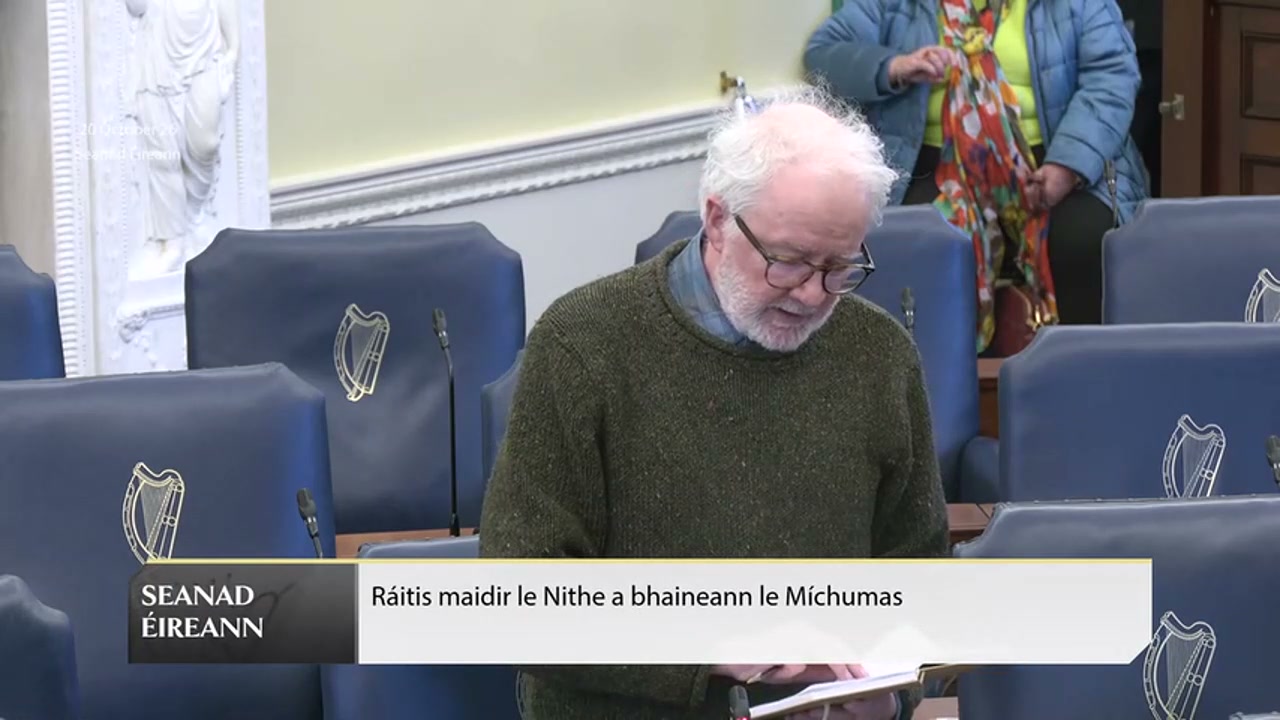
Noonan said a human rights-centred approach should put people with disabilities at the centre of decisions, protect their dignity and improve access to employment. He argued that workplaces benefit from employing people with disabilities and called for progress towards a right to thrive, rather than merely survive the system.
A pathway through life
Noonan acknowledged progress in the previous two Budgets and the wider shift towards a rights-based approach. Drawing on engagement with Down Syndrome Ireland and Down Syndrome in Kilkenny, he called for a clear pathway that addresses the needs of people with Down Syndrome at every stage of life. He referred to concerns raised by the Before We Die campaign and families supporting older people with Down Syndrome and other disabilities.
Health and education needs
He highlighted early diagnoses and health issues that may go undetected, including arthritis and sleep apnoea. Noonan also said additional time in preschool, primary school and secondary education could make a significant difference for children with Down Syndrome.
Disability payments
Noonan welcomed the €500 cost of disability payment as a starting point, while noting that it is locked in. He supported broadening the payment to include people receiving the care support allowance.
Accessible homes and public spaces
With construction under way, Noonan argued that life-cycle design should be built into public and private housing rather than left to future retrofitting. He also called for disability to be factored into public spaces, better resourcing and skills in local authorities, and engagement with local access groups. He said default 30 km/h speed limits, as promoted by the Love 30 campaign, could benefit people with visual impairments and other disabilities.
Dignity, access and employment
Noonan said a human rights-centred approach should put people with disabilities at the centre of decisions, protect their dignity and improve access to employment. He argued that workplaces benefit from employing people with disabilities and called for progress towards a right to thrive, rather than merely survive the system.
We publish thousands of recordings to make Irish politics transparent and resistant to manipulation. Spotted an error? Report it — together we are building a reliable archive of Irish politics.
Tego samego dnia All speeches from this day →
Micheál Martin
Micheál Martin sets out plan to strengthen competitiveness
Lynn Boylan
Lynn Boylan challenges EU over defence of ICC
Sarah O'Reilly
Sarah O'Reilly calls for endometriosis awareness campaign
Ged Nash
Ged Nash: Ireland Has “Wasted a Boom”
Alison Comyn
Alison Comyn calls for disability care plans and sporting discounts
Peadar Tóibín
Peadar Tóibín says Finance Bill ignores real lives
Transcript
I just want to make a couple of points, if that's OK, and again just to acknowledge the
progress that has been made in the two previous Budgets, but also the Budgets and the change
of direction in terms of the rights-based approach in terms of disabilities more generally.
I do want to make a case just for people living with Down Syndrome in Ireland and the engagement
I've had with Down Syndrome Ireland and Down Syndrome in Kilkenny as well, and it would
be, again, just around developing a clear pathway for people with Down Syndrome from
birth to older age. We hear the voice of the Before We Die campaign and older people with
family members who have Down Syndrome and other disabilities, and again the challenges
that they're facing, the anxiety that that creates, and I think is really significant.
So from birth to older age, dealing with those diagnoses at an early age for children with
Down Syndrome, from arthritis to sleep apnea, other medical issues that perhaps go undiagnosed
for some time, extra years in preschool in Montessori or high school, I think all of
these, and in primary school as well, I think would make a significant difference, and I
think it's critically important.
I agree too with the points made around the cost of disability payment. I do welcome that
it's there, 500 euro, it's a starting point but it is locked in, and I do agree with the
points that have been made by two previous speakers in relation to broadening it out
for those in receipt of care support allowance as well.
The final couple of points I want to make in relation to housing and universal design,
and I think these are issues that should be in a time when we have a construction boom
in the country, that we're missing an opportunity not to have life cycle design built into our
housing system, embedded in our housing system, rather than having to go back and retrofit
housing stock, both public and private, into the future.
We're going to have an older population, but the opportunity has been missed there by not
having that built in as well.
And I think that also goes for public realm, it has been said here previously as well,
that our public realm spaces need to have disability factored in and designed into them.
This needs a reskilling within local authorities, and engagement with access group, local access
group, we have the Kilkenny access group in our own city, I think those are important.
And I've raised it in relation to road safety previously around the Love 30 campaign, default
30 KPH speed limits in our city would make a huge difference to people with visual impairments
and with other disabilities.
So in summary, Minister, just from my perspective, this human rights centred approach I think
is really vital.
I think these are the points that have been raised across the house here this afternoon,
that puts the person with a disability at the centre of decision making.
And I think, you know, I think it's really, really important that people with disabilities,
that it's about their dignity, their access to employment, which again is absolutely woefully
low in this country, and there's no doubt, but any workplace that employs somebody with
a disability, be it physical, intellectual, that they can only enhance the workplace.
And I do think that we need to make significant gains in relation to that, and really this
is about a right to thrive rather than just survive the system.
So again, I welcome the progress being made, but I do think that we have a distance to
go and I think, I do welcome the work that you're doing, but we have significant challenges
ahead.
Thank you.