

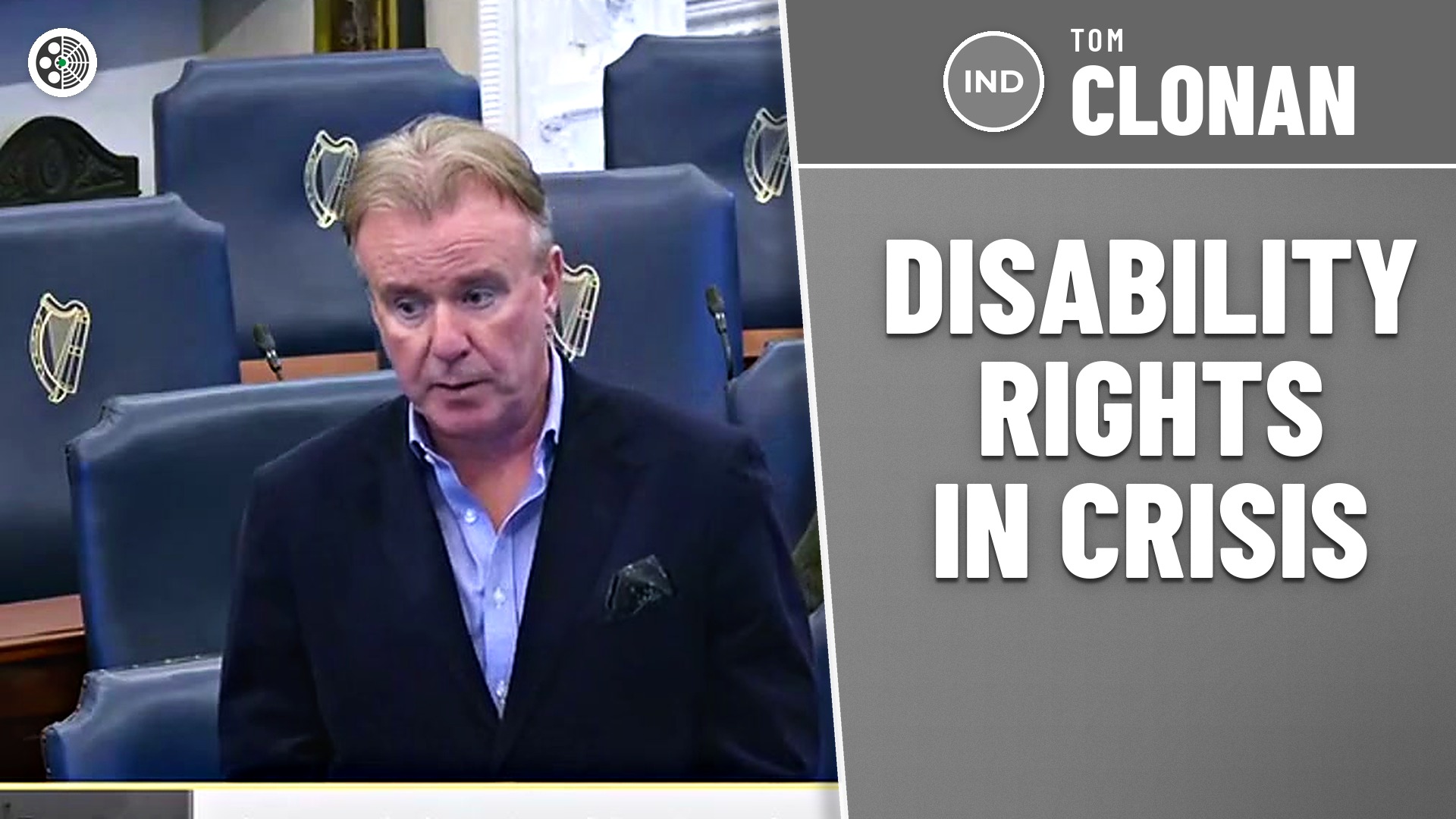


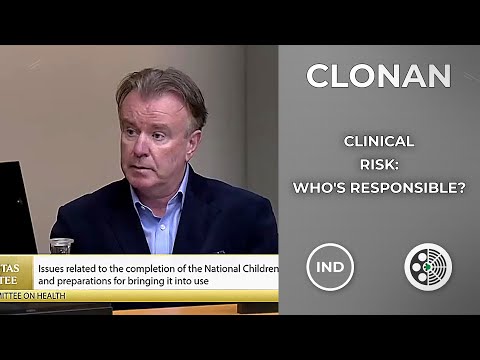
Tom Clonan says Ireland is failing disabled citizens
Senator Tom Clonan told a Seanad debate that disabled people and carers in Ireland are in crisis and lack enforceable rights to the supports needed for independent living. He criticised the Government’s approach to disability policy, arguing that proposed reforms and funding do not meet the scale of need or uphold disabled people’s human rights.
Clonan said Ireland was an outlier in the European Union because disabled citizens do not have legal, justiciable rights to care, personal assistance, housing and other supports. He also pointed to low workforce participation among disabled people in Ireland, which he said was the lowest in the OECD.
Clonan criticised a previous disability reform proposal that included compulsory medical examinations for people receiving disability allowance. He argued that the proposal would use scarce medical resources to assess people for work while many disabled people were unable to access therapies, and described it as part of a wider culture that treats disabled citizens unfairly.
He welcomed a €500 payment towards the cost of disability but said it fell far short of the annual costs he cited, and did not reach working disabled people or families with disabled children. He also said the care referendum and the Disability Bill review did not deliver enforceable rights, warning that the revised assessment-of-need process could weaken existing protections.
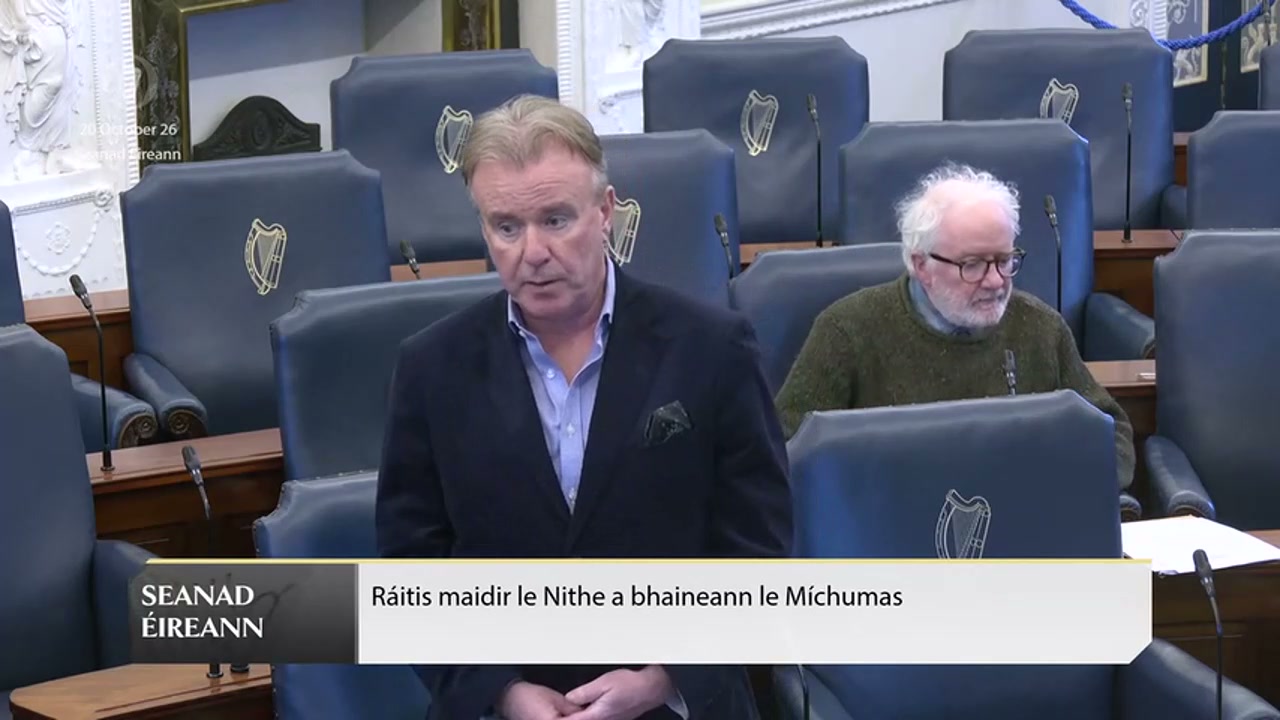
Clonan raised waiting lists for spinal surgery and urology services, and described the consequences for children and young people. He also highlighted the number of adults with disabilities who, he said, are living with older parents, asking what plans exist for their future support and housing.
Drawing on research into Australia’s disability system, Clonan argued that Ireland needed a more ambitious, human-rights-based approach. He cited his son’s lack of meaningful physiotherapy and occupational therapy since 2007, and said his family had been told to fundraise for voice-banking technology. Watch the recording to hear the full contribution.
Rights and supports
Clonan said Ireland was an outlier in the European Union because disabled citizens do not have legal, justiciable rights to care, personal assistance, housing and other supports. He also pointed to low workforce participation among disabled people in Ireland, which he said was the lowest in the OECD.
Disability reform and the cost of care
Clonan criticised a previous disability reform proposal that included compulsory medical examinations for people receiving disability allowance. He argued that the proposal would use scarce medical resources to assess people for work while many disabled people were unable to access therapies, and described it as part of a wider culture that treats disabled citizens unfairly.
He welcomed a €500 payment towards the cost of disability but said it fell far short of the annual costs he cited, and did not reach working disabled people or families with disabled children. He also said the care referendum and the Disability Bill review did not deliver enforceable rights, warning that the revised assessment-of-need process could weaken existing protections.
Services, families and the Australian model
Clonan raised waiting lists for spinal surgery and urology services, and described the consequences for children and young people. He also highlighted the number of adults with disabilities who, he said, are living with older parents, asking what plans exist for their future support and housing.
Drawing on research into Australia’s disability system, Clonan argued that Ireland needed a more ambitious, human-rights-based approach. He cited his son’s lack of meaningful physiotherapy and occupational therapy since 2007, and said his family had been told to fundraise for voice-banking technology. Watch the recording to hear the full contribution.
We publish thousands of recordings to make Irish politics transparent and resistant to manipulation. Spotted an error? Report it — together we are building a reliable archive of Irish politics.
Other speeches



Tego samego dnia All speeches from this day →
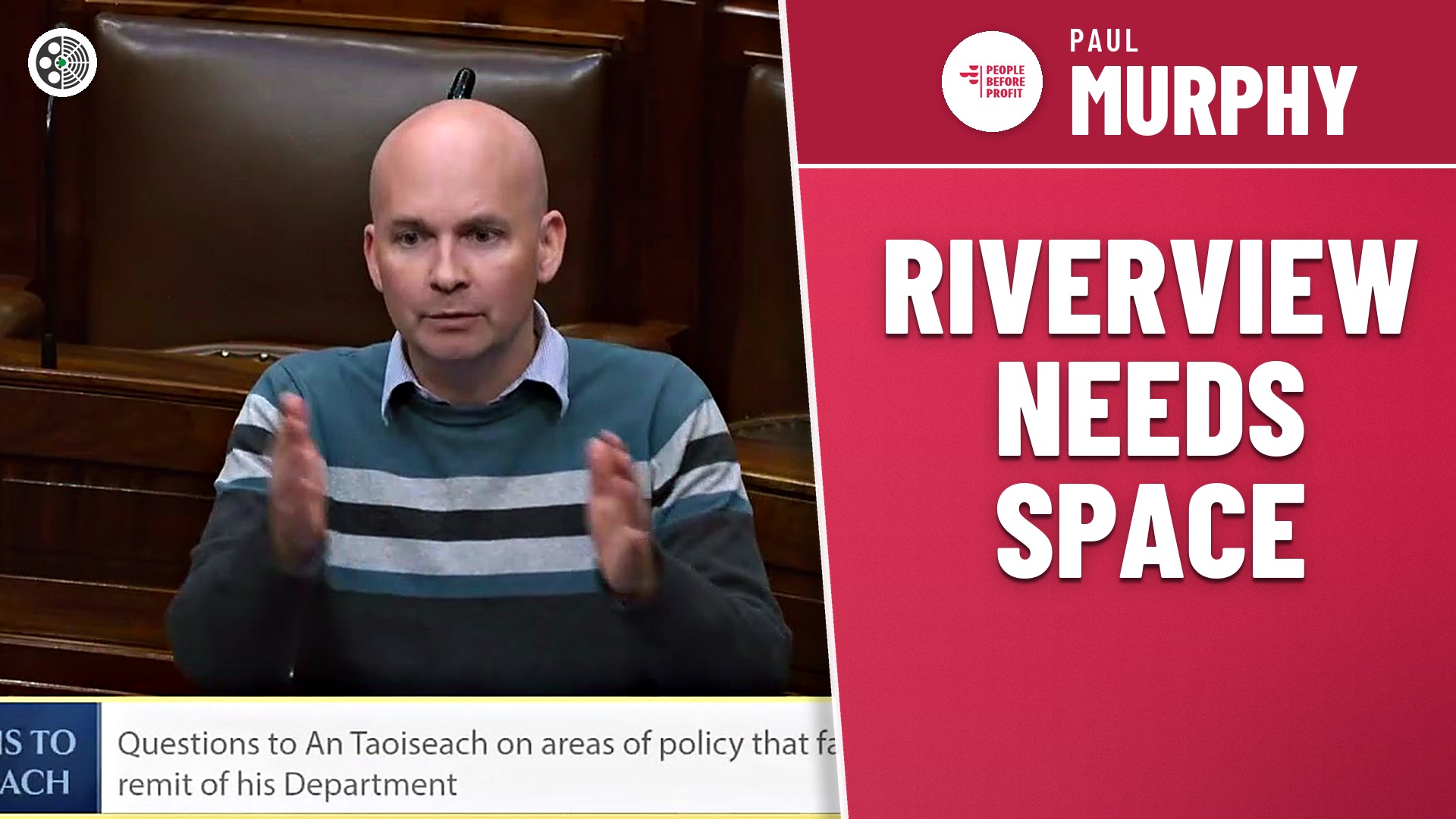
Paul Murphy
Paul Murphy presses for Riverview school extension
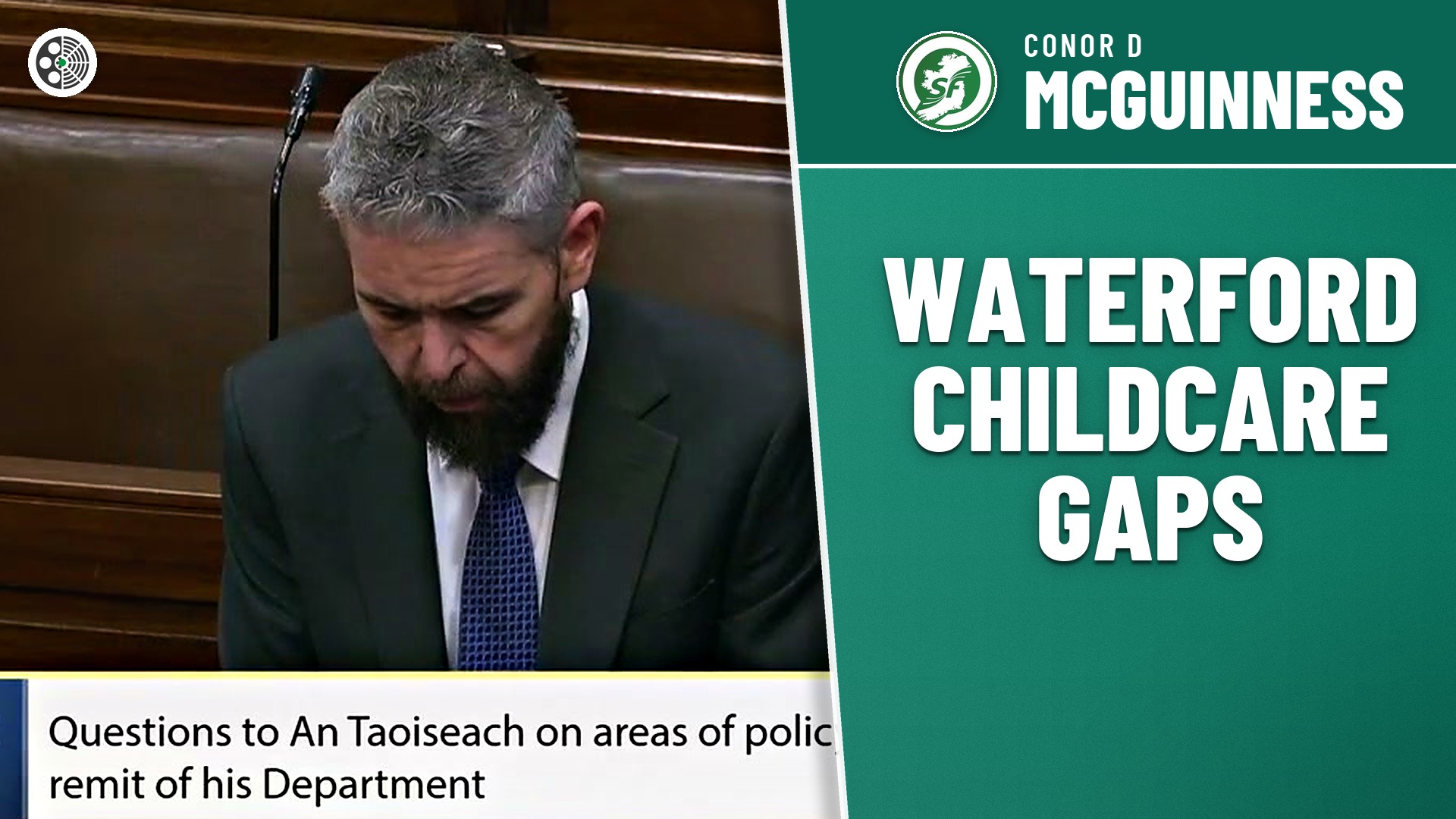
Conor D McGuinness
Conor D McGuinness asks for action on Waterford childcare gaps
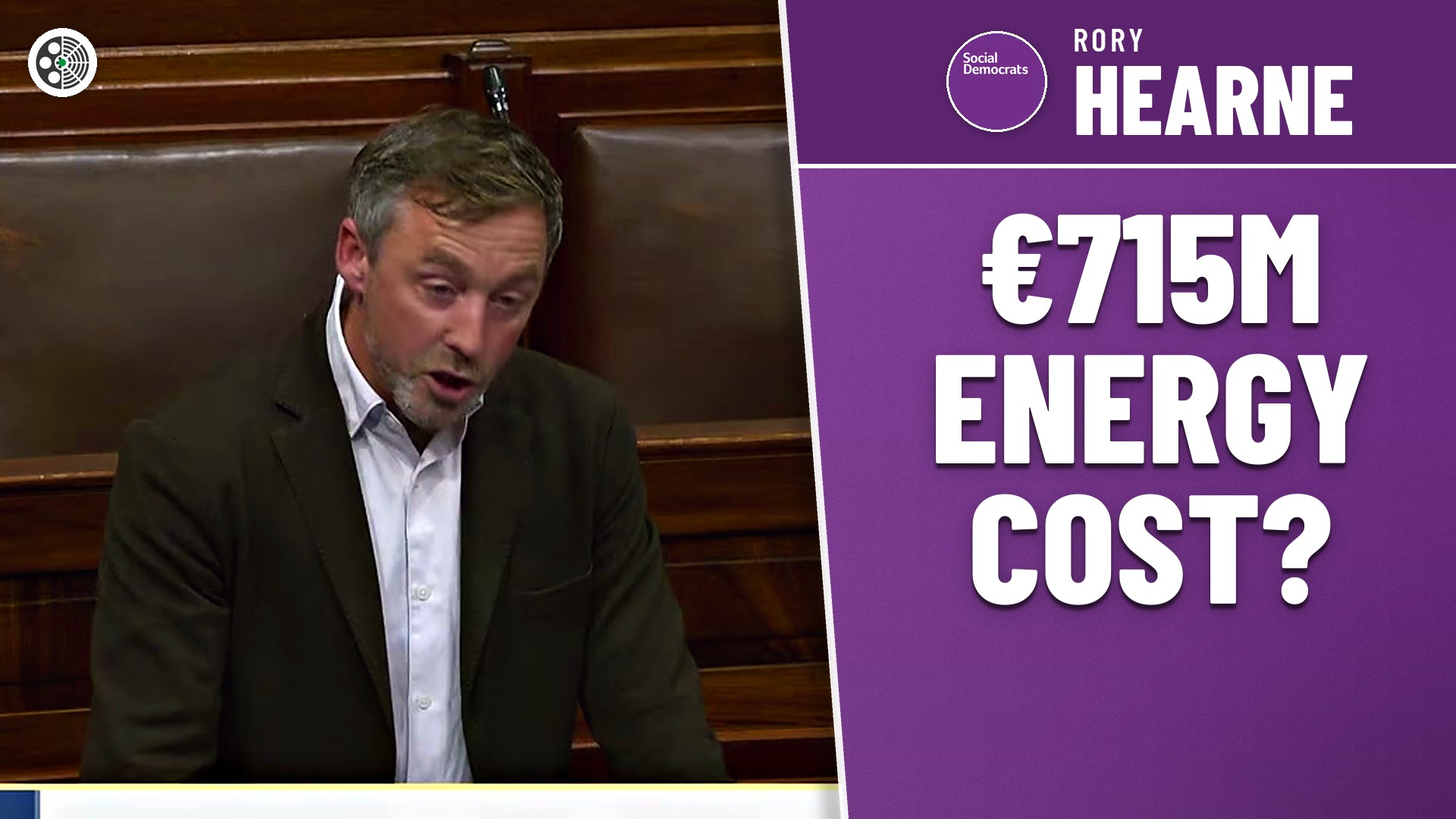
Rory Hearne
Rory Hearne: Finance Bill fails on poverty and dereliction
Kathleen Funchion
Kathleen Funchion says British amnesty bill must be binned
Mary Lou McDonald
Mary Lou McDonald: Put the Triple Lock to a Referendum
Danny Healy-Rae
Danny Healy-Rae presses for urgent Kerry water action
Transcript
Thank you very much and Minister you're very welcome here this evening and I have to
thank the Ceannorra for facilitating this debate it's something I've been
asking for for quite some time because Minister I feel, well I don't feel, I
know from lived experience that the experiences of the disabled and carers
in Ireland are abject and we are in crisis, we are outliers in European
Union terms in the way that we deal with the fundamental human rights of this
category of citizens, disabled citizens. We're the only country in the European
Union where disabled citizens do not have legal justiciable rights to care, to
supports, to interventions, to personal assistance, to housing or to any of the
supports and structures that they need to live independent autonomous lives and
to participate in the political, the cultural, the social and the artistic and
economic activities of this society. For example the participation rates of
disabled citizens in Ireland in the workforce are the lowest in the OECD. So
why is this the case? Well let's look at recent legislative
developments from these houses. In the previous government you're one of your
former colleagues as Minister for Public Expenditure, sorry Minister for
Social Protection attempted to introduce a green paper on disability reform which
had only one prescription for action within it and that was to compulsorily
medically examine every single disabled citizen in the state in receipt of
disability allowance which is approximately just short of a quarter of
a million people. These are citizens who cannot get speech therapy, who cannot get
physiotherapy, who cannot get occupational therapy, who cannot get any
of the other therapies that are necessary to ameliorate their conditions
within the therapeutic window. We have children literally dying on
waitlists, disabled children and yet the government proposed in its green paper
to compulsorily medically examine a quarter of a million disabled citizens
in order to see if they could work. A cut and paste from a discredited austerity
measure that was put in place in the United Kingdom which led to a surge in
deaths, a study carried out by Leeds Hope University or Liverpool Hope
University revealed that there was a surge in suicide amongst disabled
citizens all across England, Scotland, Wales and Northern Ireland. So the big
idea from the Department of Social Protection was to repeat this and
bring it into Ireland. Can you imagine such a scarce medical resource? To
medically examine 250,000 disabled citizens within a five-year period as
was set out would involve examining hundreds of disabled people every day,
seven days a week, 365 days a year. At what cost? And providing with no
therapeutic supports. But Minister, what I say is this is emblematic of a culture
in our polity, a set of philosophical, political and cultural attitudes towards
the disabled which is Victorian in essence. Imagine, somebody would
compulsorily subject my son to a medical examination in order to see was he able
to work. I mean this is straight out of Dickens, it's Dickensian, it's
ableist, it's deterministic and that deterministic conflation of a disabled
citizen with their socio-economic status was given expression in this year's
budget. And while I welcome 500 euro for disabled citizens to address the cost of
disability, which our own Research Minister shows is between 12 and 20
thousand euro per annum, before you pay for light or heat or food, 500 euro? You
know you could have gotten rid of means testing for disability allowance and for
carers allowance for an amount not far off what was invested in the relief
given to people in the fuel supports. So when they parked their tractors on
O'Connell Street, despite what the Taoiseach said, you can't just park your
tractor on O'Connell Street and expect to get a meeting with the Taoiseach. Well
we have been marching for, I've been marching for 22 years on O'Connell
Street and this year alone we marched twice, children in wheelchairs with peg
tubes, with nasal tubes, with oxygen tanks, young adults. The humiliation of it, going
down O'Connell Street and out to the front of the Department of the
Environment, Customs South Quay, begging for the bare minimum supports and what
we got was a 500 euro once-off payment which was to be paid to people in
receipt of disability allowance. So nothing for disabled citizens who are
working and nothing for families with disabled children. The costs of
disability don't just assert themselves when you turn 16. If you look at the
referenda, the care referenda, the Attorney General gave very specific
advice, it has been revealed on the public record, that the wording must not
in any way give disabled citizens or carers any justiciable rights. It was to
give constitutional expression to the idea that the family is the exclusive or
primary provision of care in the state and that the state would have no
obligation in law whatsoever to support the family. Again that is emblematic of a
very deeply held cultural view of disabled citizens as not having
fundamental rights. Now before I conclude Minister, the context in all of this, we
have children dying on waitlists for spinal surgery, we have children on the
urology waitlist at CHI, hundreds of young adults and teenagers, young boys
and girls, whose reproductive organs are not being developed, whose little penises
and vaginas can't develop properly for want of a routine urological
intervention, which is called the urology pathway, which has been best practiced
throughout Europe for over 30 years. They're becoming incontinent, imagine
being a little teenager and going to school and trying to socialise, you become
incontinent unnecessarily. We have, according to Before We Die, we have 55,000
adult children over the age of 25 forced to live with parents over 60 and you can
add a similar number of physically disabled adults like my son who will be
over 25 next year, I'm already over 60. What's the plan for them, for that
demographic profile? There's no ambition, there's no vision. You had one
opportunity to amend or, if you like, review the Disability Bill of
2005 and from the extensive pre-legislative scrutiny that we've
carried out, the bottom line is the only difference this will make is that
heretofore the only legal right we had was to an assessment of need. Now all
you'll have is a legal right to ask for an assessment of need and that ask will
be triaged by non-medical, non-professional, grade 7 administrators
in the HSE. It is a dilution of the rights and you had an opportunity to do
something positive and constructive. I want to conclude by saying I've done a
extensive research and I've said it to you and I've said it to Minister Foley
with the assistance of one of the top law firms, first time in the history of
the state that they've worked with the OPLA. We looked at the Australian model
which isn't perfect but my god it's generations ahead of this. It costs the
Australians 22 billion Australian dollars. They have a population of 22
billion. If you were to transpose that system here it would probably cost about
four and a half billion. We're probably spending about three billion on
disability in this country and it's going to service providers and it's
going to these high-level conferences and the fancy brochures and the bottle
of still water and the bottle of sparkling water and the travel and the
allowance and the subs of all these CEOs of NGOs and section 39s and section 38s.
It's not going to disable people. My son has had no physiotherapy, meaningful, no
OT, nothing since 2007. His situation is deteriorating now and we were told as a
family last year that he needed to voice bank like Charlie Bird because he won't
be able to speak and we were told that we would have to fundraise for that
ourselves. So this is not personal to you Minister but I would say to you it's
about time this government put their hands up and in the same way with the
economic crash be intellectually honest and say we need somebody to come in here
and take over our affairs when it comes to the disability because this is a
shamefully ableist Republic and the conditions for disabled citizens and
are abject. No plan for my son, no plan for me or for the thousands of other
parents. Tinkering about at the edges is not the radical change, the fundamental
human rights based approach that you spoke about at the UN Assembly in New
York. You're not walking in that direction, you're walking away from it.