



Paul Murphy challenges Taoiseach on public service pay
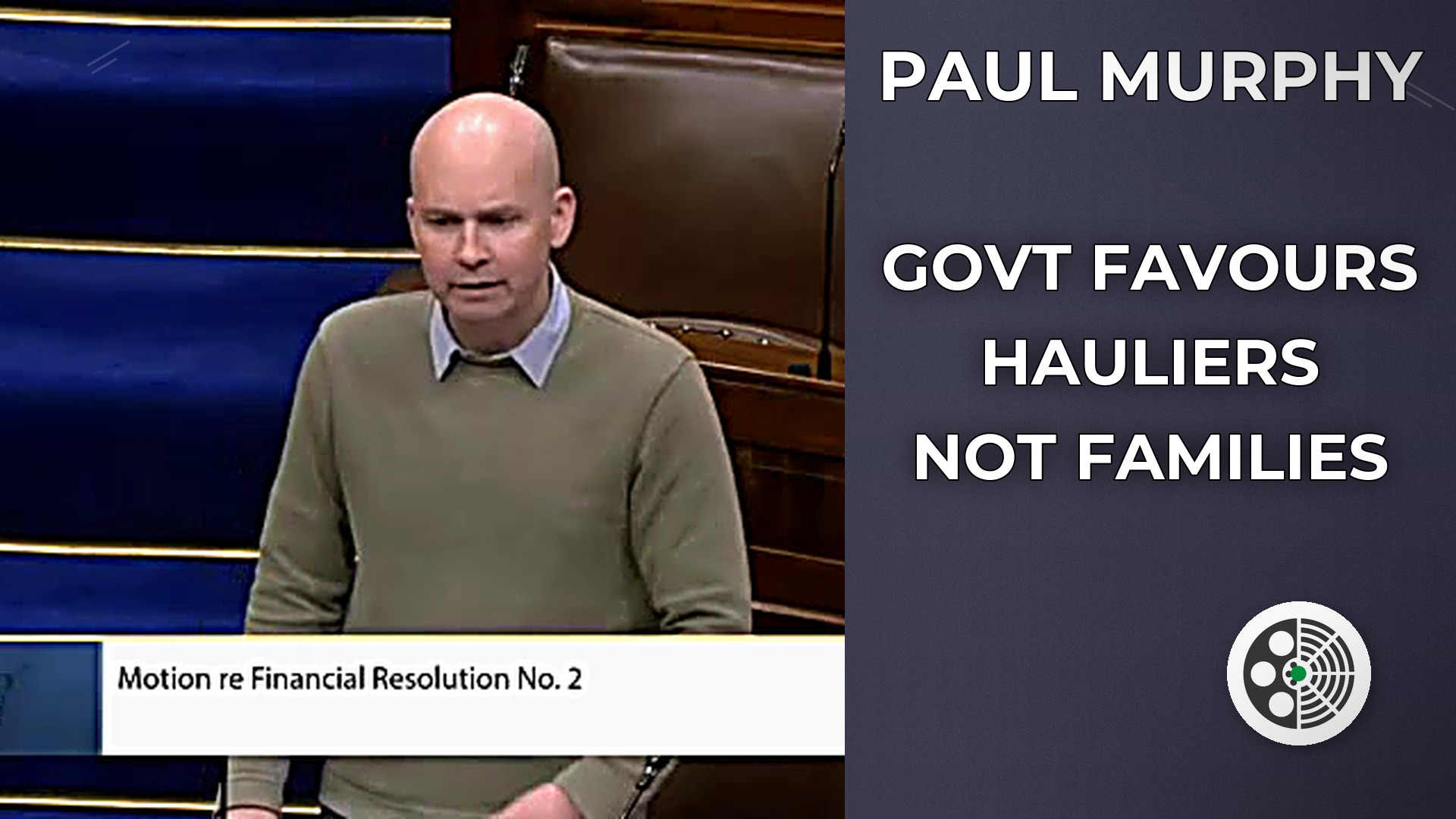
Paul Murphy challenged the Taoiseach in Dáil Éireann over public service pay, productivity and a proposed €1.6 billion pay allocation. He argued that public and ordinary workers already make society run, and that the proposed amount would be rejected as inflation and industrial action put pay at the centre of the debate.
Murphy questioned the demand for productivity elements in public service pay discussions, arguing that the workforce was already highly productive. He warned that further pressure could worsen public services.
He called the €1.6 billion figure an insult and said workers would reject it. Murphy pointed to inflation of 4.1% and to workers taking strike action for significant real-term pay increases.
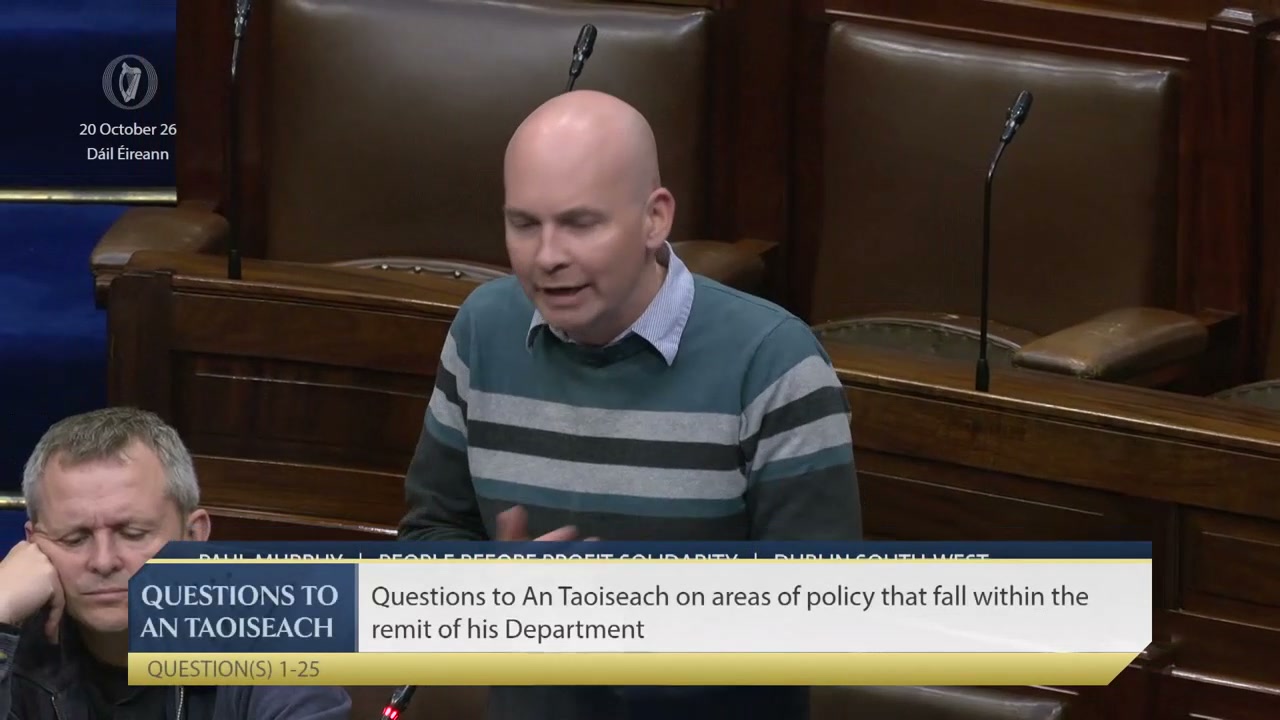
The Taoiseach said productivity improvements could come through system change and technology, and referred to new initiatives in the public service. He cited Revenue, education and teachers as examples of efficiency and innovation, before beginning to discuss the expansion of the public service.
Murphy’s challenge placed the gap between the proposed pay allocation and workers’ calls for real-term increases at the centre of the exchange.
Pay and productivity
Murphy questioned the demand for productivity elements in public service pay discussions, arguing that the workforce was already highly productive. He warned that further pressure could worsen public services.
The proposed allocation
He called the €1.6 billion figure an insult and said workers would reject it. Murphy pointed to inflation of 4.1% and to workers taking strike action for significant real-term pay increases.
The Taoiseach’s response
The Taoiseach said productivity improvements could come through system change and technology, and referred to new initiatives in the public service. He cited Revenue, education and teachers as examples of efficiency and innovation, before beginning to discuss the expansion of the public service.
Murphy’s challenge placed the gap between the proposed pay allocation and workers’ calls for real-term increases at the centre of the exchange.
We publish thousands of recordings to make Irish politics transparent and resistant to manipulation. Spotted an error? Report it — together we are building a reliable archive of Irish politics.
Other speeches
Tego samego dnia All speeches from this day →
Sarah O'Reilly
Sarah O'Reilly calls for endometriosis awareness campaign
Rose Conway-Walsh
Rose Conway-Walsh seeks bus seats for Newport students
Cian O'Callaghan
Cian O'Callaghan challenges Taoiseach over court disruption
Rory Hearne
Rory Hearne: Finance Bill fails on poverty and dereliction
Matt Carthy
Matt Carthy calls for action on drug debt intimidation
Alison Comyn
Alison Comyn calls for disability care plans and sporting discounts
Transcript
Last week we saw that it's public sector workers and ordinary workers in this
country who make society run, not the likes of Michael O'Leary. But your
response has been to say that there must be productivity elements. How can you
squeeze blood from a stone? Our workforce is already enormously
productive. You're talking about worsening public services. And also Taoiseach, the
1.6 billion you're talking about is an absolute insult. It will be rejected by
workers. 4%. Inflation is currently running at 4.1%. People are
striking, taking action for real-term significant pay increases.
Paul Murphy, Deputy Murphy, raised the issue of the public service and productivity. I
acknowledge the incredible work that the public service are doing. I attended
award service two years ago to civil service where I saw growth and
productivity through system change or through the use of technology. So it's
not about trying to, you know, this kind of emotive phrase, blood out of a stone.
That's not what I'm talking about at all. But with the same workers and so on, I
workers are enthusiastically doing these things in the public service all
the time. They come up with sort of new initiatives, new ways of doing things.
Like revenue have been very efficient. Education and teachers have been very
efficient. And teachers have been very innovative and they're leaders in their
classrooms and their schools and they keep doing things. So that's the context.
But the bottom line is that, you know, we've expanded the public service. I