

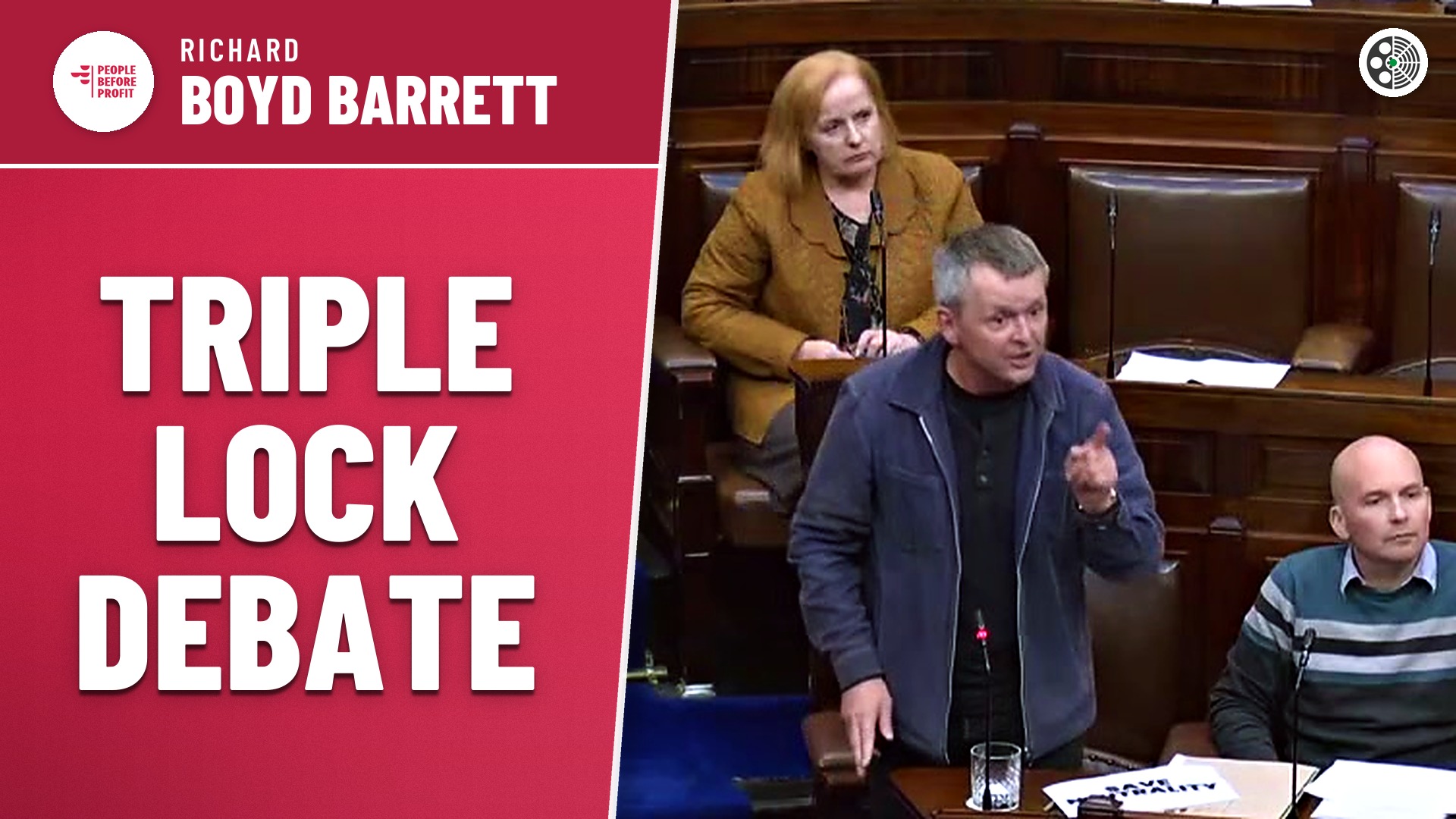


Richard Boyd Barrett in the Dáil: exchange on neutrality
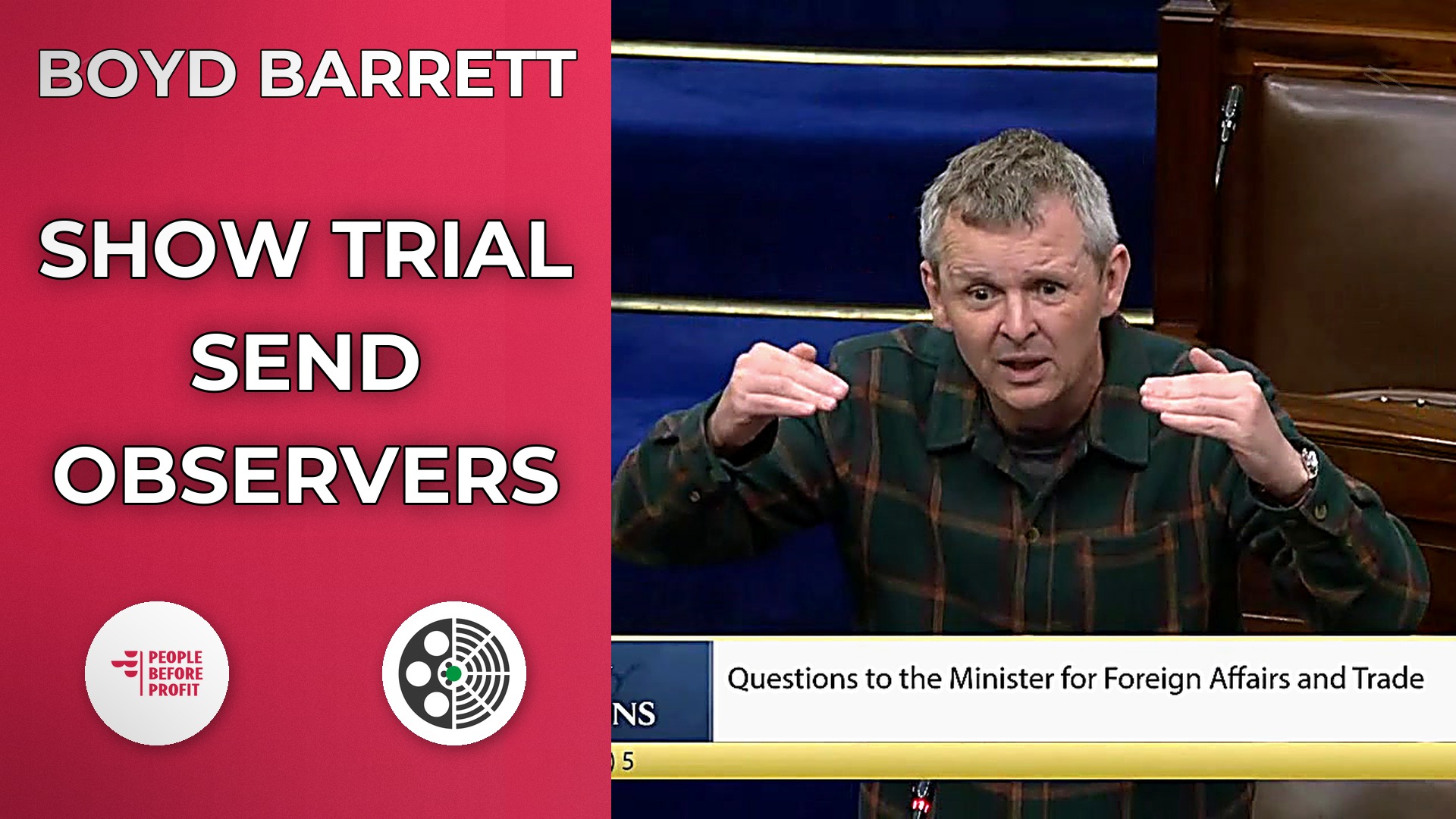
Richard Boyd Barrett took part in a Dáil exchange on Irish neutrality, the triple lock and the Government’s proposed reform bill. The discussion also addressed the time allocated for debate, the bill’s referral to committee and the arrangements for the week’s business.
The exchange raised the commitments on the triple lock associated with the Nice and Lisbon treaties, and whether Irish neutrality should be regarded as belonging to the people rather than any one government. The display of signs was described as a way of holding the Government to account for those commitments.
The Government’s position in the exchange was that the bill would receive three hours and 34 minutes of debate at second stage, with voting due to be completed by 9pm. The time limit was linked to the work-to-rule arrangements, and further debate was expected when the bill reached committee.
The exchange included objections to the handling of the debate and a rejection of the claim that the bill was being rushed through. The disagreement centred on the debate timetable and the Government’s account of the time available.
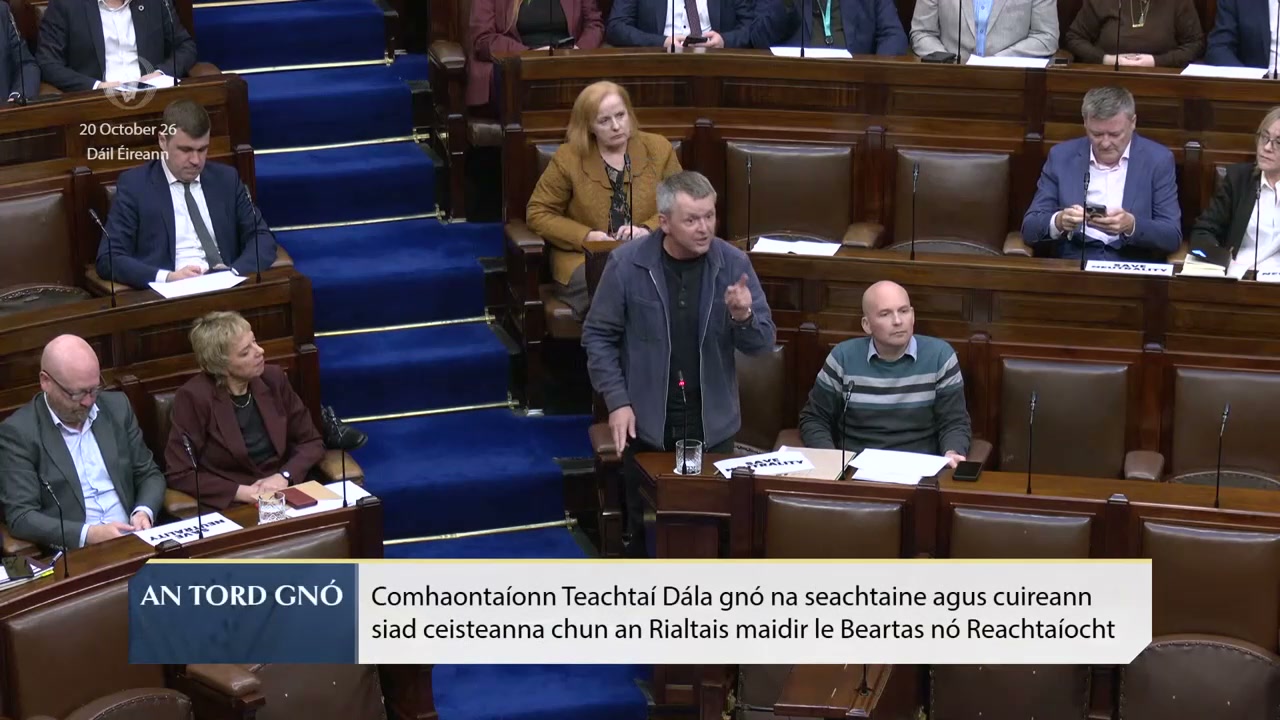
The proposed arrangements for the week’s business were put to the Dáil, and the proposed amendment was negatived. The arrangements were agreed and the question was carried.
Neutrality and the triple lock
The exchange raised the commitments on the triple lock associated with the Nice and Lisbon treaties, and whether Irish neutrality should be regarded as belonging to the people rather than any one government. The display of signs was described as a way of holding the Government to account for those commitments.
Debate time and committee stage
The Government’s position in the exchange was that the bill would receive three hours and 34 minutes of debate at second stage, with voting due to be completed by 9pm. The time limit was linked to the work-to-rule arrangements, and further debate was expected when the bill reached committee.
Dispute over the timetable
The exchange included objections to the handling of the debate and a rejection of the claim that the bill was being rushed through. The disagreement centred on the debate timetable and the Government’s account of the time available.
Order of business
The proposed arrangements for the week’s business were put to the Dáil, and the proposed amendment was negatived. The arrangements were agreed and the question was carried.
We publish thousands of recordings to make Irish politics transparent and resistant to manipulation. Spotted an error? Report it — together we are building a reliable archive of Irish politics.
Other speeches

Tego samego dnia All speeches from this day →
Ivana Bacik
Ivana Bacik: Victims Must Not Be Collateral Damage
John McGuinness
John McGuinness: Elderly people and small businesses abandoned
Sarah O'Reilly
Sarah O'Reilly calls for endometriosis awareness campaign
Thomas Gould
Thomas Gould: Shandon’s dereliction and vacant buildings
Jen Cummins
Jen Cummins: Drug intimidation is trapping families at home
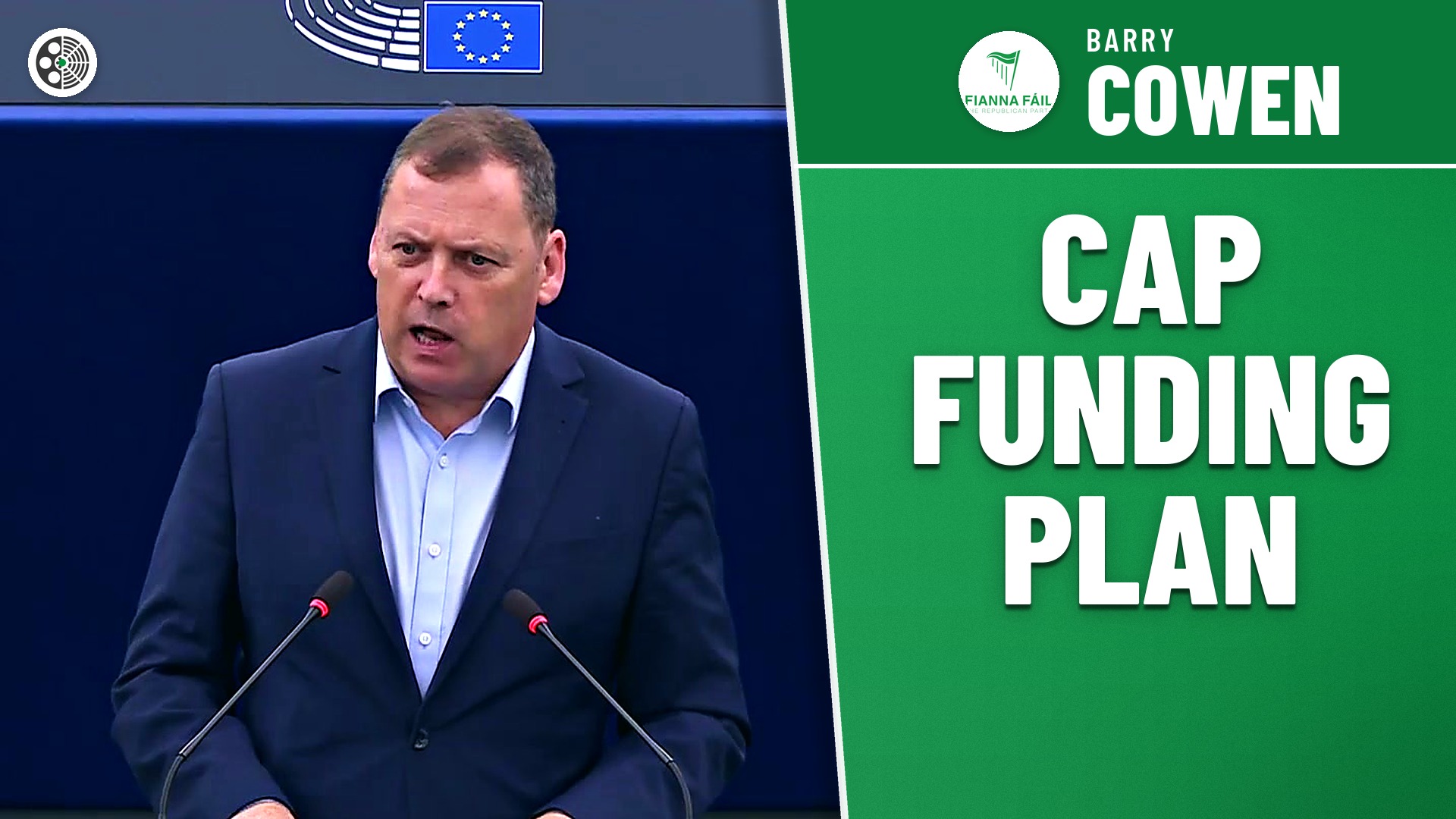
Barry Cowen
Barry Cowen urges a real plan to close the CAP funding gap
Transcript
Irish neutrality does not belong to any single government it belongs to the
people and there was a commitment made in the Nice and Lisbon treaties about
the triple lock and you are in breach of that so when we stick up these signs
we're holding you to account for commitments that were made to the Irish
people about neutrality which is their property not yours.
The thing is that the proposed arrangements for the week's business agree to the proposed amendment is negative.
Thanks I hear you. Okay I am now calling on the Chief Whip. Chief Whip please.
Chief Whip is on her feet.
You can absolutely hear from the Chief Whip if you allow me to speak and not try and shout me down.
What a shame, what a shameful of having a debate. The bill to reform the triple lock will get a full 3 hours and 34 minutes of debate here at second stage tomorrow.
It was explained by the Clerk of the Dáil at the Business Committee yesterday that voting has to be completed by 9 o'clock because of the work to rule that we are under order on.
Allow the answer. The bill will then be referred to committee where there will be opportunity for further debate
and I reject the assertions that the government is anyway rushing this through.
The order of business stands. Are the proposed arrangements for the week's business agreed to and the proposed amendment negative?
Are the arrangements agreed to? Agreed. The arrangements are agreed.
I can't hear because I cannot hear.
Are the proposed arrangements agreed to?
Now I'm putting the question Deputy Murphy. I am now putting the question.
The question is that the amendments as proposed to the arrangements on the order of business are hereby negative and the proposed arrangements for the week's business are hereby agreed to.
Deputies in favour say ta. Deputies against say near.
Question is carried.