



Gerard P. Craughwell Questions Emergency Preparedness
Senator Gerard P. Craughwell questioned emergency-planning witnesses about Civil Defence recruitment, cyber defence and preparation for industrial emergencies. He also asked about Civil Defence medical checks, drone training, generators and fire-service planning for hazardous sites.
Craughwell asked whether Civil Defence volunteers need medical assessments, where drone training takes place and whether generators had been available during past storms. The witnesses said there is no medical or fitness test for volunteers at present, described the training provided for drone operators and said claims that generators were left unused were not correct.
The Senator outlined a proposed three-tier approach to cyber defence, with the National Cyber Security Centre as the lead body, supported by consultancy groups and Defence Forces, and cyber professionals from private companies available in the national interest. The witnesses said the question was outside their area of competence and would be passed to the National Cyber Security Centre and the Department of Justice.
Craughwell asked whether the fire service had war-gamed emergencies involving mud ponds and chemical plants, including sites in Cork. Fire-service representatives described training for hazardous incidents, operator safety plans and the national incident command system introduced in 2025.
The witnesses said the Fire Service’s first priority in an emergency is life safety and rescue. They also discussed evaluating specialist vehicles that could operate in difficult terrain, including mud flats. Watch the recording to hear the full exchange.
Civil Defence volunteers and equipment
Craughwell asked whether Civil Defence volunteers need medical assessments, where drone training takes place and whether generators had been available during past storms. The witnesses said there is no medical or fitness test for volunteers at present, described the training provided for drone operators and said claims that generators were left unused were not correct.
Cyber defence planning
The Senator outlined a proposed three-tier approach to cyber defence, with the National Cyber Security Centre as the lead body, supported by consultancy groups and Defence Forces, and cyber professionals from private companies available in the national interest. The witnesses said the question was outside their area of competence and would be passed to the National Cyber Security Centre and the Department of Justice.
Industrial emergency preparedness
Craughwell asked whether the fire service had war-gamed emergencies involving mud ponds and chemical plants, including sites in Cork. Fire-service representatives described training for hazardous incidents, operator safety plans and the national incident command system introduced in 2025.
Fire-service response and equipment
The witnesses said the Fire Service’s first priority in an emergency is life safety and rescue. They also discussed evaluating specialist vehicles that could operate in difficult terrain, including mud flats. Watch the recording to hear the full exchange.
We publish thousands of recordings to make Irish politics transparent and resistant to manipulation. Spotted an error? Report it — together we are building a reliable archive of Irish politics.
Other speeches


Tego samego dnia All speeches from this day →

James Geoghegan
James Geoghegan questions Irish Water on bonuses and housing connections
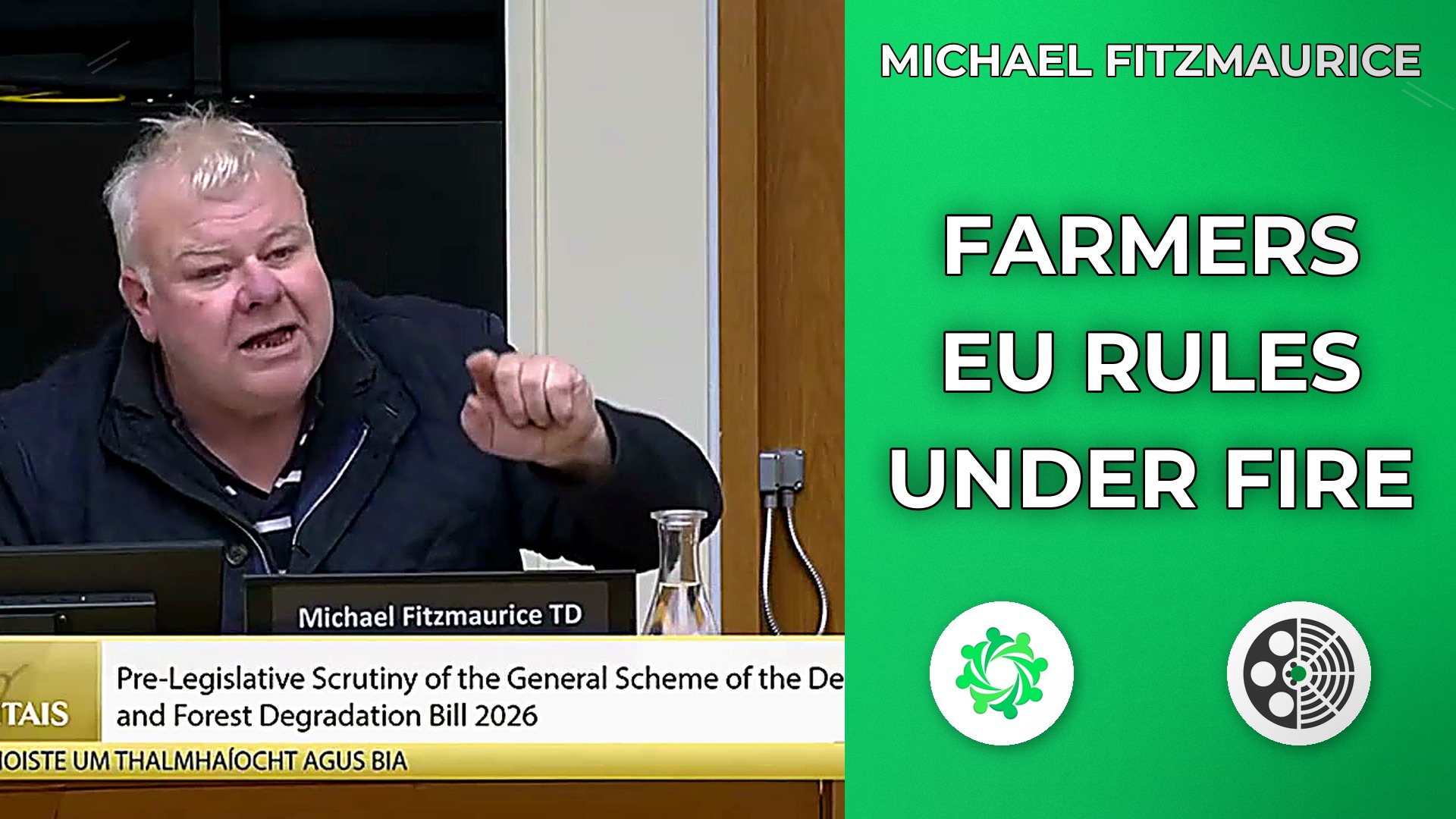
Michael Fitzmaurice
Michael Fitzmaurice challenges EU forestry regulation
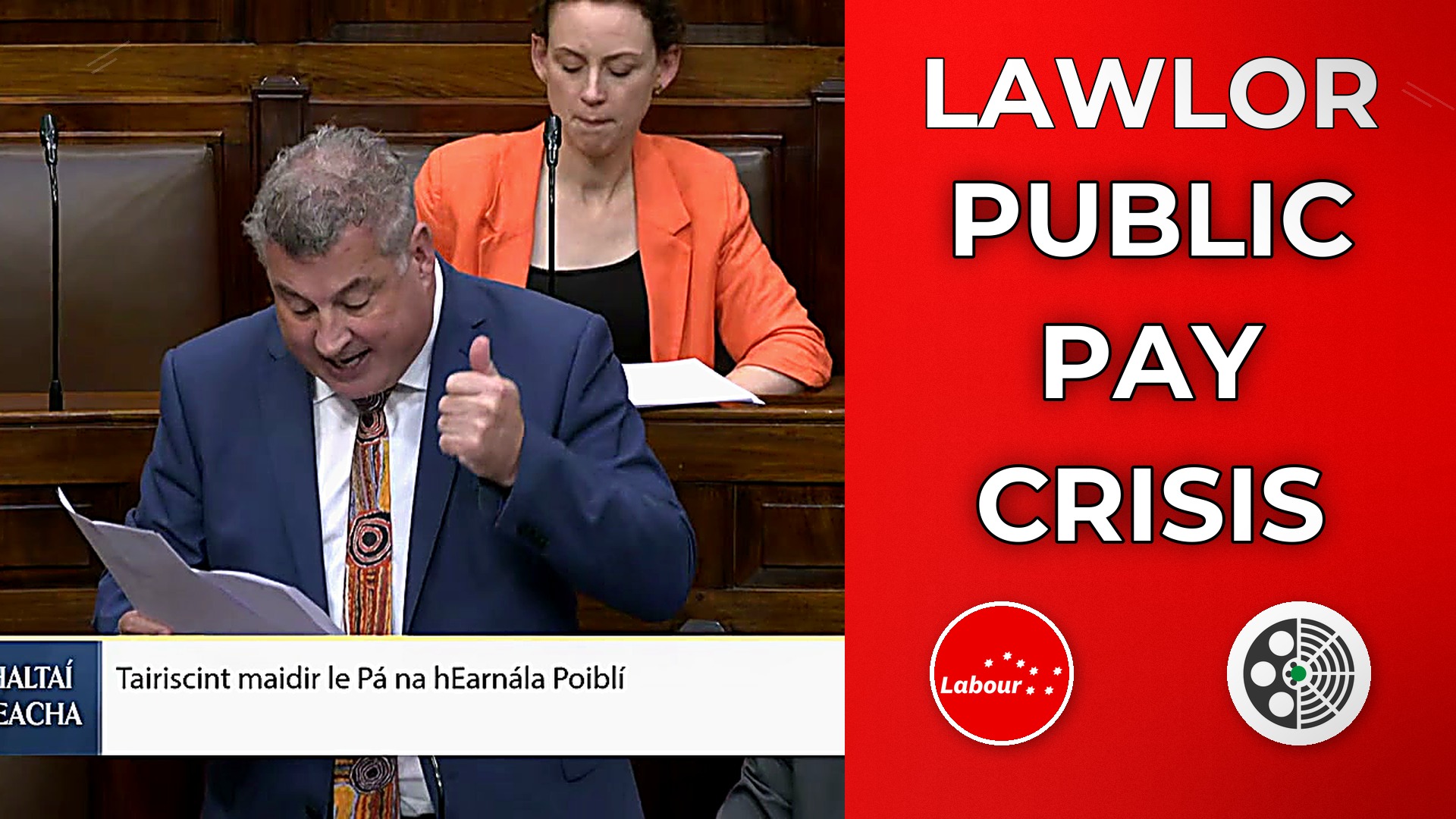
George Lawlor
George Lawlor says government must act on public sector pay
Jack Chambers
Jack Chambers says public service pay talks should begin without delay
Ken O'Flynn
Ken O'Flynn Challenges Minister Over John Barrett Dismissal
Carol Nolan
Carol Nolan Says Government Must Listen After Public Service Strike
Transcript
Thank you very much Ciarán and I want to thank the witnesses here I was
listening to you on the way and I have to say I'm rather surprised by Civil
Defence that you lost people during COVID and that you're actively recruiting
now. I was a member of Civil Defence myself 100 years ago, a wonderful
organisation. I really have to compliment the people that are here because when it
comes to emergency planning we're never sure what's coming down the line. You can
have what seems to be a fairly mild event turn into a disastrous event so I
have to compliment you on that. The cross-border fire service, I know the
amount of work that you do to get that in place and the level of commitment
that's required on either side so I believe you're entitled to a compliment
on that as well. I'd like to throw all the questions out together if you don't
mind. So for the Civil Defence, you're actively recruiting now at the moment. Is
there a medical required for volunteers and if there is, where is that
medical carried out? Drone training, where do you carry out the drone training? So
that's for Civil Defence. In the area of national emergency
planning we were talking about cyber security. I know that it is the
competence of the National Cyber Security Centre so if you feel that it is
more a question for them I'm quite prepared to withdraw the question. But we
put forward a proposal some time ago of three tiers if you want on cyber defence.
So cyber defence would be based with the National Cyber Security Centre as the
primary organisation in the event of a cyber attack. That then would be
augmented by the various consultancy groups that there are, the big five for
example, to provide second-line support coupled with the Defence Forces
and then there was a suggestion that we would have a third-line defence where
companies who had cyber professionals working within their organisation would
agree to release those professionals and to allow them be used in the national
interest and I just wonder if that has ever found any ground. Back to Civil
Defence for a minute. There was some suggestion after one of the major
storms that there were electric generators available in every Civil
Defence office and that they were not brought into service. I know that at the
time I was told the reason they were not brought into service was people would
have had electronic equipment switched on and if you hooked up a generator to
it they would be unaware of the fact that there was so there was a risk to
the body so just like an answer on that. And the final one probably is more for
the fire service than anybody else. Ohanesha Lumina has been in the public
domain for some time now. In Ohanesha Lumina there is a major mud pond just
outside the plant I'm very familiar with as I worked there one time. That mud
pond is growing and has been growing over the last 30 odd years and there is
evidence throughout the world of these mud ponds breaking their banks and it is
the fire service that usually are the people in first in a situation like that.
Has that been war-gamed? Because it's not just Ohanesha Lumina, you have Whitty
Island as well, you have several chemical plants down in the Cork area. So have you
been war-gaming those in the event of a major disaster? So that's really the
questions and maybe we'll start with Civil Defence. Morning Senator and thank
you for your comments and thank you for your appreciation of Civil Defence
volunteers across the country. If I start with the medical, we don't don't have a
medical in place for Civil Defence volunteers at the moment. What I would
say about it is that within the code of practice for volunteers there's a
personal responsibility to not show up for training or duties unless you are
well. You know if there's any reason that you shouldn't be participating there's a
responsibility there. I would also say that it's more about, it's less about
medical and more about physical fitness in Civil Defence and that can be, that
can be self-managed basically in that for example we've recently rolled out
boat operations training which requires a high degree of physical fitness and
people are opting in or out of that training depending on whether they feel
they have the required level of fitness. But the final thing I do want to say on
that is that even if a medical or physical fitness test were to be
introduced there is still a place in our organization for volunteers who
can't participate on duties. Many of them would do training, many of them will
bring experience to the unit. So it's not that it would be, it would
eliminate volunteers but it isn't there at the moment and it isn't something
that we're thinking about right now. If I go to the generators that
information isn't correct. I'm not sure where it originated. Very few units would
have had generators at the time and there is a safety issue around deploying
generators and the example that may have been given was putting a generator into
a home where somebody needs to have medical equipment hooked up to it etc.
That has to be deployed very safely because we did hear of an instance where
a diesel generator was put indoors in the home and that is very dangerous. Now
that's not something that was done by Civil Defence but it's something that
needs to be managed very carefully. There's a bigger issue on generators and I might
bring Derek or Keith in to speak about this later on. We have deployed large
scale generators that will be used in the forthcoming winter season as
required and Civil Defence may or may not be involved in those and different
local authorities have taken different approaches. And finally if I just go to
the drone training, we have drones and sonar deployed across the country in
most of our Civil Defence units. We have 45 drones across the country and I think
probably about almost 30 sonar, certainly more than 20 and Paul here would be
involved in drone training so I might ask you just to add a little bit to that
if you can Paul. Thank you. Thank you Senator. Thank you Senator. With regard to drone
training, our training we abide by the European air safety regulations and so
the competent authority in Ireland is the Irish Aviation Authority. We do the
regulatory training through them. They have approximately, I think there's either
three or four, they recognize training entities that that can provide training
so that will give you your license Maria and that but we go above and beyond
that. We provide then practical handover and equipment training and some public
safety training on best use of drone resources in search scenarios, public
safety, supporting the local authorities for wildfire events, post flooding, those
kind of scenarios. So that's the kind of extra training we provide. We've invested
heavily in drones in the last few years. Not all local authorities are signed up
but the ones that are, we've been providing them with newer equipment in
the last few years that provide that can fly in more adverse weather conditions,
wind, rain, like a morning like this morning they could they could actually
operate. So yeah, so that's on the drone training. Thank you.
I might just come in on the cyber side. I think it's very much outside our area of
competence so what I what I can do is we'll note it and we'll bring it to the
attention of the National Cyber Security Center and the Department of Justice.
I might just take the questions you raised in relation to Agadir Shalhouba
and the general response to hazardous chemical incidents. So we in the Fire
Service provide training for firefighters to respond into those kind
of difficult operating conditions. I suppose I want to talk maybe first maybe
about what we call the Cerveso sites, upper tier and lower tier, where there
will be safety plans. Predominantly the operator carries a key amount of
responsibility and I want to emphasize that that's part of the process but in
cases where there are emergencies the Fire Service will respond in quickly and
their first and always their key objective is life safety and rescue so
that those are the first level of operations. With that and with the
specialized training that firefighters have there's also then a piece around
incident command. We have a new national incident command system that was brought
into play in 2025 which sets out a common framework for all fire services to
operate together and operate safely. So that's a key part of that response as
well. The other piece we're looking at is the actual equipment you need to respond
into specialized areas like this, mud flats, those kind of it and we're
always a fan in the Fire Service of dual use. We've also been looking at, we're
taking lessons, my colleague Derek Whelan is doing a review of the summer
response to wildland fire and one of the things we see is the need for some
specialized vehicles to work in tough terrain. We have some in the Fire Service
already but we're going to do an evaluation and a piece on inter-operation
and maybe to further strengthen that again with that dual use piece where
these vehicles can respond into highland areas but also into mud flats, into areas
like Ogamish and Lughman as well where normal.
I'm really stuck for time here. You did it again, Senator Crawford.