

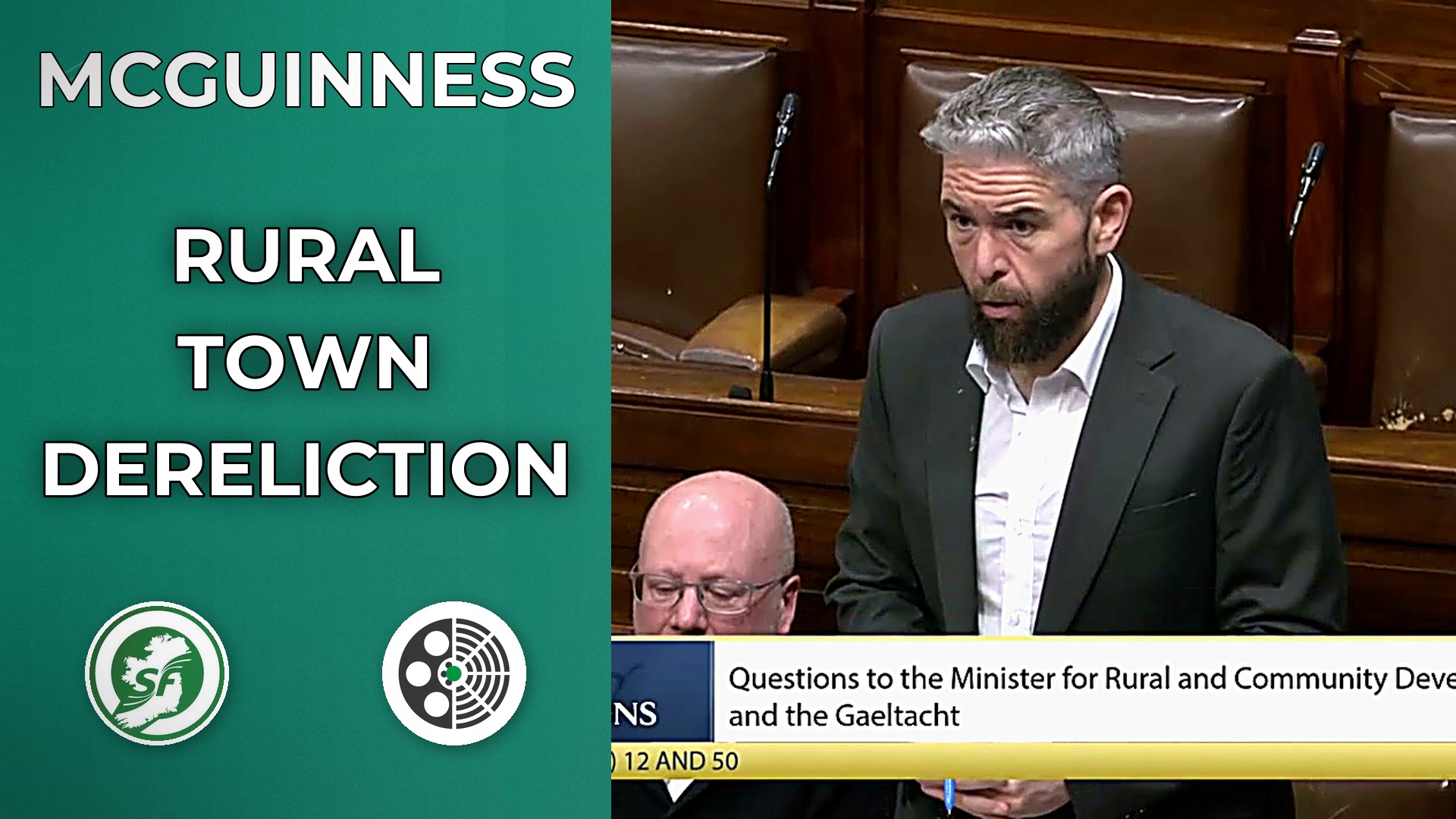


Conor D McGuinness calls for faster action on town dereliction
Conor D McGuinness called for more support and faster action to tackle vacancy and dereliction in rural towns and villages. He said empty properties threaten the viability of local communities and argued that local authorities need the resources to act more quickly.
McGuinness said towns and villages can quickly lose the critical mass needed to sustain local services, commercial space and community life. He argued that the next iteration of Our Rural Future should reflect the risks posed by vacancy and dereliction.
He called for additional capital funding and faster legal processes for properties caught up in lengthy cases, while stressing that any changes must respect property owners’ rights. He cited work in Waterford and said successful local authority projects showed what could be achieved.
The Minister for Rural and Community Development outlined measures including Town Centre First, the Rural Regeneration and Development Fund and the Town and Village Renewal Scheme. The Minister said almost €446 million had been allocated to 163 RRDF projects since 2020, and more than €217 million to almost 2,000 Town and Village Renewal projects.
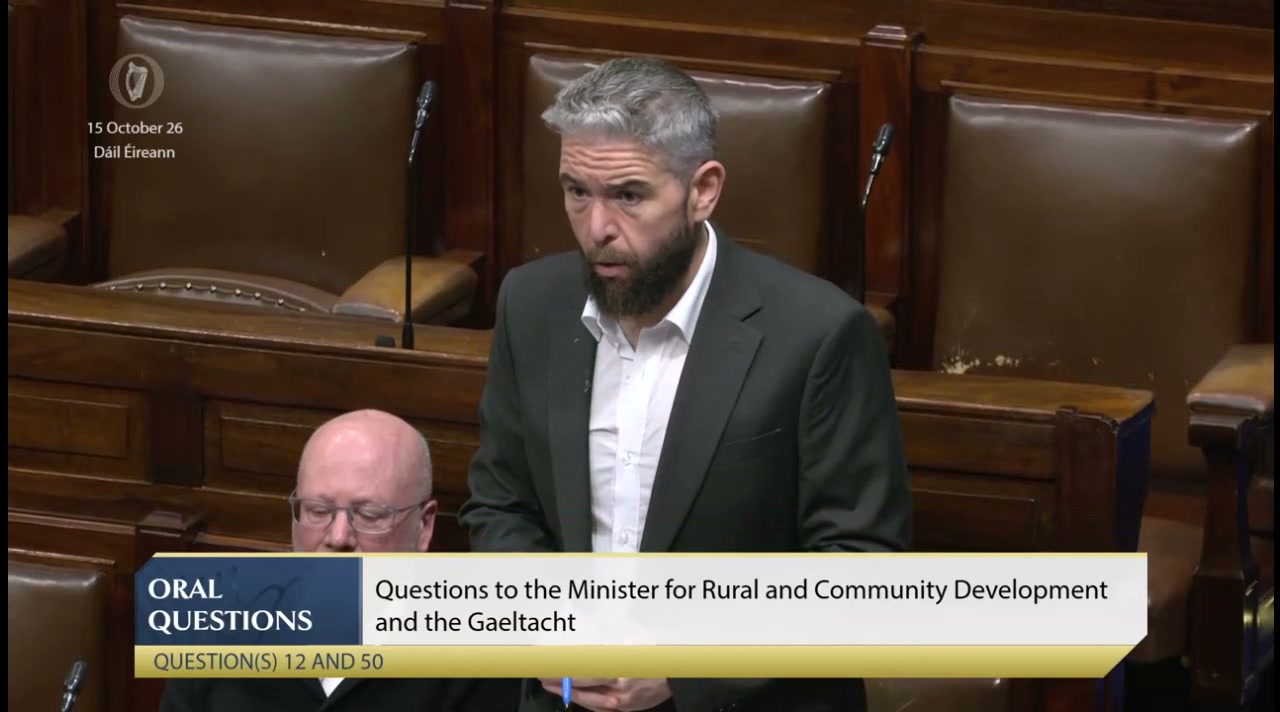
The exchange also covered the Town and Village Renewal Scheme’s building and land acquisition measure, which allows councils to acquire property as a catalyst for regeneration. The Minister said €7.2 million was confirmed for 38 projects in 2026, and urged local authorities to prioritise bringing derelict buildings back into use alongside public realm improvements. Watch the recording to hear the full exchange.
Vacancy and rural viability
McGuinness said towns and villages can quickly lose the critical mass needed to sustain local services, commercial space and community life. He argued that the next iteration of Our Rural Future should reflect the risks posed by vacancy and dereliction.
More resources for local authorities
He called for additional capital funding and faster legal processes for properties caught up in lengthy cases, while stressing that any changes must respect property owners’ rights. He cited work in Waterford and said successful local authority projects showed what could be achieved.
Government schemes and funding
The Minister for Rural and Community Development outlined measures including Town Centre First, the Rural Regeneration and Development Fund and the Town and Village Renewal Scheme. The Minister said almost €446 million had been allocated to 163 RRDF projects since 2020, and more than €217 million to almost 2,000 Town and Village Renewal projects.
Acquiring vacant buildings
The exchange also covered the Town and Village Renewal Scheme’s building and land acquisition measure, which allows councils to acquire property as a catalyst for regeneration. The Minister said €7.2 million was confirmed for 38 projects in 2026, and urged local authorities to prioritise bringing derelict buildings back into use alongside public realm improvements. Watch the recording to hear the full exchange.
We publish thousands of recordings to make Irish politics transparent and resistant to manipulation. Spotted an error? Report it — together we are building a reliable archive of Irish politics.
Other speeches


Tego samego dnia All speeches from this day →
Jennifer Carroll MacNeill
Jennifer Carroll MacNeill backs Kathleen Lynn lecture theatre
Rose Conway-Walsh
Rose Conway-Walsh backs Kathleen Lynn hospital name
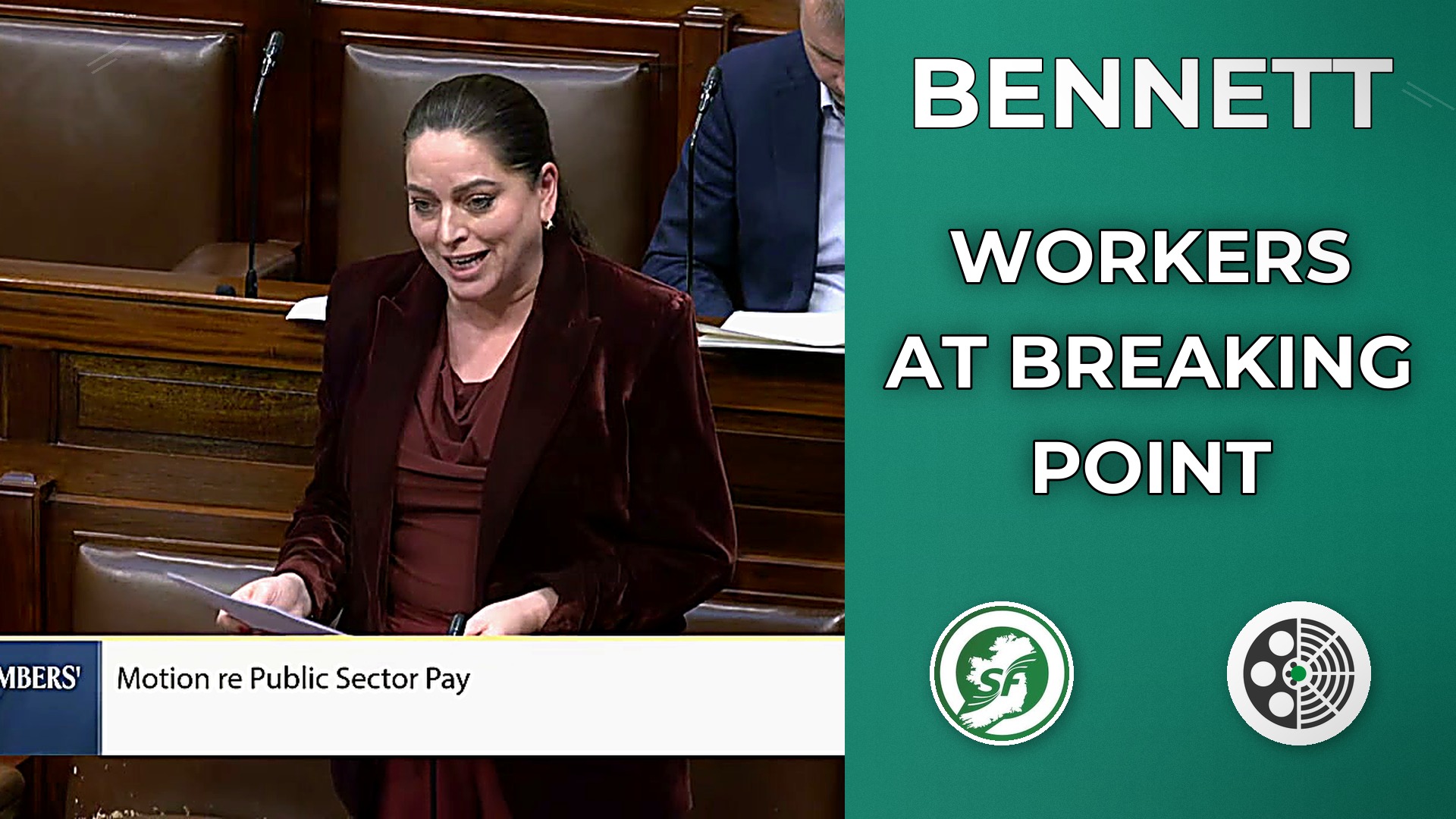
Cathy Bennett
Cathy Bennett: Public Sector Workers Have Been Taken for Granted
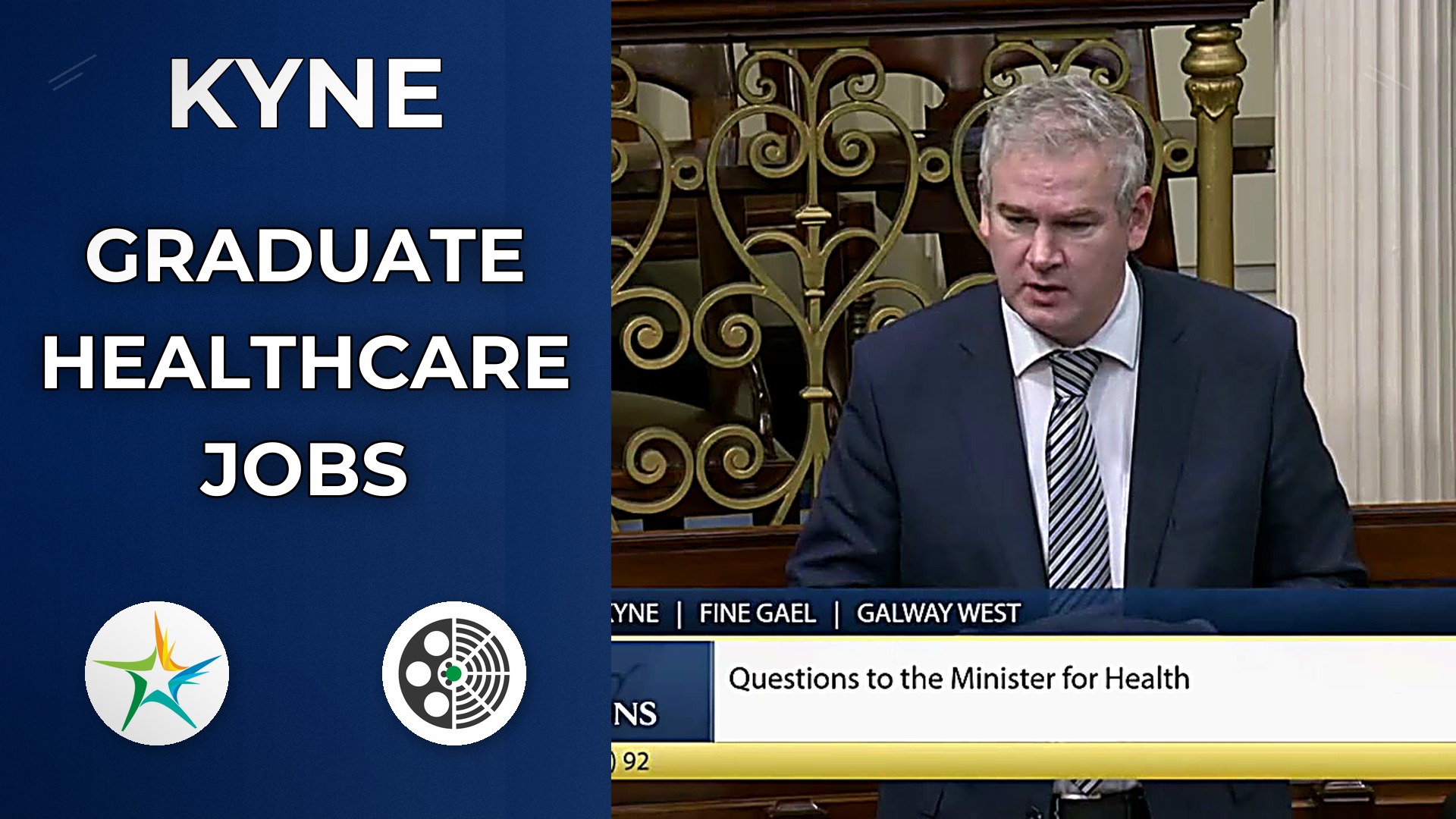
Seán Kyne
Seán Kyne presses for jobs for Galway nursing and midwifery graduates
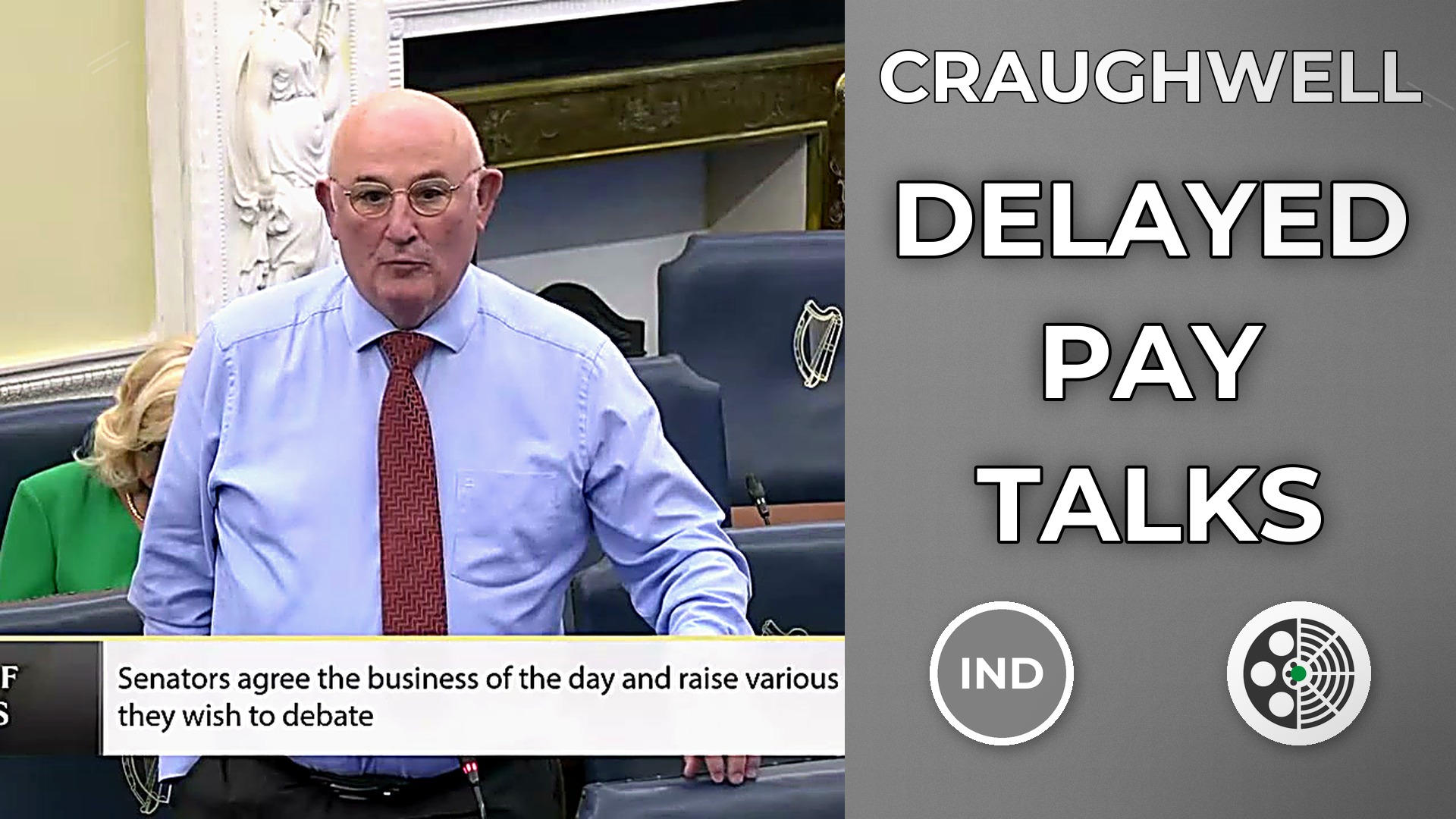
Gerard P. Craughwell
Gerard P. Craughwell blames pay talks delay for disruption
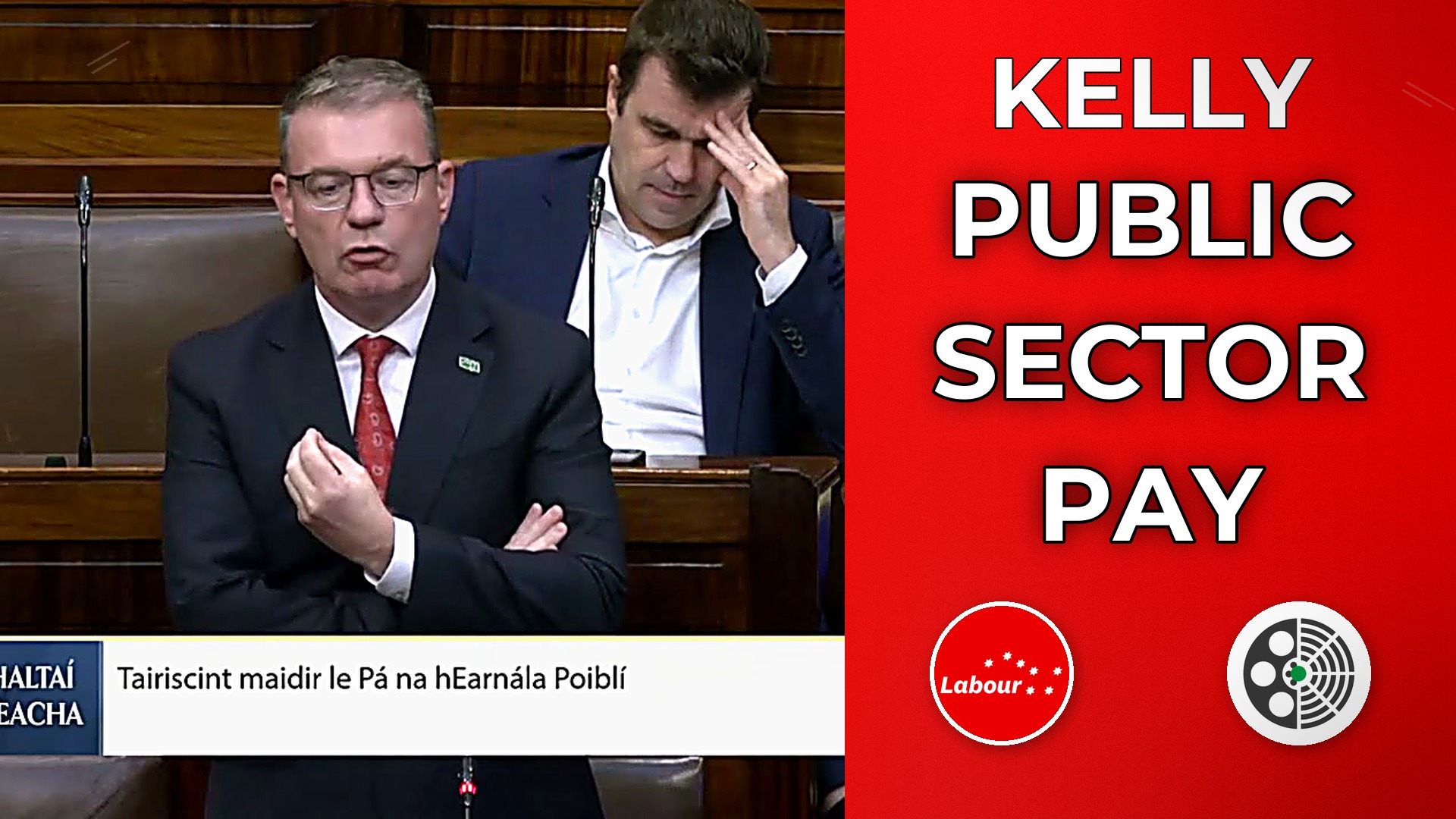
Alan Kelly
Alan Kelly presses Minister on pay after 300,000 strike
Transcript
I'm taking this question on behalf of my colleague Thomas Gould,
an Austasian Minister for Rural and Community Development in the Gaeltacht,
the role that his department has taken in tackling vacancy and dereliction in
towns and villages, and Deputy Gould as the Sinn Féin
spokesperson on local government has highlighted this issue time and
time again, particularly with regards to vacancy and its impact on the housing
crisis, and he's raised this on frequent occasion with the
housing, but obviously this is something that concerns rural communities as well
and the use of the RRDF and the town and village
renewal scheme, and that's why we think it's very important in the context of
our rural future to be published imminently, that
Minister you would give us a view of your opinion on it.
Thank both deputies for raising this issue. Firstly Deputy McGuinness,
you weren't here earlier, but we did express one of our sympathies to
you and to the community in Waterford on the appalling tragedy that happened
on Tuesday, and I assure you and all of our colleagues of our support of our
department in relation to supporting the community afterwards.
In relation to your question and that of Deputy O'Shea,
tackling vacancy and dereliction is a key priority for the government.
We are very clear that the reuse of vacant and derelict properties
will provide a catalyst for revitalising communities,
and our department's policy framework and many of the support schemes
available under the Rural Development Investment Program reflect this.
For example, the Town Centre First policy is a joint initiative between my
department and the Department of Housing, Local
Government and Heritage. The aim of this policy is to
regenerate and enhance the social and economic revival of towns and
villages and to address the challenge of vacancy
and dereliction that you have outlined. Policy has seen
town regeneration officers who are funded by my department
work closely across multidisciplinary teams
in local authorities who are collectively responsible for town
regeneration with a focus on combating vacancy and
dereliction. This includes, for example, the dedicated
capital delivery teams. It also includes broadband officers
and vacant homes officers. Importantly, a range of capital funding streams is
available to support the delivery of Town Centre
First's objectives and the town and village
scheme, and the RRDF fund, as you referred to,
have provided growing levels of investment to rural communities
in recent years. RRDF seeks to support large-scale and ambitious projects to
achieve sustainable economic and social development
in our rural towns. Since 2020, almost €446 million has been
allocated for 163 projects across Ireland. The assessment
process for the applications received in response to the latest call for
proposals under the fund is ongoing, and Minister
Butterman and I hope to announce the success of projects
before the end of the year. The Town and Village
Renewal Scheme is rejuvenating rural towns and villages across Ireland.
It's supporting projects to bring derelict and vacant buildings and sites
back into use as multi-purpose community spaces. Over €217
million has been allocated to almost 2,000
projects since the launch of this scheme.
The 2026 call for proposals under the scheme
was launched in September. There are two funding streams available, the main
scheme and the project development measure. The
closing date for applications is the 22nd of January 2027.
Town Centre First's approach complements other national policies,
including the National Housing Strategy, Delivering Homes and Building
Communities, as well as the National Planning
Framework, all of which have an aim of tackling vacancy
and dereliction, achieving balanced regional development,
and building and supporting local communities. The Minister for Housing,
Local Government and Heritage has a suite of housing supports
under the Vacant Property Refurbishment Grant, under the Craig Conagh
Initiative, as well as Thrive, the Town Centre First Heritage Renewal
Scheme. Our department is working closely with
colleagues across government. Minister Boddum and I work closely with
Minister Brown and Minister Cummins to deliver
on the goal of revitalising rural towns and rural villages
with a focus on addressing dereliction and vacancy.
So regarding this particular question, I've seen firsthand
some of the good work that's been carried out, for example, by Waterford
City and County Council. Indeed, I'm sure there are plenty of positive
examples from other local authorities, but it seems that sometimes the pace is
very slow when we're looking at villages and towns where there is considerable
dereliction and vacancy within the centre of those towns and villages.
It marks a risk to the viability of those
towns. I think it's something that needs to be reflected
in the next iteration underway by your department at the moment of
our rural future, that a village and a town can very quickly lose a critical
mass in terms of livability, in terms of
commercial space, and in terms of viability. And that's
why we need to see additional supports for local authorities
and additional money, effectively, so that they can make
quicker decisions, they can bankroll them more effectively, and they can tackle
dereliction and vacancy at a quicker pace.
Further remarks. We had a very good
visit with Minister Butler earlier in the year. We were in Lismore and
Capaquin, where you can actually see the difference that our schemes are making.
But equally, also what you just said was also evident in terms of a
dereliction can take a whole town down, and Deputy O'Shea
similarly. But we do fund, for instance, the town regeneration officers
in local authorities are funded from my department. We have really driven the
establishment of capital delivery teams. And I spoke earlier when we were
discussing RRDF around my frustration that RRDF is being
allocated and not drawn down quick enough.
And I share the frustration of both deputies in relation to that.
Where we have capital delivery teams that are working, they are drawing down
funding and making sure that the funding is being delivered
and is addressing dereliction and vacancy and is addressing
regeneration. We have the schemes there, Deputy. The schemes are working well.
And there is a variance in terms of performance. But as you know,
when it comes to property, when it comes to the ownership of property, it can be
difficult, particularly in towns. There can be a myriad of reasons why a
property is left vacant and is allowed to go
We are moving in terms of the derelict site register, the derelict site tax,
and local authorities are being given more powers to do that.
And certainly through RRDF, through Town and Village Renewal. And Town and
Village Renewal, in particular, also has a measure within it that doesn't
get a lot of coverage. That's the building and land acquisition measure,
where a council can acquire a property in a town to act as a catalyst for
regeneration. That might be opening up a new space in a town. It might be
revitalising a derelict property as a community space. But as well as the
public realm projects that we see under Town and Village Renewal, we can
also do Town and Village, or we can do building and land acquisition to
revitalise a town or a village. Thank you. Deputy?
Very briefly, I think we're speaking in common purpose here. But I think
additional capital would be very useful to those local authorities that
are performing. And perhaps it's something that you and your colleagues
in government can discuss is ways to fast track some of that legal
processes without in any way impinging on the rights of people, but to
ensure that there is maybe a fast track process where properties have
been identified, but sometimes are caught up in legal processes that
seem to go on for many, many years.
I think Deputy Chair has just hit the nub, really, the difficulties in
terms of complex cases. And there are actually some really, really good
local authorities that we see as we go around the country, where they've
gone, they've ripped off the plaster and done it, and it has made such a
difference. So certainly, Minister Cummins, I know, as Minister in this
space, and Minister Brown are committed to. But just coming back to the
building and land acquisition measure, we've confirmed funding of 7.2
million euro for 2026. That's going to fund 38 projects around the
country. That will really assist in opening up. And as I said, the
Town of Edinburgh is currently open for applications through the main
scheme and through the project development. And I would appeal to
local authorities to think outside the box. We get a lot of really fancy
public realm applications, and it's lovely to have town spaces and civic
spaces, but there's no point in having lovely, accessible civic spaces
if the buildings around them are derelict. And I think by using the
powers that are available to them, using the funding available from both
my department and from the Department of Housing, and using the resources
of the town regeneration officer, using the skill of that person, I think
we can use the existing capital money that's there to make bigger changes
and make more transformative changes. And look to those local authorities
that have dealt with those complex cases, and there are some come to mind
and that have really, really gone into the depths of dealing with those
complex cases. And it has made a massive difference in towns and
villages. But to those local authorities, so with the work underway,
Deputy McGinnis in Waterford, in terms of Capital Queen, and the super
projects in this moor, within the existing town centre, really, really
showcased for me the success of these schemes, and Deputy Shane Cork,
again, we had a good discussion with your councillors there recently
around the schemes, around the impact of the schemes, and maybe the need
for bigger counties to do something a little bit more different.
You've taken, Mr Ball and I have taken all that on board.
Thank you.