

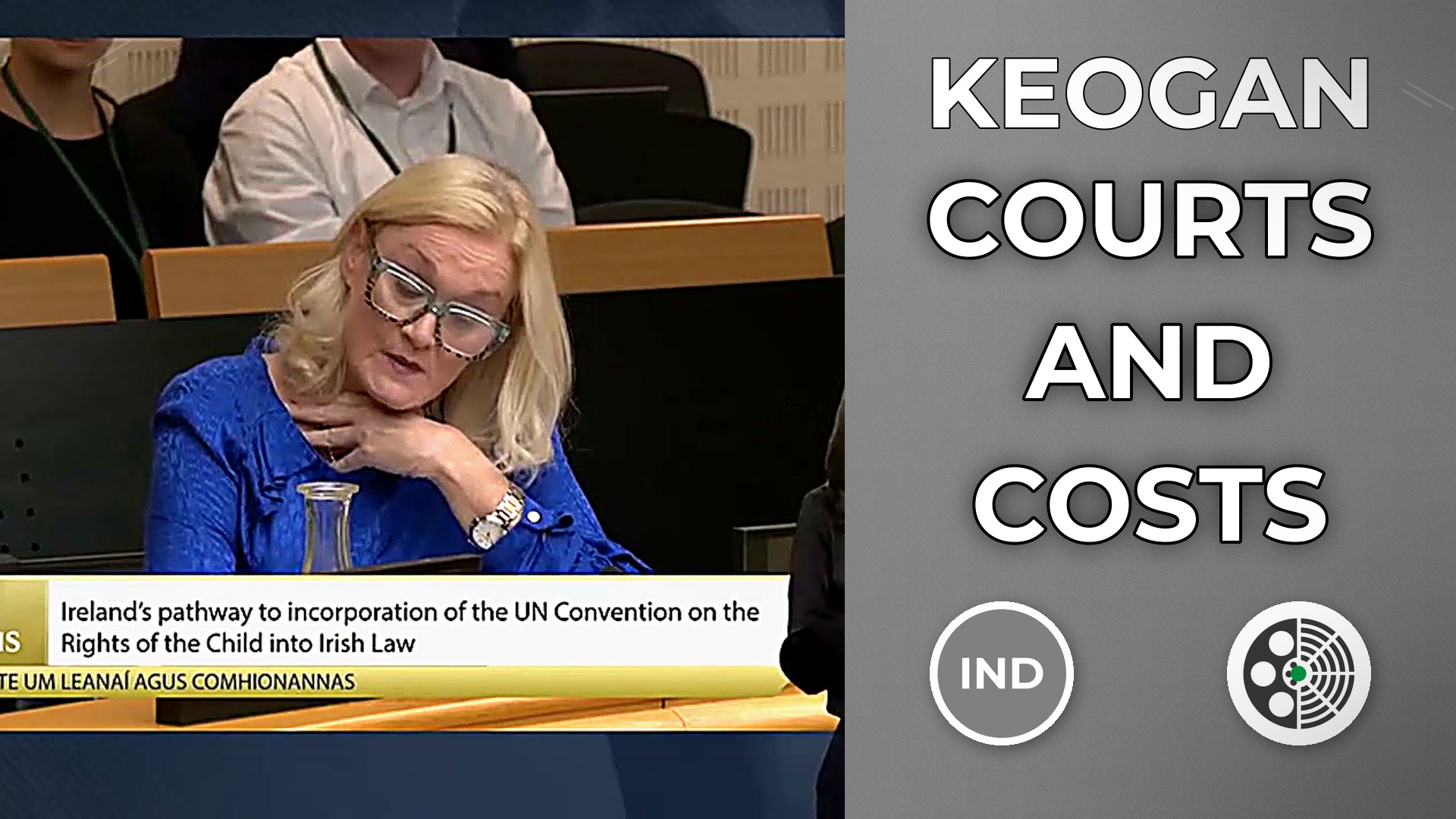


Sharon Keogan Questions Costs of Proposed Children’s Rights Law
Sharon Keogan questioned young participants about a proposed children’s rights law in a recorded discussion. She raised concerns about legal costs, mandatory impact assessments and whether judges or elected representatives should decide how public money is spent.
Keogan asked whether taking issues such as housing, healthcare and education into the legal system could divert public money from frontline services. Participants said preventing mistakes and embedding respect for children’s rights could reduce future harm and the need for court cases.
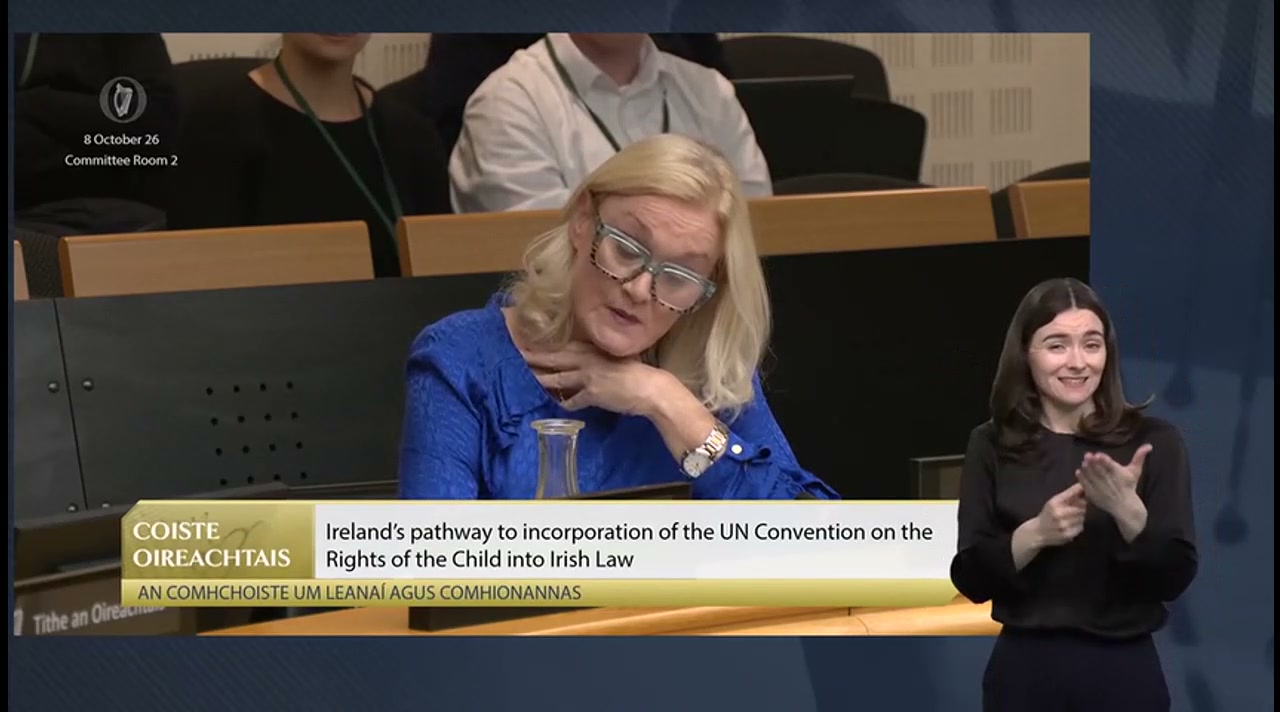
The discussion turned to a proposal for mandatory impact assessments of new government policies. Keogan asked whether added bureaucracy could slow the delivery of housing, schools and recreational facilities. Participants acknowledged that assessments could take time, while arguing that getting decisions right from the outset could prevent costly damage later.
Who decides public spending?
Keogan also asked whether final decisions on national budgets should rest with unelected judges or democratically elected representatives. The participants who responded said the people should decide.
The exchange focused on the balance between protecting children’s rights, delivering public services and deciding how public money is spent. Watch the recording to hear the full discussion.
Legal costs and children’s rights
Keogan asked whether taking issues such as housing, healthcare and education into the legal system could divert public money from frontline services. Participants said preventing mistakes and embedding respect for children’s rights could reduce future harm and the need for court cases.
Impact assessments and public services
The discussion turned to a proposal for mandatory impact assessments of new government policies. Keogan asked whether added bureaucracy could slow the delivery of housing, schools and recreational facilities. Participants acknowledged that assessments could take time, while arguing that getting decisions right from the outset could prevent costly damage later.
Who decides public spending?
Keogan also asked whether final decisions on national budgets should rest with unelected judges or democratically elected representatives. The participants who responded said the people should decide.
The exchange focused on the balance between protecting children’s rights, delivering public services and deciding how public money is spent. Watch the recording to hear the full discussion.
We publish thousands of recordings to make Irish politics transparent and resistant to manipulation. Spotted an error? Report it — together we are building a reliable archive of Irish politics.
Other speeches
Tego samego dnia All speeches from this day →
Martin Daly
Martin Daly says department’s funding case needs scrutiny
Michael Fitzmaurice
Michael Fitzmaurice seeks dates for farm support payments
Conor D McGuinness
Conor D McGuinness presses for Tallow primary care centre
George Lawlor
George Lawlor: Wexford needs timely mental health care
Luke Ming Flanagan
Luke Ming Flanagan Calls for Island Support in EU Fisheries Rules
Pearse Doherty
Pearse Doherty challenges Government over public service pay
Transcript
And some of these questions I'm going to probably even repeat.
So, sincere apologies for that.
So, just on the legal costs and the court background,
you mentioned that passing this law would automatically fix
health waiting lists or build new schools.
My concern is that by moving these issues
into a legal system, we are risking a situation
where public money is diverted away
from direct front line services
and into expensive court battles and legal fees instead.
How do you feel about that?
Yes. So, that's definitely a fair question,
but I think we also have to consider the cost
of getting things wrong.
At the end of the day, the aim is not to have a ton
of expensive court cases.
Nobody wants those.
They're stressful for everyone.
But rather, the cost of getting things wrong can be much greater
than the cost of fixing them beforehand.
And it can help to prevent a lot of stress and suffering
for a lot of people.
And diverting it from,
I wouldn't say it's exactly diverting it from other areas,
because children's rights, it comes into a lot
of different areas like housing, healthcare, education.
Everything is connected in that sort of way.
So, I do not necessarily think that it would be taking away
from those issues, but rather highlighting a certain aspect
of those issues, if that makes any sense.
Thank you, Amelia.
Anybody else like to comment on that?
Well, I suppose if you change the culture right
from the start, there is, you just change the culture.
There is less likelihood
that people will not respect children's rights.
If it's in there as kind of the baseline, oh, you must do this.
You must hear the child.
You must respect the child.
I don't see how that ends up in court cases.
Good people will take it on, make it part of their policies
and the way they conduct themselves.
I don't see that as going to court.
Ola, Neil.
It won't be easy.
There will be a cost, but the benefits do end
up outweighing the negative aspects of it.
You know, we see that if there is a precedent,
people are going to be able to work off that precedent
and people are going to be able to say, right, look,
this is what's going on, and if we don't respect that,
these are the possible consequences for that,
and we don't want that problem at all ourselves.
So, in my opinion, for a lot of places,
they will just slightly change.
Like, there isn't much to change in some places.
It's just making sure that we are considered before decisions
are made, so it's not so much that everything is going to,
there's going to be a massive change
and children are suddenly going to have all this power.
It's going to be a little thing, you know?
It's going to just be a little jump, a little step forward,
a better step in the right direction.
Okay, and I suppose to go back to the assessment piece,
the impact assessment, the proposal calls
for the mandatory impact assessment
for every new government policy.
While the goal, it's extremely noble, there is a danger
that adding a massive new layer of bureaucratic red tape
into every decision might actually slow down the building
of infrastructure that children desperately need, like housing
or new schools or recreation, so what is your view on that?
Will it slow down this, the impact assessment?
Could it slow down delivery?
It could, but things take time.
As we said, nothing is going to change overnight.
Our generation, especially at our age, 15, 16, 17,
it's not going to affect us, but it's for the next generation.
It's for the people that come after us.
It's for them that we're doing this for.
And it's better that it's done once correctly
than it's done wrong the first time,
then you have to spend more money to repair the damage
of the original outcome.
Do it once properly.
Okay, so on who should direct spending?
So if a court can legally rule
that the state has breached a child's rights
because a service lacks funding,
that gives the judge enormous power.
Do you believe that the final decision
on how national budgets are spent should be decided
by unelected judges in a courtroom
or by the democratically elected representatives of the people?
I would say the people.
People. Holly, would you say the people or would you leave it
with the judges, the unelected judges?
Just a point of order, I suppose.
You don't have to give your personal opinion.
Oh, you don't have to, yeah.
I agree with all the answers, the people.
Okay. All right, okay.
Well, thank you very much for coming in today,
and thank you for your answers to my questions.