

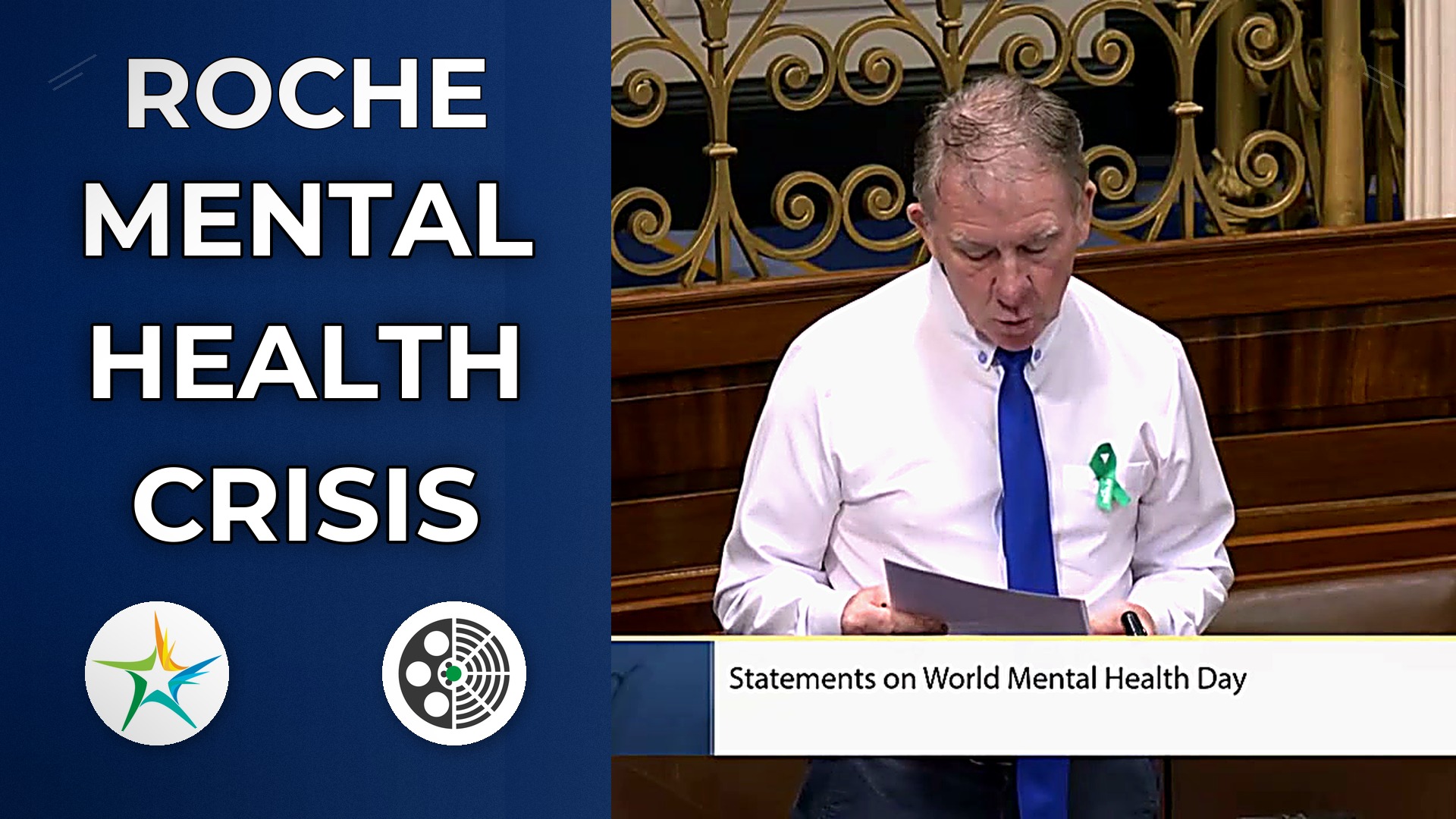


Peter Roche calls for clear mental health crisis pathways
Peter Roche, speaking as his party’s spokesperson on mental health, called for clear, compassionate routes into mental health care during an Oireachtas debate. He welcomed recent funding and service commitments while asking how people in crisis can get timely, face-to-face support when they need it.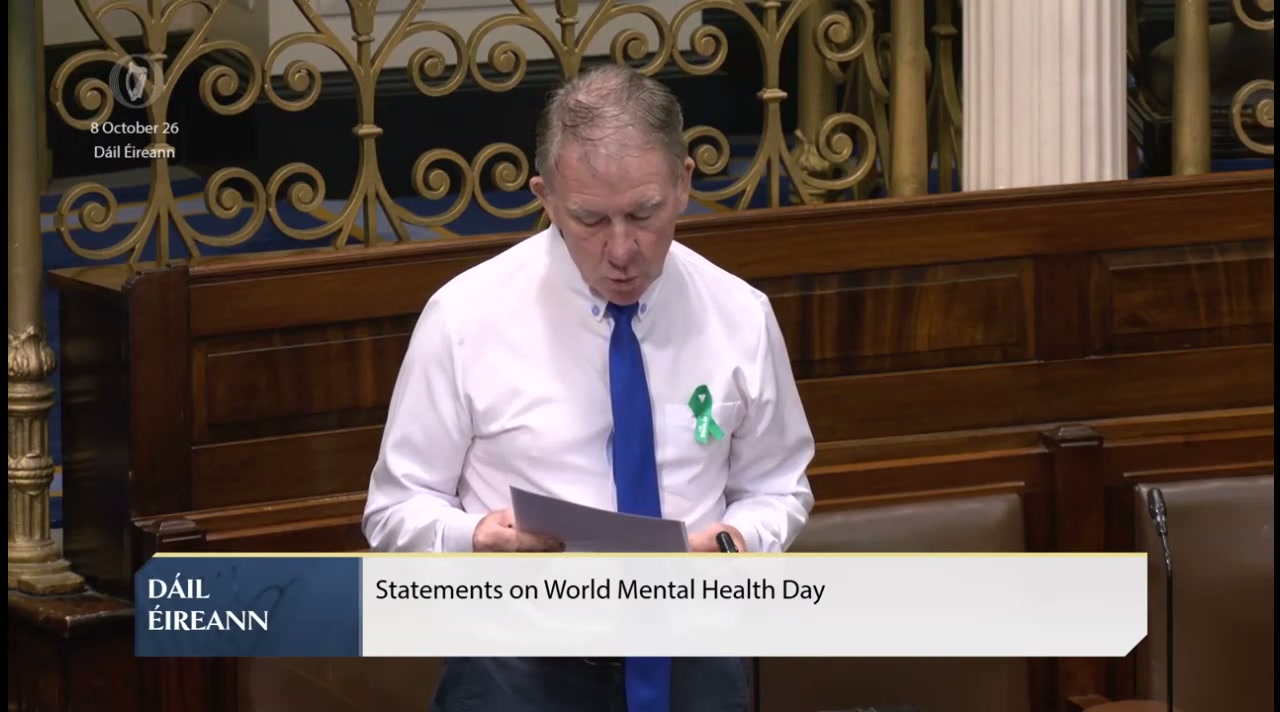
We publish thousands of recordings to make Irish politics transparent and resistant to manipulation. Spotted an error? Report it — together we are building a reliable archive of Irish politics.
Other speeches
Tego samego dnia All speeches from this day →
Ged Nash
Ged Nash challenges Government over wages and public sector pay
George Lawlor
George Lawlor: Wexford needs timely mental health care
Richard Boyd Barrett
Richard Boyd Barrett challenges government over workers and tax breaks
Sharon Keogan
Sharon Keogan Questions Costs of Proposed Children’s Rights Law
Pearse Doherty
Pearse Doherty says €43 oil relief is an insult
Michael Fitzmaurice
Michael Fitzmaurice challenges lack of care for families
Transcript
Thank you Cankola. Three short words uttering I need help and for the person
saying them that might have taken weeks or indeed months to find the courage to
do so. And before those words there may have been sleepless nights, panic
attacks, anxieties, appointments made and cancelled or a phone held in their hand
wondering who to call. And when those words finally come our response matters.
Last year in this chamber I spoke about people arriving in emergency
departments in acute mental health distress. I recall asking for dedicated
dignified crisis pathways with trained staff, appropriate spaces and timely
access to care. Since last year you might ask the question what has changed? As
my party spokesperson on mental health I welcome the commitments made over the
past year and in budget 2027. The allocation of 300 additional mental
health posts for 2026, investment in early intervention and talking therapies,
the new child and youth mental health action plan. There is also the additional
108 million in ring-fenced recurring funding and this year's budget for
mental health next year. And I want to acknowledge and thank Minister Mary
Butler, HSE and the NGO partners for their work in this regard. I also want
to recognise the positive impact that the scan teams have had in Galway. The
development of dedicated crisis response services is exactly the type of
intervention many of us have been calling for providing people in acute
mental distress with a more appropriate and a more compassionate pathway to care.
But an allocation must be professionally available and to see someone and a plan
that becomes a clear route for help. As public representatives we hear about the
strain on families, the parent trying to find support for a child, the partner
worried about leaving someone alone, the person who has asked for help and is
still waiting. For many a waiting list is it can take a daily challenge. It can
mean checking your phone, watching for changes in someone that
they love and wondering what to do if things progress. As policymakers we must
do more than listen. Mental health is always visible. Someone can get to work,
they can collect their children, they can stand on the sideline of a match and
still be struggling deeply. We need to make it easier to seek help early before
distress becomes a real crisis. We know the scale of that challenge amongst young
people and recent research from the Shawna project found that 41% of
teenagers surveyed reported poor well-being, that 62% experienced school
and exam pressure often or indeed always and almost 40% report to stress
and mental health challenges and these figures really should concern us all. We
also know what helps. Young people with higher levels of well-being are more
likely to be involved in sport, community activities and positive social
connections. That is why mental health policy cannot exist in isolation. We must
be reflected on our schools, our sporting clubs, youth services and our
communities. People should have access to counselling, appropriate assessment and
continuing support without having to prove that they have reached breaking
point. We must also respond to mental health and addiction together. For some
people alcohol and drugs become a way of coping with distress and deepening the
difficulties that exist. They deserve treatment that understands both. They
deserve a pathway to recovery with support that continues beyond the
immediate crisis. Recovery is possible. Our services must help make that
possibility reachable. For people with disabilities it means mental health care
that responds to the individual needs with services
working together and for someone in crisis it means a safe compassionate
response in an hour. Minister I do hope that there is hope and there is hope in
this debate and I want to acknowledge those providing care under considerable
pressure. The staff, the carers and volunteers, they need the resources and
they need the support and I also welcome the expansion of CAMHS and the scan
teams across our country. People recover, lives are rebuilt with the right
support someone can imagine a future today and they can see a very bright
future. That is why access matters. That is why early intervention matters and
that is why we must follow through. We ask people to find the courage to speak.
We must find the resolve to respond. Last year I said that access saved lives.
This year our responsibility is to show what we have done to make
that access a reality. For a person who is in crisis what is the road map for
them and if they are asking themselves where do they go, who do they tell?
Is support available when they're needed? If a person finds the
courage to say I need help what is the road map that follows? Where do they go
and who responds? And can they access the support they need when they need it
with a face-to-face and on a face-to-face basis.
you