



Mary Butler: Budget 2027 adds €108m for mental health
Minister for Mental Health Mary Butler outlined Budget 2027 investment in mental health services in a contribution ahead of World Mental Health Day on 10 October. She said the additional €108 million would fund crisis care, counselling, youth and specialist services, with the aim of improving access and bringing support closer to home.
Butler said people who have experienced mental health challenges, along with families, carers and advocates, must help shape mental health services. She described lived experience as expertise that should have a place alongside clinical and policy knowledge.
Butler said Budget 2027 provides for 285 additional posts and builds on sustained investment in mental health services. She also said funding for mental health had increased by more than 61% since she took office, and that ring-fenced posts would be closely monitored so funding follows recruitment.
The investment includes crisis nursing teams in busy Model 3 hospitals, two new crisis resolution teams, six Solace crisis cafés and 24 additional suicide crisis assessment nurses. Butler said the cafés offer an alternative to emergency departments and that counselling access would also expand, with 33,000 additional free sessions.
Four new Jigsaw youth mental health services are planned, alongside additional clinicians for a CAMHS ADHD pathway and services for children with intellectual disabilities. Other measures include specialist teams, further development of the intensive care rehabilitation unit at the Central Mental Hospital, and funding for peer and family support workers.
Butler said the commitments must be translated into services through the HSE Service Plan for 2027. Watch the recording to hear her full contribution.
Lived experience in mental health policy
Butler said people who have experienced mental health challenges, along with families, carers and advocates, must help shape mental health services. She described lived experience as expertise that should have a place alongside clinical and policy knowledge.
Funding, staffing and service development
Butler said Budget 2027 provides for 285 additional posts and builds on sustained investment in mental health services. She also said funding for mental health had increased by more than 61% since she took office, and that ring-fenced posts would be closely monitored so funding follows recruitment.
Crisis care and early support
The investment includes crisis nursing teams in busy Model 3 hospitals, two new crisis resolution teams, six Solace crisis cafés and 24 additional suicide crisis assessment nurses. Butler said the cafés offer an alternative to emergency departments and that counselling access would also expand, with 33,000 additional free sessions.
Youth, specialist and community services
Four new Jigsaw youth mental health services are planned, alongside additional clinicians for a CAMHS ADHD pathway and services for children with intellectual disabilities. Other measures include specialist teams, further development of the intensive care rehabilitation unit at the Central Mental Hospital, and funding for peer and family support workers.
Butler said the commitments must be translated into services through the HSE Service Plan for 2027. Watch the recording to hear her full contribution.
We publish thousands of recordings to make Irish politics transparent and resistant to manipulation. Spotted an error? Report it — together we are building a reliable archive of Irish politics.
Other speeches
Tego samego dnia All speeches from this day →
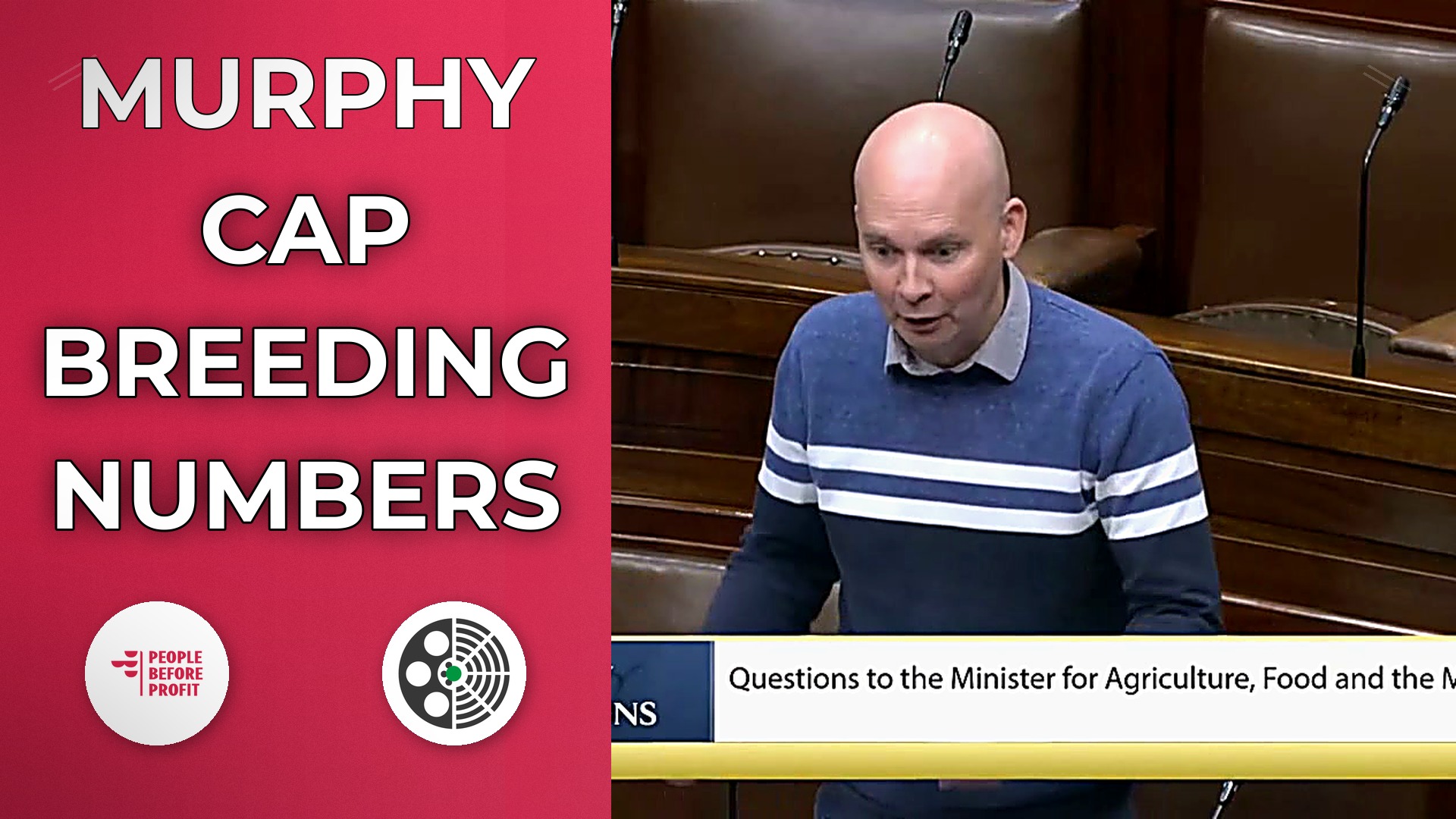
Paul Murphy
Paul Murphy Challenges Puppy Farm Bill on Breeding Limits
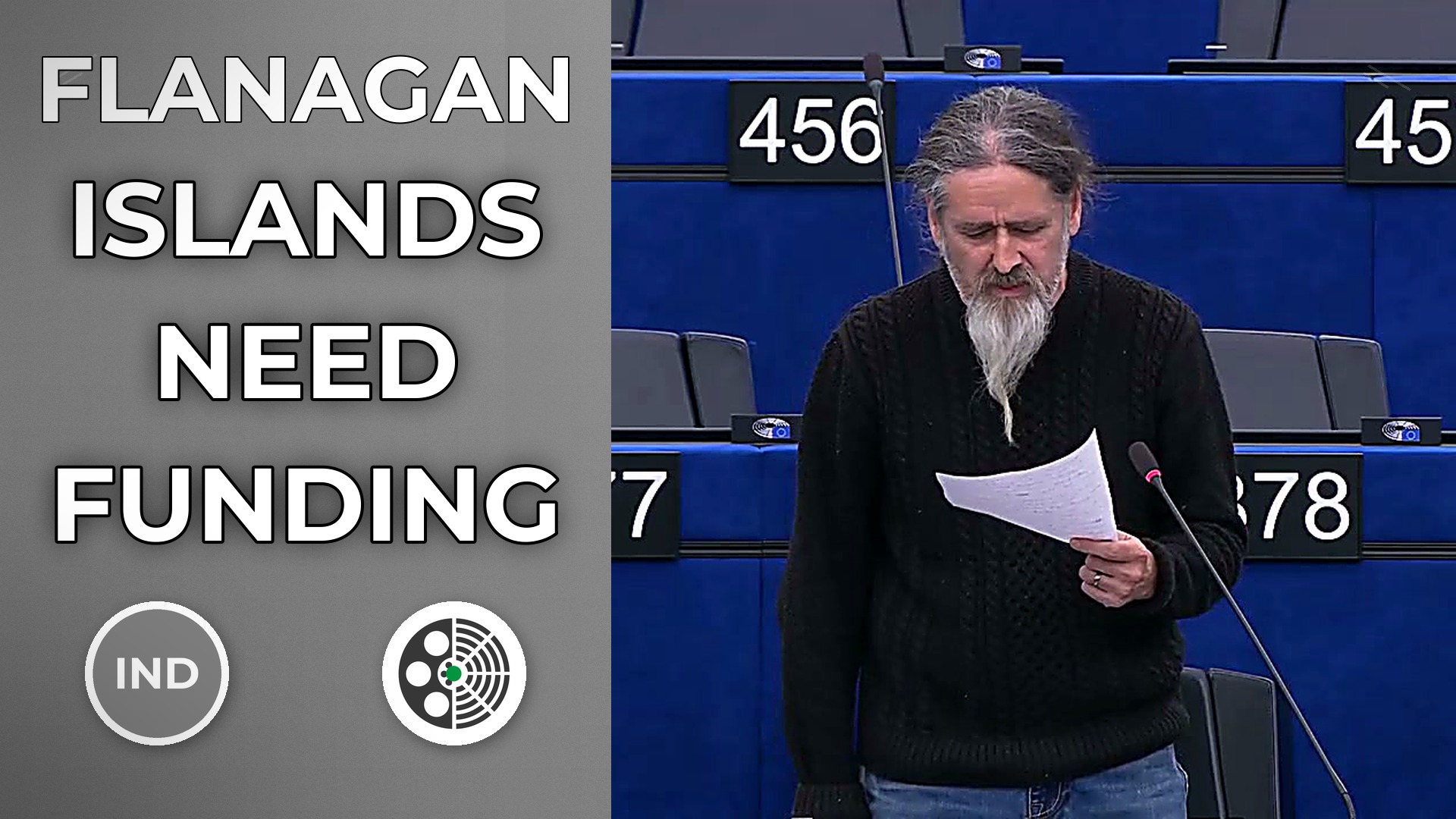
Luke Ming Flanagan
Luke Ming Flanagan Calls for Island Support in EU Fisheries Rules
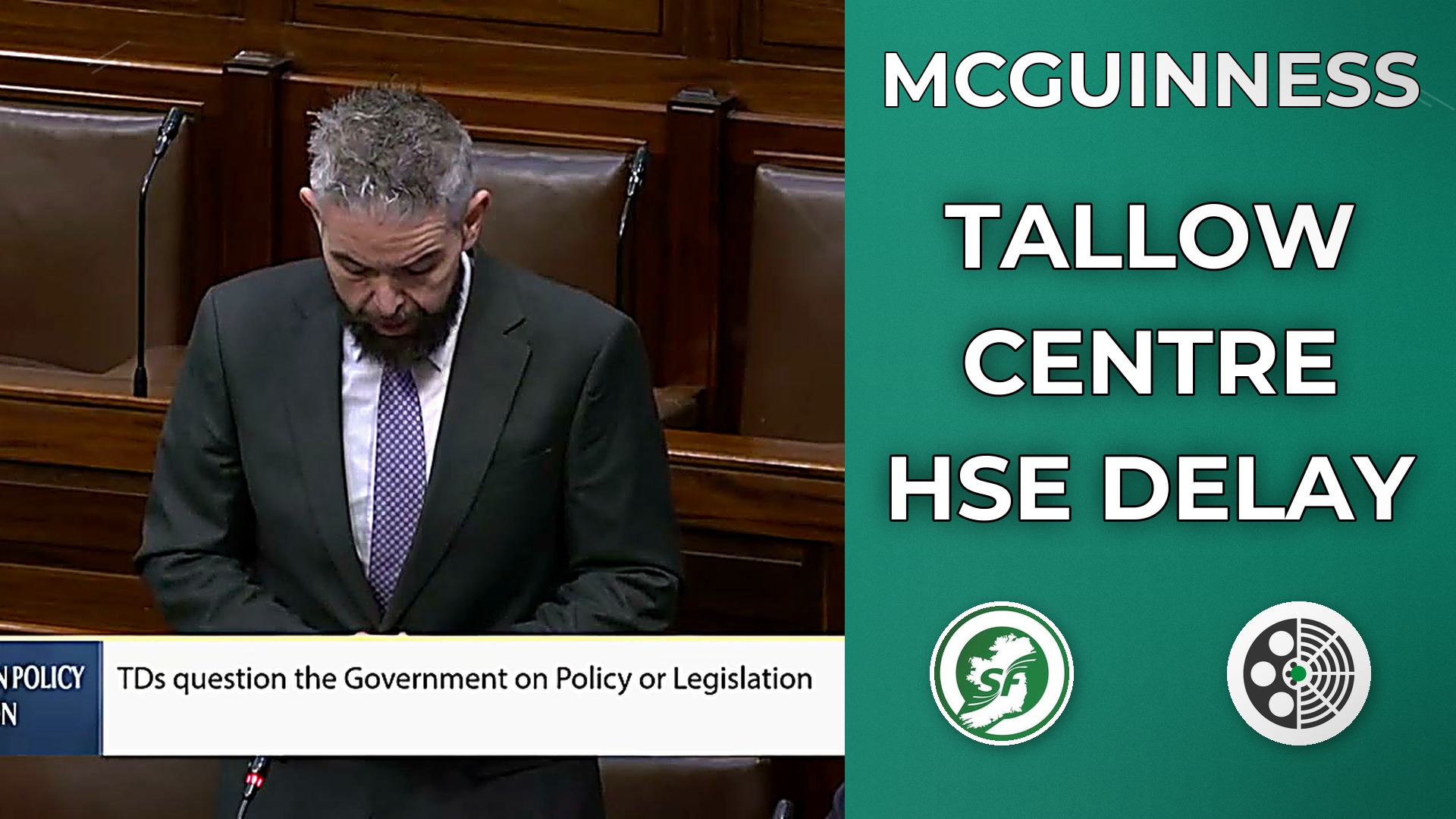
Conor D McGuinness
Conor D McGuinness presses for Tallow primary care centre
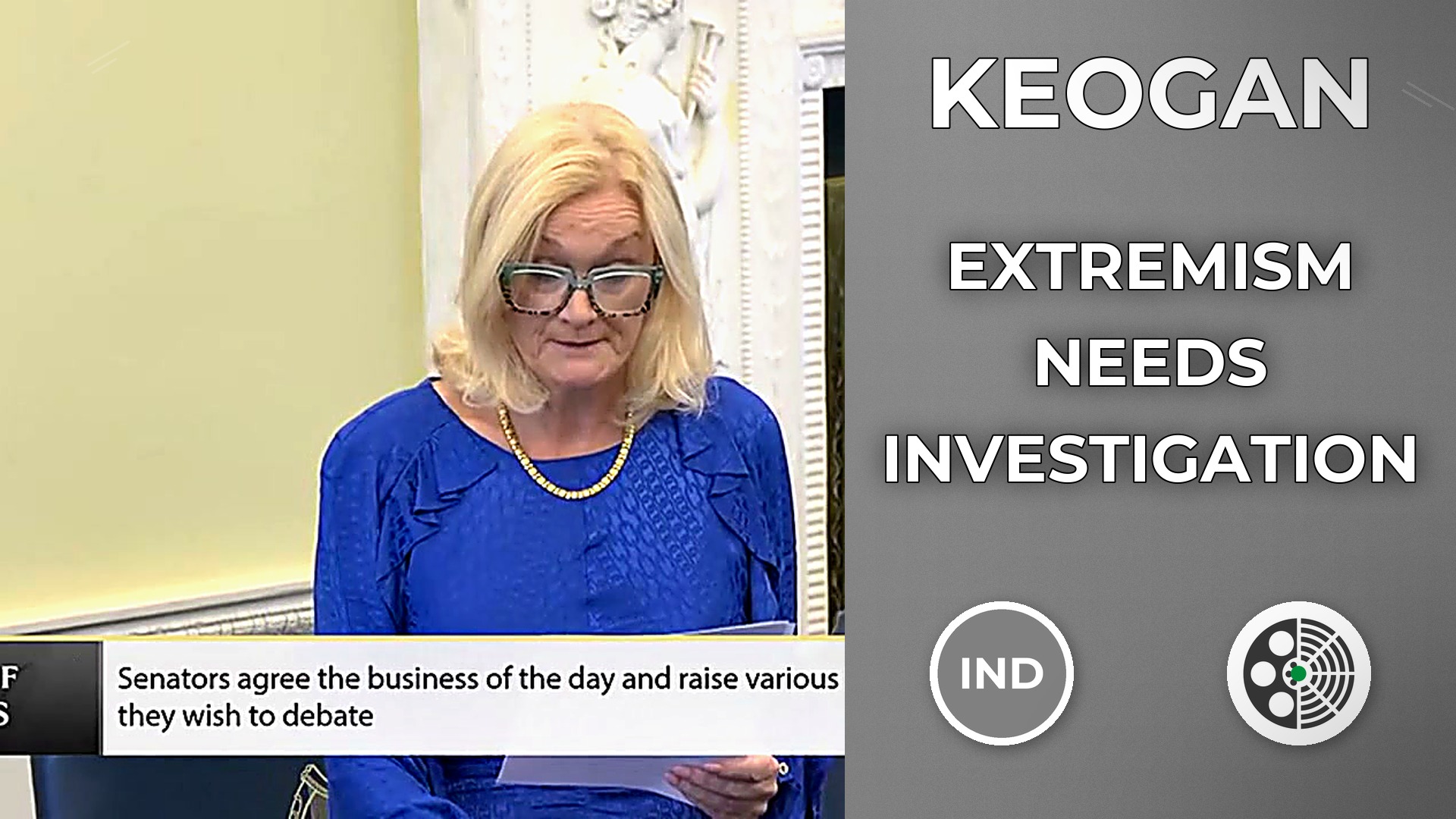
Sharon Keogan
Sharon Keogan calls for probe into Muslim Brotherhood
George Lawlor
George Lawlor: Budget 2027 fails to meet the moment
Ciarán Mullooly
Ciarán Mullooly warns island strategy is failing communities
Transcript
Thank you for the opportunity to discuss mental health today on the eve of World Mental Health Day on the 10th of October.
Mental health is something that touches every one of us, whether personally, through our families and loved ones, or through the experiences of people in our communities across the country.
I'd like to begin by drawing everyone's attention to this year's theme for World Mental Health Day,
Lived Experiences Heard, Real Voices, Real Change.
This theme reminds us of a simple truth, people who have experienced mental health challenges are experts in their own lives,
and their voices must be at the centre of how we design, deliver and improve mental health services.
I can confidently say that people's authentic lived and living experiences of mental health have been firmly at the heart of my role as Minister for Mental Health.
I know that the voices of people who use our mental health services, their family members and carers, and other committed advocates,
help us better understand what is working well and where we need to improve.
They are voices that challenge assumptions, they are voices that reduce stigma, they are voices that promote compassion,
and each voice helps us to build services that are responsive to the realities of people's lives.
Lived experience is not anecdotal, it is a form of expertise in its own right.
It is distinct from, but equal to, clinical and policy knowledge, and it must be recognised as such within our policy-making processes.
That means moving beyond individual perspectives to help articulate shared priorities, values and evidence,
ensuring that policy decisions are grounded in real-world needs and outcomes.
This is my seventh Budget as Minister for Mental Health, and I believe there is real momentum in mental health reform and service development.
Over recent years we have driven significant progress in expanding specialist mental health services and delivering the reforms set out in Sharing the Vision.
These reforms are no longer simple policy commitments.
They are now visible in services, supports and interventions that are improving people's lives across the country.
When I first became Minister for Mental Health, there were approximately 220 specialist mental health teams in place.
Today that number is approaching 300, with further teams in development and recruitment continuing across our national clinical programmes.
Those teams are transforming how we deliver care.
They support people with increasingly complex needs, they manage higher levels of clinical risk,
and provide more specialised, responsive and person-centred care for individuals and families when they need it most.
We also now have significant funds available to advance capital mental health projects,
with £470 million for mental health under the National Development Plan Health Allocation 2026-2030.
This will help us to deliver critical new mental health infrastructure, including a perinatal mother and baby unit and new adult eating disorder inpatient centres.
In next year's Budget, for the first time, I have allocated funding to appoint an Assistant National Director,
based in the HSE Capital and Estates, to really drive mental health capital projects.
I am really serious about delivering new infrastructure and spending our full allocation over the next five years.
We have enacted the Mental Health Act 2026, delivering the most significant modernisation of our mental health legislation in a generation.
We continue to increase investment in prevention and early intervention, recognising that supporting people earlier leads to better outcomes.
Last year we launched free mental health supports for men, and already, Cahirloch, more than 8,000 men have access to supports, many for the very first time.
We recently launched a new national strategy to reduce suicide and self-harm, providing an ambitious and evidence-based roadmap for the decade ahead.
These developments are not isolated achievements, they are part of a broader programme of reform and investment across mental health services.
While challenges remain and there is more work to do, these achievements show that sustained investment, evidence-based policy and strong partnerships are making a real difference to people's lives.
I am pleased to confirm that in Budget 2027 I have secured an additional €108 million for mental health services, bringing annual funding to more than £1.65 billion.
That represents a 7% increase in funding this year.
Since I have taken up office, funding for mental health services has increased by more than 61%.
Budget 2027 builds on that sustained, incremental and ring-fenced recurring investment.
It is not a one-off increase, but it is another step in the sustained development of our mental health services.
The allocation provides for staffing growth equivalent to 285 additional posts, specific new investment in priority services and programmes.
It is not acceptable to me that ring-fenced posts for mental health funded in Budget 2026 or 2027 would be delayed or suppressed by overspends elsewhere in the health service.
I will be working with the Minister for Health, Jennifer Carl-MacNeill, to ensure there is very tight control on both these new 280 posts and the posts funded for this year.
We will be clawing back the funding not spent on the 300 ring-fenced posts for this year, combining it with the additional funding for this year and holding it centrally nationally, only distributing it to the regions as posts are actually hired.
Over the past six years, I have focused investment on improving child and youth mental health services, building our national clinical programmes and developing more effective and compassionate supports for people experiencing a mental health crisis.
This year, I am renewing that focus on crisis care, while strengthening early intervention and talk therapies.
The objective is straightforward, effective help available earlier and closer to home.
We have services that are working, which I want to extend, while also addressing areas where we know further improvement is needed.
One of the central priorities of Budget 2027 is strengthening our response to people experiencing a mental health crisis and reducing lives lost to suicide.
Building on the crisis nursing teams I announced this year for all model 4 hospital emergency departments, crisis nursing teams will now be established in our busiest model 3 hospitals.
They are Loud, Nace, Mayo, Sligo, Wexford and Connolly Hospital, providing crucial out-of-hour supports to people presenting in crisis.
But hospitals should not always be the first or only option. We are building new pathways and a network of community-based alternative supports for people in distress.
In the Community Budget 2027, we will provide two new crisis resolution teams, one in Wexford and one in North Tipperary, and six new Drop-in Solace crisis cafes in Carlow, Loud, Wexford, North Tipperary and two more in Dublin,
giving people experiencing a crisis an alternative to attending an emergency department.
We know already these cafes work. We have seen a reduction of between 14% and 18% of presentations to emergency departments wherever there is a cafe.
We will also provide an additional 24 suicide crisis assessment nurses, or SCAN nurses, 12 teams of two, to complete the rollout to the eight remaining counties.
This will make SCAN a truly nationwide program.
Travellers are a priority group under Connecting for Life, our national suicide and self-harm reduction strategy, and continue to face particular challenges in relation to mental health with a suicide rate seven times higher than the general population.
Building on previous investment, I am providing a further €1 million package for Traveller-specific suicide prevention initiatives, co-designed with the Traveller community, and this will bring our total annual investment in this area to €4 million for 2027.
Early support can prevent difficulties from developing into a crisis. That is why Budget 2027 also substantially expands access to talking therapies.
We will fund 33,000 additional free counselling sessions through Community Therapy Ireland, family resource centres and HSE counselling and primary care.
These additional sessions will have a particular focus on men, on young people and the LGBTQ plus community.
Children and young people are also another major focus of Budget 2027.
We are significantly strengthening early intervention through four new Jigsaw youth mental health services, one in Kildare, one in Dun Laoghaire, one in Cavan-Manahan hub-and-spoke approach, and the same in Sligo-Leitrim.
These new locations will extend Jigsaw services to approximately 135,000 additional young people across six counties, and it will increase national coverage from 75% to 90%.
Within specialist services, we are providing 40 additional clinicians to establish a new ADHD pathway within CAMHS and to increase capacity in mental health for intellectual disability services for children with complex needs.
The focus here will be particularly on children who have been waiting the longest for assessment and support.
As Minister, I have consistently prioritised people who require specialist mental health care through steady investment in our national clinical programmes.
Over that period, specialist provision has grown from a small number of teams into near national networks.
Budget 2027 takes the next step in that expansion.
It provides for a new specialist team in adult eating disorders in Limerick, which will complete the rollout of the teams for the eating disorders, bringing it to 17.
Adult dual diagnosis team in Talla, and early intervention in psychosis in Donegal.
It will also provide additional clinical capacity for adult mental health, intellectual disability services, perinatal mental health services and adult ADHD services.
A key priority has been strengthening the National Forensic Mental Health Service and expanding access to specialist forensic care at the Central Mental Hospital in Port Ran.
In September, I was pleased to confirm that the Central Mental Hospital had reached its full operational capacity of 130 beds, an increase of more than 40%.
This was made possible by funding secured in Budget 2025.
This progress is now being built upon through the next phase of the development.
The new intensive care rehabilitation unit, the ICREW, the first service of its kind in Ireland, will provide secure long-term care for people with the most complex mental health needs, with a strong focus on rehabilitation and recovery.
In Budget 2026, I secured £2.8 million in additional ring-fenced funding to support the expansion of the ICREW, enabling the phased opening of this important new service.
Budget 2027 continues the commitment by providing a further €2.8 million to recruit additional staff and fully open the first ward of the intensive care rehabilitation unit with 15 beds.
This additional capacity will help patients move more effectively through different levels of care within the Central Mental Hospital, improving recovery pathways while also creating space for further admissions.
We are also strengthening mental health engagement and recovery services through €1 million to recruit additional mental health peer support workers, family support workers, recovery coordinators and IPS coordinators who support people experiencing mental health difficulties into employment.
Recovery is about more than clinical treatment. It is about supporting people to lead fulfilling lives in their own communities.
While the new initiatives are important, Budget 2027 must also protect the services people already rely upon.
The Budget therefore makes significant provision to maintain existing levels of mental health service in the face of wider costs and price pressures.
This includes funding for pay-and-pay increases, essential maintenance, inflationary pressures and €12 million in new placements in voluntary hospitals.
That funding matters because protecting existing capacity is just as important as developing new services.
In particular, we must continue to ensure access to highly specialised placements for people with complex needs.
Taken together, this additional investment will be felt right across crisis care, CAMHS, youth mental health, counselling, suicide prevention, community mental health services, specialist clinical programmes and forensic mental health services.
Budget 2027 gives us the highest mental health service budget in the history of the state, but ultimately what matters is what the funding delivers for people.
I look forward to working with my Department and the HSE to translate these commitments into services through the HSE Service Plan for 2027.