

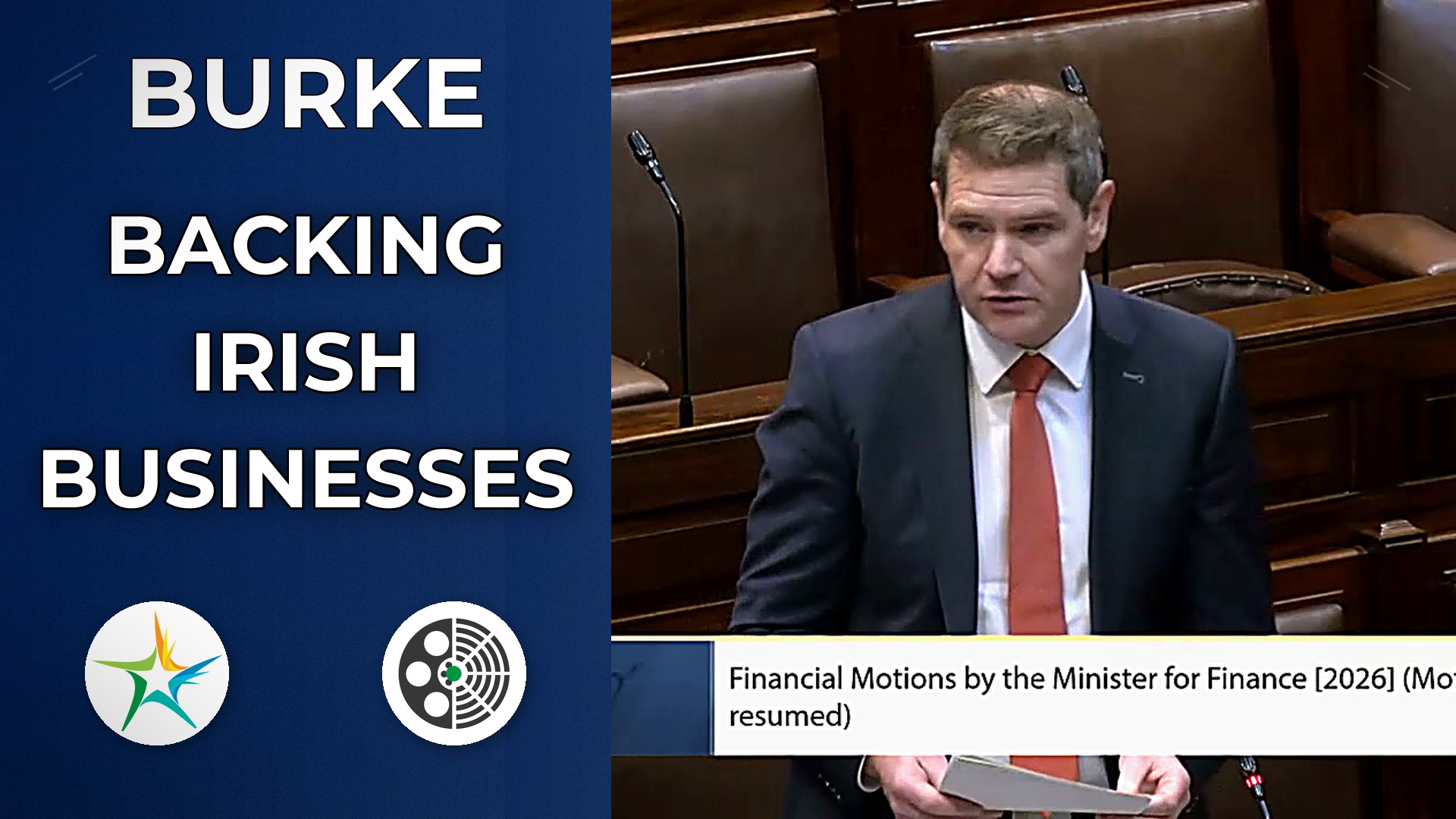


Peter Burke sets out Budget 2027 enterprise priorities
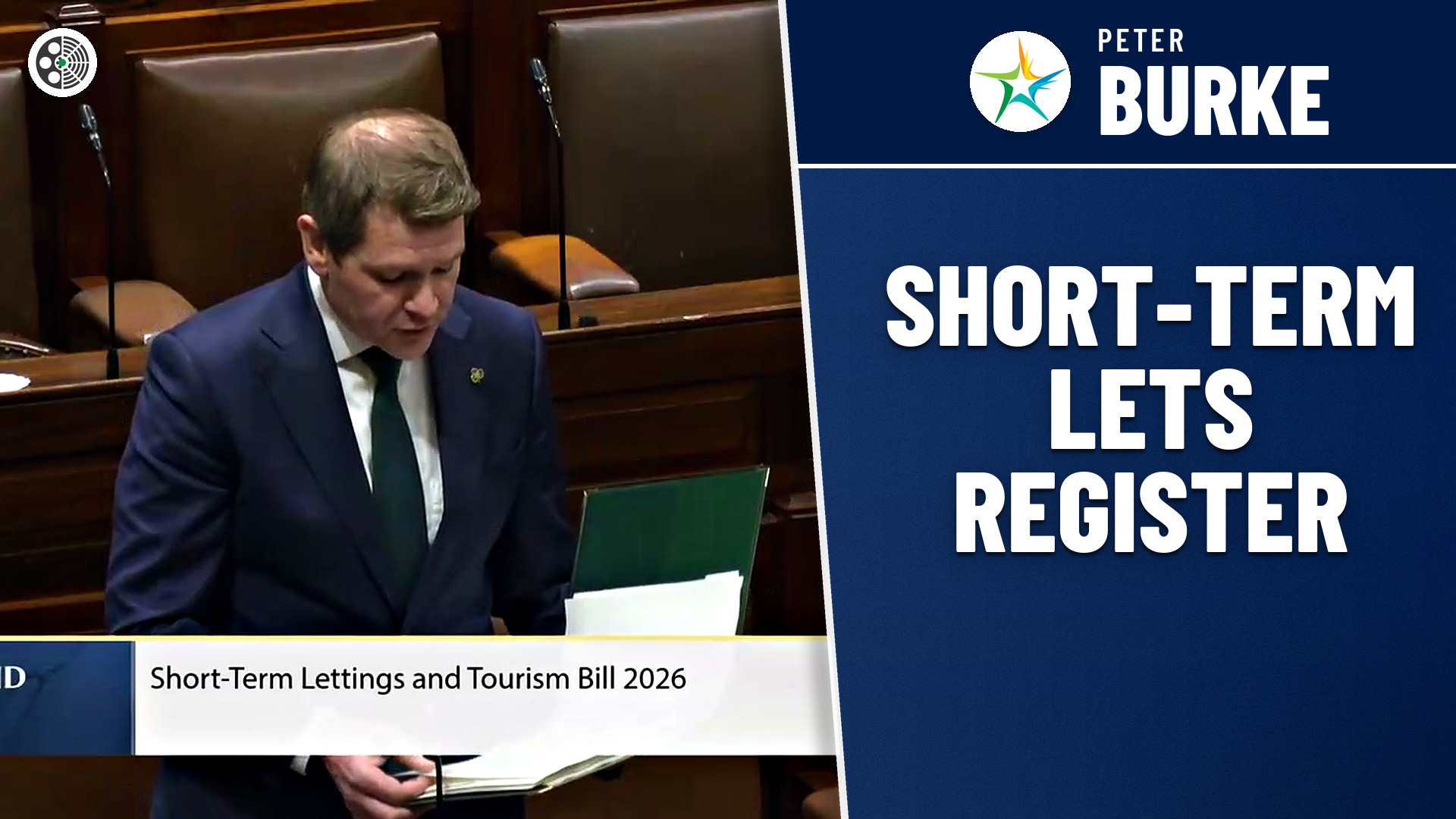
Peter Burke set out his Department’s Budget 2027 measures for Irish businesses during an Oireachtas budget debate. He said the funding and policy changes aim to improve access to finance, support innovation and tourism, and strengthen competitiveness and regional economies.
Burke highlighted the expansion of the Growth and Stability Loan Scheme to €1 billion, with availability extended to June 2029. He also outlined new funding for local enterprise offices and Enterprise Ireland, including support for the planned Startup Ireland initiative, which aims to support 1,000 start-ups over four years.
The budget includes additional funding for the Disruptive Technologies Innovation Fund and the National AI Office, alongside €300 million from the National Training Fund for upskilling and reskilling over five years. Burke also pointed to Ireland’s participation in the European Space Agency and plans to advance strategic sites for sectors including semiconductors and life sciences.
Burke outlined further support for Fáilte Ireland and Tourism Ireland, including funding for tourism infrastructure, digitalisation and market diversification. He said the measures would support tourism businesses and communities, including in the Midlands and less developed tourism markets.
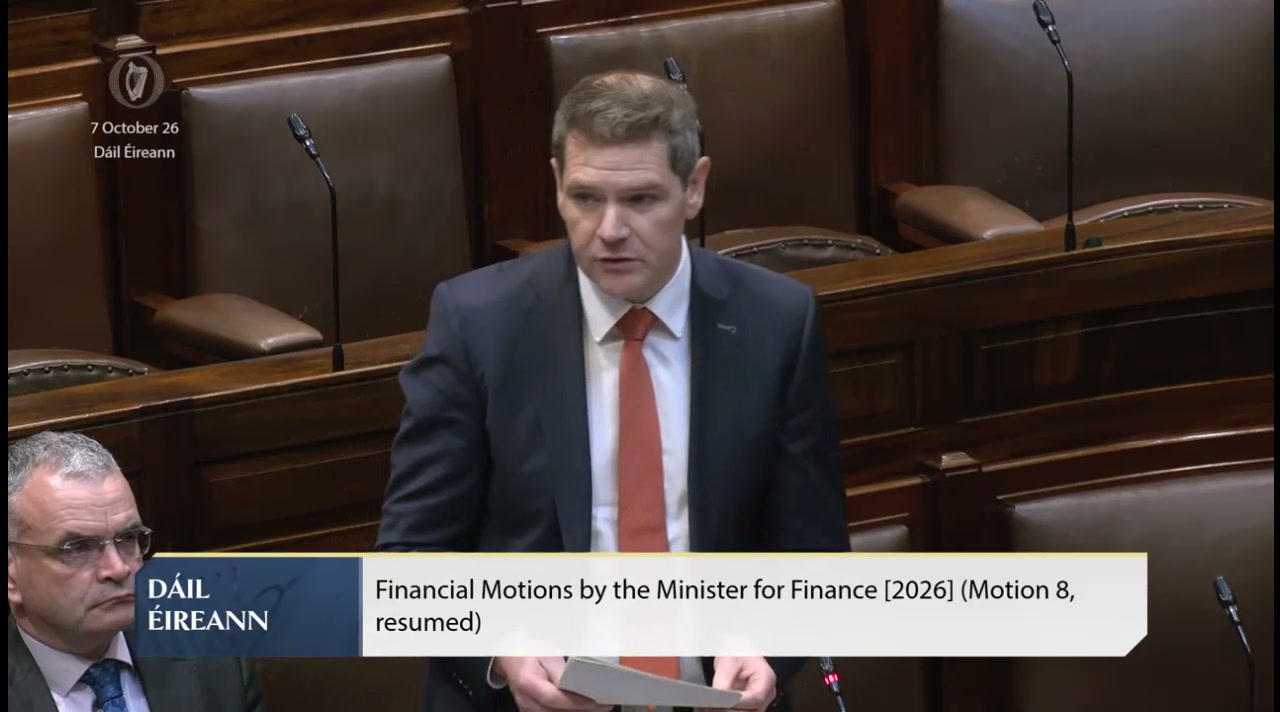
Other measures include support for rural pubs, changes to employer reporting requirements and additional resources for regulatory and labour market bodies. Burke also highlighted tax changes affecting farm succession partnerships, livestock vaccines and farm safety equipment, as well as the extension of the fuel income support scheme.
Burke said the budget’s approach was to support enterprise and jobs through targeted investment and careful spending. Watch the recording to hear his full contribution.
Finance for businesses and start-ups
Burke highlighted the expansion of the Growth and Stability Loan Scheme to €1 billion, with availability extended to June 2029. He also outlined new funding for local enterprise offices and Enterprise Ireland, including support for the planned Startup Ireland initiative, which aims to support 1,000 start-ups over four years.
Innovation, skills and strategic investment
The budget includes additional funding for the Disruptive Technologies Innovation Fund and the National AI Office, alongside €300 million from the National Training Fund for upskilling and reskilling over five years. Burke also pointed to Ireland’s participation in the European Space Agency and plans to advance strategic sites for sectors including semiconductors and life sciences.
Tourism and regional economies
Burke outlined further support for Fáilte Ireland and Tourism Ireland, including funding for tourism infrastructure, digitalisation and market diversification. He said the measures would support tourism businesses and communities, including in the Midlands and less developed tourism markets.
Competitiveness, workers and farmers
Other measures include support for rural pubs, changes to employer reporting requirements and additional resources for regulatory and labour market bodies. Burke also highlighted tax changes affecting farm succession partnerships, livestock vaccines and farm safety equipment, as well as the extension of the fuel income support scheme.
Burke said the budget’s approach was to support enterprise and jobs through targeted investment and careful spending. Watch the recording to hear his full contribution.
We publish thousands of recordings to make Irish politics transparent and resistant to manipulation. Spotted an error? Report it — together we are building a reliable archive of Irish politics.
Other speeches
Tego samego dnia All speeches from this day →
Patrick O'Donovan
Patrick O'Donovan sets out €1.298bn department budget
Norma Foley
Norma Foley outlines €7.5bn Budget for children and disability
Mary Lou McDonald
Mary Lou McDonald Calls for Action on Garvaghy Road
Jennifer Murnane O'Connor
Jennifer Murnane O'Connor Details Drug Services Investment
James Geoghegan
James Geoghegan: Budget puts money in workers’ pockets
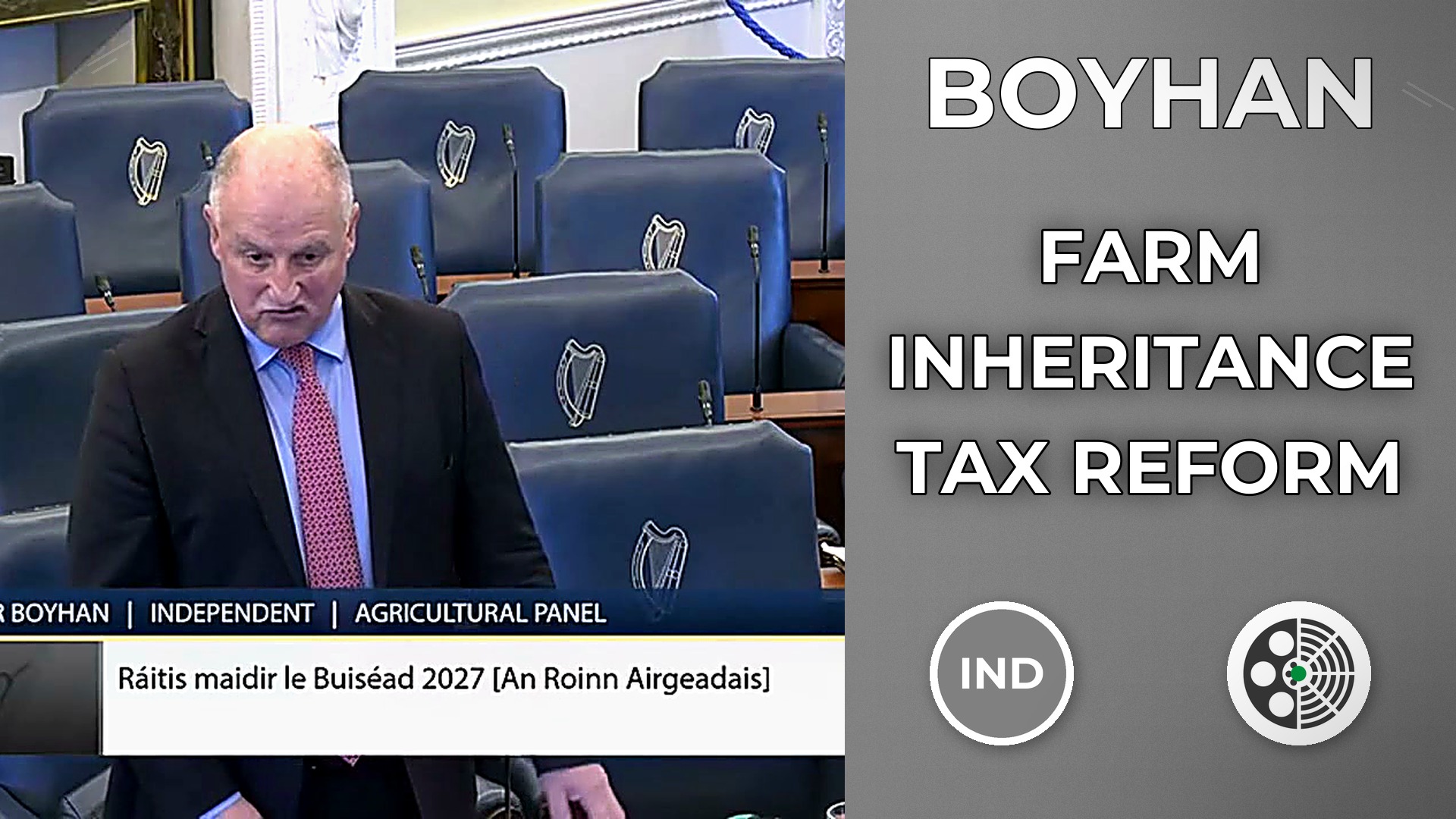
Victor Boyhan
Victor Boyhan Seeks Inheritance Tax Review for Childless Farmers
Transcript
Go raibh maith agat, Ceann Comhairle. I welcome the opportunity to speak on my department's
budget for 2027 and the work we are doing in terms of supporting the Irish enterprise
sector. A thriving enterprise sector is not built on one intervention or one budget measure.
It is a product of many factors carefully considered over time to create the right environment
for businesses to invest, innovate and create jobs. While we would all love to have a silver
bullet, long-term success depends on getting a wide range of factors right, from skills
and infrastructure to access to finance, innovation and competitiveness. Some would have you believe
that there are easy answers and obvious solutions, but delivering a stronger economy requires
many different levers to be pulled carefully. Through targeted investment and sound policymaking,
we are creating the conditions for businesses to grow, jobs to be created and Ireland to
face 2027 from a position of strength. The measures I will outline today are built on
four priorities. First, helping businesses access the capital they need to start, scale
and compete. Second, investing in innovation, productivity and the technologies that will
shape the economy of the future. Third, a critical focus on tourism and regional development
and finally strengthening our competitiveness. I will also finally touch on some of the key
changes made by Tanisha Simon-Harris in relation to taxation and supporting the agricultural sector.
Improving access to finance remains the Government's priority. Following the strong
success of the Growth and Stability Loan Scheme, I have secured approval of a half a billion euro
expansion of the scheme, bringing the total size to one billion euro and extending its
availability until June 2029. I am delighted to confirm that this funding will be available
from our pillar banks from this Friday, so SMEs should engage with their bank and apply as soon
as possible. In addition and in conjunction with Tanisha Simon-Harris, we have announced
a £1 billion ISE of Startup and Scaling Investment Programme being developed in
cooperation with Enterprise Ireland. This will be transformational and will provide
ambitious Irish companies with the capital they need to scale, innovate and compete
internationally. An additional €4.5 million has been allocated to our local enterprise offices,
including measures to help small businesses invest in energy-efficient equipment,
reducing operating costs and supporting the transition to a more sustainable economy.
Budget 2027 provides an additional €3 million to Enterprise Ireland for the establishment of
Startup Ireland, a key priority under the Programme for Government and the Action Plan
for Competitiveness and Productivity. I am delighted to officially launch the commencement
of Startup Ireland next week and look forward to the ambitious journey of supporting 1,000
startups over the next four years. Access to finance alone is not enough.
We must also ensure that Irish businesses can develop and adapt the technologies that will
drive future growth and identify where future markets will go.
Budget 2027 provides an additional €6.5 million for the Disruptive Technologies Innovation Fund.
Universities can provide a unique environment where new technologies can be tested,
refined and de-risked in ways that are often difficult for commercial organisations operating
under day-to-day market pressures. This makes the Disruptive Technology Fund so critical to the
business ecosystem. Funding for approximately €30 million will be available to support Ireland's
participation in the European Space Agency. During the first half of this year alone,
almost €13 million worth of contracts were awarded to Irish companies,
with four Irish companies winning the first-ever European Space Agency contract.
The National AI Office commenced operations in July of this year.
Budget 2027 provides an additional €2.3 million for the Office,
bringing its total allocation to €3.8 million.
Artificial intelligence presents an unprecedented opportunity for businesses and society. With many
AI companies choosing Ireland to locate their European headquarters, we will play an important
role in the safe deployment and regulation of the technology, while supporting innovation
and economic growth. The budget also included a landmark €300 million from the National
Training Fund, which will be used to upskill and reskill our workforce and AI over the coming
five years. Furthermore, additional resources provided to IDA Ireland in 2027 will progress
the Next Generation Strategic Sites initiative, helping advance the deployment of up to three
large-scale strategic sites in position for Ireland to invest opportunities in sectors such as
semiconductors and life sciences. These will be key investment positions which will capitalise
the opportunities of tomorrow. Support for Irish businesses is about more than industry. It is
about supporting sectors, sustaining jobs and communities right across our country in both urban
and rural settings. Tourism remains a key contributor to regional economies across our
country. With over 46,000 SMEs active in the tourism sector, Budget 2027 provides £1.4 million
additional funding for Fáilte Ireland to support sustainability and accessibility improvements
across its property portfolio. In addition, £5.25 million will be allocated to support
digitalisation, regional tourism infrastructure and enhanced tourism data and analytics capability.
We know that many tourists now research and book their trips using generative AI,
and we need to ensure our tourism SMEs are coming up in these searches. I am also providing an
additional £2.3 million to Tourism Ireland to support the implementation of the Action Plan on
Market Diversification, helping to grow revenue from key European markets, expand international
connectivity and attract high-value visitors to our country. With the delivery of both our culinary
and accommodation tourism strategy next year, I believe 2027 will be an exciting year for Irish
tourism. With sufficient untapped potential in this vital sector, particularly in the Midlands
and less mature markets, these will be the focus of future investment. Investment depends
not only on financial supports, but also on confidence in the institutions that underpin
our economy. The National Standards Authority of Ireland will receive €1.2 million in current
funding to increase its capacity to assess the certification of modern methods of construction,
products and systems. The NSAI will play an important role in ramping up housing construction
at scale. I am also providing an additional current funding to strengthen a range of regulatory and
labour market institutions, including the Competition and Consumer Protection Commission,
the Workplace Relations Commission and the Labour Court. I will be bringing forward new legislation
next year to empower the CCPC to impose tougher fines when it comes to the breaches of consumer
law. I welcome the pro-business taxation measures announced as part of the Budget
2027 by my colleague, Tanaiste Simon-Harris, including the key announcements on research
development tax credit. We will be working together with the key sectors in developing
a new €15 million scheme for rural pubs, acknowledging their contribution to rural
economies in our small towns and villages right across our country. Tanaiste has also
extended a number of important measures that support entrepreneurship, including the Employment
Investment Scheme, the Start-up Capital Incentive and Start-up Relief for Entrepreneurs, the
Angel Investor Relief and the Knowledge Box Development Regime. Investors require certainty,
and having a well-resourced, efficient and predictable regulatory tax system is a key
part of our offering in terms of FDI and domestic business growth. I want to acknowledge the
Government's decision to increase the national minimum wage by 75 cent per hour, in line with
the recommendation of the Low Pay Commission. It is imperative that we support workers' incomes
while also strengthening competitiveness through measures that provide greater certainty for
employers, including the removal of the 2029 living wage timeline, alongside broader actions
to reduce the cost of doing business. Working with Minister Dara Khaliri, we have also increased
the weekly earnings threshold for the lower rate of employers' PSI from €552 to €600.
This means that more workers, particularly those in the minimum wage and slightly above it,
will qualify for a reduced rate, helping to ease the cost pressures
on employers while supporting job creation and retention.
I am also glad to see that one of the key recommendations of the Cost of Business Advisory
Form will now be implemented, as we cut red tape for employers by replacing real-time
revenue-enhanced reporting requirements with a more practical monthly reporting system.
This is a common-sense measure and will be well received by the SME sector.
Across the Department and its agencies, work is underway to simplify and improve
how business access supports and services. It is imperative that we do things simpler,
lighter and faster, and in the Department we are taking simplification very seriously.
For example, I have gone through all grant processes linked to Leo funding streams
and reduced the number of questions asked by more than half in some cases.
Business' most precious resource is their time, and we need to ensure that we are not asking for
information that is not necessary, especially for some small grants.
Ceann Comhairle, I want to finish today by also noting some of the important tax changes
to our farming community, another crucial sector of importance to the Irish indigenous economy.
Regarding succession farm partnerships, the TANIS has committed to a removal
of the three-year holding period for applications made from 1 January 2027 onwards.
He is also increasing the associated tax credit that is available for
five years from €5,000 to €10,000 for succession partnerships registered from
and including 1 January 2027. VAT on respiratory vaccines for livestock will be reduced from 23%
to 9%, and in 2027 we will see an expansion of the accelerated wear and tear allowance for farm
safety equipment. Finally, the farmer's flat VAT rate addition will be increased from 4.5%
to 4.8% in 2027. This will provide full compensation for flat-rate farmers for their
VAT input costs. On the spending side, alongside this overall package, it is welcome that the fuel
income support scheme is being extended to cover a further five-month period this year in recognition
of the continuing pressures on that sector. It is easy to argue that every challenge can
be solved with more spending, but building a strong economy requires more than writing
larger cheques. The revenues that fund our schools, hospitals and public services do not
appear by accident. They are generated by successful businesses, entrepreneurs and workers
right across our country. The measures announced in this Budget reflect careful choices and clear
priorities. Every euro allocated has a purpose—to support enterprise, create opportunity,
strengthen competitiveness and deliver lasting economic benefits. Our responsibility is not
to spend more, but to spend wisely. The increased funding secured for my Department will help
ensure that Ireland remains a competitive, innovative and attractive place to do business,
work, invest and visit, both in 2027 and into the future.