

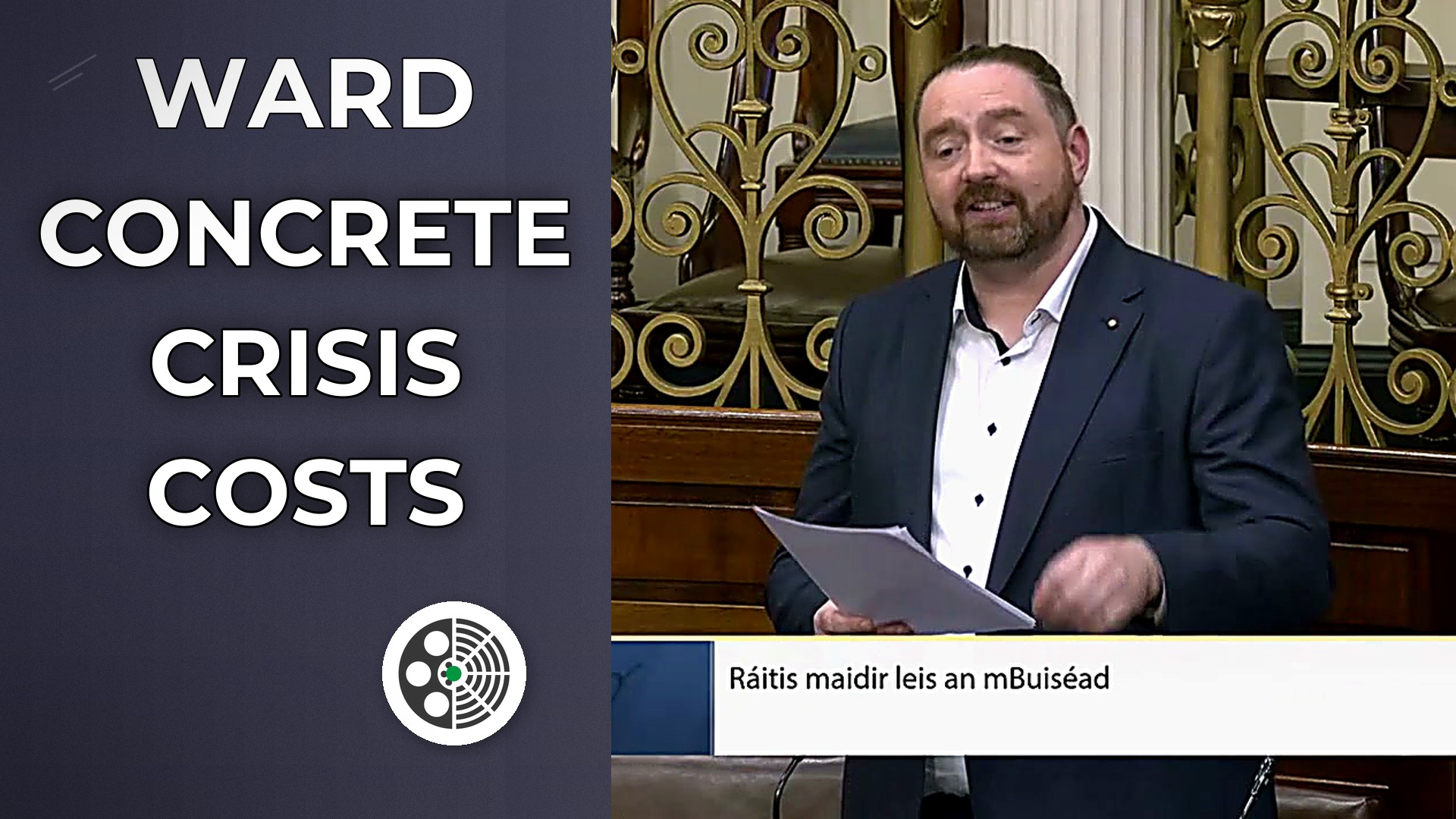

Charles Ward Questions €3.6bn Concrete Crisis Estimate
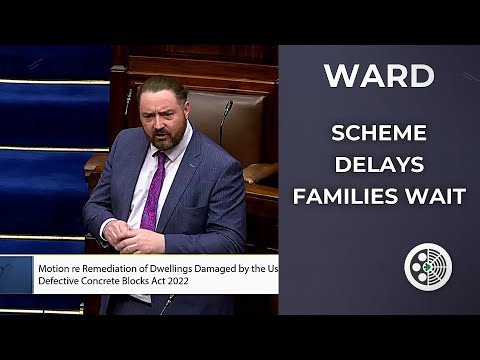
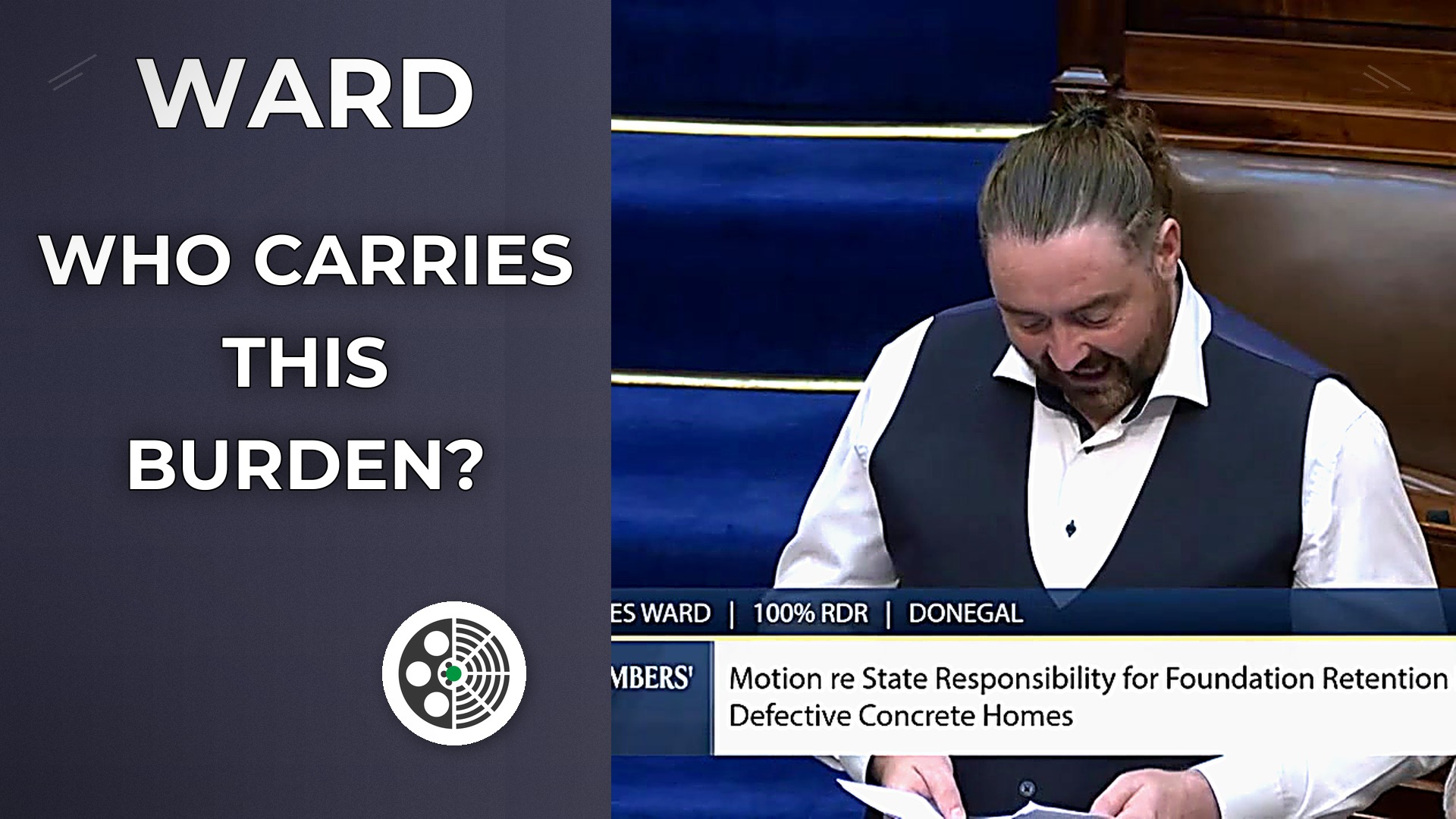
Charles Ward challenged the Government’s €3.6 billion estimate for the defective concrete crisis during a debate on Budget 2027. He called for a clear count of affected homes and detailed costings, warning that the current figure may not reflect the scale of the problem.
Ward said Budget 2027 referred to the crisis only twice and did not give it a dedicated section or detailed allocation. He argued that grouping it with other housing supports showed a lack of respect for affected homeowners.
Ward said cost estimates depend on how many homes need remediation. He cited research pointing to around 20,000 potentially affected properties across Donegal, Mayo, Clare, Limerick and Sligo, and set out hypothetical scenarios in which the state’s exposure could reach €15 billion, €20 billion or €23 billion. He stressed that these figures were examples, not predictions.
Ward said the crisis was not only a public finance issue but also a housing and social issue. He described families facing anxiety and stress, homes they could not sell, rising construction costs and difficulty securing builders and engineers.
Ward called on the Government to specify how many homes are included in its estimate, the average demolition cost and what allowances are being made. He said the state had a duty to provide those details and that affected people had waited years for answers. Watch the recording to hear the full contribution.
Budget treatment under scrutiny
Ward said Budget 2027 referred to the crisis only twice and did not give it a dedicated section or detailed allocation. He argued that grouping it with other housing supports showed a lack of respect for affected homeowners.
The scale of the liability
Ward said cost estimates depend on how many homes need remediation. He cited research pointing to around 20,000 potentially affected properties across Donegal, Mayo, Clare, Limerick and Sligo, and set out hypothetical scenarios in which the state’s exposure could reach €15 billion, €20 billion or €23 billion. He stressed that these figures were examples, not predictions.
Impact on families and communities
Ward said the crisis was not only a public finance issue but also a housing and social issue. He described families facing anxiety and stress, homes they could not sell, rising construction costs and difficulty securing builders and engineers.
Call for detailed figures
Ward called on the Government to specify how many homes are included in its estimate, the average demolition cost and what allowances are being made. He said the state had a duty to provide those details and that affected people had waited years for answers. Watch the recording to hear the full contribution.
We publish thousands of recordings to make Irish politics transparent and resistant to manipulation. Spotted an error? Report it — together we are building a reliable archive of Irish politics.
Other speeches
Tego samego dnia All speeches from this day →

Joe O'Reilly
Joe O'Reilly says budget helps people get ahead
Mattie McGrath
Mattie McGrath: Budget Measures Welcome, but Delivery Falls Short

Billy Kelleher
Billy Kelleher calls for EU budget to protect cohesion funding
Simon Harris
Simon Harris sets out Budget 2027 plan for Ireland
Micheál Martin
Micheál Martin Sets Out Budget Measures to Ease Pressures
Paul Murphy
Paul Murphy says inheritance tax change benefits the wealthiest 3%
Transcript
Minister, Budget 2027 refers to the defect of concrete crisis just twice and it
doesn't even bother to give this humanitarian crisis its own section or
detailed budget allocation. It's lumped in with a list of other housing supports
and programs. It's an absolute lack of respect. When we discuss the defect of
concrete crisis, the government focuses on the current estimate of 3.6 billion.
That's an eye-watering figure by any measure but I believe we're asking the
wrong question. The question is not whether 3.6 billion is a lot of money.
The real question is whether 3.6 billion reflects the true scale of the
problem facing families, communities and ultimately the Irish taxpayer. Because
the government has underestimated the number of affected homes, then it has
got the figures wrong and the financial liability that comes with this. In recent
years the affected homeowners have been told repeatedly the problem is limited,
manageable and contained. Yet evidence emerging in affected counties continues
to suggest the scale of this issue is all over Ireland. Research discussed this
year has pointed to approximately 20,000 potentially affected properties in
Donegal, Mayo, Clare, Limnock and Sligo alone. It is the tip of the iceberg.
The estimates rest on one crucial assumption. How many homes are affected?
Without answering that question, no cost projection can be defined and I'm going
to give you an example. If there's 50,000 homes ultimately require
remediation and average state interventions 300,000 euros per property
the exposure would be in the region of 15 billion. And if 400,000 were per
property, this would rise to 20 billion. For argument's sake, the current maximum
grant level that the government is allocating, then if we were to use that
then the bill would be 23 billion, not 3.6 billion. Your figures are off and I'm
not presenting these figures as a prediction, I'm presenting them as a
because we have seen if we do not have a figure then we cannot give an estimate.
We have been here before and I'm not suggesting that the effect of concrete
crisis is in the same level as the banking crisis. That was a 64.1 billion
euro mistake. The sooner the state understands the full scale and the
liability, the better equipped they will be to deal with the issue. And what
means that we're attempting to estimate a final bill that we still don't have
the problem solved. We still do not know how many people are affected some
14 years later. And this crisis isn't just about money, it's about families,
it's about children growing up in homes that are affected, it's about trying to
get engineers, trying to get builders to come and work where there's a
where we've seen marriages fail, we've seen suicides, it never ends. And I have
fought with banks and insurers for people in the past where they've done
everything right. The insurance companies ran, the banks ran and the vulture funds
are in there. But this has to continue and I believe that if we keep
on going the way we're going, we're going to see the bill for the effect of
concrete crisis go through the roof. And while the government focuses on the
mediation of homeowners, they continue to carry the cost, the anxiety, the stress
and they always pay their bills and they've always paying their mortgages
and they've done nothing wrong and are living in subpar conditions that they
shouldn't be living in because of government regulations. And the demand
for builders and engineers has gone through the roof and construction prices
are rising and thousands of people find themselves trapped in homes that they're
paying mortgages for that they cannot sell and their lives are a standstill.
And this is a defective concrete issue but it's also a housing issue and it's a
social issue and it's becoming a public finance issue. How many homes are going
to be included? That's what we need. If the government are going to give an
estimate, I want to know how many homes, what's the average demolition cost, what
allowances are going to be made? We need to see the details because the devil is
in the details because if we don't have the details we can't have the estimated
costs and the state has a duty to answer. People have been waiting years
and the government have not done their homework but I'm here to tell the
government I'm doing their homework for them and I will continue to do their
homework for them until they answer.