



Richard Boyd Barrett Calls for Garvaghy Road March to Be Stopped
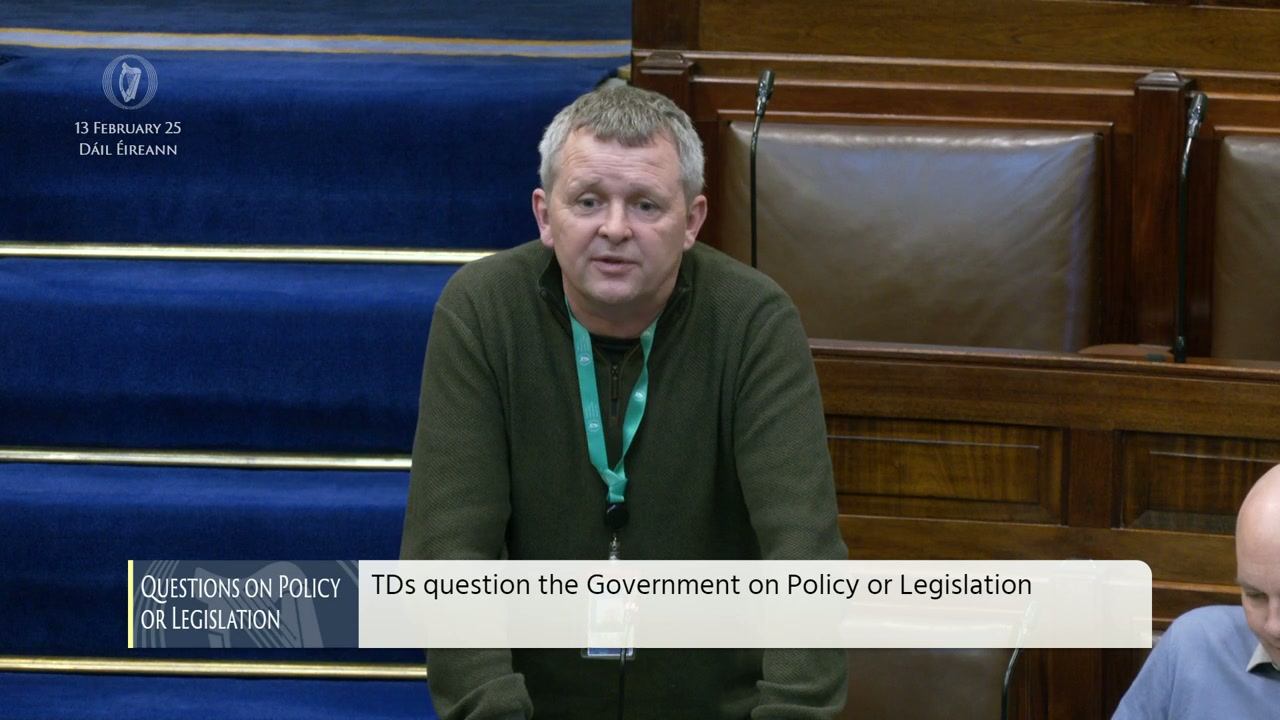
Richard Boyd Barrett urged the Taoiseach to call for the Garvaghy Road march to be stopped during an Oireachtas exchange about the Drumcree standoff. He argued that the march reflected sectarian supremacism and drew connections with the dehumanisation of Palestinians, while the Taoiseach rejected the comparison and called for talks to resolve the dispute.
Boyd Barrett said the parade through a mostly Catholic area would revive painful memories of killings and urged the Taoiseach to stand against supremacism. He also called for Ireland not to play against Israel, describing the Israeli regime as guilty of genocide.
Boyd Barrett linked the history of colonial rule in Ireland with events in Palestine, arguing that the division of communities along religious lines had consequences in both places. The Taoiseach said the situations in Gaza and Northern Ireland were incomparable and urged political leaders to be careful in their language.
Boyd Barrett questioned the handling of the standoff by PSNI Chief Constable John Boucher, citing the deployment of Scottish police officers and the information given to the Parades Commission. The Taoiseach defended Boucher’s efforts to prevent injuries and paid tribute to his work with victims.
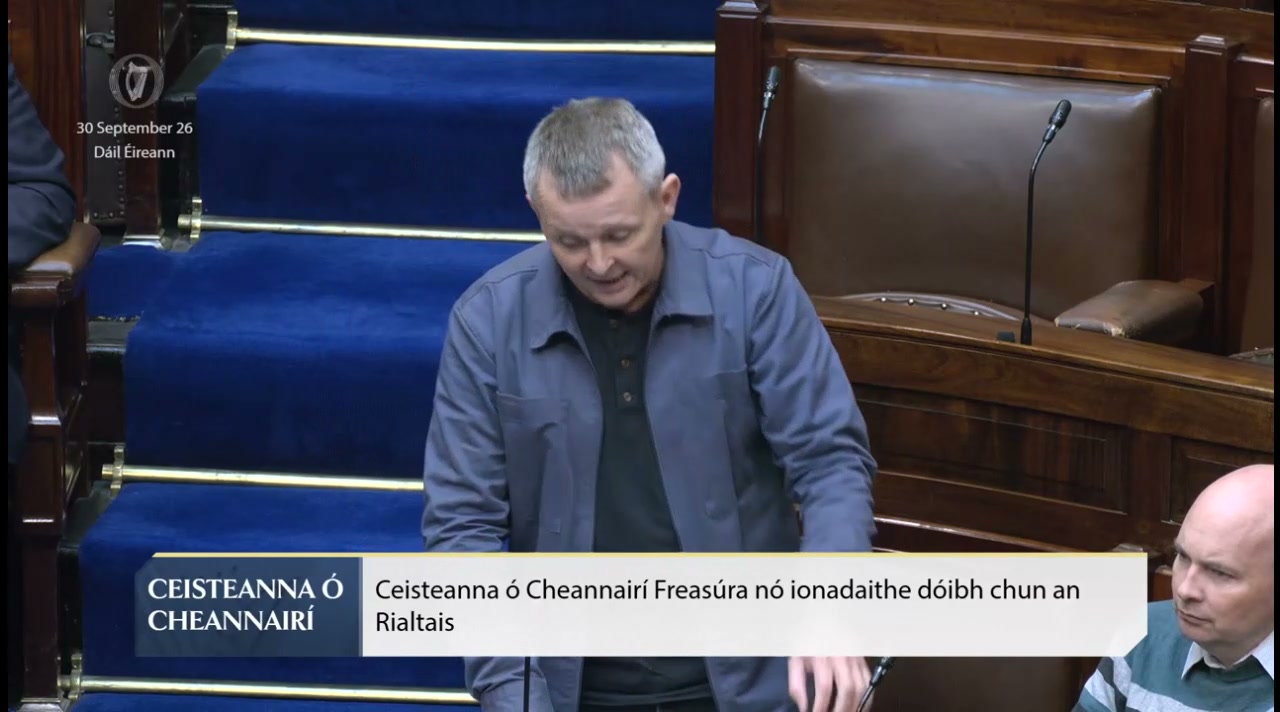
The Taoiseach said exploratory talks were continuing and argued that resolving the dispute required a broader approach based on respect for different traditions. He said a future united Ireland would require a clear vision of how people could be included. Watch the recording to hear the full exchange.
Call to stop the march
Boyd Barrett said the parade through a mostly Catholic area would revive painful memories of killings and urged the Taoiseach to stand against supremacism. He also called for Ireland not to play against Israel, describing the Israeli regime as guilty of genocide.
Debate over history and Palestine
Boyd Barrett linked the history of colonial rule in Ireland with events in Palestine, arguing that the division of communities along religious lines had consequences in both places. The Taoiseach said the situations in Gaza and Northern Ireland were incomparable and urged political leaders to be careful in their language.
PSNI and the Parades Commission
Boyd Barrett questioned the handling of the standoff by PSNI Chief Constable John Boucher, citing the deployment of Scottish police officers and the information given to the Parades Commission. The Taoiseach defended Boucher’s efforts to prevent injuries and paid tribute to his work with victims.
Talks and shared future
The Taoiseach said exploratory talks were continuing and argued that resolving the dispute required a broader approach based on respect for different traditions. He said a future united Ireland would require a clear vision of how people could be included. Watch the recording to hear the full exchange.
We publish thousands of recordings to make Irish politics transparent and resistant to manipulation. Spotted an error? Report it — together we are building a reliable archive of Irish politics.
Other speeches
Tego samego dnia All speeches from this day →
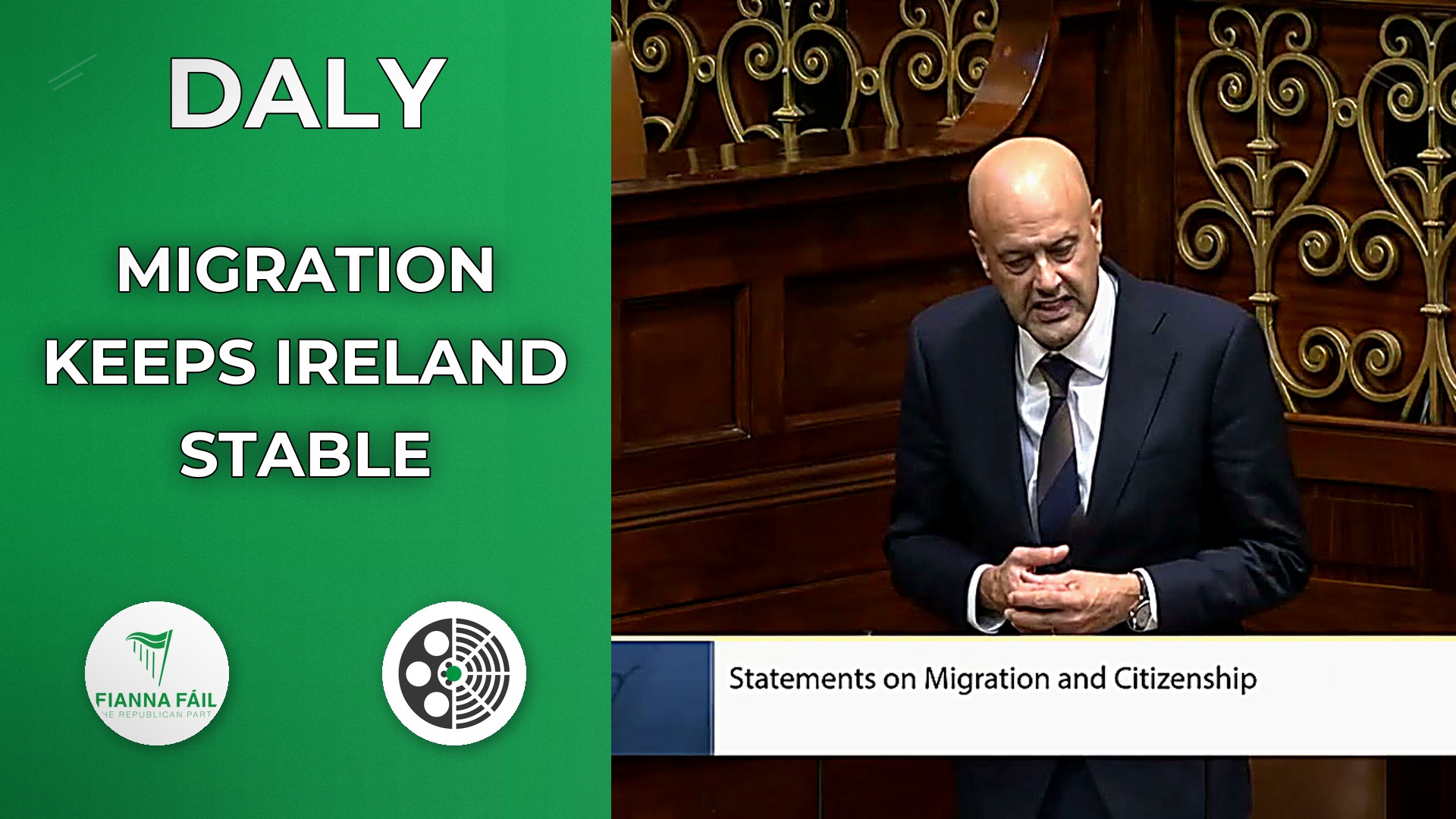
Martin Daly
Martin Daly: Citizenship rules need fairness for migrants
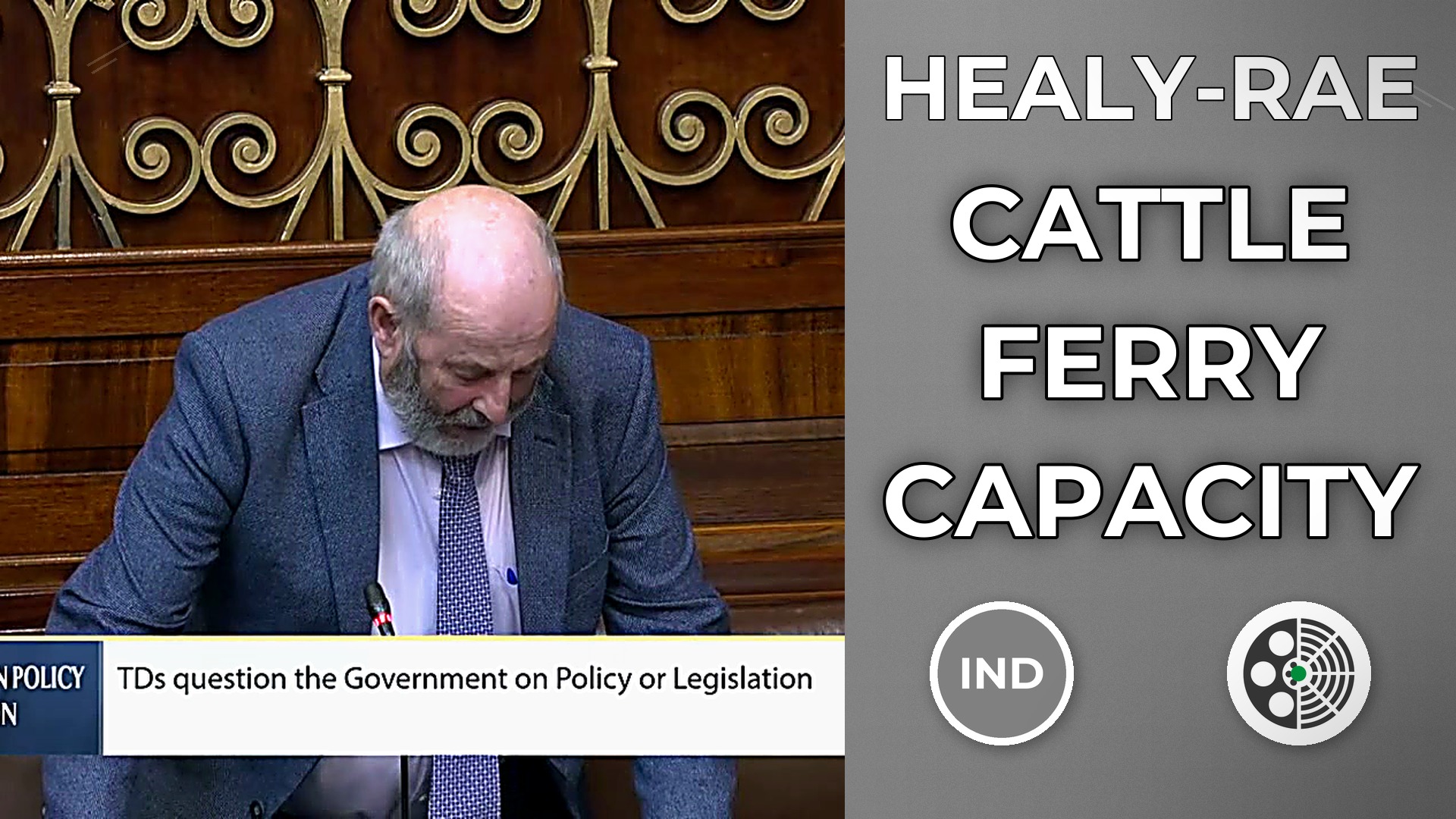
Danny Healy-Rae
Danny Healy-Rae Seeks Ferries for Cattle Exports
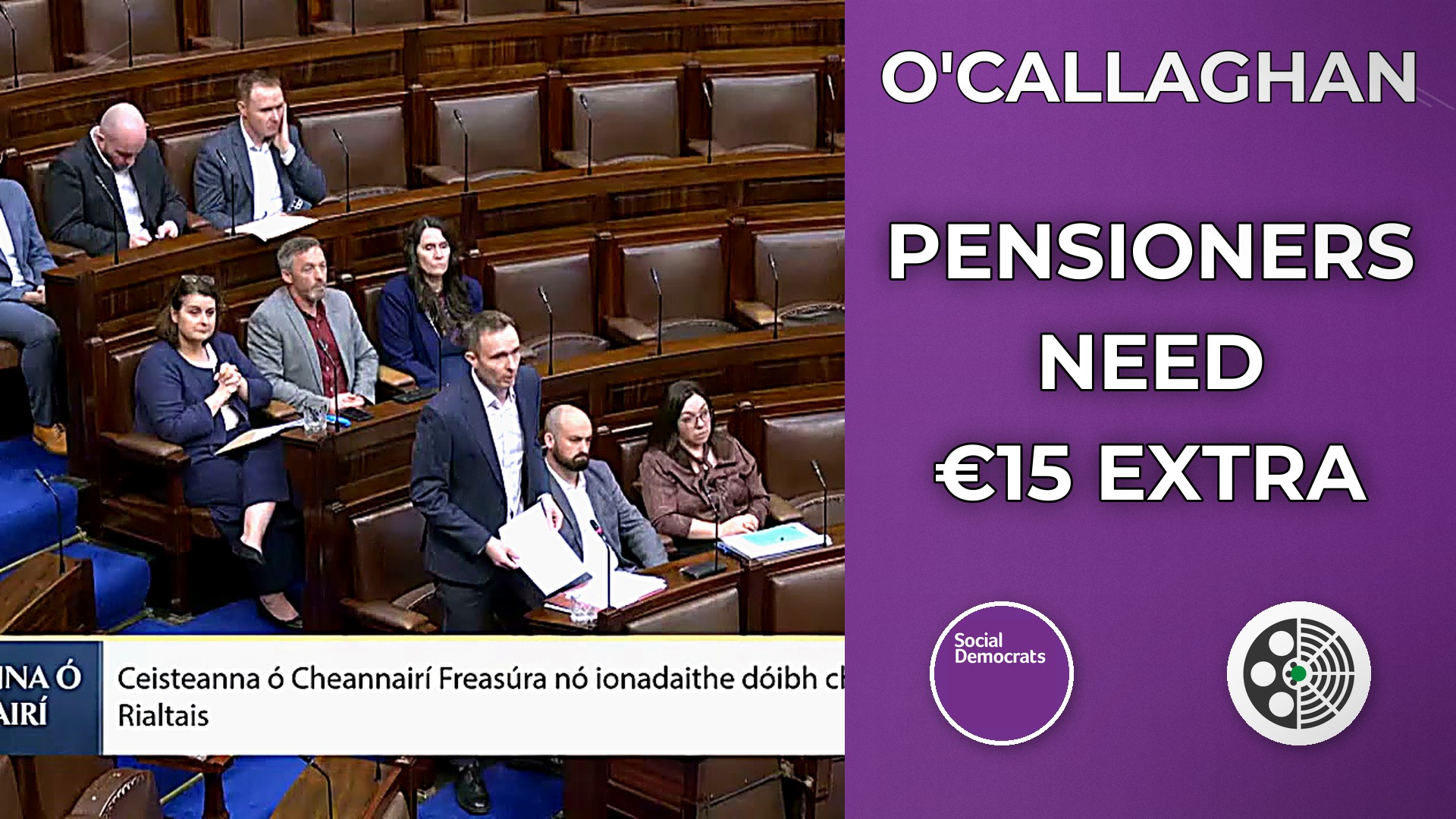
Cian O'Callaghan
Cian O'Callaghan challenges Taoiseach over pension increase
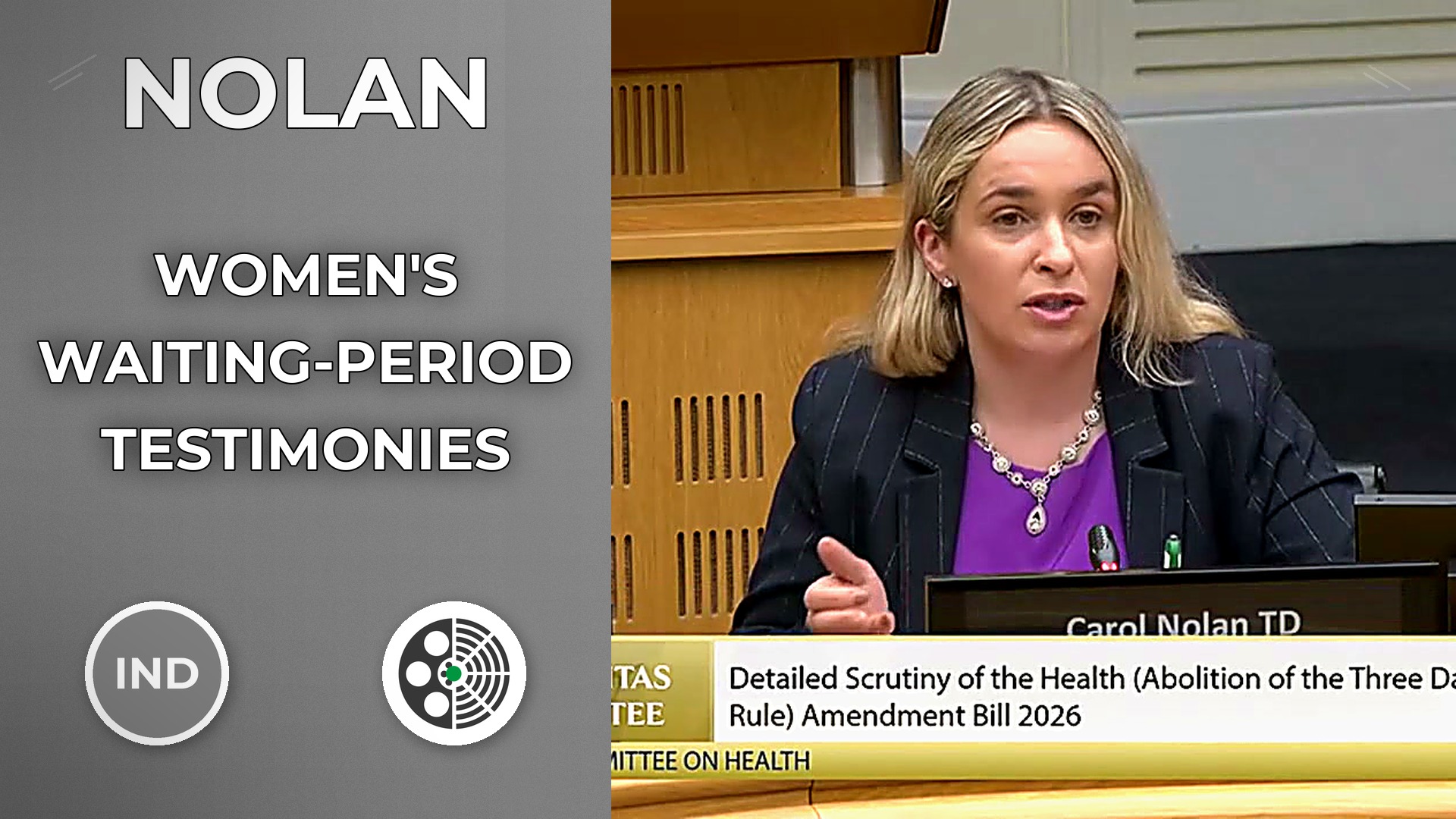
Carol Nolan
Carol Nolan challenges committee over three-day wait testimonies
Joanna Byrne
Joanna Byrne challenges FAI leadership over Israel fixtures
Mattie McGrath
Mattie McGrath backs windfall tax to ease pressure on families
Transcript
Taoiseach, yesterday you said you were not going to intervene in the Garibaldi Road drum
creed standoff, which is set to escalate potentially again this weekend, and you dismissed suggestions
that you should call on the British government, on the British Secretary of State for Northern
March going down the Garibaldi Road. Now I want to ask you to reconsider on that non-interventionist
position, and I want you to ask yourself what kind of mentality or ideology would lead Orange
men to want to march through a mostly Catholic area where they are not wanted and where that
march is going to evoke the trauma and memories of more than 21 people being killed, including
the Quinn children, Robert Hamill, Rosemary Nelson, and many more. And the answer is,
it's an ideology and a mentality of supremacism and the dehumanisation of one section of the
mentality and ideology very similar to the one on display being led by Joseph Haddad,
the mouthpiece for the Israeli regime, in the football stadium in Hungary, where he
was encouraging chants for the IDF, the people who are carrying out a genocide against the
Palestinians and taunting Irish players with racist abuse. A similar supremacist dehumanising
ideology that leads to death and destruction. And it is no coincidence that when I went
up to Drumcree before all this started about 8-9 days ago, the Drumcree community centre
was covered in banners in solidarity with Palestine. Because the people of the Garibaldi
Road understand the connection between the dehumanisation they suffer and about how colonialism
was based on dividing people on religious grounds, setting Catholic against Protestant,
just like the Zionist movement set Muslim against Christian and Jew, with all the horrific
violence that has flowed from it. Now it seems to me, as the leader of a country that has
suffered colonialism and oppression and all of that divide and rule tactics that led to
terrible things in this country, the penal laws, the so-called famine, actual masturbation
of the population, all of that, you have a responsibility to stand up against supremacism.
To stand up against the dehumanisation of a section of the population and call for that
march to be stopped because it is a sectarian supremacist march. And you might also intervene
and say stop the match as well because we shouldn't be playing against a regime guilty
of genocide.
First of all, your presentation of what I articulated here yesterday is wrong. I never
said I was not going to intervene in anything. And the non-interventionist approach as you
have described is wrong, it's false. But of course you have to present your argument in
a way then to justify your subsequent comments. And what I would say to you is this, all of
us have an obligation, all of us, all political leaders, in terms of this issue, to be careful
what we say, how we say it, if we want a resolution of it. And I don't accept your comparison
of what's happening in Gaza with the Northern Ireland of today. Incomparable. The deprivation,
the attack, the killing of 75,000 people in Gaza, the continued stemming of aid going
into Gaza, how can you compare that with what's happening in Northern Ireland today?
There is no comparison. It's just ridiculous to make that comparison. And what I would
say to you is this, Northern Ireland has come a long way since the Good Friday Agreement,
of which my party and others were centrally involved. Parity of esteem, respect for different
traditions was the hallmark of that agreement. Many parades are held across Northern Ireland
without any issues, through local agreements and through mediation and people have worked
together and lived to live together and so on like that. The Shared Ireland Initiative
is breaking new ground in terms of connectivity between North and South, joint projects, programmes
between different communities in music, biodiversity, climate, violence against women, a whole range
of programmes that we're now funding with buy-in from all communities and all traditions.
The resolution of this is what I said yesterday was, it can't be just one single intervention
is going to resolve this. We have to now resolve this to a broader lens. If we're serious about
a future where different traditions can live together on this island and share the island
in a reconciled way. And I, unlike you, because I know you've never condemned Hamas, never
publicly, for what happened on October the 7th. That's your view of life. But equally
you've referenced the PSI, I think, in a negative way there and I want to pay tribute to PSNI
and to the Chief Constable, John Boucher, for the manner in which he's managing this
and trying to navigate this, which is a very, very difficult position that the PSNI are
placed in. Now part of the reform of the Good Friday Agreement was greater cross-community
participation in the PSNI. There's a growing sense of, let's attack the PSNI and undermine
the patent reforms. We have to work to enhance the patent reforms and to ensure that the
PSNI continues on its journey of being truly cross-community in membership and so on. And
progress has been made. But what I've witnessed and listened to in the last four or five days
by quite a number of interlocutors is an attempt to undermine that process too. And we need
to be very, very careful about that because that ends up in a very negative spiral into
the future. Now the Minister for Foreign Affairs met with the Secretary of State last evening.
There was a series of exploratory talks between various groups and so on. Those talks will
continue today. And our view is, we've made it very clear in terms of our view on the
position of the parades, which we don't agree with, incomprehensible. But now we must focus
on a resolution of it and the talks are ongoing in that respect.
The scale of horror visited on the Palestinians is certainly of a different order. And I don't
have time to go into the history, but to say there's no connection, you need to look back
at the history. The leaders of the Black and Tans and the auxiliaries were sent to Palestine
after subjugating people in Ireland, went straight to Palestine. In 1936, the Governor-General
of Jerusalem asked why he was backing Zionism, said because, and I quote, I want to create
a loyal little Jewish Ulster in the Middle East. That's what he said. So they exported
the model that they'd used to subjugate and divide Catholic and Protestant to Palestine
to do the same with horrific consequences. And by the way, it's no coincidence that DUP
MP Carla Lockhart was standing out with masked men protesting against a Gaza peace march.
And as for John Boucher and the PSNI, how come last Monday or Tuesday week, he had already
recruited 200 Scottish police officers to come to the Garravarie Road, when at the same
time he was telling the Parades Commission there wasn't going to be a public order consequence
if the Orange March went down through the Garravarie Road? That suggests that John Boucher
misled the Parades Commission with the consequences we're now facing of a standoff. You need to
stand up against supremacism and an ideology that is about trying to drag the North back
to violent conflict, and you should speak up against the genocidal horror of the Israeli
regime as well.
Just to say, Pastor, and I agree with you, we can't go into history, but the Black in
Town model didn't work in Ireland. And coming from the county of Cork, I know that too well
from my history. Now, could I just say to you, in respect of John Boucher and the PSNI,
again, his primary objective, articulated with great clarity, was that no person would be
injured as a result of what transpired over the last number of days, from the decisions
that were made at the Commission onwards. That should be acknowledged. And if you speak to
victims of 30 years of violence, and you talk about supremacy, what happened in 30 years on
this island was horrific. The activities of the Provisional IRA, the activities of the
Ulster Volunteer Force and paramilitaries from the Loyalist side were horrific. Now, he led an
inquiry called Kenova, and the victims of all of that violence spoke about his integrity,
about his inclusiveness, and the degree to which he responded to the victims of the families
of the victims. You can try and demonise the individual if you like. I'm not going to do that.
I'm not going to do that. And we need a bit of honesty here, if we're going to make any way
forward, and stop retreating always, on all sides, including your contribution there.
That won't achieve anything into the future. It fits an ideological frame, but it doesn't deal
with the realities of the here and now and how we move forward. If we want a united Ireland in
the future, we've got to begin to articulate what that looks like, and how we include people.