

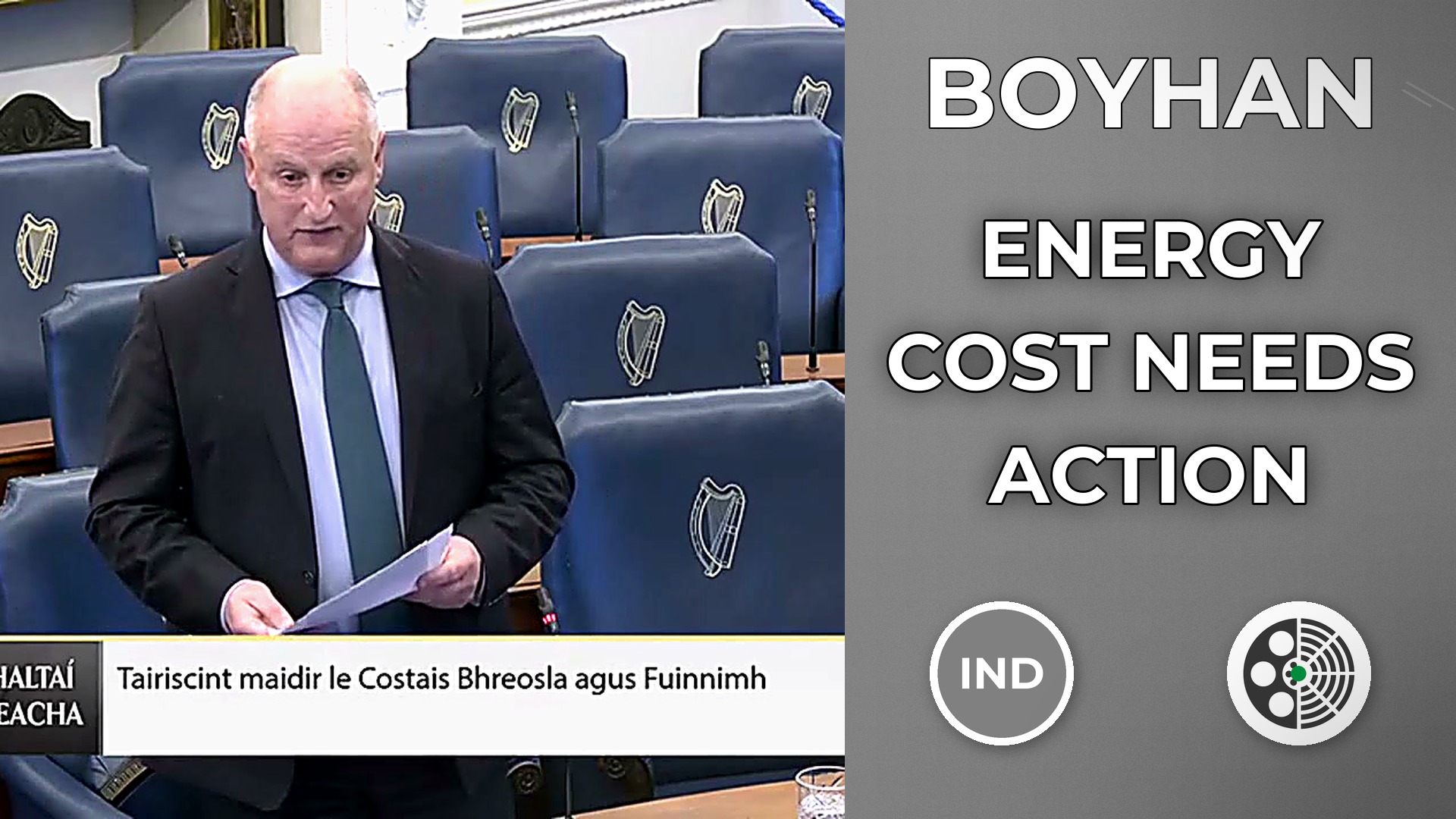


Victor Boyhan calls for farm energy support in Budget 2027
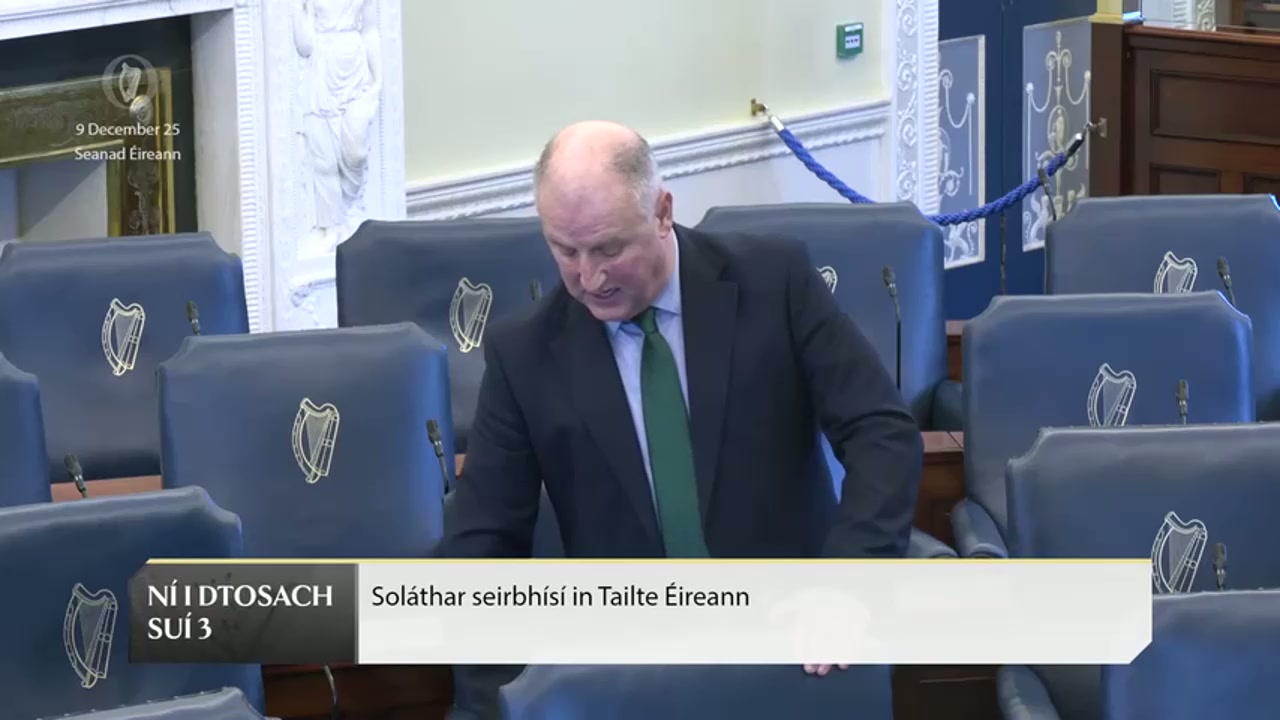
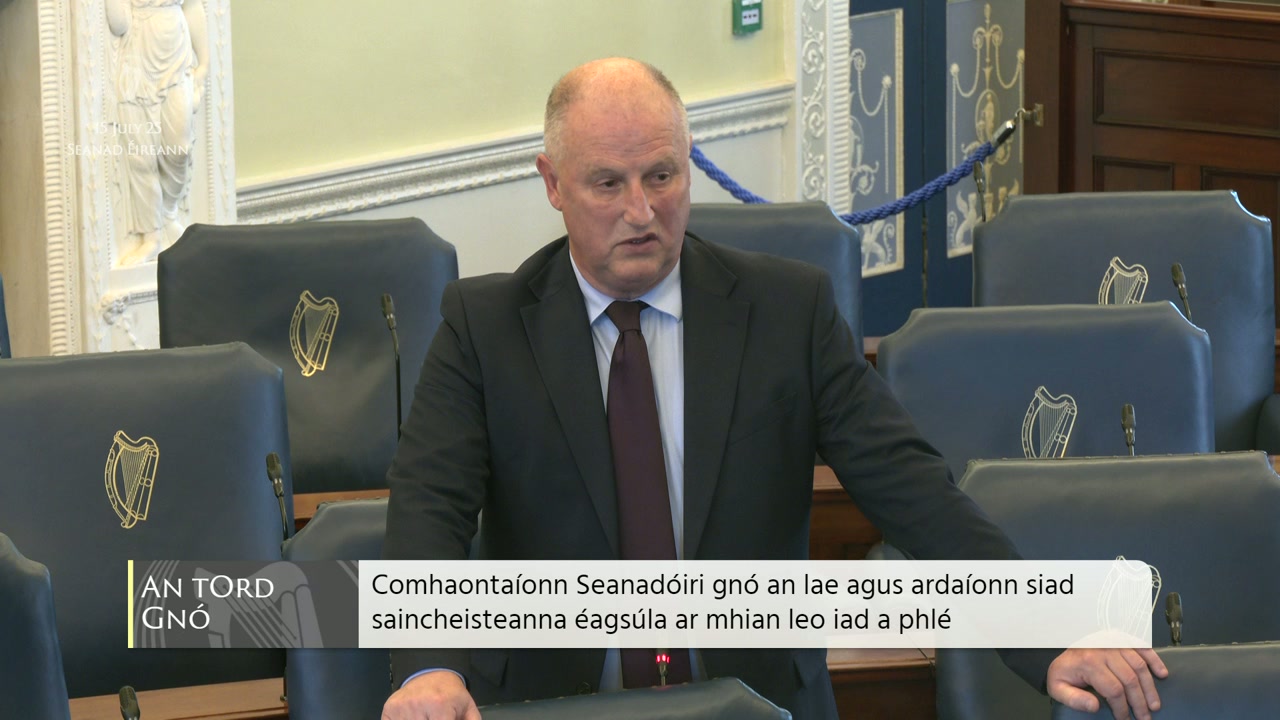
Victor Boyhan called for targeted support for farmers, growers and rural businesses in a debate on energy and fuel costs. He argued that energy security must be central to Budget 2027, citing rising costs and the energy needs of Irish agriculture and horticulture.
Boyhan said the viability of agriculture, forestry and horticulture is tied to food security, rural employment and local economies. He called for lower fuel levies, stronger financial measures for renewables and a halt to plans to phase out payments for solar power sold back to the electricity grid.
He highlighted the exposure of protected-crop growers, mushroom producers, dairy, beef and tillage farmers, and agricultural contractors to higher energy and operating costs. Boyhan backed calls made by the Irish Farmers’ Association and other farm representative organisations for targeted measures in Budget 2027.
Boyhan said solar developments should not damage highly productive agricultural land or negatively affect communities. He called for a national planning statement for solar energy, appropriate environmental assessment and meaningful public consultation, alongside reform of wind energy guidelines.
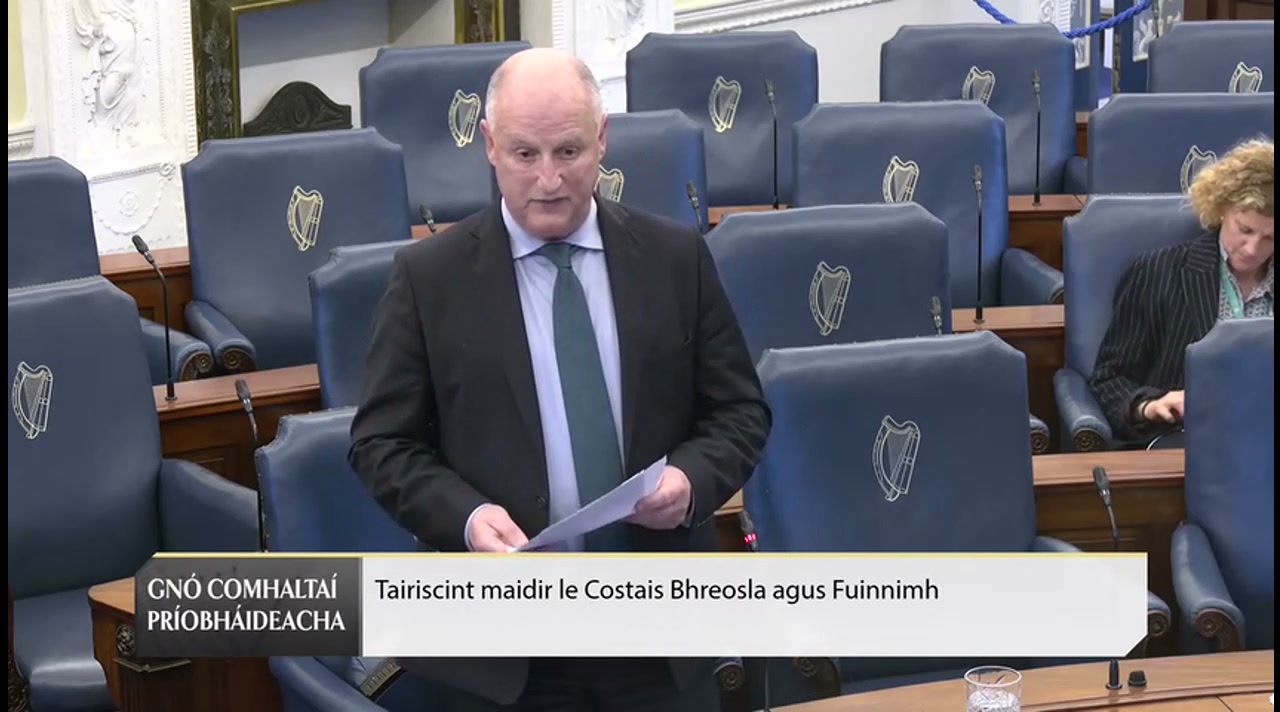
He pointed to the National Energy Affordable Task Force interim report as a basis for measured, targeted social and tax interventions. Boyhan said supporting energy-intensive horticulture could help sustain domestic food production, including crops that Ireland can grow successfully. Watch the recording to hear the full contribution.
Farm viability and energy costs
Boyhan said the viability of agriculture, forestry and horticulture is tied to food security, rural employment and local economies. He called for lower fuel levies, stronger financial measures for renewables and a halt to plans to phase out payments for solar power sold back to the electricity grid.
Support for growers and farmers
He highlighted the exposure of protected-crop growers, mushroom producers, dairy, beef and tillage farmers, and agricultural contractors to higher energy and operating costs. Boyhan backed calls made by the Irish Farmers’ Association and other farm representative organisations for targeted measures in Budget 2027.
Solar planning and communities
Boyhan said solar developments should not damage highly productive agricultural land or negatively affect communities. He called for a national planning statement for solar energy, appropriate environmental assessment and meaningful public consultation, alongside reform of wind energy guidelines.
Targeted action in Budget 2027
He pointed to the National Energy Affordable Task Force interim report as a basis for measured, targeted social and tax interventions. Boyhan said supporting energy-intensive horticulture could help sustain domestic food production, including crops that Ireland can grow successfully. Watch the recording to hear the full contribution.
We publish thousands of recordings to make Irish politics transparent and resistant to manipulation. Spotted an error? Report it — together we are building a reliable archive of Irish politics.
Other speeches
Tego samego dnia All speeches from this day →
Richard Boyd Barrett
Richard Boyd Barrett calls Drumcree march naked sectarianism
Charles Ward
Charles Ward: Donegal faces higher fares and poor bus services
Conor Sheehan
Conor Sheehan challenges 15% public transport fare rise
Mark Wall
Mark Wall: Cut public transport fares, not raise them
Richard Boyd Barrett
Richard Boyd Barrett Seeks Urgent Debate on Drumcree
Malcolm Byrne
Malcolm Byrne seeks safeguards on AI chatbots aimed at children
Transcript
Thank you. First I want to thank the Minister for coming to the House to deal with this
important matter, energy and fuel costs. I want to also thank the officials from the
department here today. I think it's a timely time to have this debate and to have this discussion
in relation to these matters. And I suppose at the very outset I want to say protecting
agriculture, forestry, horticulture and farm viability will be the centre of my contribution
to the debate here on energy and fuel costs. Without a viable agricultural sector,
food security, rural employment, resilience of local economies will be in deep trouble.
Energy security must be central to Budget 2027 and I have no doubt from utterances from the
government members and indeed the opposition that it will be central part of Budget 2027.
And I think that's an important focus that the government have chosen to take and lead out on
and I want to acknowledge that. We know that fossil fuels have virtually doubled in the last
year. I welcome the proposed kerosene boiler scrapper scheme announced uniformly yesterday
but today and I think that's a positive intervention and a welcome one. As part of
Budget 2027 I'm calling for a number of things. I'm calling for a reduction in the levies of
fuel generally across the board given the set of circumstances that Budget 2027 is now going
to have to be framed in. I'm calling for enhanced financial measures on renewables. I'm calling for
a halt on the proposal to phase out the selling of solar power back to the electricity grid.
That has been confirmed by a number of newspapers in the last week that there is this proposal
on the phasing out of selling solar power back to the electricity grid. That was a very positive
intervention and one that was marketed and sold as a real positive contribution in terms of
people's partnership and active engagement. So I think that's an important one to look at. I'm
calling for greater support for the Irish horticultural industry which is heavily reliant
on energy for production. Greater supports for protected crops and mushroom producers are central
to any vibrant, profitable horticultural food sector and they are particularly, it's a particularly
vulnerable sector due to its resilience on energy, intensive production schemes, heat, cooling, water,
irrigation, all requiring the intervention of power and the intervention of energy to be successful.
Dairy, beef and tillage farmers along with agricultural contractors are facing soaring
operational costs, threatening overall food production and indeed profit margins. That's
not sustainable in the long run. I want to acknowledge the fact that the IFA made a detailed
submission to the department outlining significant exposure to growers in relation to increased fuel
and energy costs. I know that they work collaboratively with government and government
have engaged with them in talks pre-budget so I think that's an important facet and one I want
to endorse in terms of the IFA's asks of government in the context of Budget 2027. I hope that the
IFA recommendations and other farm representative organisations and bodies will form part of the
government's central response to the sector in Budget 2027. The Tornaiste and the Minister of
Finance, Simon Harris, has acknowledged that fuel, fodder and fertilizer are the top challenges facing
the sector. He's also acknowledged the need for targeted responses and targeted interventions and
I hope that will be seen in Budget 2027. Turning to solar energy, we cannot have a situation where
solar farms impact negatively on highly productive agricultural land and our communities. I have been
to Mead, Tipperary, Cork, Cavan, indeed Galway, where I have met with communities who have real
challenges around this area. There are no specific planning guidelines in place to deal with solar
energy development and I want to acknowledge Senator Keneally who had a commencement matter
in this house only a few days ago, indeed the 22nd of October 2025, in which the Minister clearly
says there is no guidelines in place at this time. That surely was important to call it out
and surely that's something that must be happened. There must be a top priority, this must be a top
priority for government along with reform of the outdated wind energy guidelines. A national
planning statement for solar energy needs to be fast-tracked and it needs to include appropriate
environmental assessment and more importantly meaningful, not meaningless, public consultation.
I finish Minister by saying I draw your attention to the National Energy Affordable Task Force
interim report of 2025. In this document and its successor there are the keys to reform in terms of
social intervention and taxation intervention and it has to be measured and it has to be targeted
and it has to be responsive and I finish with this. When I said I started here I just wanted
to focus on agriculture, horticulture, forestry. These are critical areas that require diesel,
green diesel, fuel. I spoke earlier today about the billions of crops that we are importing into
this country, in a country where we can grow beet, cauliflower, cabbage, carrots, broccoli very
successfully. We have got to support this horticultural sector and when I talk about protected
crops I'm talking about soft fruits and crops that are under collages, tunnels or glass houses.
They need energy for ventilation, they need energy for irrigation, they need energy for light and they
need energy to sustain their businesses. I ask that these matters will be taken on board. I know
this isn't budget day, this is an opportunity. I want to thank Fine Gael for their bringing this
motion which allows me and others on this side of the house to make a contribution into the bigger
debate about energy, its costs and its impact on sustainable enterprise and sustainable agriculture,
food and forestry. Thank you.