

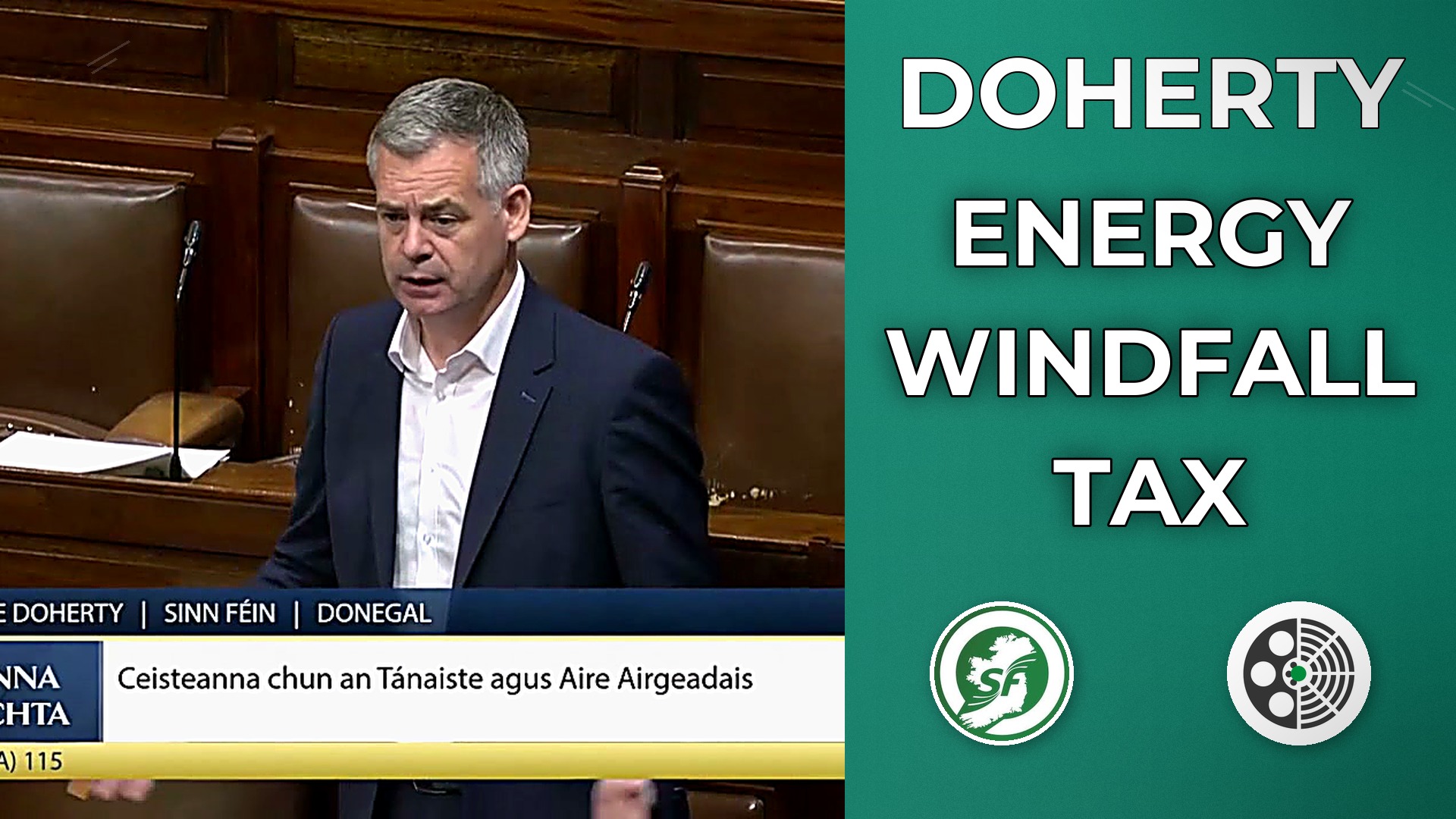


Pearse Doherty presses for 75% tax on energy windfall profits
Sinn Féin TD Pearse Doherty challenged the Minister for Finance over a windfall tax on energy companies during an Oireachtas exchange ahead of the Budget. He called for a 75% tax on excess profits, with the money redirected to households facing rising gas and electricity bills.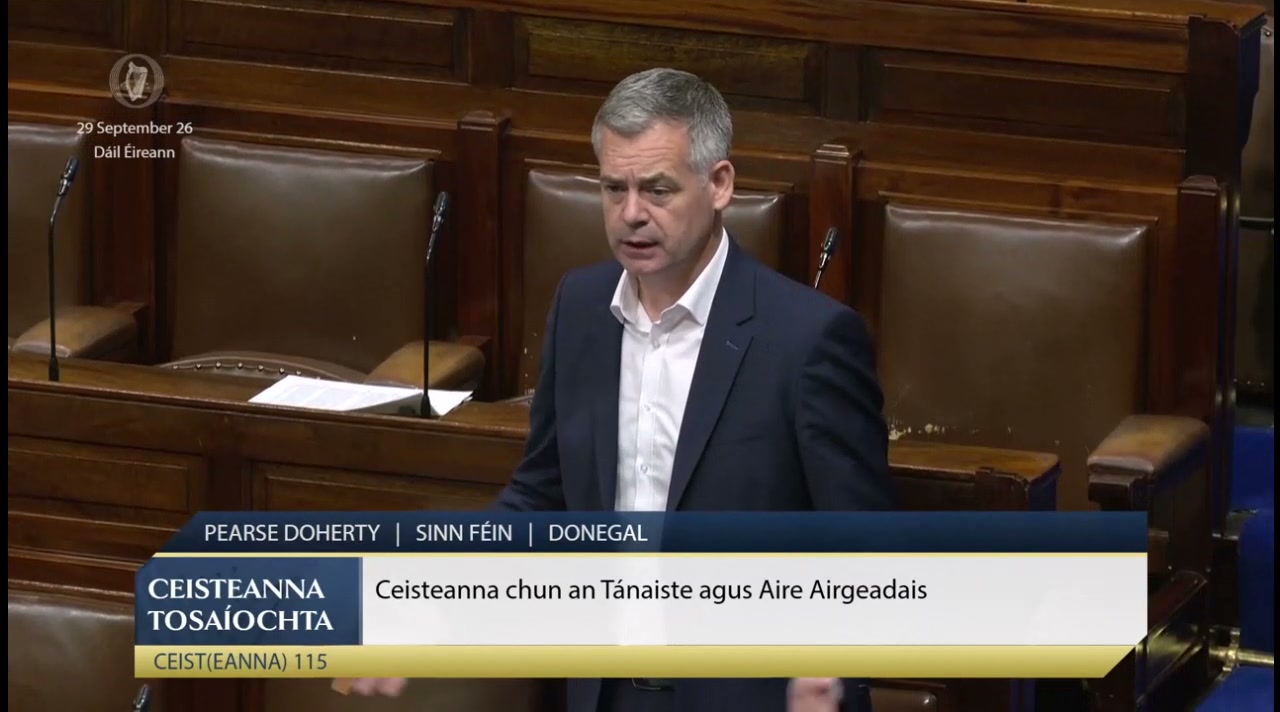
We publish thousands of recordings to make Irish politics transparent and resistant to manipulation. Spotted an error? Report it — together we are building a reliable archive of Irish politics.
Other speeches


Tego samego dnia All speeches from this day →
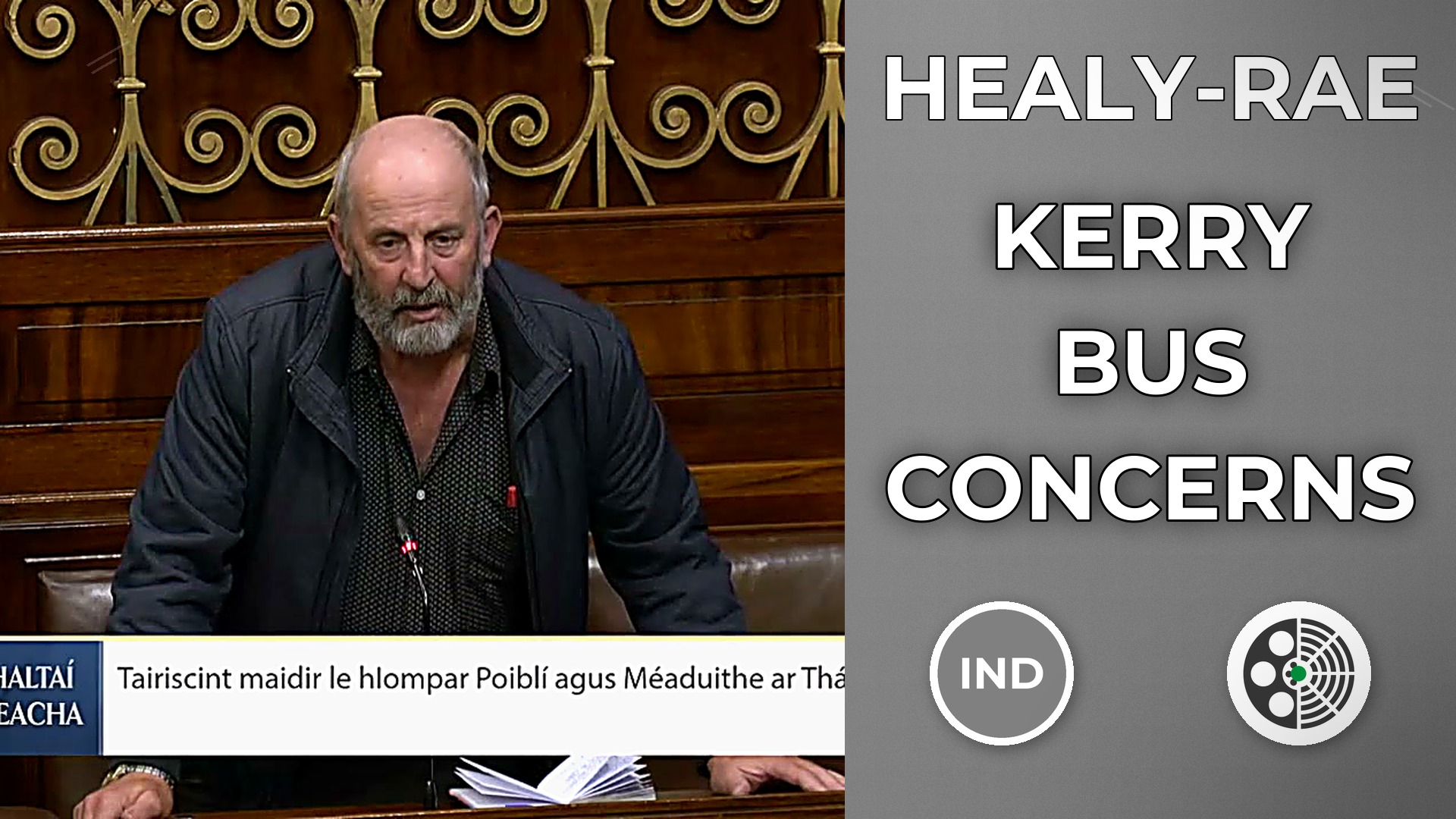
Danny Healy-Rae
Danny Healy-Rae: Bus Costs and Capacity in Kerry
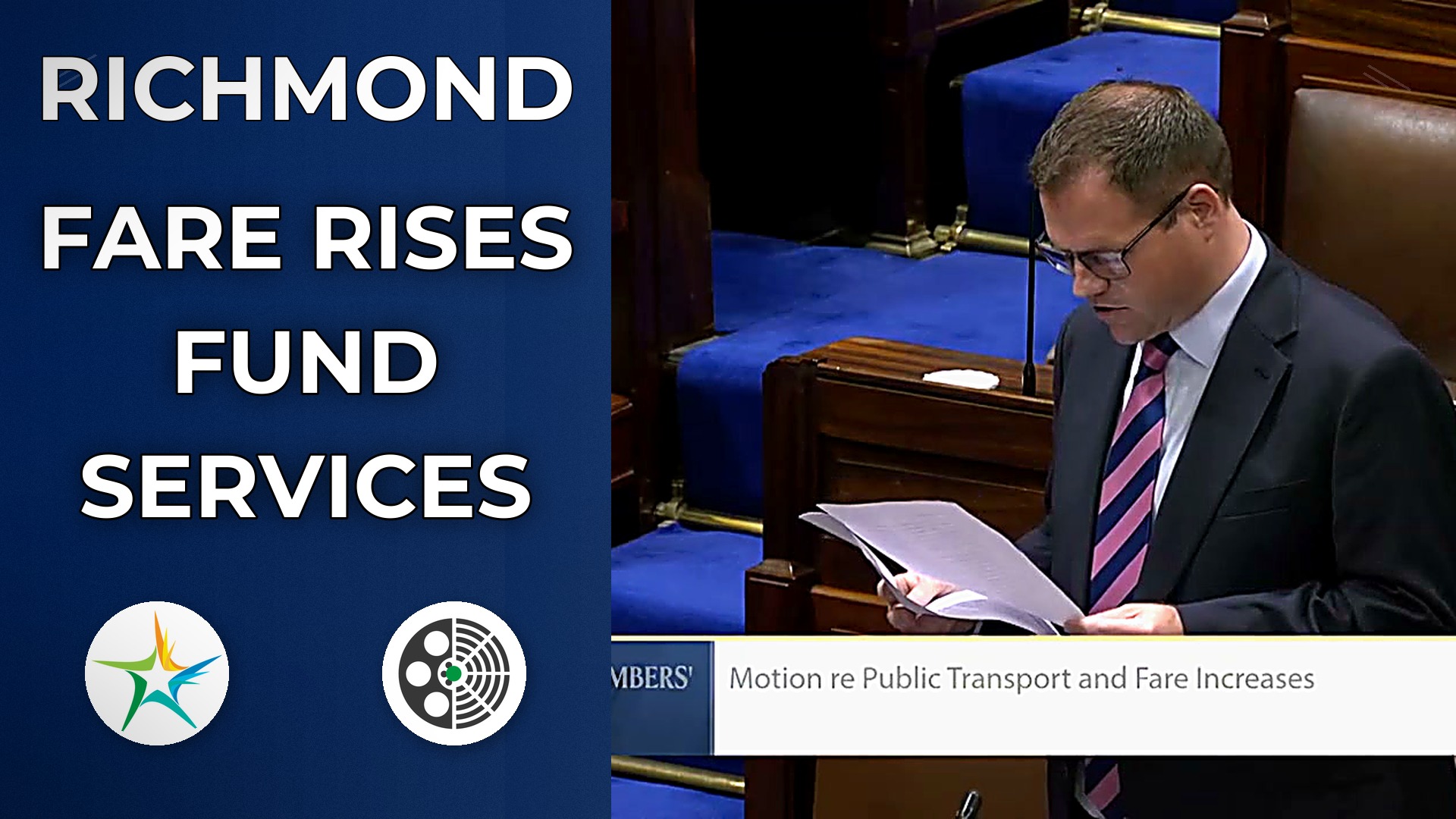
Neale Richmond
Neale Richmond Defends Public Transport Fare Adjustments
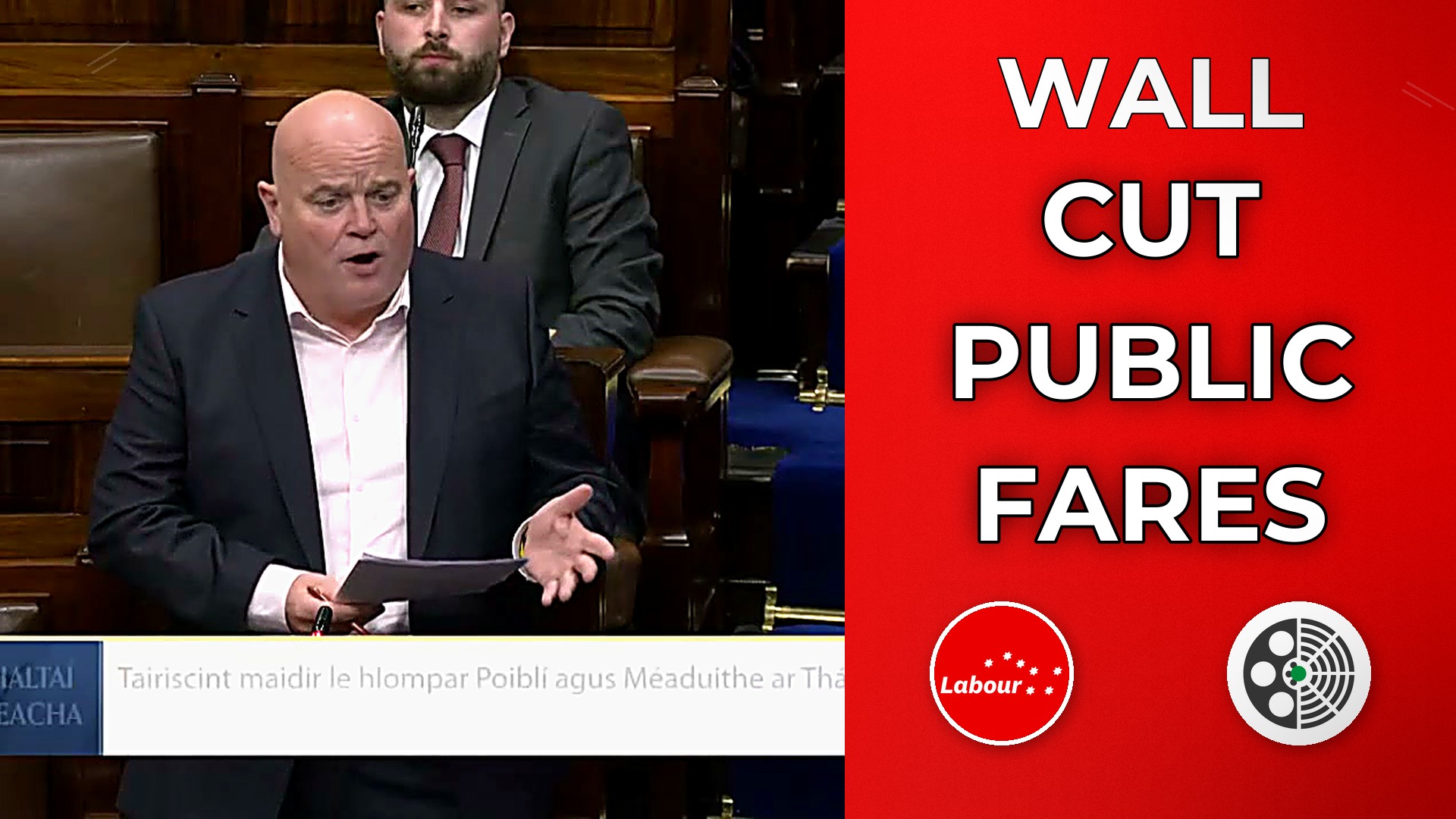
Mark Wall
Mark Wall: Cut public transport fares, not raise them
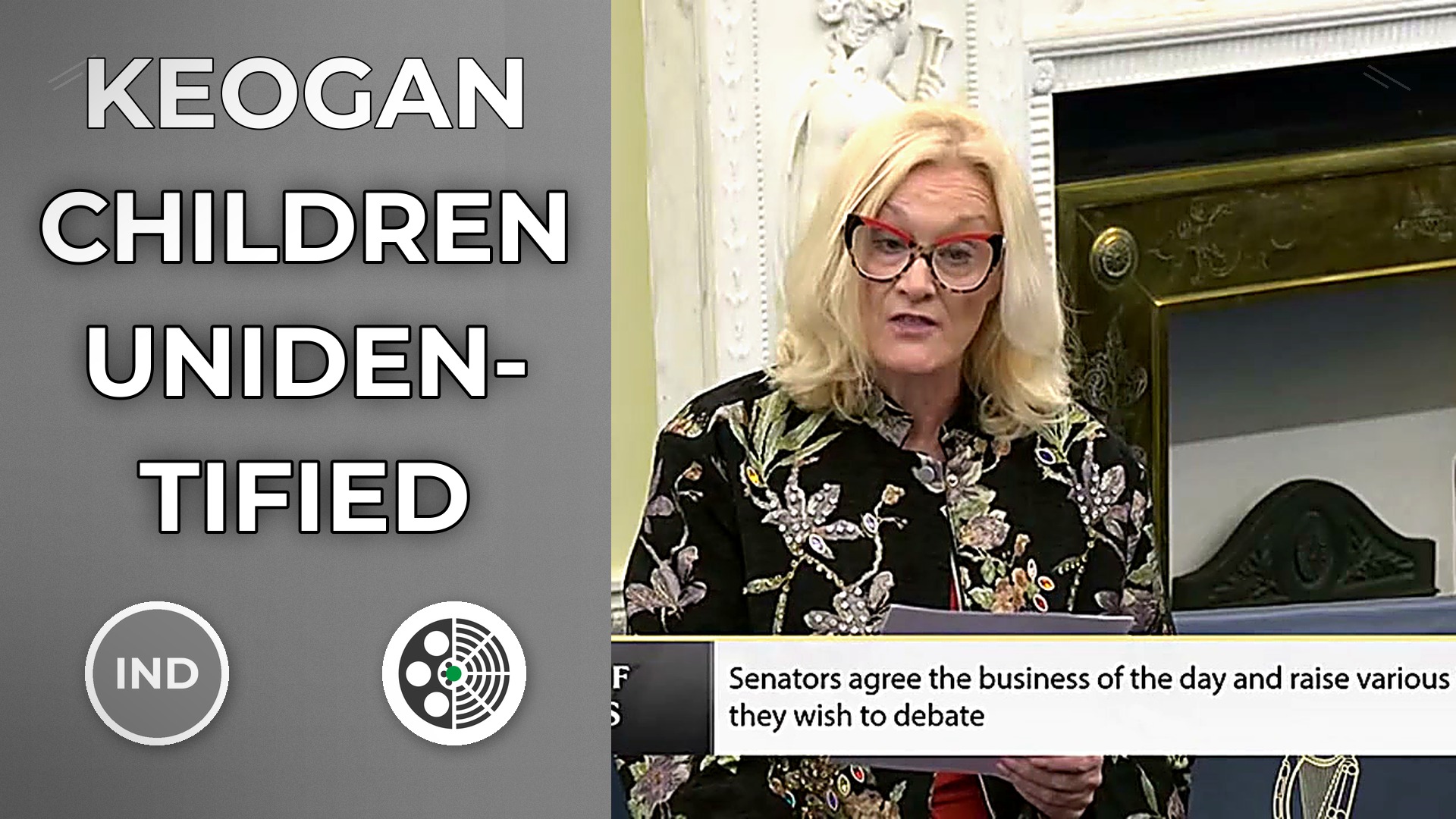
Sharon Keogan
Sharon Keogan: Child trafficking victims are going unidentified
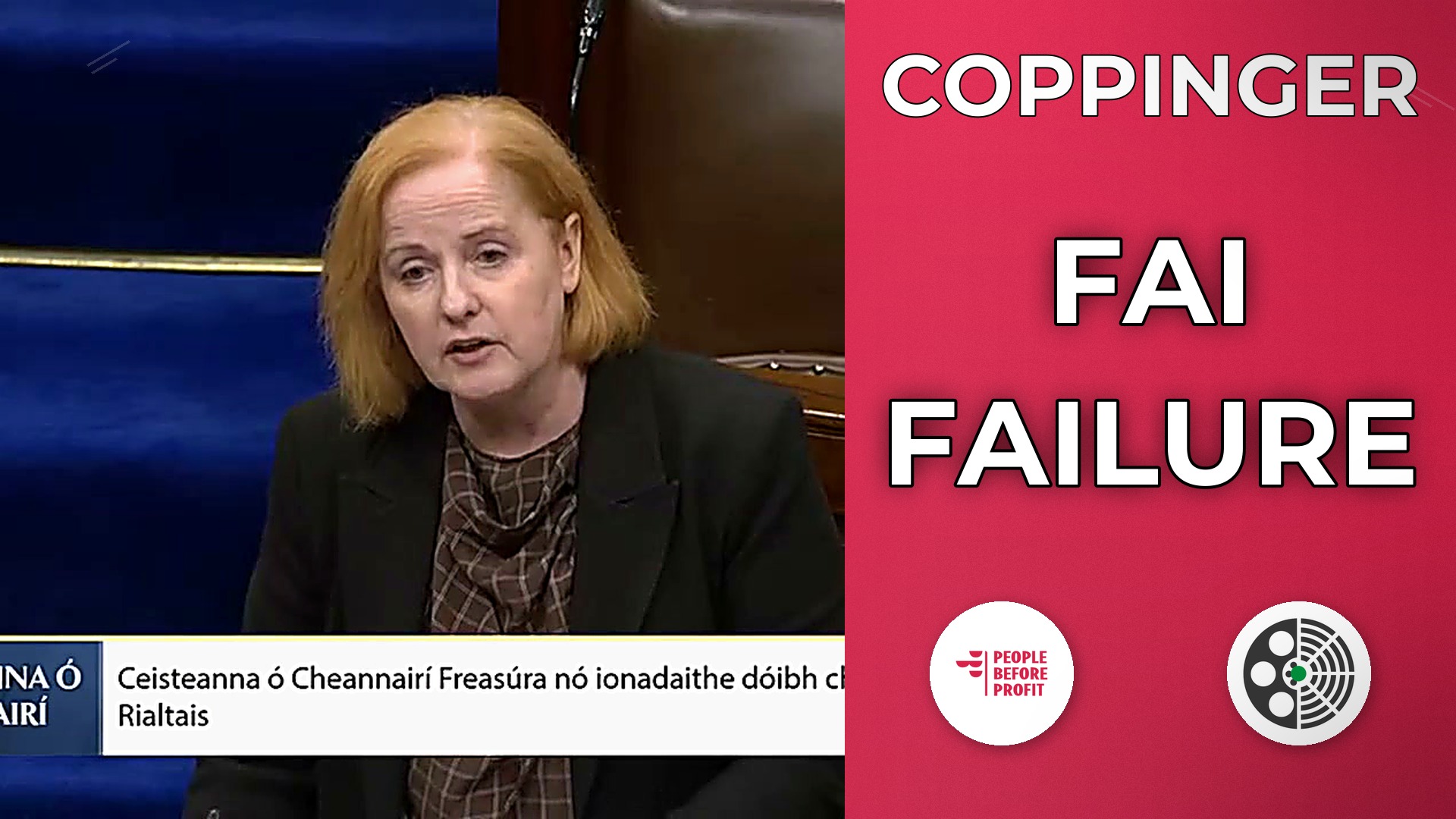
Ruth Coppinger
Ruth Coppinger challenges Taoiseach over Ireland-Israel match
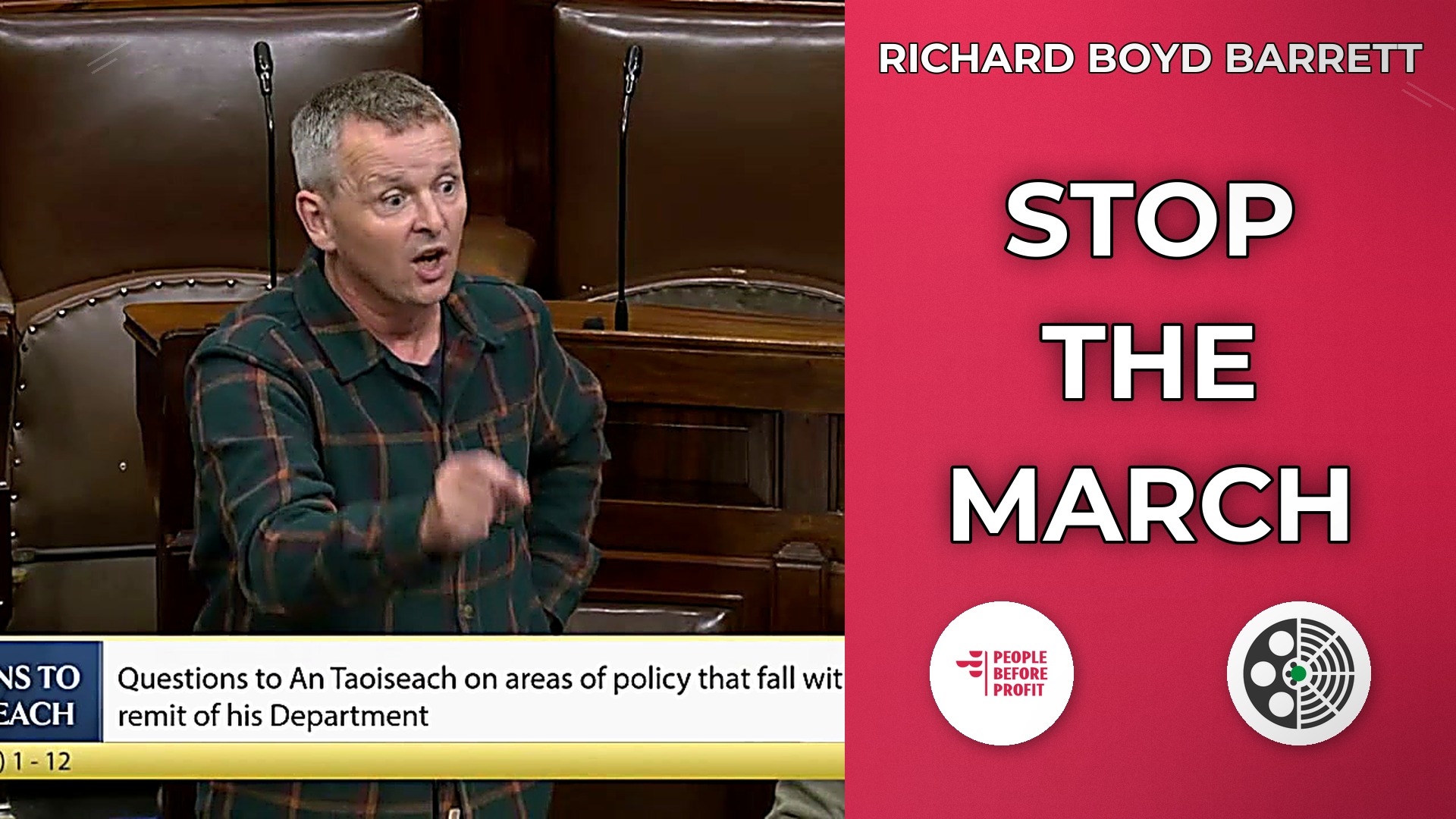
Richard Boyd Barrett
Richard Boyd Barrett calls Drumcree march naked sectarianism
Transcript
Tanaiste, from next Monday on over a million households are going to see gas prices and
electricity prices begin to increase.
Households lose out but big energy companies are going to be the big winners.
Energy companies will rake in even greater profits while ordinary people are left to
carry the burden.
So the question for you today is will you bring forward a windfall tax on these excess
profits and use the money to help households who are struggling to keep the lights on and
keep their homes this winter?
Thank you very much for the question.
Firstly, more broadly in relation to the point you make regarding energy prices and the likes,
I'm conscious of the pressures people are feeling in relation to energy bills.
They're real.
There's no doubt about that at all.
Not just in Ireland but across the European Union, across large parts of the world and
obviously in an Irish context we'll have our budget next Tuesday where we will endeavour
to do what we can do to try and assist people with those bills through particularly the
winter period.
The government is conscious of the increased financial pressures on households and businesses
in recent months and in response, as you know, we've introduced a number of measures to try
and help reduce or at least suppress the growth of fuel prices for households and businesses
with additional supports for key sectors of the Irish economy but also supports more widely
in relation to the excise reductions.
As Deputy Daugherty is aware, the European Commission's Accelerate EU Communication addresses
the EU's rising energy costs in volatile fossil fuel markets and aims to accelerate the clean
energy transition and strengthen EU energy resilience.
While the communication notes Member States may take domestic measures, no EU-wide approach
has yet been agreed.
The Temporary Solidarity Contribution, the TSC, was introduced in line with the Council's
regulation on 6 October 2022 to tackle windfall gains being made in the energy sector at the
time following the commencement of the war in Ukraine.
The TSC formed part of a co-ordinated European response reflecting the highly interconnected
nature of EU energy markets.
When we acted, we did so at an EU level and a view that an emergency intervention to mitigate
the effects of high energy prices at the time could not sufficiently be achieved by Member
States individually.
It continues to be our view that tackling the energy crisis in a co-ordinated way between
EU Member States is preferable given the interconnectedness of EU energy markets.
Governments across Europe are rightly attentive to developments in energy markets and their
impacts on households, businesses and the wider economy.
As Minister for Finance and in the context of our Presidency of the Council of the EU,
as you know, because I think we discussed it before, we did put the topic of windfall
energy tax on the agenda of the ECOFIN meeting in Dublin, and I have requested that the European
Commission now reflect on those discussions and report back at a meeting of ECOFIN next
Thursday and Friday in Luxembourg, and I will update the House after that.
Minister, you know that the European Commissioner has ruled out a Europe-wide
energy windfall tax.
He actually said that it is better done domestically.
You are the Minister for Finance.
There is no point hiding behind the skirt of the European Union.
They have said that, as of Tuesday, they are not planning to do this and said that it is
best done at a domestic level.
These companies are raking it in.
Households are going to be fleeced in terms of nearly double-digit increases in gas and
electricity from Monday on, the day before the budget.
A million households within a week will see their electricity and gas prices increase,
and you are hiding behind something that the European Commission is telling us, the public,
that they are not planning to do and that it is better done domestically.
So, you are the Minister for Finance.
Can I ask you again, will you look at introducing a windfall tax and the excess profits that
these energy companies are making while ordinary people are being pushed to the pin of their
collar trying to keep warm and keep the lights on this winter?
My position is extraordinarily clear.
I heard that individual Commissioner's comments today.
I met with Commissioner Huxter yesterday, who actually is the Commissioner who has
responsibility for taxation.
He is due to report and engage with EU finance ministers in Luxembourg next Friday.
It is my view, but not only my view, it is the view of the German finance minister, the
Italian finance minister, four other finance ministers in a signed letter to me that the
best way to consider acting on this is at an EU level.
That is how we acted in this House, as you recall, in the past, at the start of the war
in Ukraine.
Because of the interconnectedness of the EU energy market, it makes sense to look at these
things as a European Union.
But of course, there are things we can and will do domestically.
We will outline a number of them in the budget.
But in terms of the windfall energy tax, I am clear on the government's position.
I am also clear on the position of many of my EU counterparts, that working together
at an EU level is the right way to go in relation to that.
That is why we will be formally discussing this in Luxembourg next Friday, Friday week.
The energy commissioner made the point that there will be no, or in his view, there will
be no windfall tax at a European level, which is the wrong position.
I agree, absolutely.
But see, in this House here, at this Parliament, you as Minister for Finance, you can bring
it in if you want.
You can actually tax the excess profits.
We are not talking about the profits.
We are talking about the supernormal profits that energy companies are making.
Tax them at a rate of 75%.
Because why?
They should not be making these types of profits while people are being pushed to the pin of
their collar.
While we are seeing double-digit increases in gas and electricity, it is immoral that
energy companies are making these types of profits.
As Minister for Finance, you could actually stand up and have the back of ordinary Irish
people by saying, I am going to make sure that these excess profits are going to be
taxed, and I am going to make sure that that tax is redirected back into the pockets and
households right across the state to help them with their electricity bills, with their
gas bills.
That is a decision that you can make today, if you want today.
So can I ask you, will you consider that?
I am not standing on the back of ordinary workers.
And we have tested that electorally in Galway West not that long ago, where you put your
proposition and I put mine, and we won the by-election and you did not.
So we have actually tested these propositions with the people, because the people of Ireland
know that it, of course, is more nuanced than you outline, because we are in the European
Union.
Energy is extraordinarily interconnected across the European Union.
And that is why it is not just my view, it is the view of multiple governments, of a
whole variety of different political persuasions, some of the right, some of the left, some
of the centre, that the best way to consider these issues at a European level.
And that is not a new phenomenon in this House.
It is also what we did in relation to when we previously introduced measures at the start
of Russia's brutal illegal invasion of Ukraine.
So we will continue to work on how best to deal with windfall profits.
I shared your analysis of the situation in terms of the windfall profits and how we
best deal with that.
We will continue to do that at a European level.
But of course, domestically at a level, we will continue as a government to have the
backs of ordinary workers.
And that is why we have brought in packages of measures that far exceed what most of the
European countries have done, because we are in an ability to do that because of our good
management of the economy.