

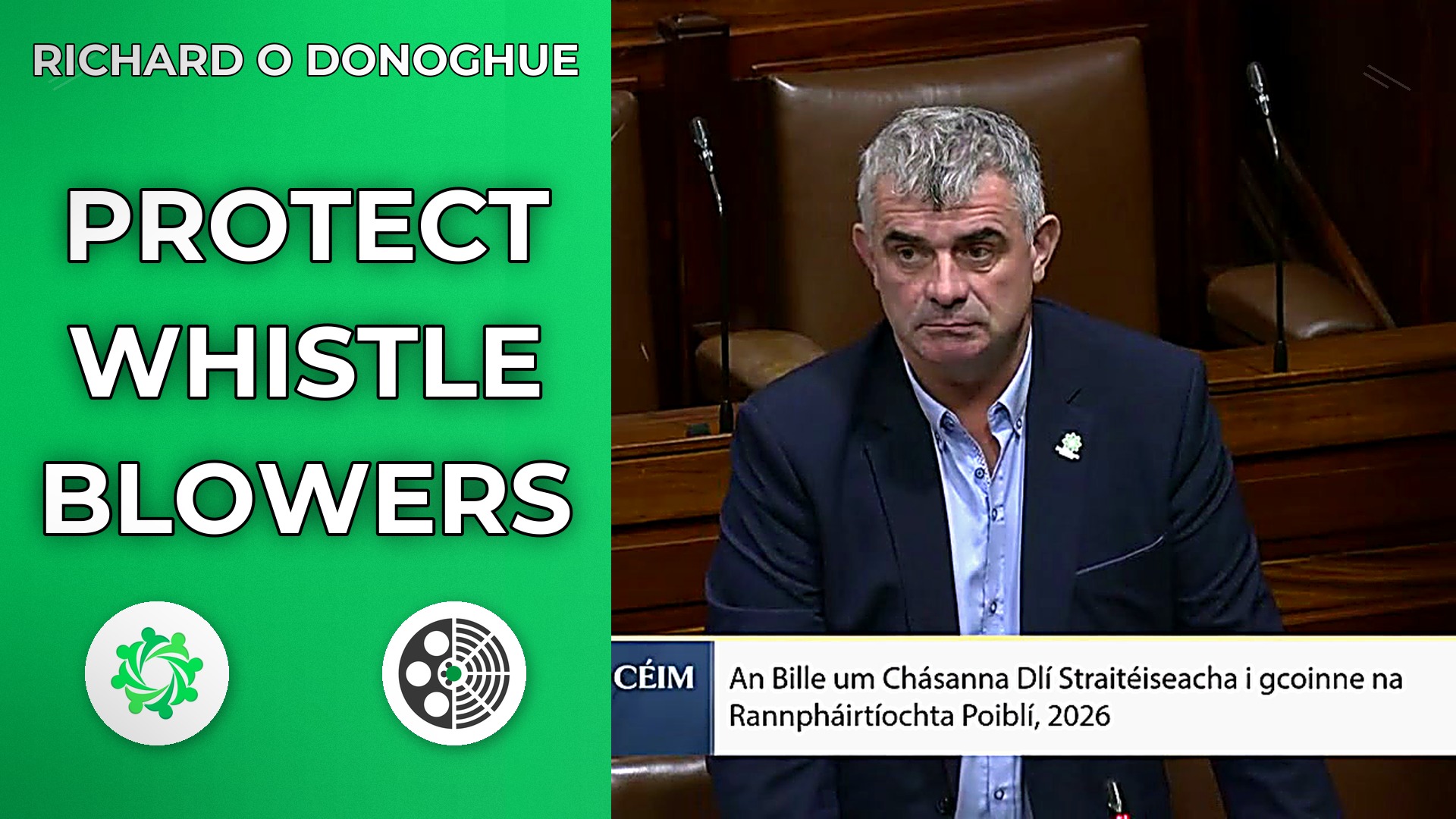


Richard O'Donoghue Calls for Whistleblower Protections
Richard O'Donoghue spoke during debate on a bill, arguing that journalists and people who expose wrongdoing need stronger protection. He pointed to delays in Revenue cases involving constituents, the personal and legal costs of whistleblowing, and the need for accountability across public services.
O'Donoghue said journalists investigating wrongdoing should be protected from legal pressure. He also argued that TDs, Senators and councillors who raise concerns should have protection when they highlight problems.
Speaking about two Revenue cases involving constituents, O'Donoghue said matters had been sitting on desks for 12 months without being examined. He said delays can add to legal bills and leave whistleblowers isolated, while others may fear that speaking up could affect their jobs.
O'Donoghue referred to whistleblowers in the Garda and prison services, and to Gardaí who were acquitted after lengthy investigations. He said those cases had consequences for careers and families, and argued that people working in public services should be protected when they raise internal concerns.
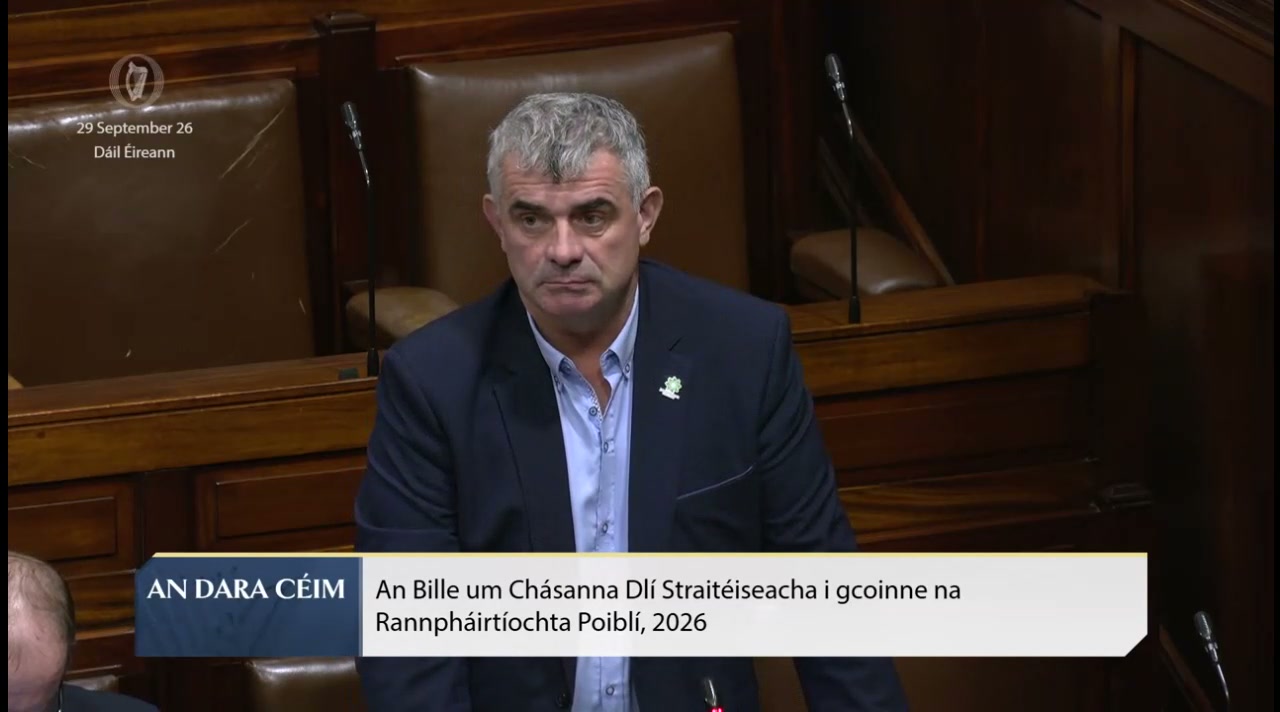
O'Donoghue also raised the issue of people repeatedly appearing before the courts while receiving free legal aid. He referred to a proposal raised by Limerick Councillor John O'Donoghue for a cap linked to repeat offending, and said accountability should apply equally regardless of a person's position in a service.
Protection for those who speak out
O'Donoghue said journalists investigating wrongdoing should be protected from legal pressure. He also argued that TDs, Senators and councillors who raise concerns should have protection when they highlight problems.
The cost of delayed cases
Speaking about two Revenue cases involving constituents, O'Donoghue said matters had been sitting on desks for 12 months without being examined. He said delays can add to legal bills and leave whistleblowers isolated, while others may fear that speaking up could affect their jobs.
Garda whistleblowers and accountability
O'Donoghue referred to whistleblowers in the Garda and prison services, and to Gardaí who were acquitted after lengthy investigations. He said those cases had consequences for careers and families, and argued that people working in public services should be protected when they raise internal concerns.
Free legal aid and repeat offending
O'Donoghue also raised the issue of people repeatedly appearing before the courts while receiving free legal aid. He referred to a proposal raised by Limerick Councillor John O'Donoghue for a cap linked to repeat offending, and said accountability should apply equally regardless of a person's position in a service.
We publish thousands of recordings to make Irish politics transparent and resistant to manipulation. Spotted an error? Report it — together we are building a reliable archive of Irish politics.
Other speeches
Tego samego dnia All speeches from this day →
Alan Dillon
Alan Dillon: €1.4bn in energy supports as fuel costs rise
Albert Dolan
Albert Dolan: Galway commuters need capacity and connectivity
Micheál Martin
Micheál Martin: Protecting the Good Friday Agreement
Richard Boyd Barrett
Richard Boyd Barrett Seeks Urgent Debate on Drumcree
Victor Boyhan
Victor Boyhan Seeks Continued Investment in Family Resource Centres
Malcolm Byrne
Malcolm Byrne seeks safeguards on AI chatbots aimed at children
Transcript
Thank you. I also welcome the opportunity of speaking on this bill. And to simplify
it for people from the point of view of a journalist, investigating journalists, they
should be protected. But also from a point of view of any society that actually want
to, from an investigation, whether you're in the department, in the government here,
whether you're in revenue. I have two cases at the moment in revenue. I'm not going to
mention them. Not for myself personally, but for people in my constituents. And to tell
you the truth, in the couple of cases I have in different parts of it, things are sitting
on desk for 12 months, not being looked at. The knock-on effect of this is the legal bills
that are involved in this. So you have somebody with, they're a whistleblower within different
sectors. And they're against the management of all these places. And then you have people
within their positions that are afraid to do anything because it might affect their
jobs. And people are actually shoved out in the cold. You can see what happened with whistleblowers
in the Garda service, in the prison service. They were cast out. Where were the protections
there? The same thing here is when you talk about journalism. If they're investigating
something that is wrong, and the pressures come on them from a legal perspective, a hundred
percent they should be protected. And the same thing here from the point of view of
a sitting TD or senator or councillor. If they see something wrong and they highlight
it out, should it be protected? We have seen in this country how many years it took when
we had people in investigation in the Gardaí. How long it took. And all those Gardaí were
acquitted from any wrongdoings. But what stood in the way of that happening? How many years?
How many people did not get to where they, in their careers, where they needed to get to?
But it did not only affect them. It affected their families and surrounding area as well,
and surrounding family. So when we look at the protections of people, and I'll just use the
Gardaí as well, because they're our protectors. And I've utmost respect for the Gardaí and I
encourage people to join the Gardaí service. But also I expect that from the point of view,
if you're in a Gardaí service and you're representing people in your area and protecting
people in your area, there should be also the same protections for you if there's an internal
matter within a Gardaí service. In any walk of life, no matter where you work, what you work at,
there's always a minority of people that do things for the wrong reasons. But the majority
of them are there for the right reasons. And we need to make sure that the majority of the people
that are there for the right reasons, and want to make things better, are protected. And the ones
that are there for the wrong reasons, and even they're in a position of power, that they're
happening. We look at this on the point of view of criminals in this country, and re-offenders,
and free legal aid. We have some people that are getting free legal aid, they have 25 and 30 times
in front of the courts. Fine if you've done something once or twice, something goes wrong
and you get free legal aid, but when you're doing something 30 times, does it not show that we have
a problem? And we're given free legal aid. This was brought up in our local authority in Limerick,
by Councillor John O'Donoghue, brought up that there should be a cap put on the point of view
of somebody re-offending and re-offending. How are you going to learn from anything if you keep
getting free legal aid? That's also an issue that needs to be discussed. From the point of anyone
within their sector, and I go from the Commissioner down, everyone should be treated as an equal,
regardless of your position in any service you do, and you should be treated as an equal when it
comes to accountability. I do hope this Bill, when it goes through, it reflects that. And the same
thing accounts for within our departments. If our departments and certain parts of our departments
are not doing right, are not accountable for their positions, also they should be held accountable.
But anyone's entitled to get a legal aid for what they do. But when they come to a case where they
need to be accountable and they re-offend, I'd have an issue with that. Thank you.