Michael Fitzmaurice Challenges VAT Rules on Mart Sales
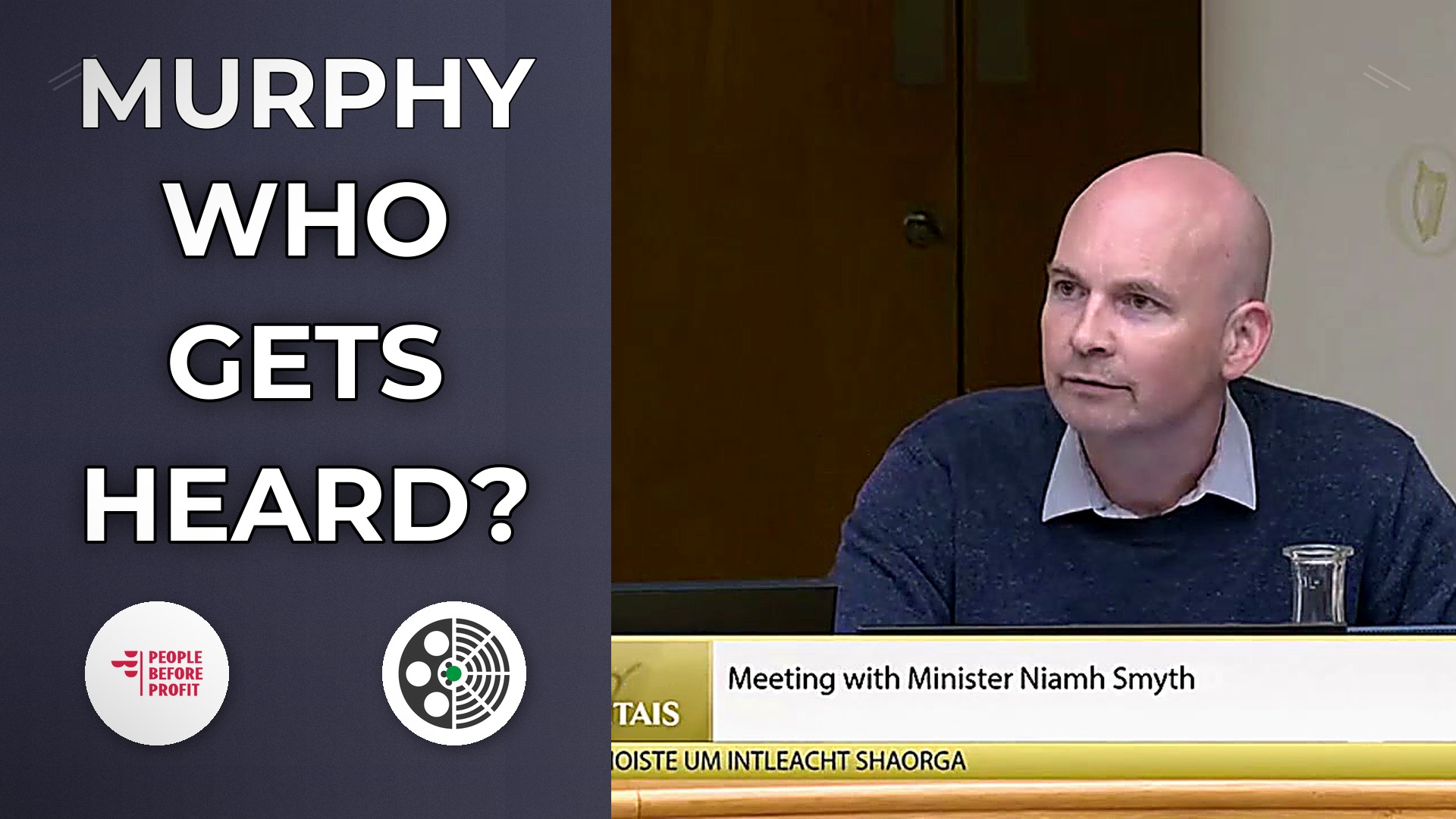
Michael Fitzmaurice questioned officials on VAT rules affecting livestock sales through marts during committee proceedings. The independent Ireland's TD challenged the treatment of marts as part of the VAT supply chain and raised concerns about the financial impact on small farmers.
We publish thousands of recordings to make Irish politics transparent and resistant to manipulation. Spotted an error? Report it — together we are building a reliable archive of Irish politics.
Thanks for coming in. Just to query that Chad, if I sell an animal in the Mart and Willy buys the animal, it's Willy's name that goes down, it's not the Mart. So how can the Mart be involved in in the middle of it? They're only, they're basically a facilitator, that's all. Yeah, in the card of the animal it's wrote it goes from Michael to Willy. Michael, all they do is take in the money off Michael and all they have is a service that auctions the animal, not, just basically they don't own the animal at any stage if you understand me. So why are they caught in the middle of this? You're absolutely correct in terms of documentation in the Marts, but for that purposes in these type of sales where someone acts for another in selling their... Does that not need re-looking at, like if that's the complication? If it's, it's not factual, we're doing a vet and it might be EU law, I don't know, it's tiny up in it, but is it not, it's, when you're doing something that's not factual, like if Willy buys the animal off me and someone, and Andreas is facilitating it, how can we be sort of making them as the responsible party within the mid-loop? Sorry Michael, the Mart will be registered for that, so it's 23% that they should be charging, if that's, if your way of looking at it is correct in my opinion, because they would, the Mart would be registered, so they would be charging 23%. I appreciate that maybe factually or economically, from the perspective of the farmer and the Mart, what you're saying, but from the VAT directive and from the VAT gap, when these situations arise, when these, when the supplies are made in this manner, the law applies a deemed sale between the buyer, the Mart, and the Mart to the, and it completes the supply chain from a VAT purpose. Right, have ye to run everything by Europe in the line of change and things? These provisions, I suppose, are provided for under the VAT directive. Yeah, but is it Europe that dictates all that? I mean if it's under the VAT directive, national law has to be in compliance with that, and it removes discretion, we have to abide by that. In the spirit of the, in the spirit of the adjustment last year, would you think it would be a fair system that a Mart manager come in from Clare there, that there was, with the adjustment, small farmers, not big farmers that's registered for VAT, small farmers with their 5 and their 10 cattle in County Clare, has ended up 380,000 less money in their pocket compared with the year before, right? This year, compared with the year before, if the figures work out the same at the moment, and which they're looking like, and then if I decide to sell to you, there's no difference, or if I go into the Mart, or if I go into the factory, which is basically promoting a certain side of the business, the factory business, that there's no change in that. Would it, does it not look like the small guy is once again being basically tossed over to nearly get out of cattle with the way it's handled, when them are the figures that I'm after giving you? Would you not think that the anomaly is a problem? And can you change one of them to make sure that they're level, that it doesn't cause this anomaly without any EU law? So, I mean, selling through a Mart by an unregistered farmer, you know, they charge a flat rate addition, and that's EU law. If it's a farmer, unregistered farmer to unregistered farmer, there's no VAT, and again, that's also EU law. And if it's an unregistered farmer to a meat processor, well, then there's a livestock rate. So, again, it all falls back on the channel. I'm giving you the reality on the ground, that County Clare, for one of them, I multiply that by every county, Roscommon, Mayo, Galway, the lot of them, where Waineland sales especially would be this time of year. And most of them counties, like Clare would be actually small compared with Galway or the west of Ireland, Mayo and counties like that and Roscommon, that's where most of those Wainelands are, that they will be a third of a million down. What have you taken in, in the first nine months or eight months of it, extra, in money, in money back? You talked about 60 million or something. What have you taken in so far in your figures? So, approximately, for every 0.1% change in the flat rate, approximately, that's 10 million. So, when it went down from 5.1% to 4.5%, I think that was 61.5 million was the exchequer gain, as it were. Yeah, and what has been taken in the first eight months this year? Can I, can I maybe? Okay, so we don't have a figure to hand for the flat rate, what we can say with the livestock rate. No, but I'm asking on the flat rate, you said there'd be an adjustment of 60 million and I'm asking if we're two-thirds of the way through, have we far too taken in? I bet you we haven't done to near it. I mean, the way VAFRA, you know, is worked out, it doesn't go down into that type of level of detail, granular detail, definitely, so we don't have those figures to hand. And can you, do you know the system that you use, the technical system? Yeah, I was interrupted a couple of times, you're making me a minute. The technical system, while you have given us a formula, could you put meat on the bones of the formula that we could, that the committee could get, the way that we'd get a grasp of it? Obviously you're expert at doing up the maths, but that you could put meat on the bones of the figures of how it's done to give to us, rather than just a thing multiplied by 100 or whatever, to explain it in detail to us, if that would be possible. And my last question, can you, through, can you level them out if you want it on one side without having to go to the EU? Can you basically have them level that it wouldn't cause a problem like it's causing at the moment, or is there an option that through, which we wouldn't be big in favour of, we'd rather level it out, that a farmer at the end of the year could align it rather than maths having to be doing the paperwork? Just to answer your last question, first, the flat rate every year, it will land where it lands at full, what's deemed to be full compensation. With the livestock rate, there is some policy discretion. That rate can go as high as 4.9% and it can go down as well. So there is discretion there. And if, for example, the flat rate was below 4.8% for the coming year, there is discretion to bring the livestock rate down to match it in that sense. And then just to go to your previous question around putting more flesh on the bones of the formula and how it's calculated, I might defer to my revenue colleagues who undertake that exercise. Thank you. Thank you, Deputy. So high level, that formula annually is the unregistered farmers flat divided by the unregistered farmers agricultural output and multiplied by 100 to give a percent. That level of flat rate calculation is in accordance with the EU VAT directive. It's arising from our obligations. We have to review that rate annually. We take the annual rate and we use a rolling three-year average to come up with what that flat rate is. I believe everything you're saying. All I'm asking is the formula to be sent to us. Yeah. Can you give us a detail on it? Because I need to get on to the next speaker, please. Can you send us the whole ash, the meat and the bones? That's all I'm looking for. They're not. So. We can provide the CSO reference data. Yeah, but the whole ash, the meat and the bones, the way we'll understand. To enable us to do that technical exercise.
Thank you for downloading 🙏
If you publish this material on social media, we would be very grateful if you tagged VideoParliament. It helps us reach more people and keep building a transparent archive of Irish politics.