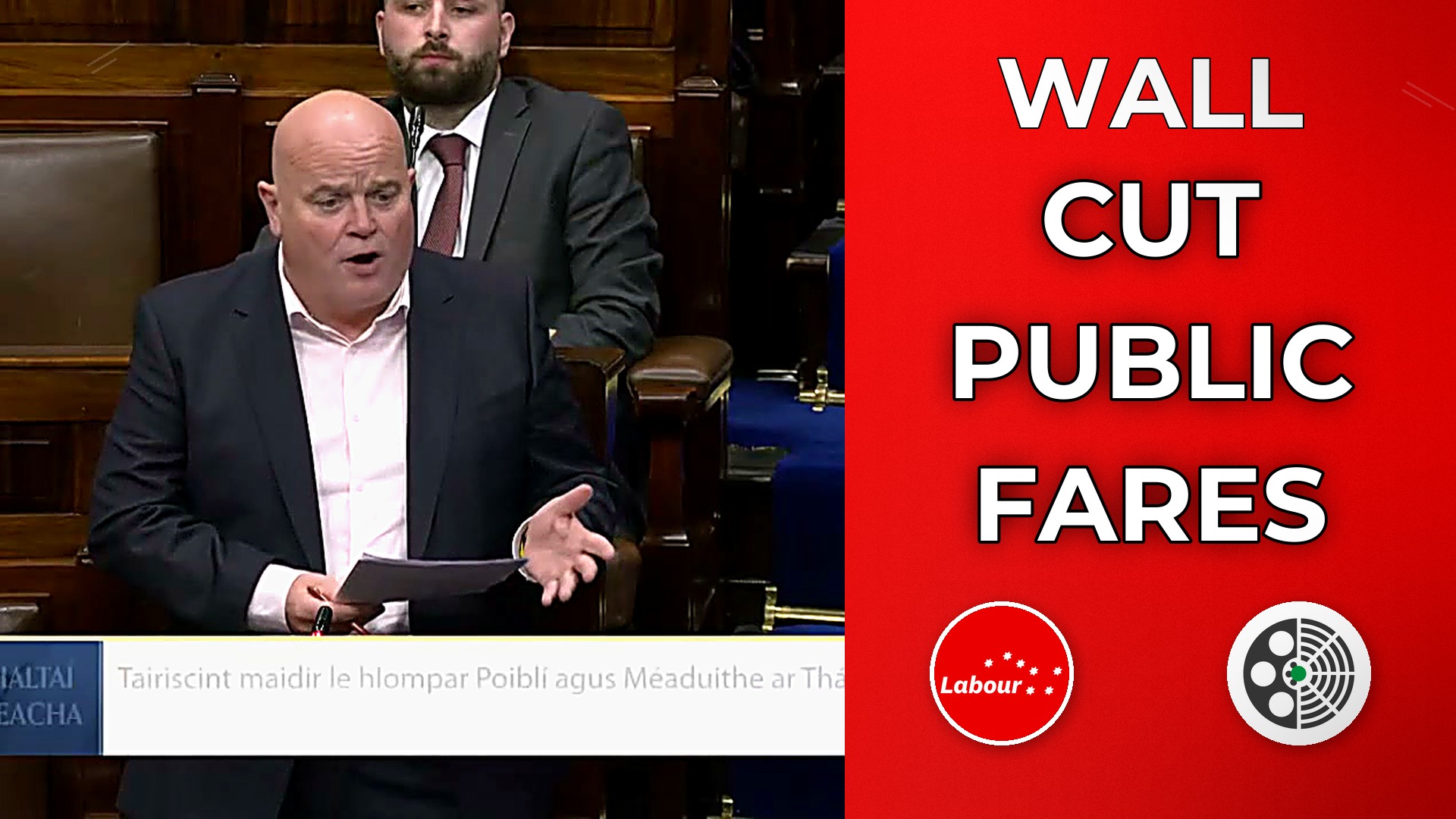
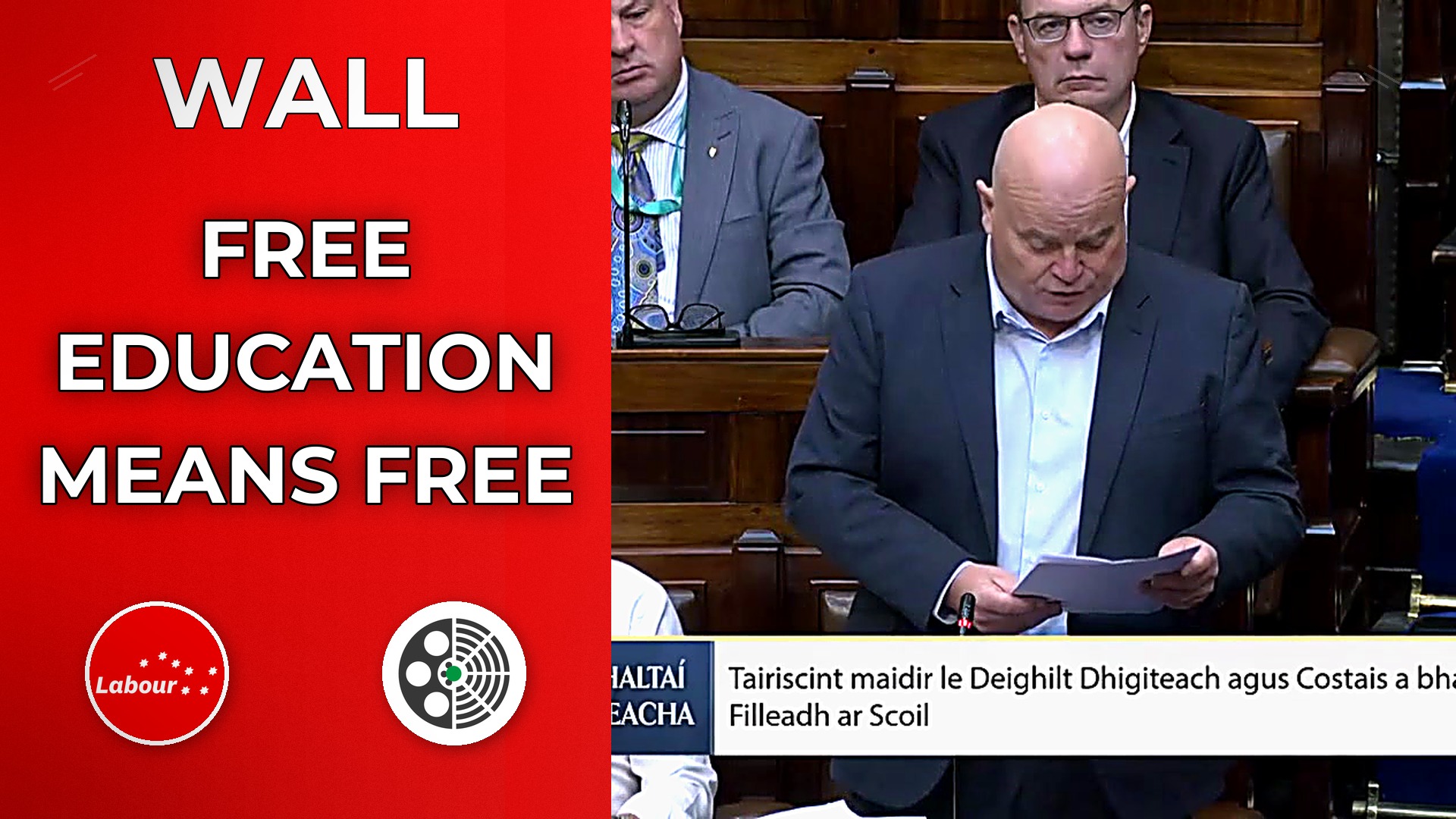
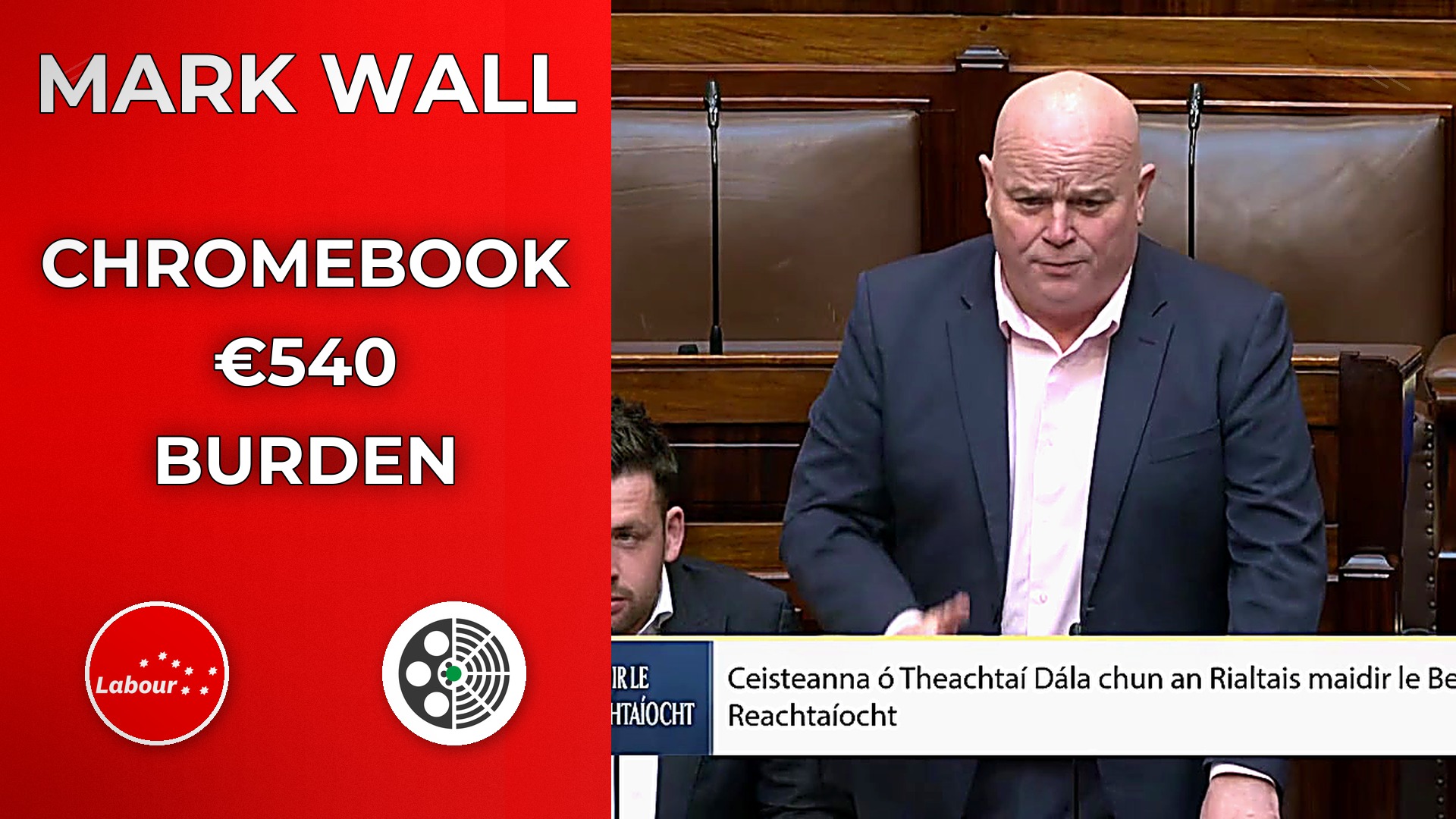
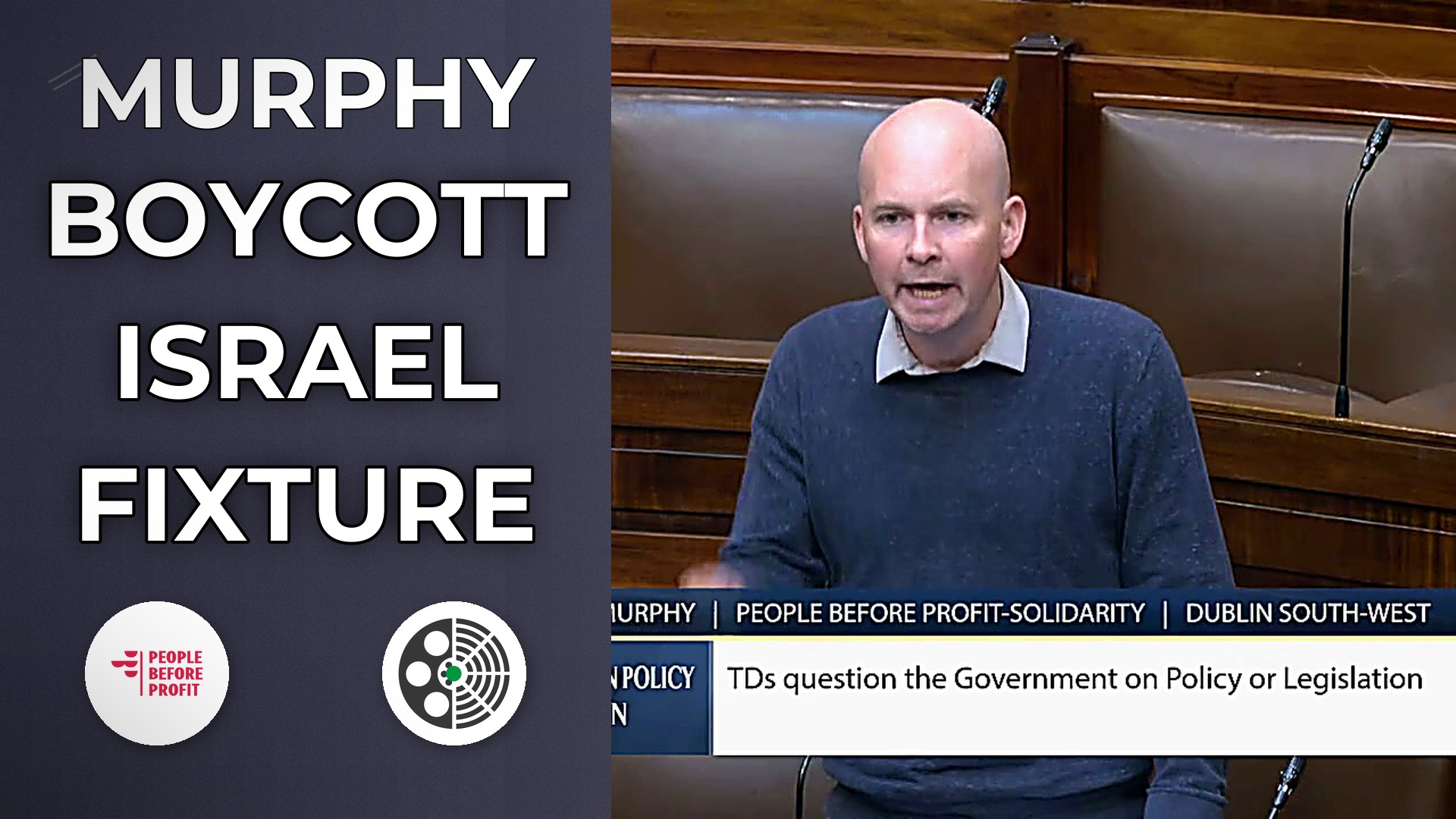
Labour Party TD Mark Wall criticised the Government’s Assessment of Need Bill during a debate in Dáil Éireann, arguing that it fails to address staffing, funding and long waiting times for children and families. He called for immediate investment in public assessment and therapy services, alongside clarity on proposed statutory guidelines and special school access.
Bill criticised as short-term reform
Mark Wall said the proposed legislative changes were necessary but did not represent the targeted reform promised by Government. He argued that the Bill amounted to piecemeal changes that would not deliver a meaningful improvement for children waiting for assessments, therapies or school places.
Long waits and service shortages
The Labour Party TD highlighted figures showing that 90% of children were not seen within the six-month statutory timeframe, with average waiting times extending beyond two years. He also referred to more than 20,000 children nationally waiting for completed assessments of need and significant vacancies across Children’s Disability Network Teams, including occupational therapists and clinical psychologists.
Pressure on families and schools
Mark Wall described families in Kildare South who had waited years for assessments and said many parents were paying thousands of euros for services that should be provided by the State. He also raised concerns about children waiting for special school places and warned against placing additional responsibility on teachers and school communities.
Questions on assessment teams and private providers
The Labour Party TD sought clarification from the Minister on the staffing of new in-reach teams, the use and cost of private providers, and which assessment teams would carry out work connected with school placements. He argued that separating access to therapies from diagnosis and special school provision could leave parents facing two parallel and difficult pathways.
Labour Party funding proposal
Mark Wall referred to the Labour Party’s Alternative Budget 2026, including a proposed initial allocation of £15 million to support assessments for the 5,000 children waiting longest while public capacity is developed. He also called for urgent investment in training therapists and specialists, and for a clear Government action plan to meet its legal obligations under the assessment of need process.
Watch the recording to hear the full contribution.
We publish thousands of recordings to make Irish politics transparent and resistant to manipulation. Spotted an error? Report it — together we are building a reliable archive of Irish politics.
Go raibh maith agat a thaos ceoinn comhairle. Minister, I welcome you into the House this afternoon and I also welcome at the outset the intent that you have in bringing this Bill forward to make changes in the assessment of need process. But while I agree with that the legislative reform is absolutely necessary, however the proposed changes presented in this Bill do not address the key issues, particularly around resourcing and funding. The needs of children should be met by the state through the provision of a well-resourced public health and education services. We all know that early intervention is vital, but shamefully far too many young children are failed by an under-resourced and over-stressed system for assessment and the provision of essential supports and therapies once a diagnosis is secured. At the end of last year, the Government promised targeted reforms to the assessment of need, with the Minister for Education and Youth stating that the system is no longer fit for purpose. This Bill is not the targeted reform parents and their children need. What this Bill is is short-termism, piecemeal changes that will have absolutely no real and tangible impact on children and their families. Every day of the week I'm trying to support families who have been failed by this Government because they cannot get access to the essential therapies that they need and truly deserve. 90% of children are not seen within the six-month limit as required under the current Disability Act. The average waiting times have now stretched to more than two years. We have a system that is unable to cope with the demand and is going to shortly implode. Only this week I've been supporting multiple families who cannot get an assessment of need or access to vital therapies. Just an example from Montgach Issuant in Kildare South. We applied for the assessment of need in May 2023. We were advised that an assessment would be completed no later than November 2023, as per the legal requirement. However, this did not happen and I went through the complaints procedure and received further notification that an assessment would be completed no later than September 2024. Another two years have passed since the last deadline and now it has been almost three years since that initial application. Which is far too long when it concerns the wellbeing of my daughter. Another family of a young child I am working with in Newbridge is waiting over a year and equally as important, that child is without a special school place. That is the harsh reality for many families I am working with throughout Kildare South, as are many of my colleagues in the Labour Party. I have had many families tell me that they are forking out thousands of euros on services that should and must be delivered by the state. They are eating into their savings, their college funds, taking out loans, going to the credit union just to get their child access to the services that they need. The Minister announced previously the new 11 in-reach teams to provide clinical guidance and support for clinicians performing assessments. Government can barely staff the CND teams throughout the country. Only recently I received a reply from the HSE West and Central Kildare that they are still recruiting for an assessment officer. The most recent figures available to me also show that as of October 2025 there are an 18% vacancy rate across positions in CDNTs with over 450 positions unfilled. Vacancies include those key and vital therapies with 27% of OTs and 44% of clinical psychologists unfilled. I would ask the Minister to provide an update to the House today on the actions her Department is taking to address the workforce challenges which we are all seeing right across the state in every area. As well as that, the PQ also informed me that they are relying on private providers to increase the capacity of assessments and decrease waiting times. While I believe that every resource of the state should be used to tackle these issues, I would ask the Minister to clarify how much the state are paying these private providers at this time. This is an issue across the health sector whereby the state is outsourcing healthcare, where government are not doing enough to prevent these long waiting lists and vacancies. Under the current Act, the statutory timeline for an assessment of need is six months. In the HSE Dublin and Mid West and Midlands area there were over 6,500 children overdue completed assessment of need report. Nationally, as we all know, that figure is over 20,000. Figures as well from the HSE also show that 8,200 children were waiting for their first contact from the CNDT at the end of March 2026. Over 5,260 are waiting over 12 months. The regional healthcare area of HSE Dublin and Midlands, which includes my own county of Kildare, has the highest waiting list for first contact with the CNDT, with nearly 1,700 children have been waiting for over a year. We in the Labour Party have raised concerns regarding the continuing attempts by government departments of passing the book. When the new Minister announced previously the replacement of the existing assessment of need process with a new system, we in the Labour Party raised concerns as the proposals were to replace the requirement of a formal diagnosis when determining access to a special class or indeed a special school. This, as my colleague Deputy Owen Kennedy stated, is a serious development. Such proposals will have profound implications for school teachers, most importantly for children and families who urgently require timely access to specialist support. By replacing a diagnostic criteria with an educational assessment, government is placing, we feel, an unreasonable and unsafe burden on school communities. Minister, you have also stated that children no longer will need an assessment of need to get a school place when you are stating that it is up to the education, that is the department I presume, to allocate places. Unfortunately, that is not happening for those that require a special school place, as I have found out most recently in my own area of Kildare South. An assessment of need is actually one of the criteria for the allocation of a special school place and that is happening right now for so many parents. Some of the families I am dealing with have had to wait on an updated assessment as the one they currently have is a number of years old for their child. The problem they have is that their child is now older, their disabilities and medical conditions remain the same, or unfortunately have increased, yet they are waiting on an updated assessment or an interim report to try and secure that special school place for their loved one. And Minister, time is unfortunately against them. I am sure, Minister, you will be aware of statements made by the ANTO calling this a profound breach of trust, a sentiment we in the Labour Party continue to echo. The Taoiseach even said that the assessment teams would be carrying out such work. I would ask you, Minister, maybe to clarify which assessment teams will actually end up doing this work. This is leaving parents with two parallel pathways, one where they can get therapies their child needs and another to get a diagnosis and a school place for their child. The Government's solution here is to place more pressure on teachers who are already, as we all know, stretched to their limit. They cannot be expected to pick up the slack for Government departments and cannot take the responsibility for the failure in addressing the huge waiting times. It is a system not based on lived reality. Only recently, my Labour Party colleague Councillor Ali Field brought a petition to the European Parliament to fight and offer families' cases of long-waited times to an assessment of need. At the time, Ali said, my son James, who has severe autism and is totally non-verbal, has been failed by our state on so many levels. James was deprived of essential early intervention while he was left waiting on a list for almost two years for an assessment of need and diagnosis. I have been banging this drum for many years now, as have many parents and advocates, but our Government are simply not listening. They do not seem to realise that they have a duty of care to all children, including the children with the highest support needs. Another mother who signed the petition, Vivian Sullivan from Kildare, said, my son Isaac was on an assessment of need from 2000 list from 2017 to 2025. His file was lost twice and on another occasion he was recorded as having been seen when he was not. We rang weekly and at the end daily. Often the phone was unanswered. He finally had an assessment in March 2025, but he still does not have access to services. Isaac is now 14 years old and has been waiting since he was five. It is totally unacceptable. Following this position, I am pleased to see that the European Parliament Committee on Petitions has sought a report from your own Department Minister on the Government's continued breach of children's rights. I hope that today you will acknowledge this and provide an update to the House on the publication of this report. In the Labour Party's Alternative Budget of 2026, we set out how we would invest urgently in tackling what has happened with this Government and how they have added to the growing weightiness. We would, in the Labour Party, have an initial allocation of £15 million under the Waiting List Initiative to outsource assessment of needs for the 5,000 children waiting longest, while capacity is built up in the public service. We also need to see urgent action to train more therapists and specialists, along with the Ringfest funding to hire future staff. There is also a real question regarding the Government's proposals as to how staff will be part of these new assessment teams. Access to an assessment of need has become a major barrier for many families of children with assessment of needs right throughout Ireland. I believe that this is an element of short-termism with this Bill. It does nothing to address the long waiting times for AONs or does not support timely access to services needed by so many of our children. I also want to raise concerns with the fact that this Bill is giving powers to issue statutory guidelines when the Dáil has not seen sight of these guidelines. I ask you, Minister, to confirm, as others have, what are the proposed guidelines, what is the timeline for these publications and have you, Minister, seen these guidelines? These are critical questions that must be addressed by the Minister and her Department before the House can give any consideration and confidence to the changes we are presented with here today. What parents and their children actually need from Government is a clear and immediate action plan that gets to grips with the growing weightiness. The workforce challenges, the vital services like speech and language, OT, physio must be allowed properly resourced and children must have access to special schools and school places in their local community. Families need certainty from Government that their child can access an assessment and the services that they so desperately need so the constant battle can eventually stop. Government must give a clear commitment to families on when they will finally comply with their own legal obligation to the assessment of need process under the Disability Act of 2025. I want to finish up with one other story, Cian Corle. If you take young Parraig Craney from my hometown of Atoy, as an example of the issues and problems that I deal with on a daily basis, Parraig got an assessment of need when he was 12 years of age. And despite his family calling to seek a new assessment to cover his additional and unfortunately growing needs for over 12 years now, that has not been for coming. And the family simply don't know where to go next. Like the Craney family in Atoy, every day is a fight for families and their children around this country. Fighting for basic services. It's a fight for an assessment, it's a fight for therapies, it's a fight for a school place. I ask when government are finally going to support these families and actually make a real dent in the waiting times and list for them to assess an assessment of need and the vital therapies that the children of this state deserve and have a right to. Go raibh maith agat, Cian Corle.
Thank you for downloading 🙏
If you publish this material on social media, we would be very grateful if you tagged VideoParliament. It helps us reach more people and keep building a transparent archive of Irish politics.