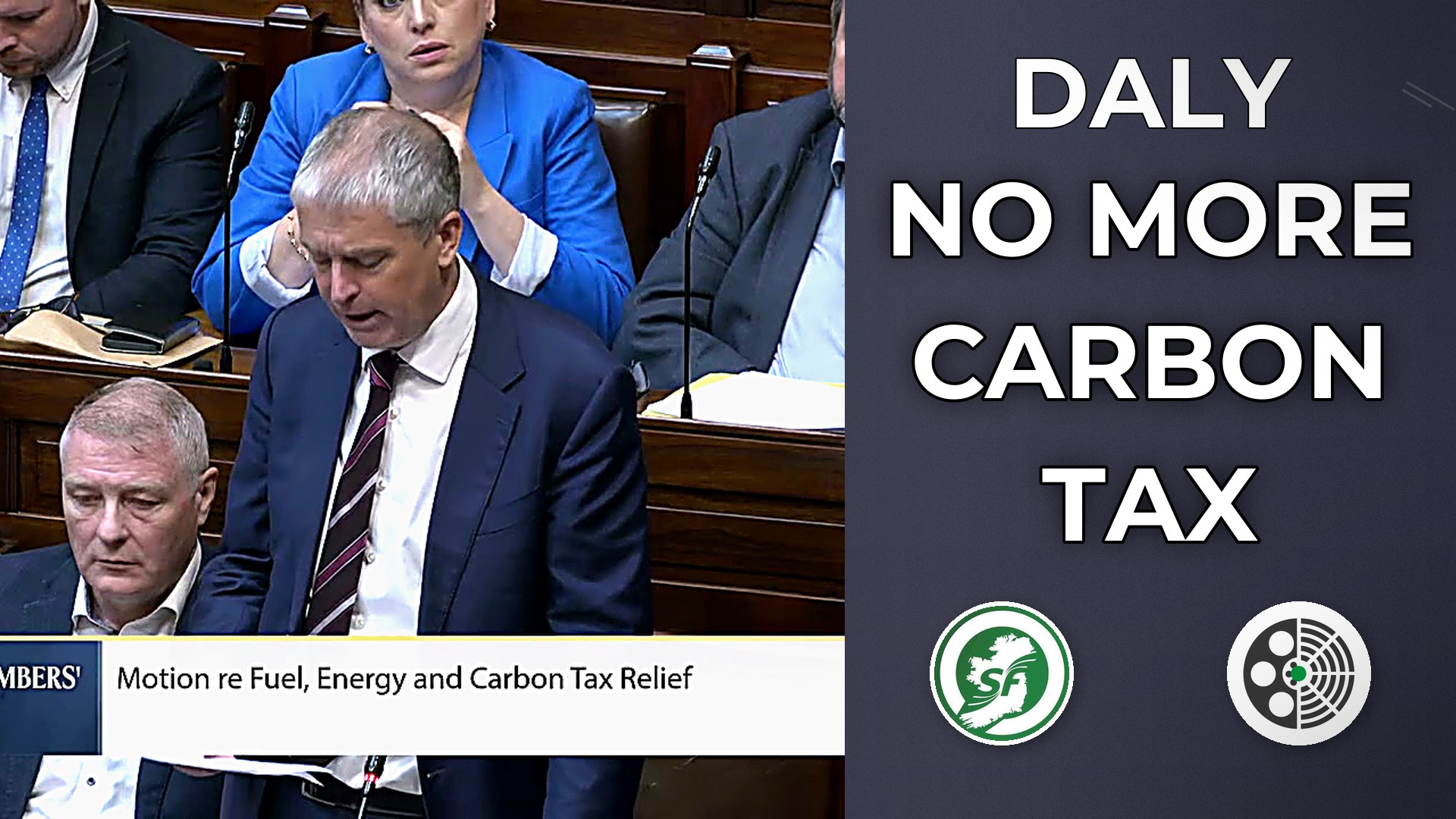
Niall Collins moved the Government’s counter motion during a Dáil Éireann debate on fuel, energy costs and carbon tax ahead of Budget 2027. He argued that the motion failed to recognise existing State supports for households, farmers, hauliers and businesses during the international energy crisis.
Government support package
Collins said the Government had delivered more than €1.3 billion in supports, including reductions in excise duty on diesel, petrol and marked gas oil, an extension of fuel relief measures, enhanced diesel rebates and targeted schemes for transport operators, farmers, farm contractors and fishers.
Rural transport and electric vehicles
Addressing concerns about rural communities, Collins said public transport investment under the National Development Plan and the Connecting Ireland Rural Mobility Plan would improve connectivity outside major towns and cities. He also pointed to electric vehicle uptake, saying one in four new vehicles purchased in Ireland in 2026 was an EV.
Farm and fertiliser supports
Collins outlined a €100 million fuel income support scheme for farmers, agricultural contractors and fishers, providing €20 million per month and support equivalent to approximately 20 cents per litre of marked gas oil. He also discussed an EU exceptional aid package for fertiliser and energy costs, with Ireland allocated €15.4 million and the potential for additional national funding.
Carbon tax and energy security
Collins argued that rising home heating oil prices were being driven by global wholesale markets rather than Government policy. He defended carbon tax as a long-term tool for reducing fossil fuel dependence, protecting people experiencing energy poverty and funding home energy upgrades, retrofitting, renewable energy and green farming measures.
Budget 2027 considerations
The contribution came less than two weeks before Budget 2027, with Collins saying the Government was examining options on home heating oil costs, rural impacts and agricultural supports. He said further significant action would be taken in the upcoming budget. Watch the recording to hear the full contribution.
We publish thousands of recordings to make Irish politics transparent and resistant to manipulation. Spotted an error? Report it — together we are building a reliable archive of Irish politics.
Thanks Chair, and I wish to move the Government's counter motion. As the deputies in this House are aware, we are living in an extraordinarily uncertain period internationally, the consequences of which are being felt in every home and business right across the country. As a small, highly open economy and a net energy importer, Ireland is naturally exposed to movements in the international energy crisis. But what we have done throughout the crisis is to monitor developments closely, we continue to examine the international situation and have always taken decisions which result in practical supports for households and for businesses across the country. The motion does not fully take into consideration the array of supports which have been implemented by Government as a result of the conflict in the Middle East. This Government has delivered one of the largest support packages in the EU per head capita, totalling over 1.3 billion euros, targeted at households, farmers, agricultural contractors, hauliers, tradespeople and businesses. Since the beginning of the crisis, this Government has acted to reduce excise duty on diesel, petrol, marked gas oil and easing pressure at the pumps. We moved to defer the 1st May carbon tax increase on home heating fuels and we are now examining different options available in relation to the cost of home heating oil ahead of the budget. We enhanced the diesel rebate scheme for hauliers and passenger transport operators. We introduced bespoke schemes to support road transport operators, farmers, farm contractors and fishers. We also reduced the NORA levy. It is for these reasons that the Government won't accept the group's motion and I therefore move the Government's counter motion. Count Corail, I am happy to have the opportunity to discuss some of the key points made by the deputies on fuel, energy and on carbon tax relief. I know that people living in rural communities like my own do not have the same public transport options as those living in urban communities, but to suggest that there is little or no public transport in rural communities is simply not true. Government commitments under the National Development Plan and in Connecting Ireland Rural Mobility Plan will strengthen rural economies and communities. It means investments in new and existing public transport infrastructure, increasing connectivity, particularly for those living outside of major towns and cities. The deputies argue that viable alternatives to private vehicles remain limited or non-existent. However, reliance on petrol and diesel powered vehicles is decreasing. One in four of new vehicles purchased in Ireland in 2026 was an EV. Industry data for 2026 shows that uptake of EVs in rural counties is proportionally higher than in urban counties. The recent interest in the Government's EV scrappage scheme is encouraging and highlights increasing consumer engagement with the transition to electric vehicles. I want to assure this House that the Government understands the exceptional pressure that rising fuel costs have placed on our farmers and our farm contractors. We have worked intensively with representative stakeholder groups with a view to providing adequate and targeted supports. The announcement of the further extension of the fuel excise rate reduction until the end of October will have provided some reassurance and certainty to farm families and to businesses. It should be noted that existing legislation provides relief for expenditure relating to carbon tax on farm diesel incurred by any person carrying on the trade of farming. In effect, this keeps carbon tax on marked diesel fixed at a rate to just 4 cent per litre for the farming sector, and that's the rate that applied in 2012. As deputies will be aware, the Minister for Agriculture acted to implement a comprehensive €100 million fuel income support scheme to assist farmers, agricultural contractors and fishers facing unprecedented increases in fuel costs. The scheme provides €20 million per month in supports. Farmers and agricultural contractors benefit from a support rate equivalent to approximately 20 cents per litre of marked gas oil used based on the verified fuel consumption in 2025. This targeted and practical support package ensured that those most exposed to these increases received meaningful assistance at a most crucial time of the year. On fertilisers, the European Commission announced at the end of July of 2026 an exceptional aid package to compensate farmers impacted by increased fertiliser and energy costs due to the Middle East crisis. The EU package is worth €540 million in total, with Ireland's allocation being €15.4 million. What is crucial to note here is that the EU regulation providing for this EU funding also makes provision for Member States to provide for up to 200% in additional national funding. In Ireland's case, this would be up to €30.8 million, which would allow for up to €46.2 million to be disbursed to Irish farmers under this scheme. The regulation provides for support to be targeted at farmers most impacted by increased costs and disbursed to farmers no later than 28 February 2027. Minister Hayden and myself, on behalf of Government, are actively working to finalise the scheme which will deliver this funding to the farmers most impacted by higher fertiliser costs and as quickly as possible. The consideration of additional national funding to top up the EU exceptional aid funding is being actively considered as part of the 2027 budget discussions. It is important to note that this motion also fails to reflect the reality that the spikes in the price of home heating oil are not as a result of taxes nor Government policy but due to the wholesale market price of oil. The motion also fails to recognise that the drivers of energy inflation are global in nature and that it is not possible for the state to control volatile energy prices. Our need for society and the economy is to decouple from fossil fuel dependence is even more apparent in recent times given the levels of volatility in the international fuel markets. The best way to achieve energy security and insulate our economy and society from fuel price shocks is to reduce our dependence on fossil fuels. The carbon tax is an important long-term policy tool in helping to achieve energy security. The fuel excise applied to kerosene home heating oil is purely carbon tax. The non-carbon component of the mineral oil tax is not applied. Setting the carbon tax rate at zero would have consequential impacts for the most vulnerable to energy poverty. Carbon tax revenues are recycled and used to protect the most vulnerable to energy poverty. Successive annual budgets have provided additional funds for the Just Transition measures. This ensures that carbon tax is a progressive tax. Funding from the carbon tax provides additional funds for targeted social protection payments, residential and energy efficiency measures, as well as funding to encourage green farming practices. As of the last budget, the government has allocated over €4.2 billion in carbon tax revenue to fund the Just Transition and decarbonisation measures since 2020. In examining changes to the carbon tax system, it is incumbent on us all to take into account our obligations under the EU Emissions Trading System legislation and the conditions of the European Commission. The principal condition of which is that our national carbon tax remains above the average auction clearing price of the ETS2, our emissions trading system for buildings, road transport and additional sectors, thereby avoiding double taxation. Heating fuels such as kerosene and natural gas are within the scope of the ETS2. Losing this derogation would result in carbon revenues being controlled at EU level, undermining our national programme of home energy upgrades and retrofitting, investment in our electricity grid and development of indigenous renewable energy on the scale required. This will take investment and it will take time. This government is committed to continue making these important investments in Ireland's future. This motion comes less than two weeks ahead of Budget 2027, in a period where we are examining the different options available in relation to the cost of home heating oil, rural impacts and agricultural supports as raised in the motion. Looking at these issues in the round, ensuring an impactful response for households and businesses across the country is a responsible way to respond. While no government can fully shield all households from all of the impacts in this crisis, this government has acted to mitigate the impacts of the crisis time and time again. This government will be taking further significant action in Budget 2027, which is less than two weeks away.