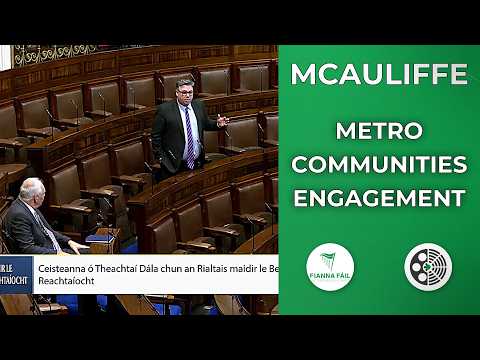
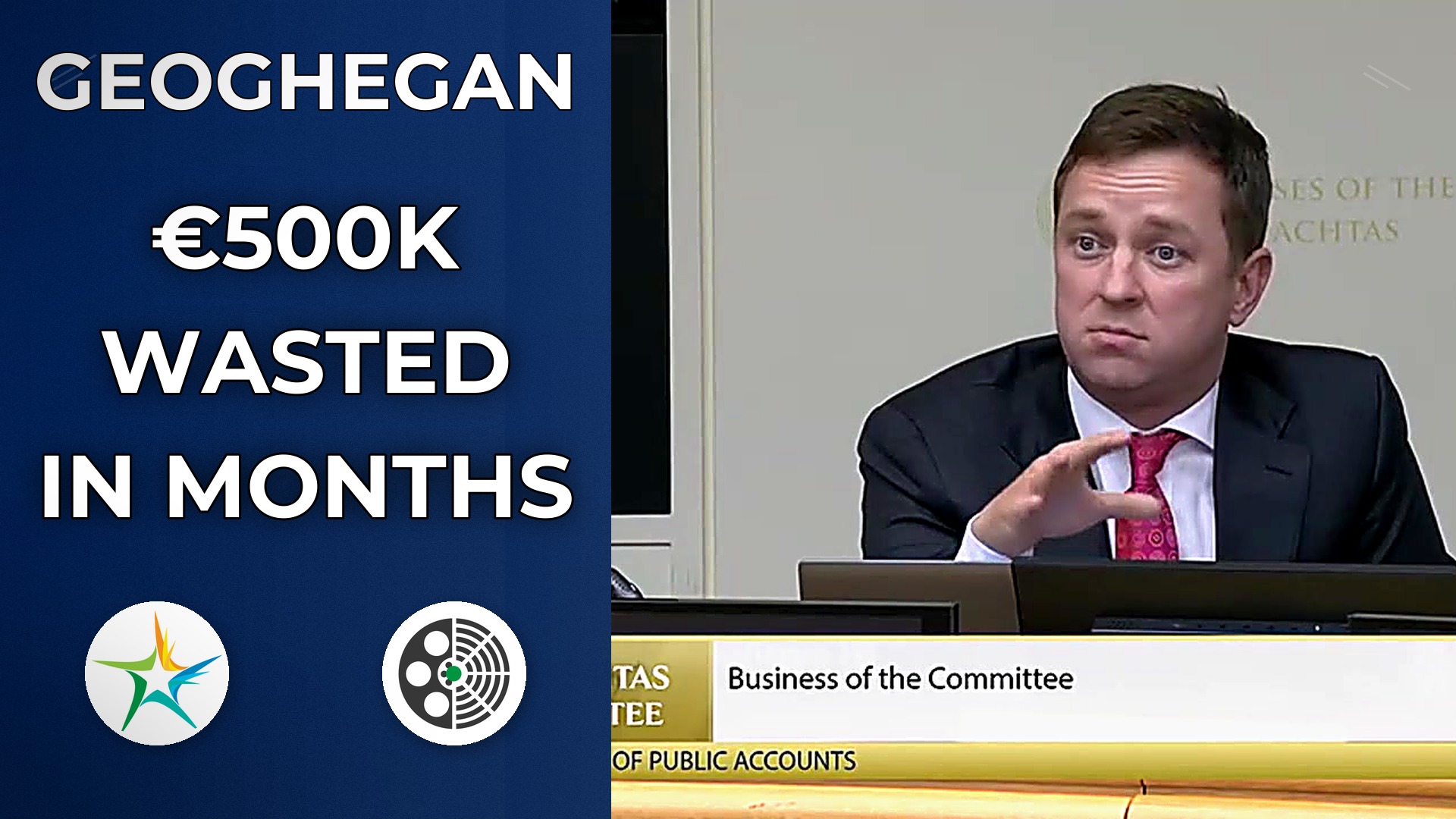
Pearse Doherty: When did you know about Garda holsters?
Pearse Doherty challenges the Minister in the Dáil over alleged defects in Garda holsters and the treatment of whistleblowers. He demands to know when the Minister for Justice was first made aware of safety concerns and what action was taken.
What Pearse Doherty asked
Pearse Doherty presses the Minister on whistleblowers who went public after raising concerns inside An Garda Síochána. He highlights claims that protected disclosures were sidelined, interference in the protected disclosure process has been admitted by senior Garda figures, and that holster defects had severe human consequences.
Details from the debate
Doherty outlines specific allegations seen on television and raised by whistleblowers, including a shotgun that left Garda custody and years later appeared with criminals, and claims that holster defects preceded the murder of Detective Garda Colm Horkin and other serious incidents. He notes that two whistleblowers worked in the Protected Disclosures Office and that the Assistant Commissioner acknowledged intervention by a former Commissioner.
Questions to the Minister
Doherty asks direct questions: when was the Minister first informed about holster safety issues, when was he briefed, and what steps were taken about the treatment of whistleblowers? He challenges the Minister's answers in the House and presses for clarity about interference in an independent process.
Legislative and procedural context
The clip records references to the 2014 protected disclosures legislation and its 2022 enhancements, the role of FIOS and the Garda Anti-Corruption Unit, and the statutory oversight mechanisms Pearse Doherty says were designed to protect both whistleblowers and the integrity of investigations. The debate ends with a call for participation in an upcoming review of the legislation.
We publish thousands of recordings to make Irish politics transparent and resistant to manipulation. Spotted an error? Report it — together we are building a reliable archive of Irish politics.
Thank you, Cathaoirleach. We recently saw on television what happened in Cardiff. These are people who are making a difference in Cardiff. They say that they want to be rich, that they want to be rich and that they want to be famous. It is important for people to know what the reality of the situation was and how to deal with it. Minister, last night four Garda Whistleblowers took the extraordinary step of going on national television, they waved their anonymity and they told the public their story. These are people who try to raise serious concerns from inside and Garda Síochána, people who have given decades of services, who have tried to fulfil their duty to challenge wrongdoing. Instead, they say they were sidelined, obstructed, penalised. Anyone watching the programme last night could see that they were devastated, Minister. It's taken a real toll on all of them and their lives. Two of them worked in the Protected Disclosures Office itself, the very system that was established after the Maurice McCabe scandal to protect people who speak out. Last night they described a system that is in crisis. We heard about a shotgun that disappeared from Garda's custody and then 13 years later turning up in the hands of criminals. We heard much more. We heard also about a confidential protected disclosure file that was concerned that weapon marked for closure without the knowledge or consent of the person responsible for managing the case. And on this morning, on Newstalk Minister, if you heard it, Deputy Commissioner Paul Cleary acknowledged that former Commissioner Drew Harris had intervened in the protected disclosure process. So what whistleblowers were telling the public last night, as interference is now directly acknowledged in respect of the Commissioner's involvement by one of the most senior officers in Garda Síochána, and that is a shocking, shocking development, Minister. But Minister, one issue brings the human consequences of all of this into particular stark focus, and that's the Garda holsters which were dangerously defective. Just six days before Detective Garda, Colm Horkin was murdered. Another Garda suffered life-changing injuries when his firearm discharged while it was in one of these holsters. Then Detective Garda Horkin was murdered after his own firearm was taken from his holster and used to kill him. It has been suggested that this was only possible because the holster was defective. The holsters had been supplied not by a specialist firearms manufacturer, but by a saddle maker for horses. And when the protected disclosure office sought the assistance of retired Lieutenant Colonel Ray Lane, an experienced weapons expert, Garda management intervened and blocked that. Lane was not appointed, and the authority of Rose Sweeney, who had discretion to make that decision, was badly undermined. Minister, many of these matters aren't secret. They've been raised internally, they've been discussed in this House, and they've been reported prominently in national newspapers over the years. And Minister, your department, when you were Minister for Justice, knew about this. You were informed in August 2020 about the issues regarding these holsters. A protected disclosure was made directly to you that month, shortly after you became Minister for Justice. So I want to ask you directly, because you avoided answering some of these questions in the years that have passed, when were you first made aware of an issue with the holsters as Minister for Justice? Were you briefed about the safety concerns surrounding them? What did you do about the treatment of the whistleblowers raising these concerns? And when all of this came across your desk as Minister for Justice, what did you do about it? And do you now accept that, given the statement of the Assistant Commissioner on Newstalk this morning, that the former Garda Commissioner has in fact interfered in an independent process surrounding the protected disclosure, and what do you say about that? Thank you, and last, Ken Corley, if I could maybe just use this opportunity, because I wasn't aware of the details last night, just again to wish our colleague Deputy Michael Healey-Ray well, and to say that any attack on an elected representative is an attack on our democracy, and it's something that we all need to condemn and to push back on, and I just want to wish him well, and his family well. Deputy, look, I think like a lot of people here, I also watched the documentary last night, and what's very clear is that it covered a wide range of very serious matters, very serious matters over the very recent several years. Many of them, and this was referred to in the programme itself, many of them were related to protected disclosures, investigations that are still ongoing, they were related to matters that are before the courts, criminal and civil, they're related to matters before the WRC, and they are also related and subject to investigations by FIOS through the Office of the Police Ombudsman, so you know for that reason that I cannot comment on those, and the reason I cannot comment on any of these matters is because we as a House, back in 2014, legislation that was brought through the House by Deputy Brendan Howland made it very clear that the legislation would prevent any of us under law to comment on or to confirm the existence or details of any specific protected disclosure, but importantly the legislation, to be very clear, Deputy Dorothy, allow the... To be very clear, and the legislation is very clear, while individuals may choose to talk about it, that does not allow us legally to talk about it, and that's very clearly set out in the legislation, so yes, individuals chose to speak about it last night, but that does not mean it does not enable any other person to speak about it, and I just want to be very clear about that, the legislation was agreed by this House in 2014, it was then enhanced in 2022, what's really important though, and I have to stress this about the legislation, is that this was put in place to allow whistleblowers to come forward, this legislation was put in place to make sure that there was an independent process that took any of these matters away from politicians, from myself, from anybody in this House, and rightly so, it was decided that this would be the approach that was taken because of what had happened in the past, that's why this legislation was enacted, and I fully support it, because we have seen over the years many people that have come forward and highlighted issues within the workplace, and we should all as individuals welcome this, we should protect whistleblowers, we should make sure that people feel that they can come forward, and when they do come forward, that there is an independent process, but we also have to respect that process and make sure that anybody that is the subject of a protected disclosure, that they are afforded the protection of that independent process as well. What I will say though, and you mentioned my time as Minister for Justice, the very first thing that I did, the very first time I got in my car to go anywhere as Minister for Justice was to Castlereagh, that was to meet with the comrades and the colleagues of Detective Horkan who were understandably devastated, but it was also to meet with his family, who I know are still going through an unbelievable trauma that they will probably never be able to fully comprehend, and I made it very clear at the time that my job as Minister was to make sure that the Gardaí in doing their job, that they were protected, that they had what they needed, that the legislation was in place for them, that we had resources and that we provided the resources for our Gardaí to make sure that they were kept safe. But I also introduced changes to make sure that the oversight within An Garda Síochána was as strong as it could be. Coupled with that you had in 2020 the establishment of the Garda Anti-Corruption Unit which was set up in An Garda Síochána, this was to make sure that any wrongdoing within An Garda Síochána was dealt with. Through the Security, Policing and the Community Safety Act I strengthened the role of the Board and An Garda Síochána Audit Committee who now have statutory roles in overseeing the appropriateness, the efficiency and the effectiveness of procedures in An Garda Síochána dealing with protected disclosures, but I also produced the legislation that enacted FIOSR and the whole reason for that was to make sure that where complaints were made by Gardaí in relation to issues within An Garda Síochána that they were dealt with more quickly. The process was too slow, there were too many elements to it, it was taking too long and it was not producing the effect it deserved. So I made sure that legislation was put in place so that we could speed up this process. We all want to make sure that there is a system in place that protects whistleblowers, but we also need to make sure that we adhere to the legislation. If I could finally, and maybe just come back to the last point, there is an opportunity for this legislation to be reviewed and that is going to be coming up soon and I think all stakeholders need to be included in that. Minister, with respect, right, these are really, really serious matters. You haven't answered any of our questions, not one. This isn't the first time. You've dodged these questions before here in the Dáil from other people in the opposition. The question I asked you, the first question I asked you, has nothing to do with a protected disclosure. Why won't you tell the public? Let me read it to you again. When were you first made aware that there was an issue with the holsters? It's been alleged that the issue with the holsters resulted in the death of a Garda. That has nothing to do with a protected disclosure. That is about you being upfront and honest and transparent about when you, as Minister for Justice, were made aware of it. Second question. When were you briefed about the safety concerns regarding the holsters? Why won't you tell us? What are you hiding? Another question I asked you. The Assistant Commissioner has gone on the radio today and admitted that there was interference by the former Garda Commissioner in relation to the protected disclosure. That isn't to do with the protected disclosure itself. It is the process. The process in relation to these protected disclosures. What do you say about that as a member of government, as a Minister who was in office at that time when he was actually interfering with an independent and autonomous office? This is earth-shattering that we have the Garda going on radio admitting blatantly that they interfered with the process. So I'm asking you the question again. Stop hiding. When were you first made aware of the issue with the holsters? Give me the date. When were you briefed about the safety concerns and what did you do about it? And what do you say about the Garda at a senior level saying that they interfered with the independent process? Firstly, I won't be led to by a party whose history when it comes to protecting our Garda is less than standard. I have done everything in my role as Minister for Justice to protect our Garda and to make sure that when they carry out their duties that they have what they need, the resources they need and the legislation in place to protect them. That is always how I've carried out my work. That's how the current Minister and former Minister carried out their work before me. There is a very clear process in place. There is a very clear structure in place. And it very clearly outlines that where matters are an issue of a protected disclosure, where issues are before the courts, where issues are before other bodies, I am precluded as others are. So I'm not hiding... No, no. No, no. Hold on a second. I'm not hiding anything. And let me be also very clear. Let me be also very clear. Allow the Minister... You just don't like the answer, Deputy. We elected representatives in this House who then passed legislation in 2014. You yourselves as a party supported the legislation in 2022, which strengthened... How can General Callaghan tell us that you were told in August 2020... Stop interrupting her. Stop interrupting her. Deputy Daugherty. Stop interrupting her. Deputy Daugherty, allow the Minister to respond, please. I apologise, but this is very, very miswritten with respect. I think I'm pretty clear in what I'm saying. It's a matter for public record that the Gardaí changed the holsters. They said that very clearly themselves. It's also a matter of public record that it's the 2005 Garda Act that states very clearly that it's the role and the responsibility of An Garda Síochána for the procurement or for any of the other matters that you've just outlined, and that I have no role as Minister for Justice in that. What's also very clear, and we've done this for a reason, is that there is a differentiation between the roles of An Garda Síochána, the actions and the roles of the Ombudsman, and myself and other Ministers, and that was clearly introduced and voted for by this House in 2014 and again in 2022. Thank you, Minister. We'll now move to Deputy...
Thank you for downloading 🙏
If you publish this material on social media, we would be very grateful if you tagged VideoParliament. It helps us reach more people and keep building a transparent archive of Irish politics.