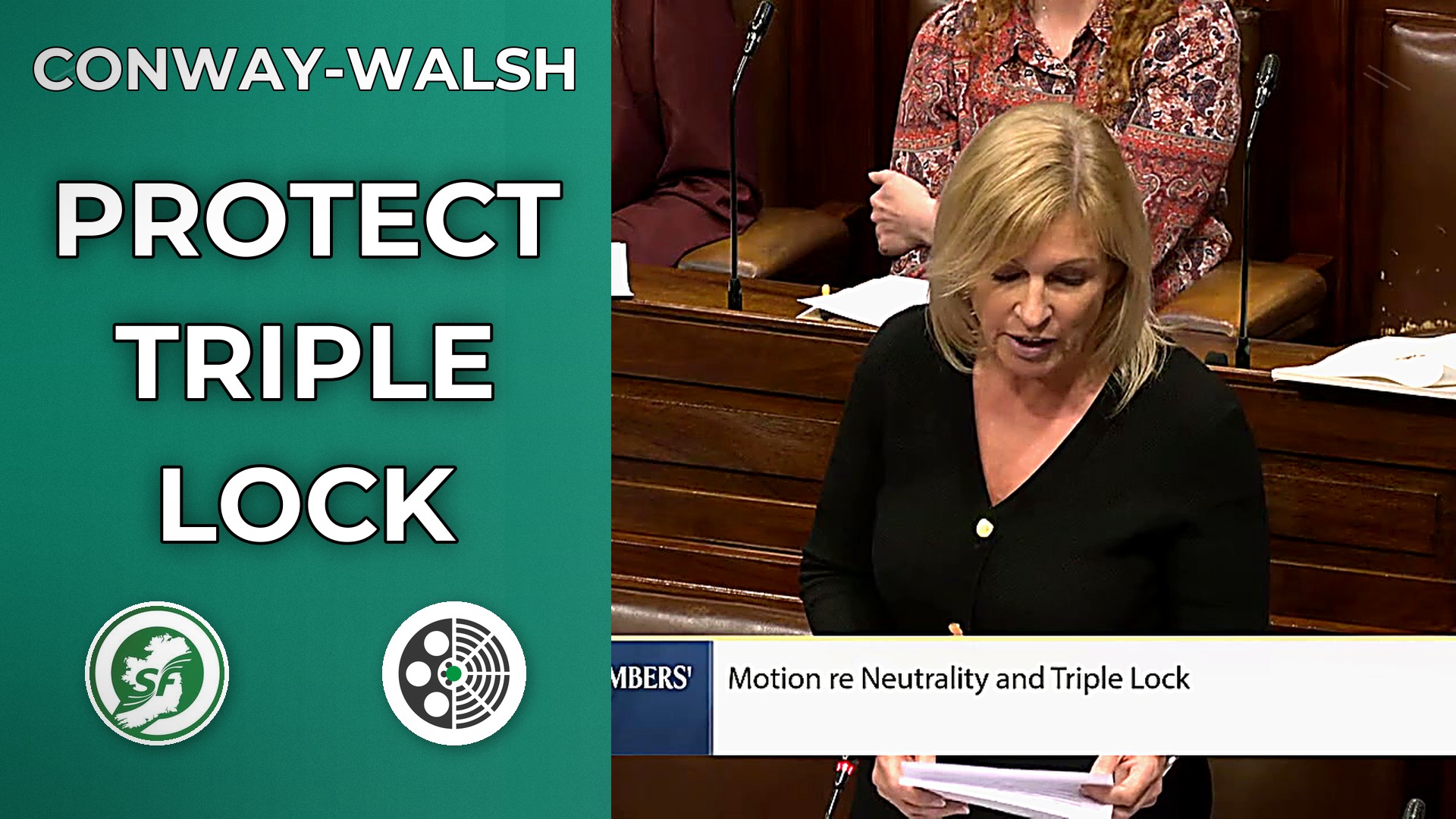
Rose Conway-Walsh: Protect the Triple Lock - Put it to the People
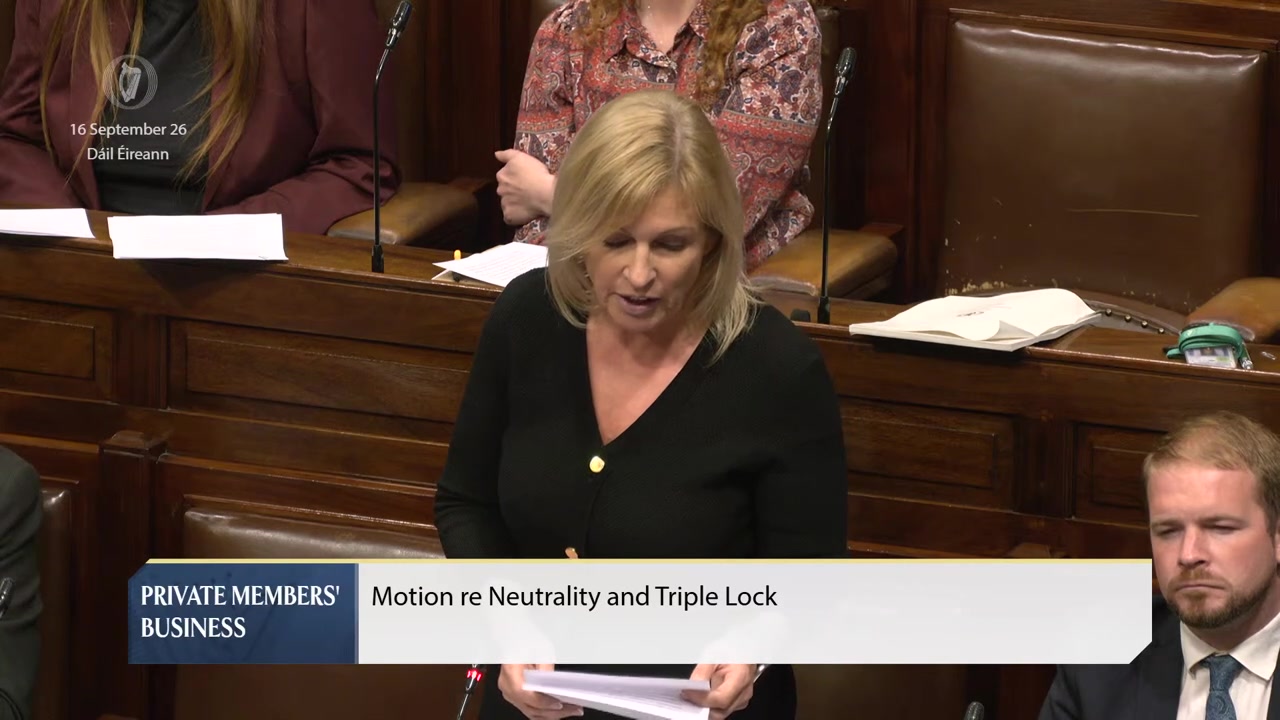
Rose Conway-Walsh challenges government plans affecting the Triple Lock and calls for a public referendum to protect Irish neutrality. Speaking in the Dail, she also highlights underinvestment in the Defence Forces after a recent visit to The Curragh and urges greater focus on barracks, recruitment and capability.
Main points: Rose Conway-Walsh sets out why the Triple Lock is a safeguard for Ireland's military neutrality and says removing it raises fundamental questions about the future of that neutrality. She argues that any move to dismantle the Triple Lock should be decided by the people in a referendum.
Defence Forces and readiness: As Chair of the Defence National Security Committee, she commends the bravery of Defence Forces personnel and recounts her visit to The Curragh, where she observed the effects of decades of underinvestment. While procurement is improving, she warns that crumbling barracks and recruitment challenges remain pressing problems.
Scope of the Triple Lock: Conway-Walsh stresses that the Triple Lock does not prevent overseas training, humanitarian missions or ceremonial duties, nor is it a determination that Ireland cannot act internationally. She describes the Triple Lock as a targeted safeguard rather than a blanket ban on overseas activity.
Political consequence: The speech frames neutrality as part of national identity and a promise given during past referendums. Conway-Walsh calls on the Minister to be honest with the public and to give people their say before any changes are made to the Triple Lock.
Implications: The address links questions of constitutional and political trust to practical defence priorities - arguing that protecting neutrality and properly resourcing the Defence Forces should go hand in hand.
We publish thousands of recordings to make Irish politics transparent and resistant to manipulation. Spotted an error? Report it — together we are building a reliable archive of Irish politics.
So, go raibh maith agat, Ceann Comhairle. A arraith, maith coithirleach ar an go cúiste am cosáint agus slán dóil na siúinte, tá naos arom i níú léirge fí glas tíoc. Minister, the government needs to be honest with the Irish people about the Triple Lock. Your amendment to our motion states that the Triple Lock is not a determination or expression of neutrality, but it is a safeguard, and it underpins promises made to the Irish people during the second Nice and Lisbon referendums that Ireland would remain military neutral. Removing that safeguard raises fundamental questions about the future of our neutrality. Minister, if you want to persist with efforts to dismantle the Triple Lock, you need to put it to the people in a referendum. I want to commend the brave men and women of our Defence Forces, particularly those who have served as peacekeepers in some of the world's most volatile regions. As Chair of the Defence National Security Committee, I visited the Corra last week, and I sincerely want to thank the personnel there at the Corra that showed me around, but I did see the consequences for myself of decades of underinvestments from successive governments. We finally and rightly are investing in our military procurement, but our barracks are still crumbling. Is it any wonder that recruitment and retention remain such serious challenges? This is where the government's focus should be regarding defence. Military neutrality does not mean military weakness. A neutral country needs a credible, properly resourced Defence Forces, and the Triple Lock is not a barrier to any of this. It is also not a blanket ban on overseas activity. It does not prevent our personnel from travelling abroad to participate in military training, undertaking humanitarian missions, responding to disasters or emergencies, or to take part in official ceremonies overseas. Neutrality is part of our national identity. It has served us well as an independent state, and I believe that the overwhelming majority of people want to have it protected. Minister, instead of dismantling a safeguard upon neutrality, give people their say.
Thank you for downloading 🙏
If you publish this material on social media, we would be very grateful if you tagged VideoParliament. It helps us reach more people and keep building a transparent archive of Irish politics.