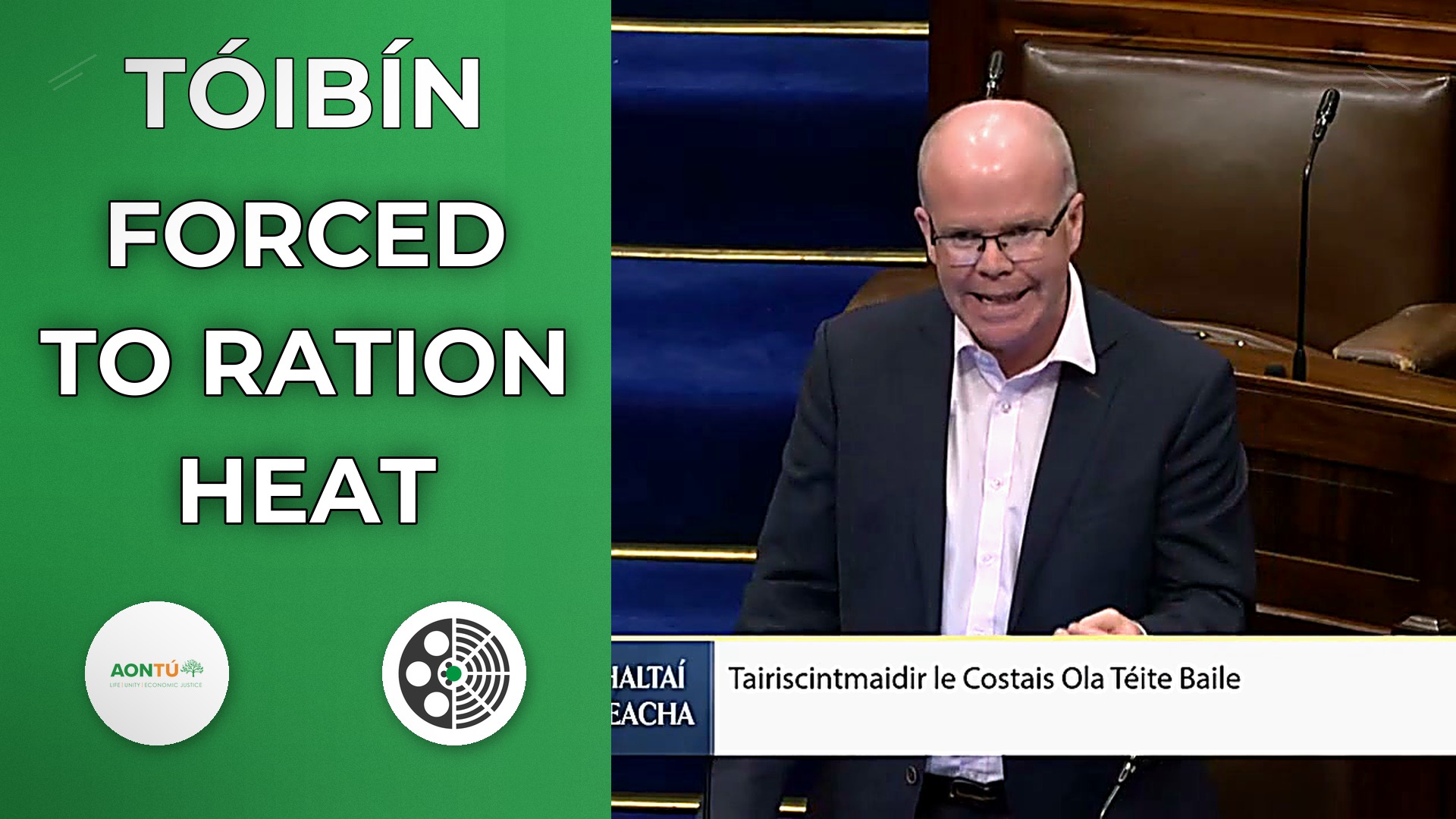
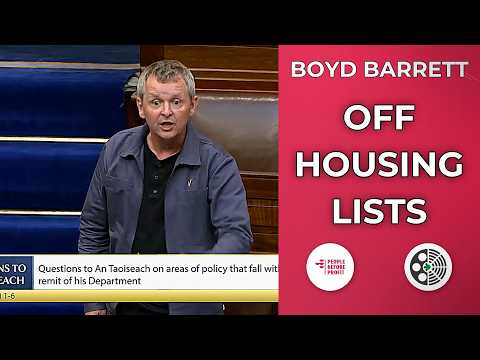
Peadar Tóibín: Demand clarity on Irish unity referendum
Peadar Tóibín challenges the Taoiseach in the Dáil, arguing Irish self-determination is within reach and demanding clarity on how a referendum on unity would be triggered. He highlights failures in cross-border healthcare, calls out political isolation on the issue, and defends the Shared Island investment programme.
Main claim: Tóibín says polls show growing support for full Irish independence and argues Brexit exposed Westminster's lack of care for the North. He tells the Taoiseach that the mechanism for deciding a referendum must be made clear to the people of Northern Ireland.
Health case and practical argument: Tóibín recalls the case of Catherine Sherry to illustrate how current arrangements denied timely treatment across the border and urges a simple policy: treat people at the closest hospital they need. He describes current cross-border healthcare as minute and glacial compared with what unity could deliver.
Political challenge: He accuses the Taoiseach of backpedalling and being isolated on Irish unity, and criticises recent political gestures as strategic errors which do not advance unity. Tóibín presses for questions to be raised with Andy Burnham about the referendum mechanism and asserts elections and Stormont should play a central role.
Reconciliation and investment: While insisting reconciliation must be worked at, Tóibín argues that atonement by non-state actors remains incomplete. He defends the government's North-South investment and research programme, noting a secured budget of two billion and over one billion allocated from the shared island fund on projects intended to bring people together.
Good Friday Agreement context: Tóibín reminds viewers that the Good Friday Agreement anchored three sets of relationships - British-Irish, North-South and within the North - and says any discussion of the North must recognise its exceptional history under partition.
We publish thousands of recordings to make Irish politics transparent and resistant to manipulation. Spotted an error? Report it — together we are building a reliable archive of Irish politics.
Diolch na maith agat, Ceann Comhairle, Taoiseach. There is a growing number of people who support full Irish independence. Polls show that the majority of this state believe that the people who live on the island of Ireland should make decisions over what happens in the island of Ireland. And Brexit has shown that London neither cares or knows much about the north of Ireland. Irish independence and Irish self-determination are in touching distance of this generation. The north was purposefully designed with an in-built two-thirds unionist majority to safeguard British rule. But today, according to election results, not one of the six counties has a unionist majority. Unity offers an amazing opportunity, Taoiseach. I authored an Oireachtas report for the Enterprise Committee a number of years ago, and I spoke to about 100 people from different backgrounds, people from businesses and trade unions, civic organisations. Many of them were from different constitutional backgrounds, but all of them agreed that if we fund together, plan together and deliver services together, that they will be better services and they will cost less. An example of this is the health care service. Catherine Eshery was married with three children and she lived just north of the border. She was diagnosed with lymphoma in September 1924 at the age of 42. Treatment was not available to her in the north of Ireland. It was available in Dublin, but she was not allowed to access it. And despite the fact that she was extremely weak, she was forced to go to London for treatment for long periods of time away from her family, and she died in London away from her family. So we should have a policy, a very simple policy, of treating people in the closest hospital that they need in this country. It will be the benefit to all people in this country. Now, don't tell me, obviously, that we have at this stage cross-border health care. It's minute and it's glacial, and it's not as transformative as unity would bring. Now Taoiseach, you are becoming increasingly isolated on the issue of Irish unity. You spent the weekend backpedalling and downplaying the significance of Trump's statement. You're at a kilter with the Dáil. You're at a kilter with your government partners. And you're also at a kilter with your own party. Indeed, Fianna Fáil supporters came into our AIM2 tent in the ploughing yesterday and stated that they were angry and frustrated with the fact that Micheál Martin is gutting such a core value of Fianna Fáil. Now, you've given many excuses why not to proceed with the unity campaign. At one stage, you said that we have to have reconciliation first before it be considered. What evidence have you got that reconciliation is more likely in a six-county state under British rule? Reconciliation happened far faster in the south than it did in the six counties. So at your next meeting with Andy Burnham, will you raise a key issue, that the mechanism for decision on the referendum of Irish unity will be made clear to the people of the north of Ireland to whom it affects? The Good Friday Agreement was about the north determining its own future. Surely they should know what that mechanism is. I am a member of a party and for me and my party, Irish unity is not a slogan. It's not a campaign. It's a very, very precious aspiration that has informed the foundation of my party and sustains us to this day. I don't take lectures from you or anybody else. The party you were once a former member of did more to divide this country and to damage the prospect of Irish unity for over 30 years. And you endorsed that violent campaign for years, Deputy O'Toolean. That's true. No, the next point I would make, I think what unity is about is about building trust. It's about building understanding with those who don't share our aspiration. It means grinding out the hard yards of reconciliation. I do not dismiss reconciliation like you do, Deputy. It's important that we work at it and do it. It means acknowledging and atoning for wrong done in the past. That hasn't been done yet. The only people doing that are the state, for state actors only. British government, Irish government, we've had the inquiries, but others have not come to the table in terms of atoning and saying what you did was wrong and so on. That has to happen. It means developing our shared understanding of what it means to live on this island and how we share it into the future. And sometimes it means absorbing and ignoring the abuse of those who prefer to use it as a slogan. I support unity. I'm satisfied with the work that we are doing to develop the potential for unity on this island. The government and I have established the most dynamic and the most consequential North South investment, development and research programme in the island's history. We've secured a budget of two billion as of today. We've allocated more than one billion of our shared island fund on projects that actually change things, that bring people together, that give us a greater insight into the reality of life on our island than at any time since partition. And I would say this to you, Deputy, the Good Friday Agreement was not just about self-determination for one political tradition. There were three sets of relationships to the Good Friday Agreement. The British-Irish, the North-South, and the two traditions within the North. The two governments, the British and Irish governments, anchored that peace process. I was in government when we signed off on the Good Friday Agreement. The British-Irish government working in lockstep together was critical. And Northern Ireland was never embroiled in the politics of the Union, or in terms of Wales or Scotland or anything else like that, because we always asserted the exceptionalism of Northern Ireland because of partition. We always did that. If we embroiled it in the Union, strategically what would happen? The Westminster government would look at everything in Northern Ireland through the prism of the Union, through the prism of Scotland and Wales. It is a strategic error what happened over the last two days. A real strategic error, all for the sake of a photo call and a press op-op. And that is not advancing unity in this country. Excuse me, Deputy Tobin's on his feet. Deputy Tobin. Go raibh maith agat. Taoiseach, you often strategically try to make this debate between you and Sinn Féin. And I think you try to do that to narrow the appeal of the issue. But the fact is, all of the parties on this side of the chamber support Irish unity. So here's the key issue. At the heart of the Good Friday Agreement is the idea that the people of the North of Ireland would self-determine their future. Right now, they have no idea how that can happen. The Secretary of State for the North of Ireland recently said, yes, this is an obscure mechanism. He then said he would not put detail in relation to how that mechanism can be exercised. Why is it that people who have the right to vote are being denied the understanding of what makes that vote likely to happen? And why is it you won't even ask that question of Andy Burnham? Why is it that you've said you'll go to meet Andy Burnham, but you will not raise the issue of the mechanism of a referendum? I believe that the best poll in the North of Ireland is actually the election. And Stormont actually should be the body to decide whether there's a referendum or not. That is the most defining view of the people of the North. Will you raise it with Andy Burnham? Two things. First of all, I'm going to raise, I want to make one point, by the way. You've actually limited, actually, in your commentary, the level of engagement North and South on health. I don't know whether you've been to Antony Gellivan and the Cancer Centre or the Cardiac Centre. I've met people from, it's very significant for people living in Donegal. You just dismissed it as a very significant investment by the Republic in the Cancer Centre in the North, and also in terms of cardiac care. So if a person in Donegal needs heart treatment immediately, they can get it in 20 minutes if you're living in the Dine Shon Peninsula, and that's important. And likewise, you talked about reconciliation. I witnessed the marvel of Coltis in Belfast this summer. I went there. I went to East Belfast to witness the pipe bands, Loyalist Pipe Bands, participating in a flaccule. Let's not dismiss the prospect of reconciliation, that it's a never-never, as you seem to be asserting. I will meet Prime Minister Burnham. Legacy will be on the agenda, which would be a real substantive breakthrough for the people who lost family members because of the violence over that 12-year period. And I'd also raise reform of the institutions of the Good Friday Agreement, and we would have spoke more generally then about the British-Irish situation at Good Friday.
Thank you for downloading 🙏
If you publish this material on social media, we would be very grateful if you tagged VideoParliament. It helps us reach more people and keep building a transparent archive of Irish politics.