

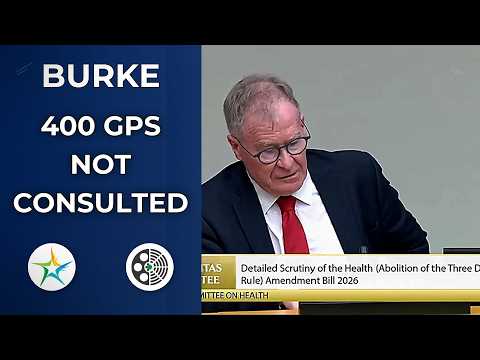


Colm Burke: Were 400 GPs Surveyed on the Three-Day Rule?
Colm Burke questioned witnesses at a committee hearing about whether the 400 GPs providing termination services were surveyed on a proposed change to the mandatory three-day waiting period. He pressed that many practitioners he spoke to believe the three-day rule should remain, while witnesses cited WHO and UNPAC evidence that mandatory waits are not supported and that reflection should be individualised.
Colm Burke asks directly whether a survey was conducted of the 400 GPs providing the service and presses the panel after being told no targeted consultation took place. He relays that consultants and GPs he has spoken to are firmly of the view that the three-day rule should stay in place.
Witnesses acknowledge practitioners' views but point to Irish UNPAC findings and World Health Organization guidance, arguing the mandatory three-day wait does not assist decision-making for most women and can be burdensome. The exchange highlights a tension between practitioner experience and the presented evidence on patient outcomes.
The discussion references international practice: 14 European countries have mandatory waiting periods of varying lengths. Witnesses counter that the presence of mandatory waits abroad does not necessarily align with the international evidence base supporting mandatory periods.
Witnesses propose that reflection periods remain important but should be individualised through doctor-patient consultation rather than mandated by law. Colm Burke concludes by asking whether a survey of the practitioners could be undertaken to support the evidence presented in the hearing.
Question on GP consultation
Colm Burke asks directly whether a survey was conducted of the 400 GPs providing the service and presses the panel after being told no targeted consultation took place. He relays that consultants and GPs he has spoken to are firmly of the view that the three-day rule should stay in place.
Practitioner concerns and patient impact
Witnesses acknowledge practitioners' views but point to Irish UNPAC findings and World Health Organization guidance, arguing the mandatory three-day wait does not assist decision-making for most women and can be burdensome. The exchange highlights a tension between practitioner experience and the presented evidence on patient outcomes.
International practice and evidence
The discussion references international practice: 14 European countries have mandatory waiting periods of varying lengths. Witnesses counter that the presence of mandatory waits abroad does not necessarily align with the international evidence base supporting mandatory periods.
Individualised reflection and next steps
Witnesses propose that reflection periods remain important but should be individualised through doctor-patient consultation rather than mandated by law. Colm Burke concludes by asking whether a survey of the practitioners could be undertaken to support the evidence presented in the hearing.
We publish thousands of recordings to make Irish politics transparent and resistant to manipulation. Spotted an error? Report it — together we are building a reliable archive of Irish politics.
Other speeches
Tego samego dnia All speeches from this day →

Thomas Gould
Thomas Gould: Cork needs more Gardaí; petrol bombs danger

Charles Ward
Charles Ward: Defend Irish Neutrality, Save the Triple Lock
Sorca Clarke
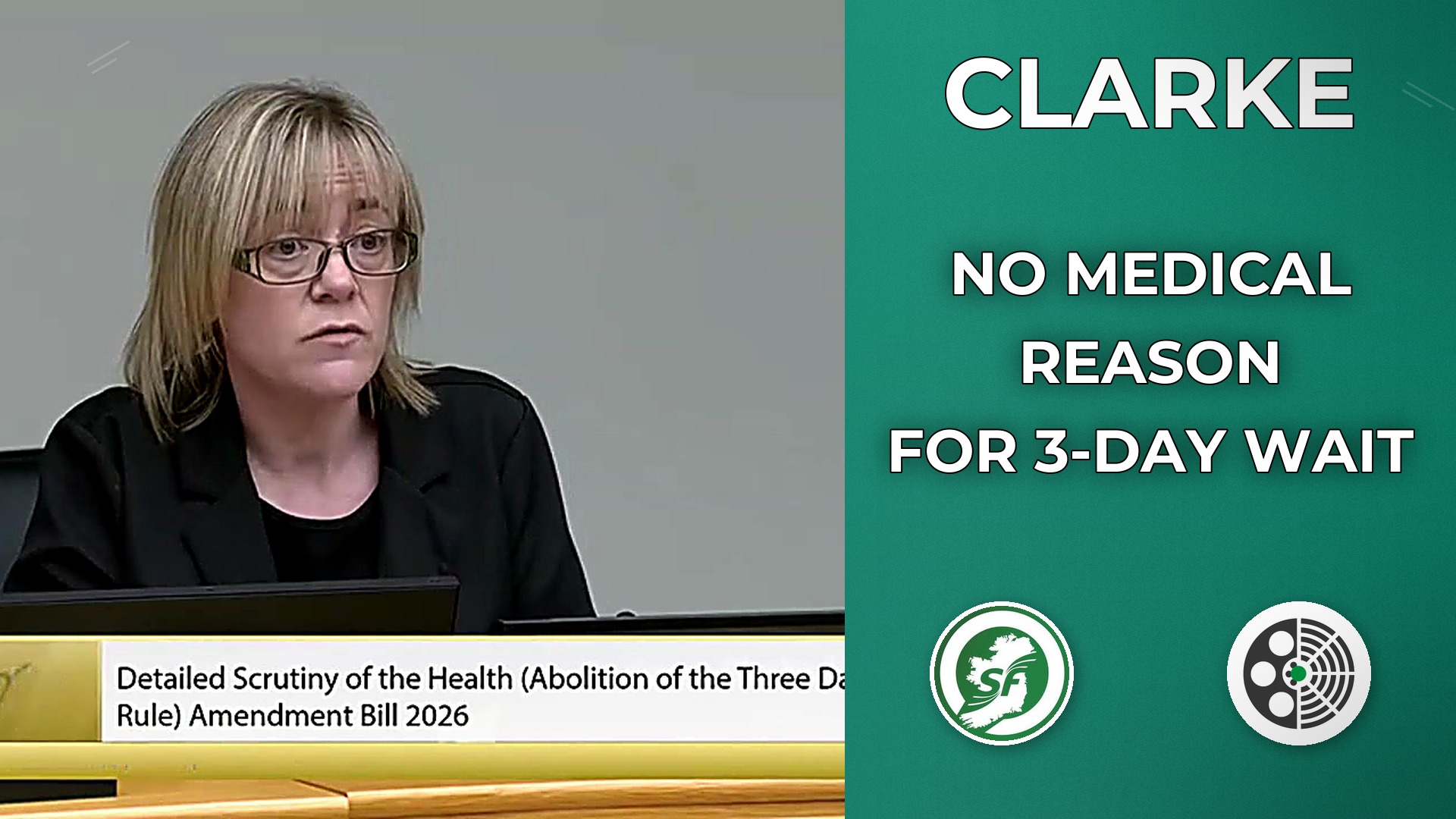
Sorca Clarke: No Medical Basis for Mandatory 3-Day Wait
Ivana Bacik
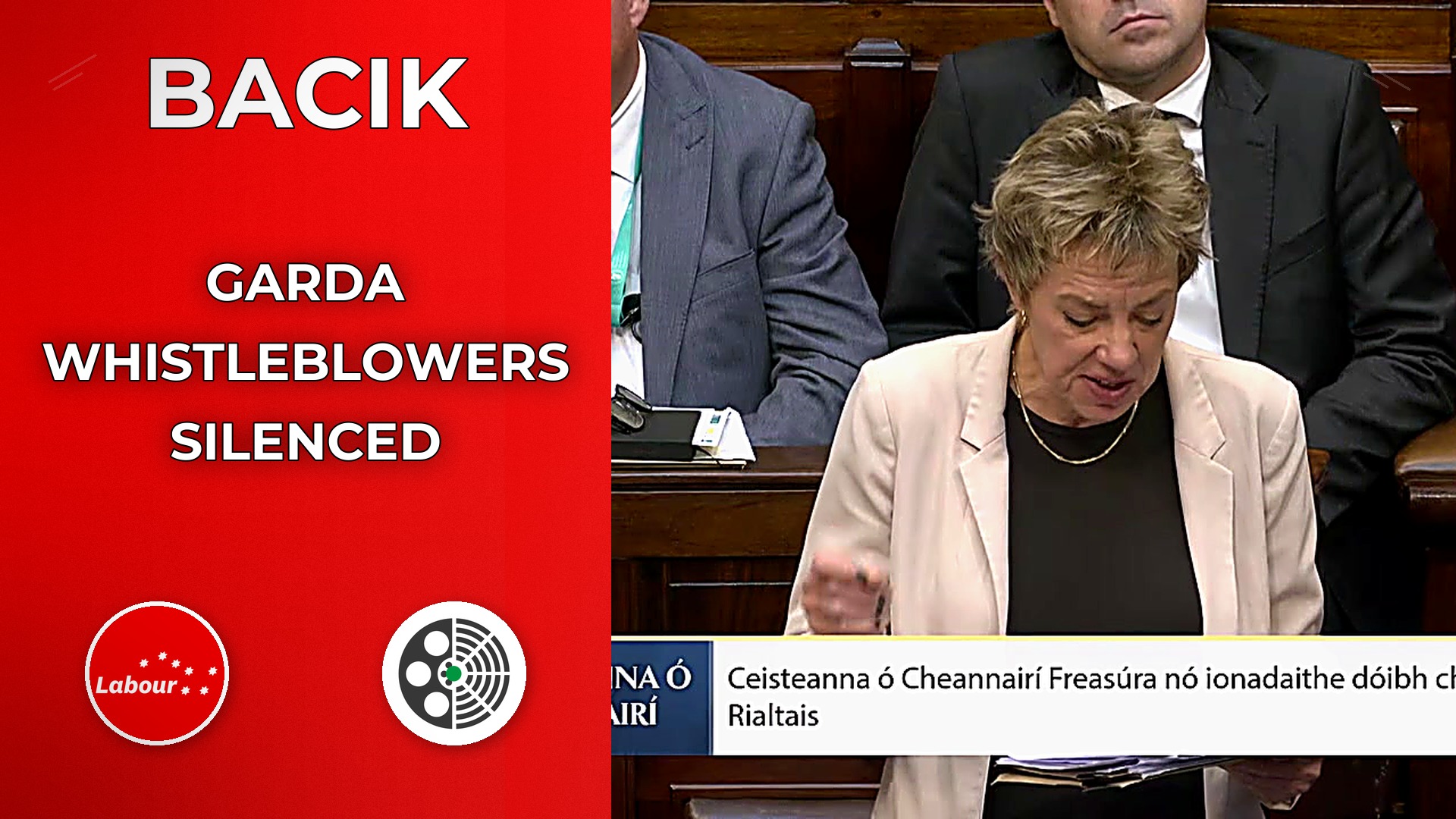
Ivana Bacik: Whistleblowers Silenced - Government Must Explain

Luke Ming Flanagan
Luke Ming Flanagan criticises government over ACRES scheme

Cathy Bennett
Cathy Bennett: Government Must Explain Gutting the Triple Lock
Transcript
Thank you very much and thank you all for coming here today. I know extremely busy schedules and I really do appreciate you coming to give evidence here. Just following on from the last question, you know of the people, the 400 GPs that are providing service, was there an actual survey done in relation to the proposed change? So there wasn't a survey done of the 400 odd GPs that are providing service? And the reason I'm asking that question is because I've spoken to a number of people who are providing the service, both consultants and GPs, and they are firmly of the view that the three-day rule should stay in place. So that's why I'm asking the question. We didn't conduct a survey of that cohort. Pardon? We did not consult. I know, but what I'm saying to you about consultation, you're doing a presentation here today on the basis of, and I fully accept what you're saying is expert evidence, but I'm getting a different line from people who are providing the service who believe that the three-day time period should be kept in place. So like what I'm saying to you is that there is a different view as well by people who are providing the service and who have a different view from what's presented here this morning. I suppose the UNPAC study is based in Ireland and a very detailed study and the outcome of that was, speaking looking particularly at 59 women and their experiences, and their experience of the three-day wait was that it didn't contribute to their decision to make a choice. But at the same time you're acknowledging that there wasn't a survey done of the people providing, and I'm not even talking about the 4,900 GPs, I'm talking specifically about the 400 and I think it's at 59 that are providing the service that there wasn't a survey done. There wasn't a survey. I think the important cohort in this discussion of the three-day wait is not the medical practitioners providing the service, but the women who are availing of the service. I accept that, but I mean in fairness when I was talking to people that I spoke to were of the view that it was helpful to the patients to have that three-day time period. And the evidence says the opposite. Okay, you spoke earlier on about best international practice. There are 14 European countries where there is a mandatory time period. For instance, I think it's Italy it's seven days, Belgium it's six, Germany, Portugal and Hungary it's three. So like that's international, you know, you're quoting international practice yet 14 European countries do have a time period the same as in Ireland. We are aware that there are a number of other European countries who have mandatory waiting periods, which as Senator Sherlock outlined are of varying duration and have varying requirements. But the presence of a mandatory waiting period does not necessarily mean that it is grounded in evidence and the international evidence would not support the use of mandatory waiting periods. This is 14 countries who are of the same view that they have that the time period is beneficial to both people giving the advice but also to the people receiving the advice. So, you know, it is in place in 14 different countries across Europe. I think the evidence speaks to the opposite, Deputy, that the World Health Organization and evidence within Ireland is very clear that the mandatory three-day wait is not helpful for the decision-making of the majority of women and is especially burdensome on women. When you talk about, you know, international evidence and likewise in relation to presentation this morning when I asked about a survey, you see the people I spoke to believed it was of benefit to the patients, to the people receiving the care. They believed that by having that second consultation it was beneficial from all aspects and that was their big argument to me about it. And I know you talk about the third consultation, people coming back two weeks later, and that's all very beneficial for people. But the argument being put forward to me is that, and this is by people who are providing the service, that they believe the three-day rule should not be changed. I think it's important to say that we are not in any way diminishing the importance of a reflection period for women who express any uncertainty or any ambivalence about their decision, but I think it's really important that, as we do in other areas of healthcare, that the length of that reflection period should be discussed by the woman in consultation with her doctor and agreed. And it may be that it is actually in excess of the current mandatory three-day waiting period, but I think that should be individualised and it shouldn't be mandated in law. Yeah, but one of the points being put to me by the practitioners is that sometimes when a person comes in and they want termination, they haven't thought it through fully, both the pros and the cons in the sense of they haven't looked at all of the information, but by allowing that time for reflection. And I fully accept, you know, the evidence you gave where people do come to you even before they take the decision and you still have to advise them about, well, you've now taken a decision, you have to come back to me again in three days time. And I fully accept your argument on that as well, but I'm talking about people who come in and there has been no prior consultation of any description. The argument being put to me by the practitioners is that they feel that that three days for reflection is extremely helpful, so that when the person takes the final decision and they take the final decision for the termination, they know that it's their best decision that they've taken and they have no regrets then afterwards. And again, I think we're speaking to the same thing, which is that a reflection period should be individualised according to a woman's needs and preferences, and this is in keeping with the international evidence and it supports a woman in taking the time that is needed to make that considered decision if she has not already reached it by the time she presents to her general practitioner. You know, you keep quoting this issue about international evidence, but the international evidence is also there that 14 other European countries have the same process in place. So, like, there are two sides on the international evidence as well, in the sense that, you know, in one country alone it's seven days, not three days, and another one is six days. So, you know, that's international evidence as well. So what I'm saying to you is that, you know, while I know there's a report from the WHO, that doesn't necessarily say it's reflective of what is being taught of in other jurisdictions. I think the World Health Organisation are very clear on their position on the mandatory aspect of the three-day wait, or mandatory waiting periods, and that the mandatory piece is clearly, the evidence is clearly that it doesn't support women in their decision-making process. We would agree that a reflection period is a really important component of safe access determination of pregnancy. Could I just ask, maybe from your own point of view, just one last question, that a survey would be done from your own point of view, as regards supporting what you're saying. Okay, thanks.