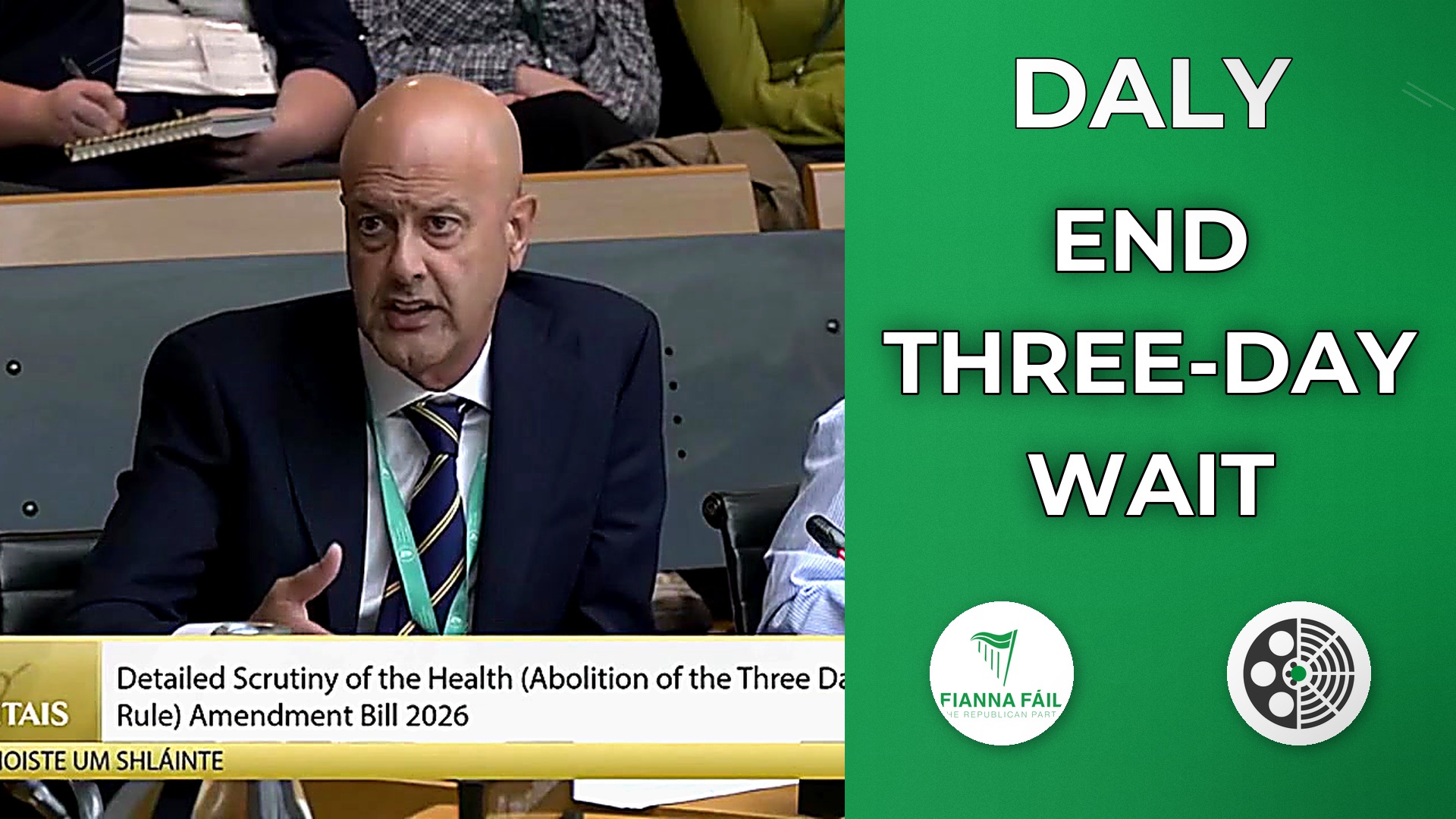
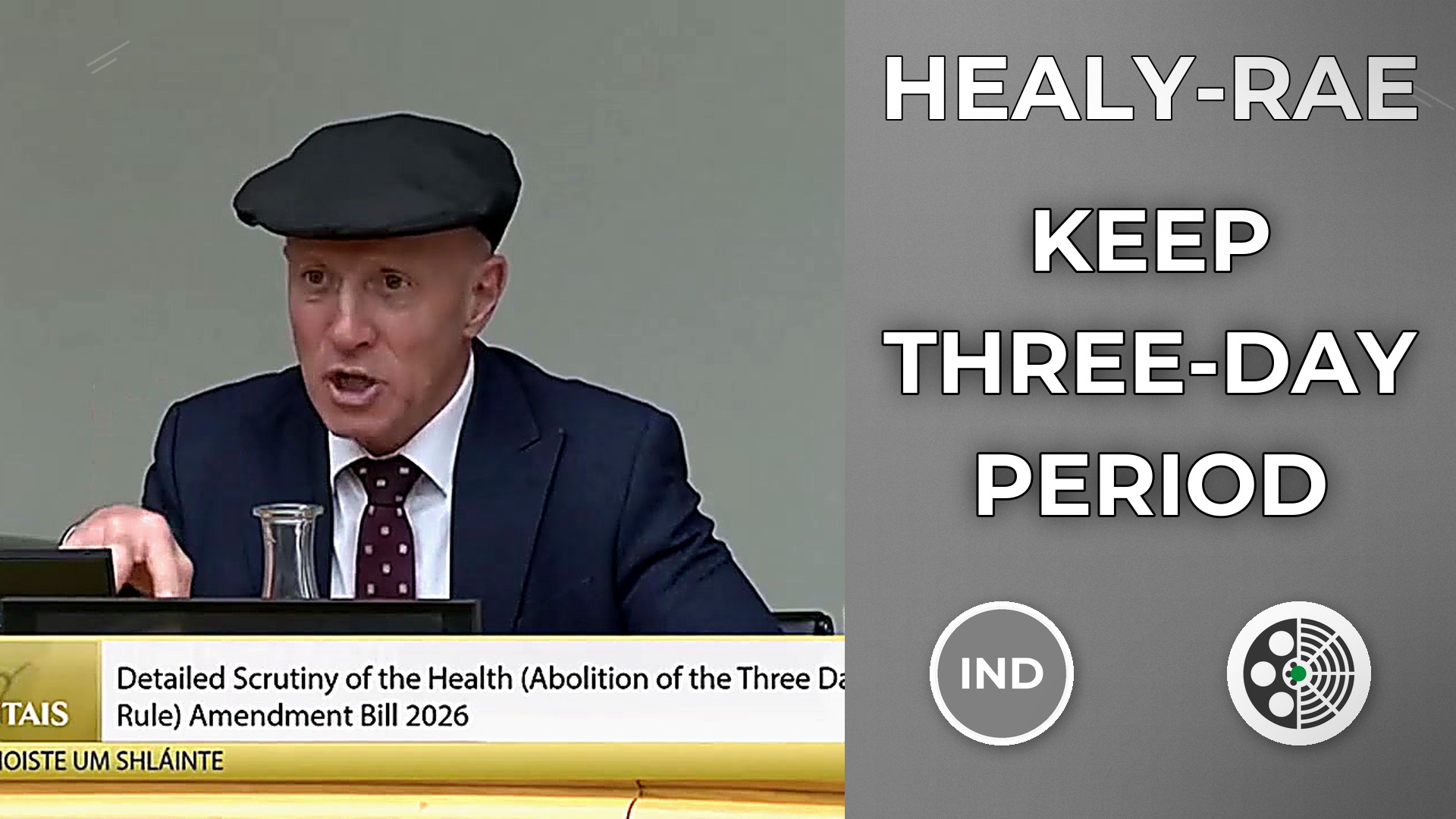
Martin Daly: GPs on the Three-Day Wait and Abortion Care
Martin Daly questions representatives of the Irish College of General Practitioners on the three-day mandatory waiting period for abortion care, its effects on access, and how GPs deliver the service since the 2019 Act. The session reviews national and international evidence including WHO guidance and Irish qualitative research.
Service provision and demand
Speakers discuss that approximately 10,000 terminations occur each year and that demand is patient-led. Most GPs reported that the service was welcomed by patients and communities, though a small number of practices experienced vocal protests.
The three-day wait and evidence
The witnesses outline reasons why 15 to 17% of patients do not return for a second consultation, including prior decision-making, miscarriage, transfer to hospital, or travel. They cite WHO guidance and Irish qualitative research (Unpack study) arguing that mandatory waits can delay care, add logistical and emotional burdens, and have limited impact on decision-making.
Consent and comparators in healthcare
The witnesses note that, apart from children, there is no other area of medicine in Ireland with a legally mandated waiting period, and emphasise that GPs follow HSE consent policy to support informed, individualised decisions.
Implications for policy
The exchange frames the policy question: whether the law should keep a statutory waiting period or allow clinicians to tailor reflection time to the needs of the woman. The witnesses recommend maintaining individualised care rather than a blanket legal mandate.
We publish thousands of recordings to make Irish politics transparent and resistant to manipulation. Spotted an error? Report it — together we are building a reliable archive of Irish politics.
Thank you to the Irish College of General Practitioners for coming in this morning, Dr. Suzanne Kelly, Dr. Ciara McCarthy and Dr. Dermot Quinlan. I suppose GPs were tasked to provide early termination under the Act when it was brought in. Approximately how many, 498 holders, how many GPs are there in Ireland, in practice approximately? So we're talking about a subgroup then of GPs who have undertaken to provide this service which is a legal service and provided for by legislation by the state, is that correct? Is it difficult for those individual GPs to provide this service? Have GPs run into difficulties say with protests and that in terms of providing this service? The majority of GPs and there's nearly 500 contract holders but some practices have more than one provider so there are more GPs than contract holders who provide the service. The majority of GPs found that their patients and their communities welcomed the provision of this service and integrated seamlessly into clinical practice along with all the other women's health care topics that Ciara has mentioned, menopause, endometriosis. There have certainly been a small number of practices and GPs where there have been protests and quite vocal protests against the provision of safe termination of pregnancy. So they're providing a legal service but under protest from protesters and there is a demand for this service. There are approximately 10,000 terminations per year in Ireland, is that true to say? Yes. And that's demand led by women who present to a GP looking for that service, would that be correct? That's correct, yes. I suppose we're here today to specifically review the three day wait time which is provided for in the legislation and there is great play made about the fact that about 15 to 17% of women do not come back for the second consultation. They present for the first consultation with their GP and do not return for the second consultation. Is there any reasons for that or is that explainable? As we said in the opening statement, many women have reached a careful, considered decision with regards to their pregnancy prior to presenting, seeking abortion care. But as we also said, women do present at different stages of decision making in the process and women who express uncertainty will be encouraged to take time for reflection and this will also include a suggestion of referral for non-directive counselling through the MyOptions service. It is important that the proposed amendment would maintain the importance of this reflection period for women who require it and that means that care is individualised according to the woman's individual needs rather than mandating a set waiting period in law. And this will allow a woman to reach a decision with regards to her pregnancy. And just to come back to your question about other reasons why women may not present for a second visit, some women will elect to continue their pregnancy after a period of reflection. Others may require transfer to a hospital setting to complete their abortion care. Some women may suffer miscarriage and some women, a smaller cohort of women, may travel to another jurisdiction to access care. At what level of first trimester natural miscarriage, what is the prevalence of that? Is that up to a third? So up to between 20 and 25% of pregnancies end in miscarriage. End in miscarriage. Do we have any research or follow-up view on the women who haven't presented a second time? Is there any research done on that as to why they might not? I was only asking. I didn't think to ask. And I suppose at the end of the day, and again, play can be made as the Irish College of General Practitioners representing the 495 members who have this contract and possibly some more members who don't provide the service. And then there are members, obviously, of the Irish College of General Practitioners who would be opposed to abortion under any circumstances. And that is the right. It's a deeply held feeling. But in representing the college today, representing the practicalities around the three-day wait time, what are your feelings in terms of the abolition of that three-day wait? Do you think that that creates a situation where it makes abortion more permissible? Or does it respect the woman's right who presents to you an adult woman who has made a decision to present for abortion care? Well, I think the evidence has shown us that the mandatory wait doesn't really help and it just hinders. So it just allows the patient to take any period of time of reflection that they need and also allows just for scheduling the next appointment to be more flexible around that woman's ability to attend the GP practice. So it just makes it easier for the patient to schedule that subsequent appointment in and around their own needs. And that can be work. It can be other caring responsibilities that they have. And the evidence which you presented here, could you walk us through that? I have only two minutes there now. But in relation to the mandatory three-day wait and how that might affect outcomes. So do you mean the published national evidence? So I suppose the World Health Organization published the first edition of their abortion care guideline in 2022 with an updated publication of a second edition in 2025. And they conducted a full meta-analysis of available evidence in the course of developing that guideline. Which concludes that they advise against the use of mandatory waiting periods because they delay or restrict access to abortion care for women. Which may impede access to any abortion care for some cohorts of women. Can increase emotional distress and can pose logistical and economic challenges both for women and the larger healthcare system. And then in terms of the Irish research, the Unpack Unplanned Pregnancy and Abortion Care Study was a qualitative piece of work. Which examined, interviewed women who had access to abortion care services in Ireland following the implementation of the Act in 2019. And women interviewed felt that the mandatory waiting period had little to no impact on their personal decision-making process. Thank you for that. And I suppose my final question is, is there any other aspect of care either for females or males? Is there any other aspect of personal healthcare where we introduce a barrier in terms of access to that care, either male or female? So if someone makes a decision to take on a piece of healthcare, whether it's abortion or any other, is there any other area of medicine there? Other than children. GPs and all doctors are well-versed in consent and supporting patients to reach the informed, correct decision that's appropriate for them. And aligned with the HSE consent policy, to answer your question, there is no other facet of healthcare where there is a legally mandated waiting period. Thanks. We're over time there. Thanks very much.
Thank you for downloading 🙏
If you publish this material on social media, we would be very grateful if you tagged VideoParliament. It helps us reach more people and keep building a transparent archive of Irish politics.